
ACS Measurement Science Au
Scope & Guideline
Empowering Discoveries in Measurement and Instrumentation
Introduction
Aims and Scopes
- Analytical Techniques and Instrumentation:
The journal covers a wide range of analytical techniques, including mass spectrometry, electrochemistry, and spectroscopy, providing insights into novel instrumentation and methodologies. - Biochemical and Biomedical Measurements:
Research related to biochemical assays, biosensors, and diagnostic tools is a core area, emphasizing the role of measurement science in healthcare and clinical diagnostics. - Nanotechnology and Material Science:
The journal explores the measurement and characterization of nanomaterials and their applications, highlighting innovations in nanoscale measurements and the development of new materials. - Computational Methods and Machine Learning:
There is a significant focus on the integration of computational techniques and machine learning in measurement science, facilitating improved data analysis and experimental design. - Environmental and Food Safety Measurements:
Research addressing the detection and quantification of environmental pollutants and food safety indicators is increasingly prominent, reflecting societal concerns over health and sustainability.
Trending and Emerging
- Integration of AI and Machine Learning:
There is a growing trend towards utilizing artificial intelligence and machine learning to enhance measurement techniques, optimize experimental designs, and analyze complex datasets. - Real-Time and In Situ Measurements:
Research focusing on real-time and in situ measurement techniques is on the rise, reflecting the demand for immediate data acquisition in various fields, including environmental monitoring and biomedical diagnostics. - Interdisciplinary Approaches:
The journal is increasingly publishing interdisciplinary research that combines measurement science with fields like biology, materials science, and environmental science, showcasing the collaborative nature of modern research. - Sustainability and Green Chemistry:
There is a marked increase in research addressing sustainable measurement practices and green chemistry, reflecting the global emphasis on environmental sustainability and responsible resource usage. - Advanced Biosensing Technologies:
Emerging topics in biosensing, particularly those using nanomaterials and innovative detection methods, are gaining traction, highlighting advancements in healthcare diagnostics and environmental monitoring.
Declining or Waning
- Traditional Chemical Analysis Methods:
There has been a noticeable reduction in papers focused solely on conventional chemical analysis methods, as the field evolves towards more innovative and interdisciplinary approaches. - Basic Theoretical Studies:
Research that focuses heavily on theoretical aspects without accompanying experimental validation is becoming less prominent, as the journal seeks more practical applications and methodologies. - Single-Use Measurement Devices:
Interest in single-use or disposable measurement devices appears to be waning, possibly due to a shift towards more sustainable and reusable measurement solutions.
Similar Journals

TALANTA
Leading Discoveries in Spectroscopy and BiochemistryTALANTA, published by Elsevier, is a premier international journal that serves as a vital platform in the field of analytical chemistry. Since its inception in 1958, TALANTA has provided a comprehensive forum for the dissemination of groundbreaking research and developments in chemical analysis, spanning a wide array of topics including biochemistry and spectroscopy. With an impressive impact factor and ranking in the Q1 quartile within its category for 2023, it is ranked #12 out of 156 journals in Analytical Chemistry by Scopus, placing it among the most influential journals in its field. Researchers, professionals, and students benefit from its stringent peer-review process and high-quality content that drives advancements in analytical methodologies and applications. TALANTA's commitment to fostering innovation and excellence in research makes it an indispensable resource for anyone at the forefront of scientific inquiry.

SPECTROSCOPY
Pioneering Insights in Analytical Chemistry and PhysicsSPECTROSCOPY is a vital peer-reviewed journal published by MJH Life Sciences, dedicated to advancing the field of spectroscopy and its applications across various disciplines including analytical chemistry, atomic and molecular physics, and optics. Established with a vision to disseminate cutting-edge research, the journal has a broad scope that encompasses the latest developments, methodologies, and technologies in spectroscopy. Although positioned in the Q4 quartiles for its categories as of 2023, it remains an important resource for researchers and students alike, providing insights into emerging trends and challenges in the field. Issues are published regularly, facilitating knowledge exchange and collaboration among professionals. With access options available in traditional formats, SPECTROSCOPY strives to reach a diverse audience, underscoring its relevance and necessity in today’s ever-evolving scientific landscape. For those in pursuit of innovative solutions and comprehensive analyses in spectroscopy, this journal serves as an indispensable platform.

Journal of Ovonic Research
Illuminating the Future of Electronic and Optical Materials.Journal of Ovonic Research is a distinguished publication dedicated to advancing the fields of electronic, optical, and magnetic materials. Published by VIRTUAL CO PHYSICS SRL, this journal offers a platform for researchers to share innovative findings and developments that push the boundaries of technology and materials science. With an ISSN of 1842-2403 and an E-ISSN of 1584-9953, it provides an important service to the academic community, particularly within Romania and beyond. Despite its recent inception in 2011, the journal has gained traction in the academic landscape, reflecting a Q4 quartile ranking in crucial categories such as Electronic, Optical and Magnetic Materials, as well as in Physics and Astronomy. The Scopus rankings further underscore its positioning, ranking within the 25th to 37th percentile across various disciplines, making it a valuable resource for professionals and students alike. Although the journal currently operates on a non-open access basis, it remains committed to exploring the latest advancements in materials science, encouraging interdisciplinary collaboration and fostering a deeper understanding of surface, coating, and film technologies. As the field evolves, Journal of Ovonic Research stands as a beacon for scholarly communication, bridging the gap between research and practical application.
Measurement Science Review
Empowering Innovation in Measurement TechnologiesMeasurement Science Review is a distinguished open-access journal published by SCIENDO, dedicated to advancing the field of measurement science across various disciplines, including Biomedical Engineering, Control and Systems Engineering, and Instrumentation. Since its inception in 2008, it has actively contributed to the dissemination of innovative research and practices relevant to these fields, currently holding a notable Q3 ranking in its category as per the 2023 metrics. With an emphasis on robust scientific inquiry and practical applications, Measurement Science Review is positioned as an essential resource for researchers, professionals, and students seeking to enhance their understanding and expertise in measurement technologies. The journal provides an accessible platform for interdisciplinary dialogue and collaboration, making it a vital component of the academic landscape in Slovakia and beyond. Its publication track extends to 2024, ensuring timely access to cutting-edge research findings for a global audience.
AEROSOL SCIENCE AND TECHNOLOGY
Driving Innovation in Aerosol Research for a Cleaner FutureAerosol Science and Technology is a premier academic journal dedicated to the study of aerosols, their properties, and their interactions with the environment, published by Taylor & Francis Inc. Since its inception in 1981, the journal has established itself as a leading source of research, boasting a commendable impact factor which underscores its relevance and influence in the fields of Environmental Chemistry, Materials Science, and Pollution, consistently ranking in the Q2 Quartile. With its comprehensive coverage of the latest advancements and interdisciplinary approaches, the journal serves as an essential resource for researchers, professionals, and students who seek to deepen their understanding of aerosol science and its applications. Although it does not currently offer Open Access options, its rigorous peer-review process ensures the publication of high-quality research that contributes significantly to both theoretical and practical advancements in the field. Readers will benefit from the journal's insightful articles that explore the complexities of aerosols and their impact on climate change, air quality, and health outcomes, making it a pivotal platform for disseminating cutting-edge findings up until 2024.
Devices and Methods of Measurements
Empowering research through cutting-edge measurement technologies.Devices and Methods of Measurements is an esteemed open-access journal published by the Belarusian National Technical University, focusing on innovative research in measurement technologies and methodologies. Since its inception in 2010, this journal has committed to fostering knowledge dissemination in the interdisciplinary fields of engineering science, physics, and applied technology, offering a platform for researchers and practitioners to share their groundbreaking findings. With the ISSN 2220-9506 and E-ISSN 2414-0473, the journal aims to facilitate the advancement of measurement techniques that enhance accuracy and reliability across diverse applications. Free for readers and contributors alike, Devices and Methods of Measurements caters to a global audience, promoting collaboration and the sharing of new ideas among professionals, academics, and students in the measurement field. Whether you are involved in experimental research or theoretical exploration, this journal provides valuable insights into the tools and practices that drive modern measurement innovations.
JOURNAL OF ANALYTICAL CHEMISTRY
Catalyzing Progress in Analytical ChemistryJOURNAL OF ANALYTICAL CHEMISTRY, published by PLEIADES PUBLISHING INC, stands as a pivotal resource in the field of analytical chemistry, offering an innovative platform for researchers, professionals, and students to advance their knowledge and contribute to the discourse within the discipline. With an ISSN of 1061-9348 and an E-ISSN of 1608-3199, this journal features a focused exploration of analytical methodologies, instrumentation developments, and applications across various domains, contributing to practical and theoretical advancements in the field. Currently ranked in the Q3 category in Analytical Chemistry with a Scopus rank of #111 out of 156, it provides critical insights and innovation strategies for professionals aiming to enhance their analytical capabilities. Access to the journal is through standard subscription models, and it covers an extensive range of topics pertinent to the discipline from 1996 to 2024. Engage with the JOURNAL OF ANALYTICAL CHEMISTRY to be part of a vibrant research community dedicated to push the boundaries of analytical practices.
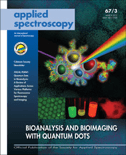
APPLIED SPECTROSCOPY
Advancing the Frontiers of SpectroscopyApplied Spectroscopy, published by SAGE Publications Inc, is a leading journal in the field of spectroscopy and instrumentation, with a legacy dating back to 1970. This esteemed journal, recognized within the Q2 category for both Instrumentation and Spectroscopy in 2023, provides critical insights and advancements that cater to a wide audience of researchers, professionals, and students. With its Scopus rankings placing it in the top 20% of publications in its respective fields, Applied Spectroscopy stands out for its rigorous peer-reviewed content that drives innovation in analytical techniques and applications. Though not an open-access publication, readers can access a wealth of research articles, reviews, and experimental findings that enrich the scientific discourse in spectroscopy. With a focus on enhancing the understanding and practical applications of spectroscopy, this journal is an essential resource for anyone engaged in this dynamic and evolving discipline.
STRAIN
Unveiling the Complexities of Strain in EngineeringSTRAIN is a prestigious peer-reviewed journal published by WILEY, dedicated to advancing the field of mechanical engineering and mechanics of materials. With an ISSN of 0039-2103 and an E-ISSN of 1475-1305, STRAIN has been a pivotal resource for researchers and professionals since its inception in 1965. As of 2023, it holds a commendable categorization in the Q2 quartile rankings for both Mechanical Engineering and Mechanics of Materials, reflecting its significant contribution to the field and ranking in the top percentile of its category. STRAIN aims to disseminate high-quality, innovative research that enhances the understanding of strain phenomena and materials behavior under various conditions. Researchers seeking to publish cutting-edge studies will find a welcoming platform in STRAIN, where they can share their insights with a global audience committed to the evolution of engineering practices. Although it does not offer an Open Access option, its robust editorial standards ensure that all published works adhere to the highest levels of academic integrity and scientific rigor.
Metrology and Measurement Systems
Transforming Data into Actionable Insights.Metrology and Measurement Systems is a distinguished open-access journal dedicated to the advancement of knowledge in the field of metrology, instrumentation, and the engineering disciplines that encompass control systems. Published by the esteemed Polska Akademia Nauk (Polish Academy of Sciences), this journal serves as a vital resource for researchers, professionals, and students striving to address the complexities of measurement systems and the intricacies of control engineering. With an ISSN of 0860-8229 and an E-ISSN of 2300-1941, Metrology and Measurement Systems has been an open-access publication since 2010, broadening the reach of cutting-edge research to a global audience. The journal is categorized in the Q4 quartile for both Control and Systems Engineering and Instrumentation as of 2023, indicative of its growing platform for high-quality scholarly discourse. Its Scopus rankings reveal its relevance in the community, with its contributions becoming increasingly significant despite the current rankings of 209/321 and 106/141 in their respective categories. As it converges into the future, culminating in a timeline from 2008 to 2024, the journal remains committed to enhancing the essential dialogue surrounding measurement systems and fostering innovations in the field.