
ACS Physical Chemistry Au
metrics 2024
Exploring the depths of computational theory and applications.
Introduction
ACS Physical Chemistry Au, published by the American Chemical Society, is a pioneering open-access journal that provides a dynamic platform for researchers and professionals in the field of physical chemistry and its interdisciplinary connections. Since its inception in 2021, the journal has made significant strides in disseminating high-quality research, evidenced by its impressive standings in various categories, including Q1 rankings in Chemistry (miscellaneous), Computational Theory and Mathematics, and Physical and Theoretical Chemistry as of 2023. With a commitment to enhancing the visibility and accessibility of scholarly work, ACS Physical Chemistry Au offers a robust Open Access model, ensuring that groundbreaking research is freely available to a global audience. The journal serves as an essential resource for researchers, students, and practitioners seeking to advance knowledge in computational theory, physical chemistry, and their applied sciences. With an ISSN of N/A and an E-ISSN of 2694-2445, the journal is poised to make a lasting impact in the academic community.
Metrics 2024
 -3.703.70-
Metrics History
Rank 2024
IF (Web Of Science)
JCI (Web Of Science)
Quartile History
Similar Journals

Journal of Physical Chemistry Letters
Connecting Researchers with the Latest in Chemical InnovationThe Journal of Physical Chemistry Letters, published by the American Chemical Society, is a premier journal in the fields of Physical and Theoretical Chemistry, Materials Science, and Nanoscience and Nanotechnology. Since its inception in 2010, this journal has established itself as a significant platform for rapid publications of cutting-edge research that bridges various branches of chemistry, providing a critical avenue for advancing knowledge in these dynamic fields. With an impressive impact factor and a consistent ranking in the top quartile (Q1) of its categories, the journal ranks 25th out of 189 in Physical and Theoretical Chemistry and 79th out of 463 in General Materials Science according to Scopus metrics. Although it currently does not operate under an open access model, it remains an essential resource for academics seeking to disseminate their findings to a global audience. Researchers, professionals, and students alike will find invaluable insights and contributions that push the boundaries of scientific inquiry within these disciplines.
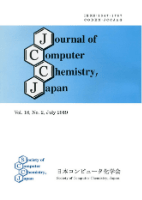
Journal of Computer Chemistry-Japan
Advancing the Frontiers of Computational ChemistryJournal of Computer Chemistry-Japan, published by SOC COMPUTER CHEMISTRY, JAPAN, is a dedicated platform for researchers and professionals in the interdisciplinary fields of computational chemistry and chemical informatics. Though the journal does not currently provide open access, it maintains a rigorous selection process for contributions, ensuring the publication of high-quality, peer-reviewed research. With a focus on advancing computational methods and techniques to solve complex chemical problems, the journal aims to bridge the gap between theoretical chemistry and practical applications, making it an invaluable resource for academics and industry professionals alike. As the complexity of chemical systems continues to rise, the relevance of computational approaches in material science, drug discovery, and molecular modeling has never been more critical. Researchers are encouraged to engage with the contents of this journal, which showcases innovative studies, methodologies, and discussions relevant to the evolving landscape of computer-aided chemistry.
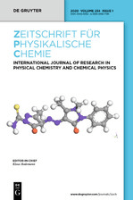
ZEITSCHRIFT FUR PHYSIKALISCHE CHEMIE-INTERNATIONAL JOURNAL OF RESEARCH IN PHYSICAL CHEMISTRY & CHEMICAL PHYSICS
Pioneering Insights in Physical ChemistryZEITSCHRIFT FUR PHYSIKALISCHE CHEMIE-INTERNATIONAL JOURNAL OF RESEARCH IN PHYSICAL CHEMISTRY & CHEMICAL PHYSICS, published by WALTER DE GRUYTER GMBH, is a highly regarded platform for researchers in the field of physical chemistry and chemical physics. With an ISSN of 0942-9352 and an E-ISSN of 2196-7156, this journal serves as a vital resource for the dissemination of original research, critical reviews, and insightful discussions that span theoretical and experimental investigations. Recognized for its quality, it holds a Q2 classification within the 2023 quartiles of Physical and Theoretical Chemistry and ranks 72nd out of 189 in the Scopus database, placing it in the 62nd percentile. The journal’s extensive publication history, originating from 1943, showcases its long-standing commitment to advancing the understanding of complex chemical phenomena. Although it currently does not offer open-access options, it continues to attract contributions from leading experts worldwide, making it essential reading for professionals, researchers, and students dedicated to pushing the frontiers of chemical science. The journal is located in Berlin, Germany, at Genthiner Strasse 13, D-10785 Berlin, Germany.
JOURNAL OF THE CHINESE CHEMICAL SOCIETY
Navigating the Landscape of Chemical AdvancementsJOURNAL OF THE CHINESE CHEMICAL SOCIETY, published by WILEY-V C H VERLAG GMBH, is a vital resource in the field of chemistry, focusing on a broad array of topics pertinent to general chemistry and its advancing sub-disciplines. Established in 1954 and running through 2024, this journal serves as a significant platform for the dissemination of high-quality research, showcasing innovative findings and developments within the chemical sciences. With its Q3 category ranking and positioning at Rank #203 in General Chemistry per Scopus, it reflects the journal's commitment to research excellence and impact. While not an open-access publication, it ensures accessibility to a global audience, making it an essential tool for researchers, professionals, and students alike seeking to stay informed and engaged in the evolving landscape of chemistry.

Frontiers in Chemistry
Catalyzing Breakthroughs Across Chemistry Disciplines.Frontiers in Chemistry is an esteemed and innovative Open Access journal published by FRONTIERS MEDIA SA, based in Lausanne, Switzerland. Since its inception in 2013, the journal has established itself as a leading platform for the dissemination of high-quality research across a broad spectrum of chemistry disciplines, achieving a notable Q1 classification in the miscellaneous chemistry category as of 2023. With an impressive Scopus rank, placing it at 72nd out of 408 in General Chemistry and falling within the 82nd percentile, Frontiers in Chemistry is committed to publishing significant findings that contribute to the advancement of the field. The journal's Open Access model ensures that research is freely accessible to all, fostering a greater exchange of knowledge and collaboration among researchers, professionals, and students globally. It covers a range of topics, from organic and inorganic chemistry to materials science and biochemistry, making it an essential resource for anyone seeking to stay at the forefront of chemical research.
Canadian Journal of Chemistry
Advancing Chemistry Through Innovative ResearchWelcome to the Canadian Journal of Chemistry, a prominent publication dedicated to advancing the study of chemistry through original research and critical reviews. Published by Canadian Science Publishing, this journal has been a cornerstone of chemical research since its inception, covering a broad spectrum of topics within the field, including catalysis, organic chemistry, and general chemistry. With an ISSN of 0008-4042 and E-ISSN of 1480-3291, it provides a vital platform for researchers, professionals, and students to disseminate their findings and engage in scholarly discourse. Impact Factor is currently in development, with the journal classified in the Q4 category for catalysis and Q3 for miscellaneous chemistry fields, signifying its evolving contributions to the scientific community. The journal operates without an open access model, which ensures a rigorous peer-review process while maintaining subscription access for institutions and libraries. Located in Ottawa, Canada, the Canadian Journal of Chemistry continues to provide an invaluable resource for those dedicated to the scientific pursuit of chemistry, making significant strides in fostering interdisciplinary approaches and innovative research methodologies.
Molbank is an open-access journal published by MDPI, dedicated to the fields of Biochemistry, Organic Chemistry, and Physical and Theoretical Chemistry. Established in 2002, this journal has served as a vital platform for the dissemination of research findings, where researchers and professionals share original articles focusing on molecular chemistry, synthesis, and related studies. With a commitment to open access, Molbank enables global access to scientific knowledge, fostering collaboration and innovation among scientists. While currently categorized in the fourth quartile for its field rankings, it provides a unique opportunity for emerging scholars to contribute to and engage with the scientific community. The journal is based in Switzerland, operating from its office at ST ALBAN-ANLAGE 66, CH-4052 BASEL, SWITZERLAND, and continues to attract submissions until 2024. Researchers, students, and professionals looking to expand their knowledge and participate in the dialogue of current molecular chemistry can benefit significantly from engaging with the content published in Molbank.
JACS Au
Elevating chemistry research with open access insights.JACS Au, published by the American Chemical Society, is a premier open access journal dedicated to advancing research in the rapidly evolving fields of analytical chemistry, organic chemistry, and theoretical chemistry. Since its inception in 2021, JACS Au has quickly established itself as a leading platform for high-quality research, reflected in its Q1 rankings across multiple categories for 2023, including Organic Chemistry and Analytical Chemistry. The journal focuses on innovative methodologies and applications that drive the discipline forward, making it an essential resource for researchers, professionals, and students alike. With an impressive Scopus ranking, consistently placing in the top tiers of its categories, and offering a broad range of access options for its readership, JACS Au aims to foster collaboration and disseminate transformative ideas that impact the global scientific community. Exploring diverse topics within chemistry, this journal provides a vital conduit for sharing groundbreaking research and enhancing scientific dialogue.
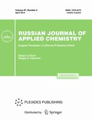
RUSSIAN JOURNAL OF APPLIED CHEMISTRY
Pioneering Research at the Intersection of Chemistry and EngineeringRUSSIAN JOURNAL OF APPLIED CHEMISTRY, published by PLEIADES PUBLISHING INC, serves as a pivotal platform for advancing knowledge in the fields of chemical engineering and general chemistry. With an ISSN of 1070-4272 and an E-ISSN of 1608-3296, this journal has been in continuous publication since 1995 and is set to continue until 2024. Although it operates without an open access model, researchers can access a wealth of innovative research findings, critical reviews, and insightful discussions that reflect the current trends and challenges in applied chemistry. Its rankings place it in Q3 quartiles for both Chemical Engineering and Chemistry as of 2023, indicating its emerging influence within these disciplines. The Scopus rankings further highlight its relevance, positioning it in the lower percentiles, suggesting a fertile ground for researchers aiming to elevate the field. Engaging with this journal can enrich academic and professional understanding, making it an essential resource for anyone dedicated to furthering their expertise in applied chemistry.
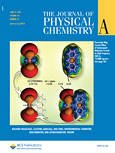
JOURNAL OF PHYSICAL CHEMISTRY A
Advancing the frontiers of molecular understanding.Journal of Physical Chemistry A, published by the American Chemical Society, serves as a leading platform for disseminating high-quality research in the fields of physical and theoretical chemistry. With an ISSN of 1089-5639 and E-ISSN of 1520-5215, this journal maintains a rigorous standard, demonstrated by its position in the Q2 category for both physical and theoretical chemistry as well as miscellaneous medicine within its 2023 category quartiles. As part of the greater ACS network, it operates with a solid Scopus rank of 76/189, placing it within the 60th percentile, emphasizing its credibility and impact in the chemistry community. The journal's objective is to enhance the understanding of molecular phenomena through innovative experimental and computational approaches, making it essential reading for researchers, professionals, and students seeking to advance their knowledge and contribute to scientific discussion. With additional open access options, the Journal of Physical Chemistry A continues to foster collaboration and the sharing of ideas in the vibrant scientific landscape of the United States and beyond.