
Acta Metallurgica Slovaca
Scope & Guideline
Connecting academia and industry through cutting-edge findings.
Introduction
Aims and Scopes
- Materials Characterization and Analysis:
The journal emphasizes the characterization of materials, including their microstructural, mechanical, and thermal properties. This includes studies on phase diagrams, microstructure evolution, and the physical properties of alloys. - Metallurgical Processing Techniques:
Research on various metallurgical processing methods, such as welding, casting, and additive manufacturing, is a core focus. This includes experimental and numerical studies on process optimization and efficiency. - Alloy Development and Performance Evaluation:
The journal covers the development and performance evaluation of new alloys and composite materials, including their mechanical properties, corrosion resistance, and thermal behavior. - Thermodynamics and Phase Transformations:
Thermodynamic analysis and phase transformation studies are central to the research published, providing insights into alloy behavior under different conditions. - Environmental Impact and Sustainability:
Research addressing the environmental impact of metallurgical processes and promoting sustainable practices in materials production and recycling is increasingly becoming a focus area.
Trending and Emerging
- Additive Manufacturing and 3D Printing:
There is a growing trend in research related to additive manufacturing techniques, particularly in the production of complex geometries and customized materials for various applications. - Sustainability and Green Metallurgy:
Emerging themes include sustainability in metallurgy, focusing on recycling processes, reduction of carbon footprints, and the development of eco-friendly materials. - Advanced Coatings and Surface Treatments:
Research on advanced coatings and surface treatment techniques is on the rise, emphasizing improvements in wear resistance, corrosion protection, and overall material performance. - Smart Materials and Functional Alloys:
The journal is increasingly publishing studies on smart materials and functional alloys that exhibit unique properties and behaviors in response to environmental stimuli. - Numerical Simulation and Modeling:
There is a significant increase in the use of numerical simulation and modeling techniques to predict material behavior, optimize processes, and understand complex interactions within materials.
Declining or Waning
- Traditional Ferrous Alloys:
Research specifically focused on traditional ferrous alloys appears to be decreasing, possibly due to the growing interest in advanced materials and composites that offer superior properties. - Basic Metallurgical Processes:
There is a noticeable decline in studies centered on basic metallurgical processes, such as simple casting and conventional forging methods, as researchers shift towards more innovative and complex processing techniques. - Fundamental Theoretical Studies:
The journal has seen a reduction in purely theoretical studies without experimental validation, as there is a stronger emphasis on research that combines theory with practical applications.
Similar Journals
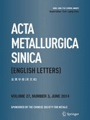
Acta Metallurgica Sinica-English Letters
Pioneering Research in Metals and Alloys.Acta Metallurgica Sinica-English Letters, published by the Chinese Academy of Sciences, Institute of Metal Research, is a premier international journal that has been fostering the advancement of knowledge in the fields of Industrial and Manufacturing Engineering and Metals and Alloys since its inception in 1997. With a commendable impact factor and ranking within the top quartiles (Q1) of leading Scopus categories, this journal serves as a vital platform for researchers and professionals to disseminate innovative research findings and groundbreaking methodologies. Notably recognized with a Scopus rank of #34 out of 176 in Materials Science and rank #81 out of 384 in Engineering, it provides a robust space for high-quality, peer-reviewed articles, thus bridging the gap between theoretical advancement and practical application in metallurgy and materials science. Although currently not an open-access journal, its rigorous editorial standards and comprehensive scope ensure that only the most impactful research contributes to the scientific community and industry advancements globally. Acta Metallurgica Sinica-English Letters is an essential read for anyone eager to stay informed on cutting-edge developments within these crucial domains.
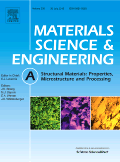
MATERIALS SCIENCE AND ENGINEERING A-STRUCTURAL MATERIALS PROPERTIES MICROSTRUCTURE AND PROCESSING
Transforming Research into Revolutionary Materials InsightsMATERIALS SCIENCE AND ENGINEERING A-STRUCTURAL MATERIALS PROPERTIES MICROSTRUCTURE AND PROCESSING, published by ELSEVIER SCIENCE SA, is a highly regarded journal specializing in the fundamental and applied aspects of materials science. Since its inception in 1988, this journal has established itself as a leading platform for disseminating innovative research findings, particularly focused on structural materials, their properties, microstructure, and processing techniques. With a prominent impact in the field, it ranks in the Q1 category across several disciplines including Condensed Matter Physics, Materials Science, Mechanical Engineering, and Nanoscience and Nanotechnology, highlighting its significance and influence within the academic community. The journal is accessible to a global audience of researchers, professionals, and students, underscoring its commitment to advancing knowledge in materials engineering. Aspiring authors and readers will find this journal an essential resource for cutting-edge research and the latest advancements in the field, further supported by its impressive Scopus rankings that place it among the top-tier publications.
METALLURGICAL AND MATERIALS TRANSACTIONS B-PROCESS METALLURGY AND MATERIALS PROCESSING SCIENCE
Shaping the Future of Materials Science Through Rigorous ResearchMETALLURGICAL AND MATERIALS TRANSACTIONS B-PROCESS METALLURGY AND MATERIALS PROCESSING SCIENCE, published by Springer, serves as a pivotal platform in advancing the field of materials science, focusing specifically on the intricacies of process metallurgy and materials processing. With an ISSN of 1073-5615 and an E-ISSN of 1543-1916, this esteemed journal boasts an impressive standing with its 2023 category quartiles, ranking Q2 in Condensed Matter Physics, Materials Chemistry, and Mechanics of Materials, while achieving a top-tier Q1 classification in Metals and Alloys. Positioned in the United States, the journal has been publishing leading research since its inception, with converged years spanning from 1973 to 1979 and 1995 to 2024. The journal's robust impact within its fields is reflected in its Scopus rankings, notably ranking #42 out of 176 in Materials Science with a 76th percentile. Though not an open access journal, its comprehensive and high-quality research articles cater to the needs of researchers, professionals, and students, ensuring they remain at the forefront of advancements in metallurgy and materials processing science.

ACTA METALLURGICA SINICA
Igniting Collaboration in the World of Alloys and MechanicsACTA METALLURGICA SINICA, established in 1978 and published by SCIENCE PRESS, stands as a preeminent journal in the fields of metallurgy and materials science. This journal is particularly revered for its contributions to Metals and Alloys, Mechanical Engineering, Geotechnical Engineering, and Mechanics of Materials, with a commendable Q1 ranking in Metals and Alloys and notable placements in other engineering disciplines. With a robust history of facilitating scholarly communication from 1978 to 1991 and consistently since 1996, the journal provides a vital platform for researchers and practitioners to disseminate significant advancements in material science. Despite being a subscription-based journal, ACTA METALLURGICA SINICA remains pivotal, holding a Scopus ranking that places it in the top tiers of its categories, fostering an environment ripe for innovation and collaboration. This ensures that the journal remains central to the ongoing discussions and developments within the metallurgy community, serving both academic and professional interests.
Russian Journal of Non-Ferrous Metals
Elevating Knowledge in Non-Ferrous MetalsThe Russian Journal of Non-Ferrous Metals, published by PLEIADES PUBLISHING INC, serves as a vital resource for researchers and professionals in the fields of materials science and engineering. With a dual ISSN (1067-8212 for print and 1934-970X for online), this journal has been instrumental in disseminating cutting-edge research from 2007 to 2023. Specializing in the mechanics of materials, metals and alloys, and the study of surfaces, coatings, and films, it provides invaluable insights into the latest advancements and applications in these areas. Although currently categorized in the Q4 tier for mechanics of materials and surfaces, and Q3 for metals and alloys in the 2023 rankings, its commitment to quality research is reflected in its Scopus metrics, ranking it within the competitive spectrum of its fields. While not an open access journal, it remains a crucial academic platform for fostering knowledge exchange among professionals and scholars. By publishing high-quality articles, the Russian Journal of Non-Ferrous Metals contributes significantly to the ongoing dialogue in metallurgical science and engineering.
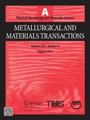
METALLURGICAL AND MATERIALS TRANSACTIONS A-PHYSICAL METALLURGY AND MATERIALS SCIENCE
Fostering Collaboration in Materials ResearchMETALLURGICAL AND MATERIALS TRANSACTIONS A - PHYSICAL METALLURGY AND MATERIALS SCIENCE, published by Springer, is a prestigious journal that plays a pivotal role in advancing the fields of physical metallurgy and materials science. With an ISSN of 1073-5623 and an E-ISSN of 1543-1940, this American journal provides a vital platform for disseminating cutting-edge research and innovative findings relevant to condensed matter physics, mechanics of materials, and metals and alloys. The journal, indexed with an impressive Q1 ranking in multiple categories in 2023, ensures its position among the top-tier publications, making it an essential resource for researchers, professionals, and students alike. Spanning decades of invaluable contributions since its inception in 1975, METALLURGICAL AND MATERIALS TRANSACTIONS A focuses on fostering academic dialogue, promoting collaboration, and showcasing leading-edge discoveries that drive the materials science community forward. Researchers seeking to publish their work in a highly visible forum will find this journal an optimal choice for reaching a discerning audience.
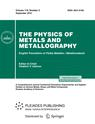
PHYSICS OF METALS AND METALLOGRAPHY
Pioneering Research in Condensed Matter and MetallographyPhysics of Metals and Metallography, published by MAIK Nauka/Interperiodica/Springer, is a respected journal dedicated to the study of the physical properties of metals and their metallographic analysis, offering invaluable insights for researchers, professionals, and students in the fields of condensed matter physics and materials chemistry. With an ISSN of 0031-918X and an E-ISSN of 1555-6190, the journal has a rich history that spans from 1970 to 2024, reflecting a long-standing commitment to advancing knowledge in this vital area of materials science. Although it currently does not offer Open Access options, its strong placement in the academic landscape is underscored by its Q3 ranking in both Condensed Matter Physics and Materials Chemistry, according to 2023 metrics, and a Scopus ranking that places it within the competitive percentile of its fields. The journal is particularly important for those engaged in the cutting-edge research and technological applications of metals and alloys, making it an essential resource for anyone looking to deepen their understanding or contribute original findings to this dynamic discipline.
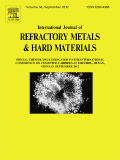
INTERNATIONAL JOURNAL OF REFRACTORY METALS & HARD MATERIALS
Transforming engineering through cutting-edge materials science.INTERNATIONAL JOURNAL OF REFRACTORY METALS & HARD MATERIALS, an esteemed publication by Elsevier Science Ltd, stands at the forefront of materials research, focusing on the development and application of refractory metals and hard materials in various engineering fields. With an impressive impact factor and recognition as a Q1 journal across several categories including Ceramics and Composites, Materials Chemistry, and Mechanical Engineering, it serves as a vital resource for researchers, professionals, and students alike. The journal has been continuously publishing high-quality research since its inception in 1982, with a convergence of developments spanning through to 2024. Its Scopus rankings further emphasize its significance, boasting ranks in the top percentiles of relevant scientific fields. Although it operates under a subscription model, the depth and rigor of the research published within its pages ensures that it remains an invaluable tool for those pursuing innovation and exploration in materials science.
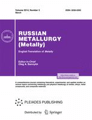
RUSSIAN METALLURGY
Exploring the Depths of Metals and AlloysRUSSIAN METALLURGY is a distinguished journal published by PLEIADES PUBLISHING INC, focusing on the fields of metals and alloys. With an ISSN of 0036-0295 and an E-ISSN of 1555-6255, this journal serves as a vital resource for researchers and practitioners alike, offering insights into the latest advancements and innovative research within the metallurgy domain. Recognized in a competitive landscape, it holds a Q3 ranking in the Metals and Alloys category as of 2023, reflecting its commitment to rigorous scientific dissemination. The journal spans a significant historical timeline of research since its inception in 1984, with aims to advance the knowledge and application of metallurgical science. Although currently not open access, it remains crucial for those aiming to stay current in the dynamic field of materials science. RUSSIAN METALLURGY fosters a deeper understanding of the physical and chemical properties of metals, guiding future innovations in industry and academia.
TRANSACTIONS OF THE INDIAN INSTITUTE OF METALS
Bridging theory and practice in metallurgy.TRANSACTIONS OF THE INDIAN INSTITUTE OF METALS is a premier journal published by Springer India, dedicated to the field of metallurgy and materials science. Established in 1969, this journal serves as a vital platform for researchers and professionals to disseminate their findings on metals and alloys, showcasing innovative studies and experimental techniques. With an impressive impact factor and categorized in the Q2 quartile for metals and alloys as of 2023, it ranks 70 out of 176 in its field according to Scopus, placing it in the 60th percentile. The journal maintains a robust reputation for fostering academic excellence, thus attracting contributions from both established and emerging scholars. Though not an open access publication, its well-curated content remains a crucial resource for advancing knowledge and technology in metallurgy. The journal's extensive operational history, particularly during notable converged years, underscores its enduring significance in the scientific community.