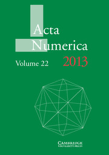
ACTA NUMERICA
Scope & Guideline
Exploring the Depths of Computational Techniques.
Introduction
Aims and Scopes
- Numerical Methods Development:
The journal publishes research on the formulation and analysis of new numerical techniques, including adaptive methods, finite element methods, and low-rank tensor methods. - Applications in Physics and Engineering:
Research often explores the application of numerical methods to solve real-world problems in physics, engineering, and computational sciences, such as molecular dynamics and fluid dynamics. - Machine Learning Integration:
There is a consistent focus on integrating numerical methods with machine learning techniques, particularly physics-informed neural networks and other novel algorithms. - Optimal Control and Design:
Papers often address optimal control problems, experimental design, and computational strategies, highlighting the interplay between numerical analysis and optimization. - Theoretical Foundations:
The journal emphasizes the theoretical underpinnings of numerical methods, including convergence analysis, stability, and error estimation.
Trending and Emerging
- Physics-Informed Machine Learning:
The integration of machine learning with traditional numerical methods, particularly in the context of physics-informed neural networks, is a rapidly growing area, reflecting the increasing use of AI in computational sciences. - Multiscale and Asymptotic Methods:
There is a notable rise in research addressing multiscale problems and asymptotic-preserving schemes, highlighting the need for effective solutions in complex physical problems. - Control Theory Applications:
The focus on control of differential-algebraic systems and optimal control strategies is expanding, showcasing the journal's commitment to applying numerical methods to dynamic systems. - Computational Efficiency and Precision:
Emerging trends in mixed precision algorithms and adaptive methods reflect an increasing emphasis on computational efficiency and accuracy in numerical simulations. - Tensor and High-Dimensional Data Methods:
Research on tensor methods and their applications in high-dimensional problems is gaining significance, indicating a shift towards handling complex data structures in numerical computations.
Declining or Waning
- Traditional Numerical Analysis Techniques:
There seems to be a reduction in papers focusing solely on classical numerical analysis techniques, as the field increasingly embraces interdisciplinary approaches and modern computational methods. - Purely Theoretical Research:
The journal has seen a decline in purely theoretical contributions without practical applications, indicating a trend towards more applied research that demonstrates real-world relevance. - Basic Linear Algebra Methods:
Research centered on fundamental linear algebra techniques appears to be less frequent, as more complex and innovative approaches gain prominence in the published works.
Similar Journals
Computational Methods in Applied Mathematics
Exploring the Frontiers of Computational InnovationComputational Methods in Applied Mathematics is a premier academic journal published by WALTER DE GRUYTER GMBH, based in Germany. With its ISSN 1609-4840 and E-ISSN 1609-9389, this journal serves as a crucial platform for the dissemination of cutting-edge research and innovations in the fields of Applied Mathematics, Computational Mathematics, and Numerical Analysis. Notably, it has been recognized in 2023 with a Q2 ranking in its category quartiles, marking it as a significant contributor in its discipline. Spanning from 2001 to 2024, it fosters interdisciplinary collaboration and exploration of computational methodologies that solve complex mathematical problems. Though it operates on a traditional access model, its relevance is underscored by its Scopus rankings, which place it among the notable leaders in its area. As a trusted source of scholarly articles, Computational Methods in Applied Mathematics is an essential resource for researchers, professionals, and students aiming to stay abreast of advancements and discussions that shape the future of applied mathematics.
APPLIED MATHEMATICS AND COMPUTATION
Pioneering Solutions with Computational ExcellenceApplied Mathematics and Computation is a premier journal dedicated to the dissemination of high-quality research in the field of applied mathematics and computational methods. Published by Elsevier Science Inc, this influential journal has established itself as a key resource for researchers, professionals, and students interested in mathematical modeling, numerical analysis, computational algorithms, and their applications across various disciplines. With an impressive impact factor reflecting its scholarly credibility, it holds a distinguished position in the Q1 quartile for both applied and computational mathematics as of 2023, ranking #31/635 and #12/189 in Scopus categories respectively, thereby indicating its significant impact on the academic community. The journal encompasses a broad spectrum of topics, encouraging original research, critical reviews, and innovative methodologies that address real-world challenges. Although it currently does not offer open access options, it remains a cornerstone publication for those at the forefront of mathematical research, continuously bridging theory with practical computation since its inception in 1975.
NUMERICAL LINEAR ALGEBRA WITH APPLICATIONS
Advancing the Frontiers of Numerical MethodsNUMERICAL LINEAR ALGEBRA WITH APPLICATIONS, published by Wiley, is a premier journal dedicated to advancing the fields of numerical linear algebra, applied mathematics, and their interrelated applications. With ISSN 1070-5325 and E-ISSN 1099-1506, it has established itself as an essential resource for researchers, academics, and practitioners interested in cutting-edge developments in numerical methods and their practical implications. The journal has attained an impressive Q1 ranking in both Algebra and Number Theory and Applied Mathematics as of 2023, highlighting its influence and prestige within the mathematical community. Spanning from 1994 to 2024, NUMERICAL LINEAR ALGEBRA WITH APPLICATIONS is recognized for its rigorous peer-reviewed publications that address the theoretical and algorithmic advancements in numerical linear algebra, making it a critical reference for professionals and students alike. The journal is not Open Access, which encourages subscribers to gain access to high-quality research outputs that promote innovation and multidisciplinary collaborations in mathematics.
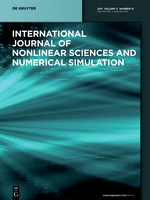
INTERNATIONAL JOURNAL OF NONLINEAR SCIENCES AND NUMERICAL SIMULATION
Pioneering Research in Nonlinear PhenomenaINTERNATIONAL JOURNAL OF NONLINEAR SCIENCES AND NUMERICAL SIMULATION, published by WALTER DE GRUYTER GMBH, serves as a premier platform for advancing knowledge in the vibrant domains of applied mathematics, computational mechanics, and various fields of engineering and physics. With an ISSN of 1565-1339, this journal has been at the forefront of disseminating significant research findings since its inception in 2000. Its commitment to quality is reflected in its category quartiles for 2023, ranked Q2 in Computational Mechanics and Engineering (miscellaneous), and Q3 in multiple engineering disciplines. Although it currently operates under a subscription model, the journal remains dedicated to presenting groundbreaking studies that explore complex nonlinear phenomena and numerical methodologies. As an invaluable resource for researchers, professionals, and students alike, the journal aims to foster innovation and collaboration across related fields, enhancing both theory and application through its peer-reviewed articles.
Numerical Analysis and Applications
Empowering researchers with vital insights in numerical techniques.Numerical Analysis and Applications is a prominent journal dedicated to advancing the field of numerical analysis, published by the Siberian Branch of the Russian Academy of Sciences. Established in 2009, and running through to 2024, this scholarly publication serves as a vital resource for researchers, professionals, and students involved in the mathematical sciences. The journal’s impact is underscored by its classification in the Q3 quartile for numerical analysis within the latest metrics, reflecting its significance in the academic community, although it presently ranks 74 out of 88 in the numerical analysis category, representing a 16th percentile. With a broad scope that encompasses innovative methodologies and applications in numerical techniques, the journal aims to foster interdisciplinary collaboration and share pivotal advancements in numerical theory and practice. Access options may vary, thus offering opportunities for both traditional and contemporary researchers to engage with cutting-edge content that is crucial for driving forward the computational sciences.

JOURNAL OF COMPUTATIONAL MATHEMATICS
Exploring New Horizons in Computational ResearchJOURNAL OF COMPUTATIONAL MATHEMATICS, published by GLOBAL SCIENCE PRESS, is a distinguished peer-reviewed academic journal dedicated to advancing the field of computational mathematics. With a focus on high-quality research that bridges theoretical and practical applications, this journal aims to disseminate innovative methodologies and robust algorithms that address complex mathematical problems. Operating without an open-access model, it maintains a reputable standing with a Q2 category classification in computational mathematics as of 2023, showcasing its influence and relevance within the academic community. The journal, which has been in publication since 1996, continues to evolve, providing a platform for researchers, practitioners, and students to engage with cutting-edge developments up to 2024. By contributing to the body of knowledge in computational mathematics, this journal plays a vital role in fostering collaboration and advancement in related disciplines.

Advances in Applied Mathematics and Mechanics
Transforming Ideas into Solutions for Real-World ChallengesAdvances in Applied Mathematics and Mechanics is a premier academic journal published by GLOBAL SCIENCE PRESS that focuses on the latest research and innovative developments in the fields of applied mathematics and mechanical engineering. Since its inception in 2009, this journal has consistently contributed to the advancement of knowledge, garnering a respectable Q2 ranking in both Applied Mathematics and Mechanical Engineering categories, reflecting its significance in enhancing scientific discourse. With an impactful reach, as evidenced by its Scopus rankings, this journal hosts cutting-edge research, theoretical advancements, and practical applications that serve as invaluable resources for researchers, professionals, and students alike. While it operates under a subscription model, the accessibility of vital research findings is critical for driving innovation within these interrelated disciplines. The journal’s scope encompasses a broad range of topics, from computational methods to engineering applications, positioning it as a crucial platform for interdisciplinary collaboration and knowledge sharing in an ever-evolving academic landscape. For prospective authors and readers, Advances in Applied Mathematics and Mechanics stands as a key contributor to confidently navigating the nexus of applied mathematics and mechanics.

ESAIM-Mathematical Modelling and Numerical Analysis
Exploring the Nexus of Theory and ApplicationESAIM-Mathematical Modelling and Numerical Analysis, published by EDP SCIENCES S A, is a prestigious open-access journal at the forefront of the fields of mathematical analysis, applied mathematics, computational mathematics, modeling, simulation, and numerical analysis. With an impressive Q1 ranking in multiple categories for 2023, the journal is recognized for its contribution to advanced research, particularly in areas that intertwine mathematical theory with practical applications. The journal’s ISSN is 2822-7840 and its E-ISSN is 2804-7214, showcasing its commitment to both traditional and digital dissemination of knowledge. Spanning from 1996 to 2024, ESAIM has established itself as a vital platform for scholars seeking to publish innovative research and engage with the latest advancements in the field. Researchers and practitioners can explore the journal’s content through various access options, fostering a collaborative environment for the sharing and development of new mathematical methodologies. Situated in France, ESAIM continues to attract an international readership, driving forward the global discourse in mathematical sciences.

Numerical Mathematics-Theory Methods and Applications
Bridging Theory and Practice in Numerical MathematicsNumerical Mathematics: Theory Methods and Applications, published by GLOBAL SCIENCE PRESS, stands as a pivotal journal in the fields of applied and computational mathematics, control and optimization, as well as modeling and simulation. With an ISSN of 1004-8979 and an E-ISSN of 2079-7338, this journal has been committed to disseminating high-quality research since its establishment in 2010, curating contributions that reflect the latest advancements in numerical methodologies and their diverse applications. As a Q2 journal in its category for 2023, it ranks favorably in the Scopus metrics, with notable positions in various mathematical disciplines. Although it does not currently provide open access, it remains an essential resource for researchers and professionals seeking to deepen their understanding of numerical methods and their applications. The journal’s esteemed reputation, coupled with its strategic focus on emerging trends in mathematics, makes it an invaluable platform for scholars who wish to contribute to and stay informed about cutting-edge developments in this dynamic field.

Mathematics in Engineering
Exploring the synergy between mathematics and engineering.Mathematics in Engineering, published by the American Institute of Mathematical Sciences (AIMS), is a premier open-access journal that has been advancing the field of mathematical sciences since its inception in 2019. With a focus on interdisciplinary applications, this journal embraces a broad spectrum of topics within analysis, applied mathematics, and mathematical physics. It has quickly garnered recognition, achieving notable rankings such as Q1 status in Analysis and Mathematical Physics, and Q2 in Applied Mathematics, according to the 2023 category quartiles. The journal’s Scopus rankings further underline its commitment to quality, with impressive placements reflecting its growing influence in the mathematical community. Accessible to all, Mathematics in Engineering aims to provide a platform for the dissemination of innovative research findings and methodologies, fostering collaboration among researchers, professionals, and students in the mathematical domain. For those looking to contribute to or deepen their understanding of current mathematical applications in engineering, this journal is an essential resource.