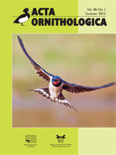
ACTA ORNITHOLOGICA
Scope & Guideline
Exploring the intricate world of avian biology and conservation.
Introduction
Aims and Scopes
- Avian Ecology and Behavior:
Research articles focusing on bird behavior, habitat selection, and ecological interactions, emphasizing how environmental factors influence avian life. - Conservation and Population Dynamics:
Studies assessing bird populations, threats to their habitats, and conservation strategies, highlighting the importance of preserving avian biodiversity. - Reproductive Biology and Nesting Strategies:
Investigations into reproductive ecology, including nesting success, site selection, and parental care, shedding light on the life history strategies of various bird species. - Migration and Movement Patterns:
Research on migratory behavior, seasonal movements, and the impact of environmental changes on migration routes and timing. - Physiology and Morphology:
Studies examining the physiological adaptations and morphological traits of birds, contributing to our understanding of their survival and reproductive success.
Trending and Emerging
- Climate Change Effects on Bird Populations:
An increasing number of studies are focusing on how climate change impacts bird habitats, migration patterns, and breeding success, underscoring the urgency of understanding these dynamics in the face of global environmental change. - Technological Innovations in Bird Monitoring:
There is a growing trend towards using advanced technologies, such as drone surveillance and remote sensing, for monitoring bird populations and behaviors, enhancing data collection and analysis. - Community Ecology and Interactions:
Research examining the interactions within bird communities, including competition, predation, and mutualism, is gaining traction as scientists seek to understand the complexities of avian ecology in diverse environments. - Conservation Genetics:
Emerging studies are delving into the genetic aspects of bird conservation, exploring how genetic diversity influences population resilience and adaptability, which is critical for effective conservation strategies.
Declining or Waning
- Urban Ecology Studies:
Research focusing on the impact of urbanization on bird populations and behaviors has seen a decline, possibly due to a shift towards more specific ecological interactions or conservation efforts. - Invasive Species Impact Assessments:
While once a prominent topic, the frequency of studies examining the impacts of invasive species on native bird populations has decreased, indicating a potential shift in research focus towards more immediate conservation challenges. - Morphological Studies:
There appears to be a reduction in the number of studies dedicated solely to morphological traits, suggesting that researchers may be integrating these considerations into broader ecological or behavioral studies.
Similar Journals
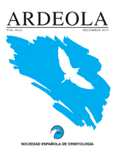
Ardeola-International Journal of Ornithology
Connecting Ornithologists Through Insightful StudiesArdeola - International Journal of Ornithology, published by the SOCIEDAD ESPAÑOLA DE ORNITOLOGÍA, serves as a vital platform for the dissemination of research in the field of avian studies. With a history dating back to 1980, this esteemed journal has cultivated a reputation for high-quality research, achieving a notable Q2 category ranking in Animal Science and Zoology as well as in Ecology, Evolution, Behavior, and Systematics as of 2023. While primarily based in Spain, Ardeola caters to a global audience, providing essential insights into ornithology through rigorously peer-reviewed articles. The journal does not currently operate under an open-access model, which underscores the significance of institutional subscriptions and the importance of supporting academic publishing. Researchers, professionals, and students engaged in avian ecology will find Ardeola indispensable for accessing impactful studies that advance our understanding of bird populations, behaviors, and conservation issues. With its accessibility and continuing commitment to excellence, Ardeola plays a crucial role in fostering knowledge and promoting dialogue in the ornithological community.

Ornithology Research
Fostering Global Collaboration in Bird ScienceOrnithology Research is a leading academic journal published by SPRINGERNATURE, specializing in the field of avian studies and contributing to the broader category of Animal Science and Zoology. With a respectable Q2 ranking in its field as of 2023, this journal provides a dynamic platform for the dissemination of innovative research findings related to ornithology, ecology, and conservation. The journal, which transitioned to an Open Access model, ensures that its research is accessible to a global audience, fostering collaboration and knowledge sharing across disciplines. With an E-ISSN of 2662-673X, Ornithology Research serves the needs of researchers, professionals, and students dedicated to understanding the complexities of avian life. Its commitment to high-impact, peer-reviewed articles makes it an essential resource for anyone interested in advancing the science of ornithology.
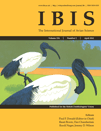
IBIS
Exploring the dynamics of nature and behavior.IBIS, published by WILEY, stands as a prestigious journal in the field of animal science, zoology, and ecology since its inception in 1859. With a focus on innovative research that informs the scientific community on ecological dynamics, behavioral studies, and conservation strategies, IBIS fills a critical niche for researchers, professionals, and students alike. The journal is recognized for its robust impact factor and commands a Q1 ranking in three key categories as of 2023, demonstrating its influence and reach within the global academic landscape, particularly in Animal Science, Ecology, Evolution, Behavior and Systematics, and Nature and Landscape Conservation. Although not an open-access publication, its rigorous peer-review process ensures high-quality contributions that advance knowledge in these vital areas. Through interdisciplinary collaboration and comprehensive coverage of cutting-edge topics, IBIS remains an essential resource for those striving to understand and protect our natural world.

ZOOLOGICHESKY ZHURNAL
Pioneering research in zoology for over seven decades.Zoologichesky Zhurnal, a prominent journal in the field of Ecology, Evolution, Behavior and Systematics, has been a vital publication since its inception in 1950. Published by MAIK Nauka-Interperiodica in the Russian Federation, this journal has established a notable reputation in disseminating scientific research and advancing knowledge in zoology. With its coverage spanning from 1950 to 2023, and a specific convergent focus during 1982-1983, this journal contributes significantly to the ecological and evolutionary sciences, even though it currently holds a Q4 classification in the 2023 category quartiles, indicating its niche positioning among peers. Researchers and students engaged in the study of biological sciences, particularly those interested in the dynamics of ecosystems, behavior of species, and evolutionary processes, will find valuable insights and original research articles within its pages. While access to this esteemed journal is not open, it remains an essential resource for those seeking to deepen their understanding of zoological sciences.
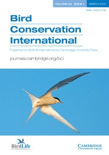
BIRD CONSERVATION INTERNATIONAL
Nurturing a global community dedicated to avian preservation.BIRD CONSERVATION INTERNATIONAL, published by Cambridge University Press, stands as a premier academic journal dedicated to the field of avian conservation and the vital ecological interactions that sustain bird populations worldwide. With an impressive impact factor reflected through its Q1 ranking in Animal Science and Zoology, alongside notable Q2 standings in Ecology and Nature and Landscape Conservation, this journal provides a crucial platform for researchers and practitioners committed to advancing the science and practice of bird conservation. Spanning articles from its inception in 1991 through to its future publications in 2024, BIRD CONSERVATION INTERNATIONAL not only fosters innovative research but also nurtures a global community dedicated to the preservation of avian species and their habitats. While currently not offering open access, it remains a cornerstone for scholarly communication in its field, making significant contributions to knowledge and policy shaping conservation efforts across the globe.
Birds, published by MDPI, serves as a pivotal platform for scholarly exchange in the fields of Animal Science, Zoology, and Ecology. With its publication journey from 2020 to 2024, the journal notably holds a Q2 ranking in both the Animal Science and Zoology, and Ecology, Evolution, Behavior and Systematics categories for 2023, indicating its growing influence and relevance in these critical areas of study. Hailing from Switzerland, Birds is committed to advancing understanding of avian biology and ecology, offering timely research findings and fostering interdisciplinary collaboration. The journal features an Open Access model, allowing unimpeded access to high-quality research and facilitating greater dissemination of knowledge. Aspiring researchers, seasoned professionals, and students alike will find a wealth of insights and innovative approaches within its pages, contributing significantly to the conservation and appreciation of bird species worldwide.
ARDEA
Advancing avian knowledge through rigorous research.ARDEA, published by the Nederlandse Ornithologische Unie, is a prominent journal in the fields of Animal Science, Zoology, and Ecology. With its rich history spanning from 1981 to the present, ARDEA serves as a vital platform for researchers and professionals dedicated to avian studies and the ecological sciences. This quarterly journal is recognized in the Q3 category for both Animal Science and Ecology, as per the latest rankings, and maintains an impressive global standing within its subject areas. Although it operates without an open access model, the journal provides significant insights and contributions to the understanding of bird biology, conservation, and evolution. Researchers and students seeking to advance their knowledge in ornithology and related fields will find ARDEA to be an indispensable resource, promoting high-quality research and fostering academic collaboration.
OSTRICH
Exploring the Frontiers of Avian ResearchOSTRICH, a distinguished journal published by Taylor & Francis Ltd, serves as a pivotal platform for disseminating research in the fields of ecology, evolution, behavior, and systematics. With an ISSN of 0030-6525 and an E-ISSN of 1727-947X, this journal has been contributing vital insights to the scientific community since its inception in 1930. Maintained in the UK, OSTRICH holds a respectable Q3 category ranking in the 2023 Ecology, Evolution, Behavior, and Systematics quartiles and ranks 408th out of 721 within its scientific domain according to Scopus, showcasing a competitive position within the 43rd percentile. OSTRICH is committed to publishing high-quality research that informs conservation efforts and biodiversity studies, making it an essential resource for researchers, professionals, and students interested in avian biology and related ecological fields. While not currently an open-access journal, OSTRICH offers varied access options through institutions and libraries, further widening its reach and impact within the scientific community. We invite academics and practitioners to explore its valuable articles that drive forward innovations in avian research.
ORNIS HUNGARICA
Fostering collaboration through open access research.ORNIS HUNGARICA, an esteemed journal in the fields of Animal Science and Zoology as well as Ecology, Evolution, Behavior and Systematics, is published by Walter de Gruyter GmbH, a leading scientific publisher renowned for its commitment to disseminating high-quality research. Operating under an Open Access model since 2012, this journal provides invaluable access to scholarly articles, fostering collaboration and knowledge sharing among researchers and professionals. With its ISSN 1215-1610 and E-ISSN 2061-9588, ORNIS HUNGARICA has become a noteworthy platform for innovative studies and findings from Hungary and beyond, contributing significantly to the discourse in its field. As indicated by its Q3 ranking in Animal Science and Zoology and Q4 ranking in Ecology, the journal is recognized for its diverse research contributions, although it aims to expand its reach and relevance in future editions. Researchers and students alike will find in ORNIS HUNGARICA a dedicated resource for advancing knowledge and furthering the understanding of avian biology and ecology.
BIRD STUDY
Exploring the intricate world of birds and their ecosystems.BIRD STUDY, an esteemed journal published by Taylor & Francis Ltd, stands at the forefront of avian research, contributing significantly to the fields of ecology, evolution, behavior, and conservation. With its ISSN 0006-3657 and E-ISSN 1944-6705, this journal has been a cornerstone of ornithological studies since its inception in 1954 and continues to provide a critical platform for the dissemination of knowledge through 2024 and beyond. It holds a respectable Q3 quartile ranking in both Ecology, Evolution, Behavior and Systematics and Nature and Landscape Conservation, reflecting its pivotal role in the academic community. While the journal is not open access, it continues to attract submissions from a diverse array of researchers and professionals eager to share their findings on the intricate and dynamic interactions of birds within their ecosystems. As the global focus on biodiversity and conservation intensifies, BIRD STUDY remains dedicated to fostering knowledge and encouraging evidence-based practices that aim to protect avian species and their habitats.