
Acta Polytechnica
Scope & Guideline
Empowering innovation in engineering research.
Introduction
Aims and Scopes
- Engineering Innovations:
Focus on novel engineering techniques and technologies, including materials science, mechanical engineering, and structural analysis, with an emphasis on practical applications in real-world scenarios. - Applied Research:
Addresses practical challenges in various engineering fields, encouraging studies that lead to direct industrial applications and improvements in existing technologies. - Interdisciplinary Collaboration:
Promotes research that combines insights from multiple engineering disciplines, fostering collaboration among researchers to tackle complex problems. - Theoretical Developments:
Includes theoretical studies that contribute to the understanding of fundamental engineering principles, often serving as a foundation for further applied research. - Historical and Societal Contexts:
Explores the historical development of engineering practices and technologies, as well as their impacts on society, emphasizing the importance of context in engineering advancements.
Trending and Emerging
- Sustainability and Eco-Friendly Technologies:
There is a notable increase in research focused on sustainable engineering practices, including eco-friendly materials and energy-efficient technologies, responding to global environmental challenges. - Artificial Intelligence and Machine Learning:
The integration of AI and machine learning techniques into various engineering applications is on the rise, showcasing the journal's responsiveness to current technological advancements. - Advanced Materials and Nanotechnology:
Emerging research in advanced materials, including nanocomposites and smart materials, reflects a trend towards developing innovative solutions for enhancing material properties. - Digital and Computational Methods:
A growing emphasis on digital modeling, simulation, and computational methods in engineering design and analysis signifies a shift towards data-driven approaches in engineering research. - Robotics and Automation:
Research in robotics, automation, and intelligent systems is increasingly prevalent, highlighting the journal's focus on the future of engineering in a rapidly advancing technological landscape.
Declining or Waning
- Traditional Manufacturing Processes:
Research related to conventional manufacturing techniques seems to be less frequent, suggesting a shift towards more advanced and automated manufacturing technologies such as additive manufacturing and robotics. - Basic Theoretical Studies in Classical Mechanics:
There appears to be a decline in purely theoretical studies focused on classical mechanics, possibly due to a growing emphasis on applied research and practical engineering solutions. - Historical Engineering Practices:
While historical analysis has its place, the frequency of papers examining historical engineering practices and technologies has decreased, indicating a potential shift towards more current and forward-looking engineering challenges. - Low-Tech Solutions:
The exploration of low-tech or traditional engineering solutions is less prominent, as the journal increasingly favors innovative, high-tech approaches to engineering problems.
Similar Journals
Opir Materialiv i Teoria Sporud-Strength of Materials and Theory of Structures
Unlocking Knowledge for a Sustainable Engineering FutureOpir Materialiv i Teoria Sporud - Strength of Materials and Theory of Structures is a prestigious open-access journal published by BUDIVELNIK, focusing on significant developments in the fields of material science and structural engineering. Established in 2009, this journal facilitates the dissemination of original research articles, theoretical analyses, and case studies related to the strength of materials and structural stability. The journal aims to bridge the knowledge gap between academia and industry, fostering innovation and practical applications in construction and material technology. With its commitment to open access, Opir Materialiv i Teoria Sporud ensures that vital research is accessible to a global audience of researchers, professionals, and students, thereby contributing to the advancement of engineering practices and safety standards. The journal is based in Kyiv, Ukraine, and encourages rigorous academic discourse within its scope, making it an essential resource for those engaged in structural engineering and material sciences.
GEOSYNTHETICS INTERNATIONAL
Leading the Charge in Geotechnical InnovationGEOSYNTHETICS INTERNATIONAL, published by EMERALD GROUP PUBLISHING LTD, is a leading journal in the fields of Civil and Structural Engineering and Geotechnical Engineering, recognized for its significant contributions since its inception in 1994. With an impressive impact factor reflecting its esteemed reputation—ranking in the top quartile (Q1) for both primary categories—this journal serves as a critical platform for the dissemination of cutting-edge research and innovations related to synthetic materials in geotechnical applications. Researchers, professionals, and students alike benefit from access to peer-reviewed articles that explore both theoretical advancements and practical implementations of geosynthetics, addressing complex engineering challenges and environmental considerations. Given its commendable rankings in Scopus, where it stands at Rank #73 in Civil and Structural Engineering and Rank #46 in Geotechnical Engineering, with an 80th percentile performance, the journal not only enhances scholarly dialogue but also influences industry practices. GEOSYNTHETICS INTERNATIONAL continues to play a pivotal role in shaping future directions in engineering and sustainability.
Journal of the Faculty of Engineering and Architecture of Gazi University
Driving progress in architectural and engineering disciplines.The Journal of the Faculty of Engineering and Architecture of Gazi University, ISSN 1300-1884, is an esteemed publication aimed at advancing knowledge in the fields of architecture and engineering. Published by GAZI UNIVERSITY, this journal has established itself as a crucial resource for researchers and practitioners alike since its inception in 1998, with its content spanning up to 2024. Noteworthy for its impact, the journal is categorized in Q2 for Architecture and Q3 for miscellaneous engineering fields, reflecting its significant contribution to ongoing discussions and innovations in these areas. With a Scopus rank of #50 out of 189 in Architecture and #168 out of 307 in General Engineering, this journal resonates with a wide audience by showcasing high-quality research that fosters collaboration and inspiration within the academic community. The journal's commitment to open access facilitates the free dissemination of knowledge, making it an essential read for students, professionals, and researchers looking to contribute to the evolving landscape of engineering and architectural practices. Located in Ankara, Turkey, it serves as a pivotal platform for the international exchange of ideas and methodologies in engineering and architecture.
Journal of Central South University
Fostering High-Impact Research in Dynamic DisciplinesThe Journal of Central South University, with ISSN 2095-2899 and E-ISSN 2227-5223, stands as a leading publication in the fields of Engineering and Materials Science, particularly in Metals and Alloys. Published by JOURNAL OF CENTRAL SOUTH UNIV, this journal has established itself as a vital source of innovative research and technical advancements, emphasizing interdisciplinary approaches and practical applications. With an impressive Q1 ranking in both Engineering (miscellaneous) and Metals and Alloys for 2023, it is recognized for its high-impact contributions, reflected in its rankings of Rank #52/307 in General Engineering and Rank #35/176 in Metals and Alloys within Scopus. The journal aims to disseminate cutting-edge research findings and insightful discussions, making it an essential resource for researchers, professionals, and students keen on advancing their knowledge in these dynamic fields. Although it is not open access, the journal's reach and reputation ensure that its contents are accessible to a broad academic audience interested in the significant developments shaping the future of engineering and materials science.
Pamukkale University Journal of Engineering Sciences-Pamukkale Universitesi Muhendislik Bilimleri Dergisi
Advancing Engineering Knowledge Without BoundariesPamukkale University Journal of Engineering Sciences, or Pamukkale Universitesi Muhendislik Bilimleri Dergisi, is a distinguished open-access journal published by Pamukkale University, dedicated to advancing research and knowledge within the engineering sciences. Since its inception in 1995, the journal has served as a vital platform for researchers and practitioners in various engineering disciplines, promoting innovative findings and practical applications in engineering. The journal is accessible globally, facilitating knowledge dissemination without barriers and fostering international collaboration. With its dedication to high-quality research, the journal aims to contribute significantly to the academic community and inspire future engineering solutions. Researchers and scholars are encouraged to submit their original research articles, reviews, and case studies, thus contributing to the ever-evolving landscape of engineering science.
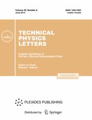
TECHNICAL PHYSICS LETTERS
Illuminating Pathways in Technical Physics ResearchTechnical Physics Letters, an esteemed publication of MAIK Nauka/Interperiodica/Springer, serves as a pivotal platform for advancing the field of physics and astronomy since its establishment in 1996. This journal, with its ISSN 1063-7850 and e-ISSN 1090-6533, not only publishes high-quality research articles but also encourages innovative discussions and practical applications within the diverse realms of technical physics. With a solid reputation reflected in its Q3 category ranking within the broader physics and astronomy landscape, it aims to connect researchers and professionals who seek to address contemporary challenges and encourage multidisciplinary approaches to complex scientific problems. Although the journal does not currently offer open access options, it remains accessible to a wide readership, fostering a collaborative spirit among the scientific community. As it converges its efforts from 1996 to 2024, Technical Physics Letters is poised to be an essential resource for anyone looking to stay at the forefront of physics research.
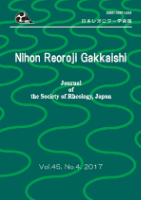
NIHON REOROJI GAKKAISHI
Fostering Knowledge in the Dynamic World of RheologyNIHON REOROJI GAKKAISHI is an esteemed journal published by the SOC RHEOLOGY, JAPAN, dedicated to advancing the field of rheology and its applications within condensed matter physics, materials science, and mechanical engineering. Since its inception in 1973, this journal has contributed significantly to the global discourse on fundamental and applied research, boasting a comprehensive coverage of innovative studies and breakthroughs up to 2024. Although it currently does not offer open access, it maintains a respected presence with a HIndex that reflects its historical impact and relevance. The journal is categorized in the Q3 quartile across several fields, indicating its essential contributions in these domains among a competitive cohort. With ranking positions of #454 in Mechanical Engineering and #334 in Condensed Matter Physics in Scopus, NIHON REOROJI GAKKAISHI remains an invaluable resource for researchers, professionals, and students aiming to explore and contribute to the ever-evolving landscape of materials science and engineering.
Journal of Mathematical and Fundamental Sciences
Innovating research for a brighter scientific future.Journal of Mathematical and Fundamental Sciences, published by INST TEKNOLOGI BANDUNG, serves as an essential platform for disseminating research findings in the diverse fields of mathematical and fundamental sciences. With an ISSN of 2337-5760 and recognized as an Open Access journal since 2013, this publication promotes global accessibility to innovative research, fostering collaboration among researchers, professionals, and students in Indonesia and beyond. The journal has demonstrated its influence within the academic community, evidenced by its classification in various quartiles for 2023, including Q3 in Agricultural and Biological Sciences and Mathematics, and Q4 rankings in several other disciplines. Furthermore, it holds respectable Scopus ranks across numerous categories, reflecting its commitment to quality and relevance in research contributions. With a focus on multidisciplinary studies, the Journal of Mathematical and Fundamental Sciences is dedicated to advancing knowledge and inspiring new ideas across a spectrum of scientific inquiries.
JOURNAL OF ENGINEERING MATHEMATICS
Fostering interdisciplinary dialogue for a better tomorrow.Welcome to the JOURNAL OF ENGINEERING MATHEMATICS, a leading scholarly platform published by Springer that has contributed significantly to the fields of engineering and mathematics since its inception in 1967. With an esteemed Q2 ranking in Engineering and a Q3 ranking in Mathematics according to the latest categorization, this journal is recognized for its rigorous peer-reviewed content that showcases innovative research across various mathematical and engineering disciplines. Researchers and professionals alike will find valuable insights within its pages, as it covers theoretical developments and practical applications that are pivotal for advancing knowledge in these critical areas. The journal maintains a robust presence in the global academic landscape, evidenced by its positioning in the 74th percentile for General Mathematics and 52nd percentile for General Engineering in Scopus rankings. As we look forward toward our convergence years spanning from 1967 to 2024, the JOURNAL OF ENGINEERING MATHEMATICS continues to invite submissions that foster interdisciplinary dialogue and exploration, making it an essential resource for students, academics, and industry experts.

Acta Technica Napocensis Series-Applied Mathematics Mechanics and Engineering
Elevating Knowledge in Mechanics and Engineering DisciplinesActa Technica Napocensis Series-Applied Mathematics Mechanics and Engineering is a leading journal published by the Technical University of Cluj-Napoca, specifically from the Faculty of Machine Building Department of Systems Engineering. With a noted commitment to advancing knowledge in the fields of applied mathematics, mechanics, and engineering, this journal serves as a platform for researchers, professionals, and students to disseminate innovative findings and methodologies. Though the journal does not operate under an open access model, it provides valuable content that contributes to the ongoing dialogue in engineering disciplines both regionally and globally. The journal's reputation is highlighted by its indexed presence in scholarly databases, ensuring visibility and accessibility to a wider academic audience. Based in Cluj-Napoca, Romania, Acta Technica Napocensis strives to foster collaboration among engineers and scientists while upholding rigorous academic standards.