
Advances in Concrete Construction
Scope & Guideline
Shaping the Landscape of Modern Construction
Introduction
Aims and Scopes
- Innovative Concrete Materials:
Research on novel concrete compositions, including those incorporating recycled materials, nanotechnology, and alternative aggregates to improve performance and sustainability. - Structural Performance and Analysis:
Studies focused on the behavior of concrete structures under various loading conditions, including seismic, thermal, and impact loads, to enhance structural integrity and safety. - Durability and Sustainability:
Exploration of the long-term performance of concrete in different environmental conditions, including the use of eco-friendly materials and methods to enhance durability and reduce environmental impact. - Advanced Testing and Characterization Methods:
Development and application of new testing methodologies and analytical techniques for the characterization of concrete materials' properties at micro and macro levels. - Smart and Sustainable Construction Practices:
Investigation into smart construction technologies and their integration with concrete applications, including automation, monitoring, and sustainable construction practices.
Trending and Emerging
- Nanotechnology in Concrete:
There is a growing focus on the use of nanomaterials, such as nano-silica and carbon nanotubes, to enhance the mechanical properties and durability of concrete. - Sustainable and Recycled Materials:
An increasing trend towards incorporating recycled materials and sustainable practices in concrete production is evident, reflecting the industry's shift towards eco-friendly solutions. - Smart Concrete and Structural Health Monitoring:
Research on smart materials that can monitor their own condition and adapt to environmental changes is gaining traction, emphasizing the importance of structural health monitoring. - Advanced Computational Methods:
The application of machine learning and artificial intelligence for predicting concrete properties and optimizing mix designs is emerging as a significant trend. - Durability Under Extreme Conditions:
Studies focusing on the performance of concrete materials under extreme environmental conditions, such as freeze-thaw cycles and high temperatures, are increasingly relevant.
Declining or Waning
- Traditional Concrete Mix Designs:
Research focusing on conventional concrete mix designs with limited innovation has decreased as the field shifts towards more sustainable and advanced materials. - Basic Mechanical Properties of Standard Concrete:
Studies that solely address the basic mechanical properties of standard concrete without integrating advanced materials or innovative applications are becoming less frequent. - Conventional Reinforcement Techniques:
Research centered on traditional reinforcement methods is declining as new materials and technologies, such as fiber-reinforced composites, gain prominence. - Generalized Theoretical Models:
The reliance on generalized theoretical models without practical validation or innovative enhancements is waning as researchers emphasize experimental and numerical studies. - Local Case Studies with Limited Scope:
Research focusing on localized case studies without broader implications or innovative applications is becoming less common, as the journal encourages more comprehensive and impactful studies.
Similar Journals
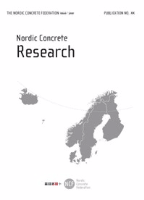
Nordic Concrete Research
Advancing Concrete Innovation for a Sustainable FutureNordic Concrete Research is a prestigious journal dedicated to advancing the field of concrete technology and engineering, published by SCIENDO. With an ISSN of 0800-6377 and an E-ISSN of 2545-2819, this journal provides a robust platform for scholars, researchers, and industry professionals to share innovative research findings and insights related to concrete materials, practices, and applications. Since becoming an Open Access publication in 2018, it has enhanced accessibility for global readers, promoting wider dissemination of knowledge and collaboration across disciplines. The journal's commitment to excellence in scholarly communication is evident as it invites contributions that address both fundamental and applied aspects of concrete science, supporting the continuous evolution of this essential material in sustainable construction practices. Situated in Warsaw, Poland, Nordic Concrete Research not only serves the Nordic region but also aims to impact the international concrete community.
Beton- und Stahlbetonbau
Innovating the Future of ConstructionBeton- und Stahlbetonbau is a renowned journal published by ERNST & SOHN, dedicated to advancing knowledge in the field of building and construction, particularly focusing on concrete and reinforced concrete engineering. Established in 1969, this peer-reviewed publication encompasses a broad range of topics, including innovative construction methods, structural analysis, and material performance, making it a crucial resource for researchers, scholars, and industry professionals alike. With an impact factor ranking it within the Q2 category in the Building and Construction field, this journal holds significant influence, evidenced by its Scopus rank of #112/223. Importantly, Beton- und Stahlbetonbau is committed to providing high-quality content that meets the academic rigor demanded by its audience, ensuring that readers remain at the forefront of technological advancements and research in concrete construction.
Structural Concrete
Advancing the Future of Concrete EngineeringStructural Concrete, published by ERNST & SOHN, is a premier journal dedicated to the field of Civil and Structural Engineering, focusing on innovative research and advancements in concrete materials and technologies. With an impressive impact factor and a consistent ranking in the Q1 category of both Building and Construction and Civil and Structural Engineering, the journal stands as a vital resource for researchers, professionals, and students alike. It is indexed with notable Scopus ranks, underscoring its significance within the academic community. The journal spans a comprehensive scope (from 2001 to the present) that encompasses diverse topics related to the behavior, design, and application of structural concrete. Although not an open access publication, it offers valuable insights and cutting-edge knowledge that contribute to the ongoing evolution of construction practices and materials science. Structural Concrete is an essential platform for sharing pioneering findings and fostering collaboration within this dynamic field.

Journal of Materials and Engineering Structures
Advancing Sustainable Engineering SolutionsJournal of Materials and Engineering Structures is a pioneering Open Access journal published by MOULOUD MAMMERI UNIVERSITY OF TIZI-OUZOU, dedicated to advancing the field of materials science and engineering. Since its inception in 2014, the journal has aimed to provide researchers, professionals, and students with a platform for sharing cutting-edge research and innovative applications in materials engineering and construction structures. Although the HIndex and Scopus ranking data are not specified, the journal plays a crucial role in disseminating knowledge that contributes to the development of sustainable and efficient engineering practices. With its commitment to accessibility and knowledge sharing in the heart of Algeria, the Journal of Materials and Engineering Structures is poised to make a significant impact on both local and global academic communities.

Innovative Infrastructure Solutions
Leading the Charge in Sustainable Engineering Practices.Innovative Infrastructure Solutions is a leading academic journal published by Springer International Publishing AG, focusing on pioneering advancements in the fields of building and construction, civil and structural engineering, and environmental engineering. With an impact factor that reflects its significant role in the academic community, this journal serves as a vital platform for researchers, professionals, and students to disseminate groundbreaking studies and novel methodologies spanning diverse engineering disciplines. Since its inception in 2016, Innovative Infrastructure Solutions has steadily positioned itself within the Q2 category across several fields, including geotechnical engineering and engineering geology, as recognized in the 2023 quartiles. This reputable journal, accessible from Switzerland, not only emphasizes collaboration and knowledge exchange but also empowers innovators in infrastructure development globally. Whether you're contributing to a research project or seeking the latest findings, Innovative Infrastructure Solutions remains essential for anyone invested in advancing sustainable infrastructure solutions.
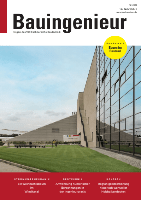
Bauingenieur
Bridging Theory and Practice in Engineering DiscoursesBauingenieur, an established journal in the field of Building and Construction and Civil and Structural Engineering, has been a significant platform for scholarly discourse since its inception in 1969. Published by VDI FACHMEDIEN GMBH & CO KG UNTERNEHMEN FACHINFORMATIONEN in Germany, this journal, available in both print (ISSN: 0005-6650) and electronic formats (E-ISSN: 1436-4867), serves as a vital resource for researchers, professionals, and students dedicated to advancing knowledge and practice in engineering. Although currently without open access options, Bauingenieur aspires to contribute to the academic community by presenting cutting-edge research, case studies, and technical reviews within the realms of construction and civil engineering. As evidenced by its categorizations in the 2023 Scopus rankings, where it has a Q4 designation in both relevant categories, it provides an essential resource for understanding current trends and challenges in the industry. The journal welcomes contributions that push the boundaries of knowledge and foster innovative solutions in the built environment.
PROCEEDINGS OF THE INSTITUTION OF CIVIL ENGINEERS-STRUCTURES AND BUILDINGS
Pioneering Research in Building and ConstructionPROCEEDINGS OF THE INSTITUTION OF CIVIL ENGINEERS-STRUCTURES AND BUILDINGS, published by Emerald Group Publishing Ltd, is a leading journal in the fields of Building and Construction and Civil and Structural Engineering. Since its inception in 1992, this journal has served as a vital platform for disseminating high-quality research and innovative practices within the industry, contributing to the advancement of engineering knowledge and its applications. With an impact factor reflective of its significant presence in the field, this publication ranks in the Q3 category, reinforcing its role as an essential resource for researchers and professionals alike, positioning it among the top journals in its category. As of 2023, it holds notable Scopus rankings, emphasizing its credibility and influence within both Building and Construction (Rank #88/223) and Civil and Structural Engineering (Rank #171/379). Researchers aiming to enhance their understanding of cutting-edge developments in civil engineering will find this journal indispensable in accessing a wealth of knowledge, methodologies, and case studies that shape the infrastructures of tomorrow.

Cement Wapno Beton
Pioneering Research in Building and Materials ScienceCement Wapno Beton is a renowned academic journal published by STOWARZYSZENIE PRODUCENTOW CEMENTU, focusing on the intricate fields of building and construction, as well as materials science. With the ISSN number 1425-8129, this publication has been committed to advancing knowledge and fostering innovation since its inception in 2007, and it will continue until 2024. The journal operates within a competitive landscape, as reflected in its 2023 Scopus rankings, placing it in the third quartile (Q3) in both Building and Construction and Materials Science categories. Although it currently does not offer open access options, Cement Wapno Beton remains an essential resource for researchers, professionals, and students seeking valuable insights into the latest developments and technologies in construction materials. Its scope encompasses a wide range of topics, including architectural advancements, sustainable building practices, and innovative material applications, making it an indispensable tool for those dedicated to the evolution of construction science.

Computers and Concrete
Exploring Interdisciplinary Frontiers in Civil EngineeringComputers and Concrete is a leading academic journal published by TECHNO-PRESS, focusing on the interdisciplinary field of computational mechanics as applied to civil engineering and concrete materials. With an impressive impact factor consistent with its status in its category, this journal holds a prestigious Q1 ranking in Computational Mechanics for 2023, being recognized as one of the top journals within this domain. Since its inception in 2006, Computers and Concrete has provided a vital platform for researchers and professionals to disseminate innovative findings, fostering collaboration and knowledge exchange among an engaged community. The journal is available in both print and digital formats, ensuring accessibility to a wide audience of academics and practitioners alike. By featuring high-quality research articles, review papers, and technical notes, this journal plays a crucial role in advancing the understanding and application of computational techniques in the field of concrete and structural engineering.
International Journal of Concrete Structures and Materials
Pioneering Research in Concrete Materials and ApplicationsThe International Journal of Concrete Structures and Materials, published by SPRINGER, is a premier open-access journal dedicated to the field of civil and structural engineering, with a strong emphasis on concrete materials and their diverse applications. With an ISSN of 1976-0485 and E-ISSN of 2234-1315, this journal has established itself as a crucial resource since its inception in 2012, addressing pressing challenges in structural integrity and durability. With a remarkable impact factor and ranking in the Q1 category for both Civil and Structural Engineering and Ocean Engineering, this journal has garnered recognition and respect, ranking #18 out of 105 in Ocean Engineering and #81 out of 379 in Civil and Structural Engineering as per Scopus metrics. The journal’s open-access policy enhances the dissemination of knowledge, making cutting-edge research readily available to a global audience. Aimed at researchers, practitioners, and students alike, the International Journal of Concrete Structures and Materials strives to promote advancements in concrete technology and foster innovative solutions for contemporary engineering problems.