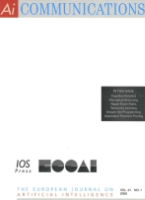
AI COMMUNICATIONS
Scope & Guideline
Illuminating the Pathways of AI Research.
Introduction
Aims and Scopes
- Artificial Intelligence Methodologies:
The journal focuses on the development and refinement of algorithms and frameworks, including machine learning, neural networks, and optimization techniques, to enhance the capabilities and efficiency of AI systems. - Multi-Agent Systems:
A significant area of research involves multi-agent systems, including collaboration, communication, and decision-making strategies, particularly in complex environments such as traffic management and autonomous systems. - Ethics and Responsible AI:
The journal addresses ethical considerations in AI, exploring frameworks for responsible AI development, including fairness, accountability, and transparency in algorithmic decision-making. - Application-Specific Innovations:
AI Communications showcases research focused on specific applications of AI, such as healthcare, transportation, and environmental monitoring, demonstrating the practical impact of AI technologies. - Theoretical Foundations:
The journal also emphasizes theoretical perspectives, including logic, reasoning, and argumentation frameworks, which underpin the development of robust AI systems.
Trending and Emerging
- Ethical AI and Fairness:
Recent publications show a growing concern for ethical implications and fairness in AI systems, addressing the need for accountability and transparency in AI decision-making processes. - Environmental Sustainability:
There is a rising interest in environmentally friendly AI applications, particularly in optimizing machine learning processes and developing sustainable practices in various industries. - Interdisciplinary Research:
Emerging themes highlight the integration of AI with other fields, such as healthcare, urban analytics, and social sciences, demonstrating the potential of AI to address complex societal challenges. - Advanced Machine Learning Techniques:
Recent papers increasingly focus on advanced machine learning techniques, including deep reinforcement learning and multi-objective optimization, showcasing innovative approaches to problem-solving. - Real-Time Data Processing and Analysis:
The trend towards real-time data processing in AI applications is evident, with research focusing on dynamic environments such as traffic systems and autonomous vehicles, enhancing responsiveness and efficiency.
Declining or Waning
- Historical Perspectives on AI:
Research that delves into historical analyses and future predictions of AI has become less prominent, indicating a potential shift towards more practical and application-oriented studies. - Traditional Rule-Based AI Systems:
There appears to be a waning interest in traditional rule-based systems in favor of more dynamic and adaptive methodologies, such as deep learning and reinforcement learning approaches. - Basic Theoretical Concepts:
While foundational theories remain important, the emphasis on basic theoretical concepts without direct application has diminished, as researchers increasingly seek to connect theory with real-world applications. - Narrow AI Focus:
There is a noticeable decline in studies that focus exclusively on narrow AI applications, as the field moves towards more integrative and holistic approaches that combine multiple AI techniques.
Similar Journals
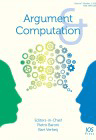
Argument & Computation
Exploring the Intersection of Logic and TechnologyArgument & Computation is an esteemed academic journal dedicated to the interdisciplinary exploration of formal structures of argumentation and their computational applications. Published by IOS PRESS based in the United Kingdom, this Open Access journal, since its inception in 2010 and particularly impactful since 2016, serves as a pivotal platform for researchers and practitioners seeking to advance the fields of Artificial Intelligence, Computational Mathematics, Computer Science Applications, and Linguistics. With its current categorization in Q3 in Artificial Intelligence, Q2 in Computational Mathematics, and Q1 in Linguistics and Language for 2023, the journal maintains a commendable position within the scholarly community, evidenced by its high Scopus rankings, notably in Linguistics and Language where it ranks in the 92nd percentile. By fostering innovative research and discussions, Argument & Computation plays an essential role in bridging theoretical insights with computational practices, making it indispensable for academics, students, and professionals invested in the evolution of argumentation frameworks and their implications in technology and society.
International Journal of Computational Intelligence and Applications
Connecting Theory and Practice in Computational IntelligenceThe International Journal of Computational Intelligence and Applications, published by WORLD SCIENTIFIC PUBL CO PTE LTD, is a prominent journal dedicated to advancing the field of computational intelligence and its applications, with a keen focus on innovative methodologies and theoretical frameworks. With an impact factor reflective of its growing influence, the journal is classified in Q3 for Computer Science Applications and holds Q4 standings in both Software and Theoretical Computer Science as of 2023, showcasing its critical niche within these disciplines. Established in 2008 and converging through 2024, this journal serves as a vital resource for researchers, professionals, and students in Singapore and beyond, promoting scholarly communication and collaboration. Although it is a non-open access journal, it still provides a wealth of information that is readily accessible through institutional subscriptions and library resources. Researchers contributing to the journal benefit from its wide reach and dedicated readership, making it a substantial platform to disseminate groundbreaking research and insights.
Intelligent Decision Technologies-Netherlands
Pioneering Research at the Intersection of Technology and Decision Making.Intelligent Decision Technologies-Netherlands, published by IOS PRESS, is an emerging journal dedicated to the dynamic fields of Artificial Intelligence, Computer Vision, and Human-Computer Interaction. Established in 2007 and continuing through 2024, this journal aims to foster interdisciplinary research and innovation by providing a platform for cutting-edge studies and applications of intelligent systems. While its current impact factor reflects a growing influence within the scientific community, with quartile rankings ranging from Q3 to Q4 in various pertinent disciplines, Intelligent Decision Technologies plays a pivotal role in shaping future research directions. Although the journal does not offer open access, it remains accessible across academic institutions, encouraging researchers, professionals, and students to contribute to and engage with the latest advancements in decision technologies. With a commitment to quality and relevance, this journal seeks to advance knowledge and enhance the understanding of intelligent systems in today's rapidly evolving technological landscape.

Journal of Advanced Computational Intelligence and Intelligent Informatics
Advancing Knowledge in Computational IntelligenceThe Journal of Advanced Computational Intelligence and Intelligent Informatics, published by FUJI TECHNOLOGY PRESS LTD, stands as a pivotal platform in the fields of Artificial Intelligence, Computer Vision, and Human-Computer Interaction. Established in 1997, this Open Access journal has been providing accessible insights into the latest advancements in computational intelligence and informatics since 2007. With its ISSN 1343-0130 and E-ISSN 1883-8014, this journal invites a diverse readership, including researchers, professionals, and students eager to explore innovative methodologies and applications. Despite its current Q4 ranking in the relevant categories, the journal remains committed to contributing valuable knowledge to the academic community and enhancing the global discourse in computational technologies. With its focus on fostering communication and collaboration among scholars, the journal plays an essential role in driving forward the understanding of intelligent systems and their applications in various domains.
MACHINE LEARNING
Exploring Pioneering Research in Machine LearningMACHINE LEARNING is a premier academic journal published by SPRINGER, dedicated to advancing the field of artificial intelligence and software engineering. Established in 1986, this journal has consistently showcased pioneering research and innovative methodologies that facilitate the understanding and application of machine learning techniques across various domains. With an impressive impact factor reflecting its high-quality publications, it is classified within the top quartile (Q1) in both Artificial Intelligence and Software categories as of 2023, underscoring its critical role in these fields. The journal boasts significant Scopus rankings, placing it at the 45th and 54th positions, respectively, in Computer Science - Software and Computer Science - Artificial Intelligence, further validating its stature as a vital resource for researchers, professionals, and students alike. While not an open-access journal, MACHINE LEARNING ensures that its comprehensive peer-reviewed articles are widely circulated, fostering academic dialogue and innovation. The journal continues to be a go-to platform for cutting-edge research, providing invaluable insights and contributions that drive the future of machine learning.
NEURAL COMPUTING & APPLICATIONS
Charting New Territories in Neural Computing ResearchNEURAL COMPUTING & APPLICATIONS is a premier journal dedicated to the burgeoning fields of Artificial Intelligence and Software Engineering, published by Springer London Ltd. Established in 1993, the journal serves as a pivotal platform for disseminating cutting-edge research and innovative applications in neural computing, covering a broad range of topics from algorithm development to real-world applications. With its impressive categorization in the 2023 Journal Quartiles—ranging Q2 in Artificial Intelligence and Q1 in Software—it stands out in its discipline, ranking 42nd out of 407 in Computer Science Software and 50th out of 350 in Computer Science Artificial Intelligence, reflecting its significant impact in the academic community. Although not an open access journal, it provides vital access to significant findings and methodologies that drive advancements in technology. Researchers, professionals, and students looking to stay abreast of the most relevant and impactful developments in these fields will find NEURAL COMPUTING & APPLICATIONS an indispensable resource.

Frontiers in Artificial Intelligence
Empowering Innovation in AI ResearchFrontiers in Artificial Intelligence, published by FRONTIERS MEDIA SA, is a pioneering open-access journal that commenced in 2018, dedicated to advancing the multifaceted field of artificial intelligence. With an impressive Q2 ranking in the category of Artificial Intelligence, it occupies a significant position within the academic community, offering a platform for high-quality, peer-reviewed research. The journal's comprehensive scope encompasses a variety of subfields, including machine learning, robotics, and human-computer interaction, making it an invaluable resource for researchers, professionals, and students alike. As an open-access journal since 2019, it ensures that cutting-edge research is readily available to a global audience, facilitating knowledge sharing and collaboration. With its headquarters in Switzerland and a commitment to scholarly excellence, Frontiers in Artificial Intelligence is at the forefront of the scientific discourse, empowering the next generation of innovations in AI.

International Journal of Internet Protocol Technology
Navigating the Evolving Landscape of Internet ProtocolsThe International Journal of Internet Protocol Technology (ISSN: 1743-8209; E-ISSN: 1743-8217), published by InderScience Enterprises Ltd, is an esteemed periodical dedicated to advancing research in the realms of internet protocols and communication technologies. Established in 2005 and headquartered in the United Kingdom, this journal serves as a vital platform for scholars and professionals, providing insights into innovative approaches and emerging trends within the field. With a 2023 Scopus ranking placing it in the Q4 category for Computer Networks and Communications, it continues to contribute to an evolving digital ecosystem. Although the journal does not offer open access, its articles are accessible through institutional subscriptions and provide a wealth of knowledge that aids the understanding and development of internet protocols. Researchers, practitioners, and students will find a range of high-quality studies that explore critical issues and technological advancements shaping global digital communications.

INTERNATIONAL JOURNAL OF UNCERTAINTY FUZZINESS AND KNOWLEDGE-BASED SYSTEMS
Bridging the gap between theory and application in fuzzy logic.Welcome to the INTERNATIONAL JOURNAL OF UNCERTAINTY FUZZINESS AND KNOWLEDGE-BASED SYSTEMS, a prestigious publication dedicated to advancing the fields of artificial intelligence, control systems engineering, information systems, and software research. Published by WORLD SCIENTIFIC PUBL CO PTE LTD in Singapore, this journal serves as a vital forum for the dissemination of innovative theories, methodologies, and applications rooted in the coexistence of uncertainty and fuzziness within knowledge-based systems. With its ISSN 0218-4885 and E-ISSN 1793-6411, the journal consistently ranks in the Q3 category across various Scopus categories, including Control and Systems Engineering and Information Systems, reflecting its influential position in the academic community. Researchers and practitioners alike will find valuable insights and the latest trends through its comprehensive articles, making this journal an essential resource for those seeking to navigate the complexities of this evolving field.
Informatics-Basel
Connecting Scholars, Shaping the Future of InformaticsInformatics-Basel is a leading international, peer-reviewed journal published by MDPI that has been at the forefront of disseminating high-quality research in the field of informatics since its establishment in 2014. Based in Switzerland, this Open Access journal strives to provide a platform for innovative studies across various domains, including Communication, Computer Networks and Communications, and Human-Computer Interaction, demonstrating its strong impact within these fields with impressive rankings: Q1 in Communication and Q2 in both Computer Networks and Communications and Human-Computer Interaction. Researchers and scholars are encouraged to contribute to the advancing dialogue on critical issues and emerging technologies, as evidenced by its esteemed Scopus rankings, placing it in the top percentiles of its respective categories. With its commitment to elevating knowledge accessibility, Informatics-Basel has become an essential resource for the academic community, stimulating collaboration and the sharing of ideas from 2014 to 2024 and beyond.