
AIP Advances
Scope & Guideline
Bridging the Gap in Scientific Communication.
Introduction
Aims and Scopes
- Applied Physics:
The journal covers a wide range of topics in applied physics, including materials science, nanotechnology, and photonics, highlighting the significance of fundamental physics in practical applications. - Interdisciplinary Research:
AIP Advances promotes interdisciplinary studies that integrate concepts from physics, engineering, chemistry, and biology, fostering collaboration among diverse scientific communities. - Innovative Methodologies:
The journal emphasizes the development and application of novel methodologies, including computational modeling, machine learning, and advanced experimental techniques, to solve complex scientific problems. - Materials Characterization:
Research focusing on the characterization of materials, including their structural, electronic, and magnetic properties, is a core area, contributing to the understanding of material behavior under various conditions. - Energy Conversion and Storage:
The journal also addresses topics related to energy conversion and storage technologies, including solar cells, batteries, and thermoelectric materials, reflecting the growing importance of sustainable energy solutions.
Trending and Emerging
- Quantum Technologies:
There has been a significant increase in research focusing on quantum technologies, including quantum computing, quantum sensors, and quantum information systems, as the field gains momentum in both academic and commercial spheres. - Machine Learning and AI Applications:
The integration of machine learning and artificial intelligence into experimental and theoretical research is rapidly growing, with applications ranging from materials discovery to predictive modeling in various scientific domains. - Nanomaterials and Nanotechnology:
Research on nanomaterials continues to flourish, with an emphasis on their unique properties and applications in electronics, medicine, and energy, driving innovation in multiple fields. - Sustainable Energy Solutions:
There is a pronounced focus on sustainable energy technologies, including advanced solar cells, energy storage systems, and thermoelectric materials, reflecting global efforts to address climate change. - Biomaterials and Bioengineering:
Emerging research in biomaterials and bioengineering, particularly in relation to drug delivery systems and tissue engineering, is gaining traction, showcasing the intersection of physics with life sciences.
Declining or Waning
- Traditional Energy Sources:
Research focused on traditional energy sources, such as fossil fuels, has decreased as the scientific community pivots towards renewable energy technologies and sustainability. - Basic Theoretical Physics:
There has been a notable decline in purely theoretical physics papers, particularly those lacking experimental validation or practical applications, as the journal increasingly favors studies with tangible outcomes. - Conventional Materials Science:
Topics related to conventional materials without innovative modifications or applications have seen reduced interest, reflecting a shift towards advanced materials and nanotechnology.
Similar Journals
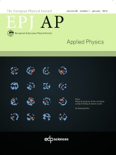
EUROPEAN PHYSICAL JOURNAL-APPLIED PHYSICS
Shaping the Future of Applied Physics ResearchEUROPEAN PHYSICAL JOURNAL-APPLIED PHYSICS, published by EDP SCIENCES S A in France, serves as a vital platform for the dissemination of cutting-edge research in the fields of condensed matter physics, electronic, optical and magnetic materials, and instrumentation. With an ISSN of 1286-0042 and E-ISSN of 1286-0050, this journal has been a valuable resource for researchers since its inception in 1998, aiming to foster innovation and dialogue among professionals and academics alike. Featuring an impact factor that reflects its growing influence, the journal is currently ranked in the Q4 quartile for several related categories in 2023, underscoring its ongoing contributions to the scientific community despite its relatively competitive positioning. Access to the journal is available through various Open Access options, ensuring that pioneering research is readily accessible to all. As it continues to evolve towards its 2024 objectives, EUROPEAN PHYSICAL JOURNAL-APPLIED PHYSICS remains dedicated to advancing knowledge and facilitating collaboration in applied physics, making it an essential resource for students, researchers, and professionals dedicated to exploring the forefront of physical sciences.
Chinese Physics B
Exploring the depths of physics with open access insights.Chinese Physics B, published by IOP Publishing Ltd, is a distinguished journal in the field of Physics and Astronomy, offering a platform for researchers to disseminate cutting-edge studies and advancements. With an ISSN of 1674-1056 and an E-ISSN of 2058-3834, this journal emphasizes open access, ensuring that groundbreaking research is readily available to a global audience. Reflecting its commitment to quality, Chinese Physics B is categorized in the Q3 quartile (2023) in its subject area and ranks 118 out of 243 among its peers in general physics and astronomy according to Scopus, placing it in the 51st percentile. Publishing since 2008, the journal not only maintains a rigorous peer-review process but also aims to foster collaboration among academics in various physics disciplines. With its base in the United Kingdom, Chinese Physics B remains a crucial resource for those seeking to stay abreast of developments in the diverse world of physics.
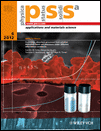
PHYSICA STATUS SOLIDI A-APPLICATIONS AND MATERIALS SCIENCE
Shaping the future of engineering and materials research.PHYSICA STATUS SOLIDI A-APPLICATIONS AND MATERIALS SCIENCE, published by WILEY-V C H VERLAG GMBH, stands as a prominent journal in the fields of condensed matter physics, materials science, and engineering. With an ISSN of 1862-6300 and E-ISSN 1862-6319, this journal has been actively contributing to scientific discourse since its inception. The journal currently holds a respectable Q2 ranking across several categories including Electrical and Electronic Engineering and Materials Chemistry, demonstrating its significance in advancing research and development within these domains. Although it does not offer open access, the journal ensures high-quality peer-reviewed content that is critical for researchers and professionals aiming to stay at the forefront of materials science innovations. The journal’s convergence years, extending from 2005 to 2024, reflects its ongoing commitment to publishing impactful research. By facilitating discussions on applications and advances in materials science, PHYSICA STATUS SOLIDI A continues to be an essential resource for those striving to contribute to this dynamic field.

ACTA PHYSICA POLONICA A
Pioneering Insights in the Evolving World of PhysicsACTA PHYSICA POLONICA A is a distinguished peer-reviewed journal published by the Polish Academy of Sciences Institute of Physics, offering a platform for disseminating cutting-edge research in the field of physics and astronomy. With an ISSN of 0587-4246 and an E-ISSN of 1898-794X, this journal has been a staple for scholars since its inception, converging its publication years from 1996 to 2024. Despite its current Q4 classification in the Physics and Astronomy (miscellaneous) category, ACTA PHYSICA POLONICA A provides valuable insights and breakthroughs addressing various aspects of general physics. Researchers, professionals, and students will find a wealth of knowledge within its pages, even as it operates in an evolving academic landscape. While subscription options exist, the journal aims to foster collaboration and knowledge exchange in the physics community, making it a vital resource for those seeking to stay at the forefront of research advancements.
Papers in Physics
Exploring innovative research in the heart of physics.Papers in Physics is a reputable, open-access journal dedicated to advancing knowledge in the diverse fields of physics, materials science, and theoretical chemistry. Published by the Instituto de Física Líquidos y Sistemas Biológicos in Argentina, this journal has been disseminating groundbreaking research since 2009 and has quickly established its place within the academic community. With a consistent commitment to accessibility, it serves as a vital resource for professionals, researchers, and students alike, enriching the discourse with innovative studies and findings. As recognized by its 2023 Scopus rankings, the journal occupies Q3 quartile positions across several categories, including Materials Science and Physics, illustrating its relevance and impact in the scientific landscape. The journal's breadth of research encompasses interdisciplinary approaches, fostering collaboration among scholars from various domains. Whether you are seeking to publish your own research or exploring the latest developments in physics and its related fields, Papers in Physics stands as a critical platform for the dissemination of knowledge and the advancement of science.
JOURNAL OF PHYSICS-CONDENSED MATTER
Innovating Research for a Solid-State Future.JOURNAL OF PHYSICS-CONDENSED MATTER, published by IOP Publishing Ltd, stands as a premier platform for the dissemination of impactful research in the fields of condensed matter physics and materials science. Since its inception in 1989, this journal has successfully bridged the gap between fundamental and applied research, delivering cutting-edge findings pertinent to both the academic community and industry professionals. Ranking in the Q2 category for both Condensed Matter Physics and Materials Science, it holds a respectable position within the scientific community, as evidenced by its Scopus rankings. With a commitment to fostering innovative research and promoting open dialogue, the journal offers a substantial collection of articles that contribute to the evolving landscape of materials science and physics. Researchers and students are encouraged to engage with the journal’s rich content, which not only enhances their academic pursuits but also plays a crucial role in advancing technologies based on solid-state materials.

Journal of Advanced Dielectrics
Elevating the Standards of Dielectric and Material ResearchThe Journal of Advanced Dielectrics, published by World Scientific Publishing Co Pte Ltd, is a pivotal open-access platform since 2014 dedicated to advancing research in the fields of dielectrics, ceramics, and composites. Based in Singapore, this journal aims to bridge the gap between theoretical developments and practical applications in Electrical and Electronic Engineering, Condensed Matter Physics, and Electronic, Optical, and Magnetic Materials. With an impressive classification in the 2023 Quartile Rankings indicating its significance within its categories, and notable Scopus Rankings that highlight its impact and relevance, this journal serves as a vital resource for scholars and professionals committed to cutting-edge research and innovation. As it continues to flourish through the converging years from 2015 to 2024, the Journal of Advanced Dielectrics stands as an essential conduit for the dissemination of knowledge in advanced material sciences, making it an indispensable asset for today's research community.
CHEMICAL PHYSICS LETTERS
Unveiling Breakthroughs in Physical Chemistry ResearchCHEMICAL PHYSICS LETTERS, published by Elsevier, is a prestigious journal that has been at the forefront of advancing knowledge in the fields of physical and theoretical chemistry and physics since its inception in 1967. With an impressive impact factor reflective of its high-quality research output, this journal holds Q2 quartile rankings in both the Physical and Theoretical Chemistry and Physics and Astronomy categories for 2023. It is recognized as a key platform for disseminating groundbreaking findings, with Scopus rankings placing it within the top 76th and 66th percentiles in its respective categories. Researchers and professionals benefit from its insightful contributions and rigorous peer-review process, making it an essential resource for those engaged in cutting-edge chemical physics studies. Although the journal is not open access, it remains accessible through various institutional subscriptions, ensuring that a wide audience can explore its wealth of knowledge. Located in Amsterdam, Netherlands, the journal continues to drive innovation and collaboration across diverse scientific disciplines.
ACS Nano
Driving Discovery in the World of Nanoscale ResearchACS Nano, published by the American Chemical Society, stands as a prestigious journal in the domains of Engineering, Materials Science, Nanoscience, and Physics. With an exceptional impact factor reflecting its standing as a Q1 category journal in multiple disciplines, it plays a pivotal role in disseminating groundbreaking research from 2007 to 2024. Known for its rigorous peer-review process, the journal boasts impressive Scopus rankings—positioned at #1 in General Engineering and #6 in General Physics and Astronomy—placing it among the top 1% of journals in its field. Although it is not an open-access publication, ACS Nano provides a wealth of knowledge that is essential for advancing the development of nanotechnology and its applications across various industries. Researchers, professionals, and students alike will find in its pages a trove of innovative studies and insights that drive the future of materials science and engineering.
EUROPEAN JOURNAL OF PHYSICS
Unveiling Innovative Research in PhysicsEuropean Journal of Physics, published by IOP Publishing Ltd, is a premier international journal serving the diverse field of physics and astronomy. With a commitment to advancing scientific knowledge since its inception in 1980, the journal provides a platform for original research articles, reviews, and topical discussions in various domains, including theoretical and experimental physics. Operating out of the United Kingdom, the journal has achieved a commendable Q2 ranking in the Physics and Astronomy (miscellaneous) category for 2023, reflecting its robust influence in the academic community, alongside a notable Scopus Rank that underscores its relevance in both the Social Sciences and General Physics and Astronomy fields. Although it does not currently offer open access, the journal's traditional publication model ensures rigorous peer review, maintaining high scholarly standards that are imperative for researchers, professionals, and students striving to stay ahead in their respective fields. Don't miss the opportunity to engage with cutting-edge research and contribute to the ongoing dialogue in physics by accessing this vital resource.