Alcoholism Treatment Quarterly
Scope & Guideline
Advancing the Science of Alcoholism Treatment
Introduction
Aims and Scopes
- Research on Treatment Modalities:
Explores various therapeutic approaches, including pharmacological, psychological, and social interventions aimed at treating alcohol use disorders. - Qualitative and Quantitative Studies:
Utilizes both qualitative and quantitative research methodologies to understand the complexities of alcohol use and recovery. - Focus on Recovery Capital:
Investigates the concept of recovery capital and its role in supporting individuals in their recovery journey. - Impact of Social and Environmental Factors:
Examines how social networks, familial relationships, and environmental contexts influence substance use behaviors and recovery outcomes. - Interdisciplinary Perspectives:
Encourages contributions from diverse fields such as psychology, medicine, social work, and public health to foster comprehensive understanding and treatment of alcohol use disorders. - Community and Peer Support Models:
Highlights the importance of community-based recovery support systems, including peer-led initiatives and their effectiveness in promoting sustained recovery.
Trending and Emerging
- Digital and Online Interventions:
An increasing number of studies focus on web-based and digital interventions aimed at modifying drinking behaviors, particularly in response to the COVID-19 pandemic. - Social and Environmental Influences:
Research is increasingly examining the impact of social networks, community resources, and environmental factors on alcohol use and recovery, emphasizing the need for holistic approaches. - Youth and Adolescent Substance Use:
There is a growing emphasis on understanding alcohol use among youth and adolescents, particularly regarding peer influence, genetic risk, and preventive measures. - Intersectionality in Addiction Studies:
Emerging research highlights the intersection of various identities (e.g., racial, gender, socioeconomic) in understanding alcohol use disorders and recovery experiences. - Focus on Recovery-Oriented Systems of Care:
An increasing trend toward developing recovery-oriented education and treatment systems that prioritize long-term recovery support and community integration. - Mental Health and Substance Use Disorder Co-Morbidity:
There is a rising interest in understanding the interplay between mental health issues and substance use disorders, particularly in treatment settings.
Declining or Waning
- Traditional Treatment Approaches:
There has been a noticeable decline in research focused solely on traditional treatment methods, such as inpatient rehabilitation, as newer, more integrative approaches gain attention. - General Population Studies:
Research centered on alcohol use within general populations is becoming less frequent, with more emphasis being placed on specific subpopulations (e.g., youth, minorities) and their unique challenges. - Single-Factor Analysis of Substance Use:
Studies analyzing alcohol use disorders through a single lens (e.g., solely biological or psychological factors) are less common, as interdisciplinary approaches become more prominent. - Stigmatization of Alcohol Use:
While still relevant, the focus on stigma associated with alcohol use disorders appears to be waning, possibly due to the increasing recognition of recovery narratives that highlight resilience and empowerment. - Longitudinal Studies of Recovery:
The number of longitudinal studies examining long-term recovery outcomes has decreased, as more immediate intervention studies and pilot programs take precedence.
Similar Journals

Substance Abuse and Rehabilitation
Fostering collaboration for effective treatment strategies.Substance Abuse and Rehabilitation, published by DOVE MEDICAL PRESS LTD, is a leading open-access journal dedicated to the study and treatment of substance abuse and related rehabilitation practices. With its ISSN 1179-8467, this journal provides a vital platform for researchers, clinicians, and students to disseminate their findings and insights in a field increasingly relevant to public health. Since becoming open access in 2010, the journal has enhanced its reach, allowing for a broader audience to engage with cutting-edge research and reviews that address the complexities of substance abuse disorders. The journal aims to foster innovation and interdisciplinary collaboration by publishing high-quality peer-reviewed articles that cover a wide range of topics, including addiction therapy, policy implications, and the social determinants of substance use. As a vital resource within the realm of addiction research, Substance Abuse and Rehabilitation plays a crucial role in driving forward knowledge and practices that can improve outcomes for individuals and communities affected by substance use issues.
ADDICTIVE BEHAVIORS
Bridging Research and Practice in Addiction StudiesADDICTIVE BEHAVIORS is a prestigious journal published by PERGAMON-ELSEVIER SCIENCE LTD, specializing in the critical examination and exploration of addiction-related issues across diverse fields including Clinical Psychology, Psychiatry and Mental Health, and Toxicology. With a robust history dating back to 1975 and convergence extending to 2024, the journal is esteemed for its rigorous peer-reviewed research that contributes significantly to understanding addiction phenomena. Ranked in the Q1 category for its focus areas, it stands out within the academic community, evidenced by its impressive Scopus rankings—25th in Clinical Psychology and 14th in Toxicology—placing it in the top tier of its disciplines. This journal offers valuable insights into addiction behaviors, treatment methodologies, and public health implications, making it an essential resource for researchers, practitioners, and students seeking to advance their knowledge and impact the field. Although not Open Access, it provides vital access options for institutions and individuals invested in addiction studies.
Journal of Studies on Alcohol and Drugs
Exploring the science behind addiction and recovery.The Journal of Studies on Alcohol and Drugs is a premier academic journal dedicated to advancing the understanding of alcohol and drug use, its effects, and its societal implications. Published by ALCOHOL RES DOCUMENTATION INC at the Center for Alcohol Studies, Rutgers University, this journal features comprehensive research that spans the disciplines of health, psychiatry, mental health, and toxicology. With its Q1 ranking in Health (Social Science) and Q2 ranking in Psychiatry and Mental Health, the journal plays a vital role in disseminating high-impact research that informs policy, prevention, and treatment strategies in addiction and substance use. The journal contributes significantly to the field, as evidenced by its solid Scopus rankings and engagement with contemporary issues, making it an essential resource for researchers, practitioners, and students. Although it does not offer open access, the journal's commitment to rigorous peer review and scholarship ensures that it remains at the forefront of research on alcohol and drugs through its converged publication timeline from 2007 to 2024.
ADDICTION RESEARCH & THEORY
Fostering Knowledge, Enhancing Recovery.ADDICTION RESEARCH & THEORY, published by Taylor & Francis Ltd, is a leading academic journal dedicated to advancing the understanding of addiction through innovative research and theoretical frameworks. With its ISSN 1606-6359 and E-ISSN 1476-7392, this journal serves a diverse audience, including researchers, healthcare professionals, and students in the field of medicine. The journal, classified in the Q2 category of Medicine (Miscellaneous) as of 2023, and ranking in the 76th percentile in Scopus, demonstrates a robust impact within the community, reflecting its commitment to high-quality research and discourse. With publications spanning from 1993 to 2024, ADDICTION RESEARCH & THEORY aims to provide a comprehensive platform for the latest empirical studies, critical reviews, and theoretical discussions on addiction, making it essential for anyone engaged in this vital area of health and social issues. Although it does not currently offer Open Access options, the journal remains a critical resource for scholarly communication, contributing significantly to the fields of addiction medicine and psychiatry.
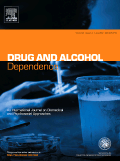
DRUG AND ALCOHOL DEPENDENCE
Advancing knowledge on substance use disorders.Drug and Alcohol Dependence is a premier journal published by Elsevier Ireland Ltd, dedicated to the rigorous exploration and analysis of substance use disorders, including drug and alcohol dependencies. With its established history since 1975 and a remarkable convergence of research extending to 2024, the journal holds a prestigious position within the academic community, evidenced by its Q1 ranking in multiple categories, including Pharmacology, Psychiatry and Mental Health, and Toxicology for 2023. It ranks impressively among its peers, underscored by Scopus rankings of #46, #99, and #27 in key fields related to medical pharmacology and toxicology. As a non-open access title, it caters to a global readership of researchers, professionals, and students, providing them with peer-reviewed insights into critical developments and innovative methodologies in the field. The journal’s commitment to advancing knowledge and understanding of drug and alcohol dependence is essential for addressing the global challenges posed by substance use, making it a valuable resource for all stakeholders in public health and clinical practice.
DRUG AND ALCOHOL REVIEW
Exploring the complexities of drug and alcohol research.DRUG AND ALCOHOL REVIEW, published by Wiley, is a leading journal dedicated to advancing the scholarship in the fields of drug and alcohol research. Since its inception in 1989, this esteemed publication has provided a critical platform for the dissemination of innovative research findings, reviews, and theoretical papers, addressing pressing issues in substance use and addiction. With an impact factor that places it in the Q1 category in both Health (social science) and Medicine (miscellaneous), it ranks #78 out of 371 in the Scopus index for Health and #115 out of 398 in Medicine, reflecting its significant influence and high citation rates among scholars. The journal is committed to fostering a multidisciplinary approach, integrating perspectives from psychology, sociology, public health, and medicine, to inform policy and practice. Accessible to researchers and practitioners alike, *DRUG AND ALCOHOL REVIEW* serves as an essential resource for anyone invested in understanding and addressing the complexities of drug and alcohol use in society.
JOURNAL OF ADDICTIONS & OFFENDER COUNSELING
Advancing Knowledge at the Intersection of Psychology and LawJOURNAL OF ADDICTIONS & OFFENDER COUNSELING, published by Wiley, serves as a critical platform for interdisciplinary research at the intersection of psychology, law, and social issues related to addictions and criminal behavior. With a commitment to excellence since its inception in 1990, this journal boasts an impressive Scopus rank within the top quartiles of its fields—ranking Q2 in Law and Q3 in both Clinical and Social Psychology as of 2023. While currently not designated as an Open Access publication, it provides a wealth of peer-reviewed articles that promote the understanding and counseling of offenders, making it invaluable for researchers, practitioners, and students alike. The journal addresses critical contemporary issues, fostering discussions that influence policy and therapeutic practices, ensuring its vital role in advancing knowledge and effective interventions in addiction and offender counseling.

SUBSTANCE USE & MISUSE
Advancing knowledge on substance use and its societal impact.SUBSTANCE USE & MISUSE, published by Taylor & Francis Inc, is an esteemed academic journal dedicated to the multifaceted study of substance use and its implications on health and society. With a notable impact factor and categorized in the Q2 quartile across multiple fields—including Health (Social Science), Medicine (Miscellaneous), Psychiatry and Mental Health, as well as Public Health—this journal serves as an essential platform for researchers, professionals, and students alike. Spanning from 1966 to 2024, it provides a rich archive of peer-reviewed articles that explore current trends, innovative research, and evidence-based practices in the management and understanding of substance use. The journal offers various access options, catering to the diverse needs of its audience and affirming its commitment to fostering scholarly discourse in the United Kingdom and beyond. By engaging with this journal, readers can enhance their understanding of the complexities surrounding substance use, making it a crucial resource for advancing knowledge and informing policy in this critical area of public health.
ALCOHOL
Unraveling the Behavioral and Biochemical Effects of Alcohol.ALCOHOL, published by Elsevier Science Inc, is a leading journal in the interdisciplinary field of alcohol research, with a focus on the behavioral, biochemical, and social science aspects of alcohol consumption and its effects on health. Established in 1984, this journal provides a vital platform for disseminating comprehensive and innovative research findings, encompassing topics that range from toxicology and neurology to biochemistry and the social impacts of alcohol use. With an impact factor reflecting robust engagement, ALCOHOL maintains notable quartile rankings in various categories, including Q2 in Health (Social Science) and Medicine (Miscellaneous), indicating its significance within the academic community. Researchers and professionals will find ALCOHOL invaluable for staying abreast of cutting-edge studies and advancing knowledge in this critical area, fostering an understanding of the complex relationship between alcohol and health outcomes.

Journal of Social Work Practice in the Addictions
Bridging research and practice for impactful change.The Journal of Social Work Practice in the Addictions is a pivotal publication in the field of social work, dedicated to addressing the multifaceted challenges of addiction through rigorous research and practice. Published by Routledge Journals, Taylor & Francis Ltd, this journal has been a valuable resource since its inception in 2001 and continues to provide vital insights as it converges towards 2024. With a focus on empirical studies, theoretical advancements, and innovative practice approaches, it serves professionals and researchers alike who are engaged in the health and social sciences. Holding a respectable Q3 quartile ranking in both Health (Social Science) and Rehabilitation and a Q4 ranking in Social Work, it emphasizes the importance of interdisciplinary collaboration in tackling issues of addiction. The journal does not currently offer open access, ensuring exclusive dissemination to its dedicated readership, which includes practitioners, scholars, and students committed to improving outcomes for individuals affected by substance use disorders. As an essential platform within the community, it fosters knowledge exchange and supports evidence-based practice, thereby enhancing the field’s collective understanding of addiction-related challenges.