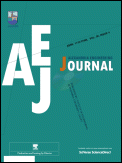
Alexandria Engineering Journal
Scope & Guideline
Advancing engineering knowledge without barriers.
Introduction
Aims and Scopes
- Engineering Innovations and Applications:
The journal publishes research that presents novel engineering designs, methodologies, and applications across various fields, including mechanical, civil, electrical, and environmental engineering. - Computational Modeling and Simulation:
A significant focus is placed on computational studies aimed at solving complex engineering problems, utilizing techniques such as finite element analysis (FEA), computational fluid dynamics (CFD), and numerical methods. - Sustainable Engineering Practices:
The journal emphasizes research that contributes to sustainability, including studies on renewable energy, waste management, and the development of eco-friendly materials. - Nanotechnology and Materials Science:
Research on the application of nanomaterials and advanced materials in engineering, including their synthesis, characterization, and integration into engineering solutions. - Health and Safety Engineering:
Papers that address health, safety, and environmental concerns related to engineering practices are also a staple, ensuring that the engineering community is informed about best practices. - Interdisciplinary Approaches:
The journal encourages interdisciplinary research that combines principles from various engineering domains with fields such as biology, chemistry, and materials science to address complex engineering challenges.
Trending and Emerging
- AI and Machine Learning Applications:
There is a marked increase in research integrating artificial intelligence and machine learning techniques across engineering disciplines, particularly in predictive modeling and optimization. - Sustainable and Green Technologies:
Research focused on sustainable engineering practices, including renewable energy technologies, waste recycling, and eco-friendly materials, is on the rise, reflecting global trends towards sustainability. - Advanced Materials and Nanotechnology:
The journal is increasingly featuring studies on the development and application of advanced materials, particularly nanomaterials, showcasing their potential benefits in various engineering applications. - IoT and Smart Systems:
Research related to the Internet of Things (IoT) and smart systems is gaining popularity, with a focus on their applications in smart cities, healthcare, and industrial automation. - Fractional Calculus Applications:
There is a growing trend towards the application of fractional calculus in modeling and solving complex engineering problems, particularly in dynamics and control systems. - Health Informatics and Engineering Solutions:
The intersection of healthcare and engineering is becoming more prominent, with studies focusing on the engineering aspects of health informatics and medical devices.
Declining or Waning
- Traditional Engineering Practices:
There seems to be a waning interest in purely traditional engineering practices without integration of modern technologies such as AI or IoT, as the journal increasingly emphasizes innovative methodologies. - Single-Domain Research:
Research that focuses solely on a single engineering domain without interdisciplinary collaboration is becoming less frequent, as the trend shifts towards more holistic approaches that combine multiple engineering disciplines. - Theoretical Studies without Practical Applications:
Papers that present theoretical models without experimental validation or practical application are seeing reduced publication rates, as the journal prioritizes studies with tangible engineering implications.
Similar Journals
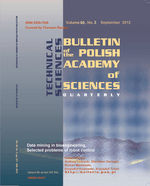
Bulletin of the Polish Academy of Sciences-Technical Sciences
Unveiling Breakthroughs in Engineering and BeyondBulletin of the Polish Academy of Sciences-Technical Sciences is a distinguished peer-reviewed journal published by the Polish Academy of Sciences, focusing on a broad spectrum of disciplines within technical sciences. With an E-ISSN of 2300-1917 and an established presence since 1983, this journal transitioned to an Open Access model in 2009, ensuring wide dissemination of innovative research findings. Recognized for its contributions, the journal boasts notable rankings in various categories, including Q4 in Artificial Intelligence and Q3 in fields such as Computer Networks and Communications and Atomic and Molecular Physics, as indicated by its Scopus rankings. With its strategic location in Warsaw, Poland, and a commitment to advancing knowledge and technology, the Bulletin serves as a vital platform for researchers, professionals, and students to share and engage with cutting-edge developments in engineering and related fields. Emphasizing high-quality research, this journal offers an essential resource for anyone looking to enhance their understanding of current trends and breakthroughs in technical sciences.

Suranaree Journal of Science and Technology
Empowering Research, Inspiring ProgressSuranaree Journal of Science and Technology is an esteemed academic publication dedicated to fostering innovation and research in the interdisciplinary fields of engineering and technology. Published by Suranaree University of Technology in Thailand, this journal aims to disseminate high-quality research findings that contribute to the ongoing dialogue within the scientific community. With an ISSN of 0858-849X and an E-ISSN of 0858-849X, it provides an essential platform for researchers to share their work, though it is currently not open access. The journal's ranking in the bottom quartile (Q4) for Engineering (miscellaneous) as of 2023 highlights the competitive landscape it operates in, with Scopus rankings placing it at the 287th position out of 307 in the General Engineering category, indicating both the challenges and opportunities for growth within its network. As the journal converges from 2018 to 2024, it invites scholars, professionals, and students to contribute, ensuring the ongoing exchange of knowledge and advancements in the field.

Applied Sciences-Basel
Exploring the Frontiers of Applied ResearchApplied Sciences-Basel, an interdisciplinary journal published by MDPI, serves as a prominent platform for disseminating high-quality research in the fields of engineering, materials science, computer science, and fluid dynamics. Since its inception in 2011, this open access journal, based in the heart of Switzerland, has garnered a reputation for facilitating the rapid exchange of ideas and advancements in applied sciences. With an impressive influence marked by its quarterly rankings in various categories—including Q2 in Engineering and Material Science—it is positioned well within the Scopus rankings. Researchers, professionals, and students can benefit from its extensive scope and significant impact factor, as the journal actively promotes innovative methodologies and applications that address pressing scientific challenges. The journal's commitment to open access ensures that vital research is readily available to all, fostering collaborative efforts across disciplines and geographies.
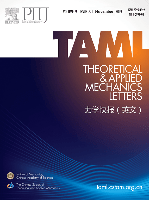
Theoretical and Applied Mechanics Letters
Fostering Innovation in Mechanics for a Sustainable TomorrowTheoretical and Applied Mechanics Letters, published by ELSEVIER, stands as a premier journal in the field of engineering and applied mechanics, recognized for its rigorous peer-reviewed articles that advance theoretical and practical frameworks. With an impressive open access policy established in 2015, the journal enhances global accessibility to cutting-edge research across a range of disciplines including Aerospace, Civil, Mechanical, and Biomedical Engineering, along with Computational Mechanics and Ocean Engineering. The journal boasts an enviable position in the academic landscape, achieving a Q1 rank in several categories as of 2023, while being cited among the top percentiles in Scopus Ranks, specifically ranking #25 in Aerospace Engineering and #15 in Computational Mechanics. The journal aims to foster innovation by providing a platform for scholars and professionals to disseminate their findings, thereby bridging the gap between theoretical research and practical applications. By promoting a diverse range of topics and methodologies, Theoretical and Applied Mechanics Letters not only contributes to the advancement of engineering disciplines but also supports the global academic community in exploring sustainable and impactful engineering solutions.

Dyna
Empowering scholars and practitioners in engineering.Dyna, with the ISSN 0012-7361 and E-ISSN 1989-1490, is a prominent academic journal published by the Federación Asociaciones Ingenieros Industriales España. Situated in Spain, it is dedicated to advancing knowledge and research in the field of engineering, specifically focusing on diverse aspects within the Engineering (Miscellaneous) category. With a current Scopus rank of #245 out of 307, Dyna operates in the 20th percentile, emphasizing the journal’s commitment to fostering innovation and dialogue among scholars and industry practitioners alike. Although it operates under traditional access models, the journal is pivotal for researchers, professionals, and students seeking to contribute to the evolving landscape of engineering disciplines. Covering a broad range of topics from 2009 to 2024, Dyna aims to facilitate interdisciplinary collaboration and disseminate cutting-edge findings that can influence both academia and industry.
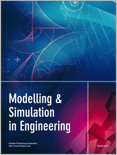
Modelling and Simulation in Engineering
Connecting Engineers to the World of SimulationModelling and Simulation in Engineering is a pioneering open-access journal, published by HINDAWI LTD, and established in 2007. With a focus on advancing the fields of engineering, computer science applications, and modeling and simulation, this esteemed journal serves as a vital platform for researchers, professionals, and students alike. The journal has made significant strides in its academic contributions, reflected in its current categorization within the Q3 quartile in Computer Science Applications, Engineering (miscellaneous), and Modeling and Simulation as of 2023. With a Scopus ranking of 133 out of 307 in General Engineering and 183 out of 324 in Mathematics' Modeling and Simulation, it emphasizes the crucial interplay between theoretical research and practical applications. Each article published in Modelling and Simulation in Engineering undergoes a rigorous peer-review process, ensuring high-quality research dissemination. By maintaining an open-access format, the journal promotes global collaboration and accessibility, supporting the dissemination and advancement of engineering knowledge worldwide. With its headquarters located in the United States, the journal is truly positioned at the convergence of innovation and research.
BRAZILIAN JOURNAL OF CHEMICAL ENGINEERING
Connecting Ideas, Inspiring InnovationsThe Brazilian Journal of Chemical Engineering (ISSN: 0104-6632, E-ISSN: 1678-4383), published by Springer Heidelberg, stands as a prominent open-access journal dedicated to disseminating innovative research and advancements in chemical engineering since its inception in 1997. With a commitment to enhancing knowledge exchange within the field, this journal is indexed in Scopus, earning a respectable Q3 rank in the category of General Chemical Engineering as of 2023. It provides a platform for researchers, professionals, and students to explore a diverse range of topics, fostering collaboration and innovation from its base in Brazil. The journal has converged its operations from 1995 and will continue to push the boundaries of chemical engineering research until 2024 and beyond. As a critical resource for up-to-date methodologies and emerging trends, the Brazilian Journal of Chemical Engineering is essential for those aiming to make impactful contributions in this dynamic and evolving field.

Periodica Polytechnica-Civil Engineering
Bridging Theory and Practice in Engineering ExcellencePeriodica Polytechnica-Civil Engineering is a prestigious journal published by the Budapest University of Technology and Economics, dedicated to advancing the field of civil engineering through high-quality research and innovative practices. Established in 1972, the journal has transitioned through various phases of publication and now spans an expansive range of topics within civil and structural engineering, geotechnical engineering, and engineering geology. With an impact factor indicating its growing influence and a commendable placement in the Q3 quartile according to the latest 2023 metrics, it recognizes contributions that bridge theoretical advancements with practical applications. While currently not open access, the journal remains a vital resource for researchers, professionals, and students seeking to stay abreast of the latest developments in engineering design, construction techniques, and geotechnical innovations. The continuous publication of significant research after almost five decades underscores its commitment to disseminating knowledge crucial for the world’s infrastructure challenges, making it an essential reference point within the engineering community.
Multidiscipline Modeling in Materials and Structures
Innovating the future of materials science and engineering.Multidiscipline Modeling in Materials and Structures, published by EMERALD GROUP PUBLISHING LTD, serves as a vital platform at the intersection of diverse fields including materials science, mechanical engineering, and modeling and simulation. Since its inception in 2005, this journal has gained recognition for its commitment to advancing knowledge and innovation within these disciplines, boasting a commendable Q3 categorization across multiple fields as of 2023. With a robust Scopus ranking that places it in the top 60th percentile for both mechanical engineering and mechanics of materials, it stands as a credible source for researchers and practitioners seeking to stay informed on the latest methodologies and applications. The journal emphasizes the importance of collaborative approaches to complex problems in materials and structural analysis, aiming to foster interdisciplinary dialogue and generate impactful research outcomes. Although currently not open access, the journal offers subscription options that ensure access to cutting-edge studies and critical reviews relevant to professionals and students alike. Engaging with this journal not only enriches one’s understanding of the field but also contributes to the ongoing discourse and development of innovative solutions in materials and structural modeling.
SADHANA-ACADEMY PROCEEDINGS IN ENGINEERING SCIENCES
Fostering Collaboration for Engineering ExcellenceSADHANA-ACADEMY PROCEEDINGS IN ENGINEERING SCIENCES, published by Springer India, is a highly regarded journal in the field of engineering sciences, focusing on innovative research within a multidisciplinary framework. With a history spanning from 1984 to 2024, the journal has established itself as a critical platform for the dissemination of groundbreaking findings, boasting a Q2 ranking in its category and a commendable position within the 76th percentile of Scopus rankings. Researchers and professionals are encouraged to submit their works and contribute to the continuous evolution of engineering disciplines, as the journal fosters collaboration and promotes scholarly dialogue. Although currently not classified as open access, SADHANA’s commitment to academic excellence ensures that it remains a vital resource for the global engineering community, enhancing knowledge transfer and inspiring future innovations.