
Alpha Psychiatry
Scope & Guideline
Innovative Insights into Psychiatric Disorders and Treatments.
Introduction
Aims and Scopes
- Psychiatric Disorders and Their Treatment:
This core area encompasses research on various psychiatric disorders, including schizophrenia, depression, anxiety, and substance use disorders, emphasizing both pharmacological and psychotherapeutic interventions. - Impact of Social and Environmental Factors on Mental Health:
The journal explores how social determinants, such as childhood experiences, socioeconomic status, and pandemic-related stressors, influence mental health outcomes and treatment efficacy. - Emerging Technologies in Psychiatry:
Research in this area includes the application of machine learning, telepsychology, and neuroimaging techniques to improve diagnostic accuracy and treatment strategies. - Cross-Disciplinary Approaches to Mental Health:
The journal encourages studies that integrate insights from psychology, neuroscience, sociology, and public health to create comprehensive models for understanding mental health issues. - Quality of Life and Well-being:
Investigating the relationship between mental health conditions and overall quality of life, including studies on resilience, coping mechanisms, and the psychosocial aspects of recovery.
Trending and Emerging
- Impact of COVID-19 on Mental Health:
A significant increase in studies addressing the psychological effects of the COVID-19 pandemic, including anxiety, depression, and the long-term consequences of social isolation, has emerged as a critical area of research. - Telepsychology and Remote Interventions:
The rise of telepsychological interventions, particularly during the pandemic, signifies a growing trend towards remote mental health services, highlighting the need for research on their effectiveness and patient outcomes. - Intersection of Physical and Mental Health:
There is an increasing focus on the relationship between physical health conditions (like diabetes, cardiovascular diseases) and mental health, emphasizing holistic approaches to patient care. - Use of Artificial Intelligence and Machine Learning:
Innovative studies utilizing AI and machine learning for predicting mental health outcomes and personalizing treatment plans are gaining momentum, reflecting advancements in technology and data analysis. - Child and Adolescent Mental Health:
Emerging themes related to mental health issues in children and adolescents, especially in the context of social media use, academic pressures, and family dynamics, are becoming increasingly prominent.
Declining or Waning
- Traditional Psychotherapy Techniques:
Research on conventional psychotherapy methods appears to be waning, as there is a growing emphasis on innovative therapeutic approaches, such as acceptance and commitment therapy, mindfulness, and technology-assisted therapies. - Neurobiological Mechanisms of Mental Disorders:
Although neurobiological studies remain relevant, there has been a shift away from purely biological explanations towards more integrative models that consider psychosocial factors and patient experiences. - Substance Use Disorders Focus:
While still an important area, the volume of research specifically targeting substance use disorders has decreased, potentially reflecting a broader shift towards integrated mental health care that encompasses substance use as part of overall mental health. - Single-Factor Models of Mental Health:
Research that focuses on singular factors, such as genetic predispositions or isolated psychological traits, is becoming less common in favor of multifactorial models that consider the interplay of various determinants.
Similar Journals
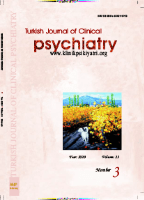
Klinik Psikiyatri Dergisi-Turkish Journal of Clinical Psychiatry
Advancing Mental Health Knowledge for AllKlinik Psikiyatri Dergisi - Turkish Journal of Clinical Psychiatry is a distinguished open-access journal dedicated to the evolving field of psychiatry and mental health. Published by KLINIK PSIKIYATRI DERGISI in Turkey since 1998, this journal aims to provide a platform for the dissemination of research, clinical studies, and reviews that contribute to the understanding of psychological disorders and treatment methodologies. With an ISSN of 1302-0099 and an E-ISSN of 2146-7153, the journal is indexed in various databases, although it currently holds a rank of 460/567 in the Scopus ranking for the category of Medicine: Psychiatry and Mental Health. The journal operates under an open-access model, ensuring that research findings are readily accessible to a wide audience, contributing to greater knowledge and awareness in the field. As it converges from 2017 to 2024, Klinik Psikiyatri Dergisi continues to strive for excellence, providing valuable insights and resources for researchers, professionals, and students interested in the complexities of mental health.

Psychiatria i Psychologia Kliniczna-JOURNAL OF PSYCHIATRY AND CLINICAL PSYCHOLOGY
Exploring innovative solutions in psychiatry and clinical psychology.Psychiatria i Psychologia Kliniczna - Journal of Psychiatry and Clinical Psychology is a vital platform for advancing the fields of psychiatry and clinical psychology, published by Medical Communications in Poland. With its ISSN 1644-6313, this Open Access journal has been providing unrestricted access to impactful research since 2005, ensuring that findings in mental health are both accessible and disseminated widely. Although currently ranked in the Q4 quartile across Clinical Psychology and Psychiatry and Mental Health categories, and with the Scopus ranks placing it at 262/311 in Clinical Psychology and 493/567 in Psychiatry, the journal serves as a crucial resource for researchers seeking to explore innovative methodologies and therapeutic interventions. The journal's aim is to enhance understanding and treatment of psychiatric disorders by facilitating the exchange of knowledge between academia and clinical practice. As it converges from 2006 to 2024, Psychiatria i Psychologia Kliniczna remains committed to publishing high-quality articles that contribute toward the evolving landscape of mental health research.

Translational Psychiatry
Championing open access to groundbreaking psychiatric research.Translational Psychiatry, an esteemed journal published by SpringerNature, is at the forefront of research in the fields of biological psychiatry, neuroscience, and mental health. With an impressive Q1 category ranking in Biological Psychiatry, Cellular and Molecular Neuroscience, and Psychiatry and Mental Health, the journal fosters high-quality scholarly work that informs clinical practices and guides future research directions. Since its inception in 2011, Translational Psychiatry has embraced the Open Access model, ensuring that groundbreaking findings are easily accessible to all, promoting collaboration and innovation within the global scientific community. With a solid ranking in Scopus—particularly at #33 out of 567 in Psychiatry and Mental Health and #6 out of 51 in Biological Psychiatry—this journal plays a critical role in advancing our understanding of mental health disorders, bridging the gap between bench science and clinical application. As it continues evolving through its converged years from 2011 to 2024, Translational Psychiatry remains an essential resource for researchers, healthcare professionals, and students dedicated to improving mental health outcomes.

COMPREHENSIVE PSYCHIATRY
Bridging research and practice in contemporary psychiatry.COMPREHENSIVE PSYCHIATRY is a leading peer-reviewed journal dedicated to advancing the field of psychiatry and mental health, published by W B SAUNDERS CO-ELSEVIER INC. With its Q1 designation in both Clinical Psychology and Psychiatry and Mental Health, this journal ranks impressively, holding the 9th position out of 311 in Clinical Psychology and the 27th position out of 567 in Psychiatry and Mental Health according to Scopus metrics. Since transitioning to Open Access in 2019, COMPREHENSIVE PSYCHIATRY has significantly increased its accessibility, enabling a broader audience of researchers, mental health professionals, and students to engage with cutting-edge research and clinical practices. The journal's scope encompasses a wide array of topics, including but not limited to evidence-based interventions, psychological evaluations, and the latest empirical studies in the field. As we continue to navigate the complexities of mental health in contemporary society, this journal serves as a vital resource for disseminating impactful findings and fostering collaborative discourse among scholars and practitioners globally.

JOURNAL OF PSYCHIATRY & NEUROSCIENCE
Empowering Healthcare Professionals with Cutting-Edge ResearchJOURNAL OF PSYCHIATRY & NEUROSCIENCE, published by the CMA-Canadian Medical Association, serves as a pivotal platform for disseminating cutting-edge research in the fields of psychiatry and neuroscience. This esteemed journal, indexed with the ISSN 1180-4882 and E-ISSN 1488-2434, focuses on advancing our understanding of mental health through meticulous peer-reviewed articles, reviews, and clinical studies. With an impressive impact within the research community, it has achieved notable rankings, including Q1 in both Medicine (miscellaneous) and Psychiatry and Mental Health, as well as Q2 in Biological Psychiatry as of 2023. The journal fosters critical dialogue among scholars and practitioners by offering insights into the complexities of brain function and mental disorders, making it a fundamental resource for healthcare professionals, researchers, and students alike. Although it operates under a subscription model, its rich content continues to inform and influence the advancement of mental health science, affirming its role in bridging the gap between research and clinical practice.
INTERNATIONAL JOURNAL OF PSYCHIATRY IN MEDICINE
Exploring Innovations in Psychiatric ResearchINTERNATIONAL JOURNAL OF PSYCHIATRY IN MEDICINE is a distinguished publication dedicated to advancing the understanding of psychiatric practice and mental health issues within a medical framework. Published by SAGE PUBLICATIONS INC, this journal has been a trusted source in the field since its inception, with its archives dating back to 1973. It offers a comprehensive exploration of psychiatric research, clinical studies, and theoretical advancements that seek to bridge the gap between psychiatry and general medicine. With an impact factor reflective of its quality and relevance, categorized in the Q3 quartile in Psychiatry and Mental Health, this journal stands as a vital resource for researchers, clinicians, and students alike. Although operating on a traditional subscription model, the extensive knowledge shared within its pages contributes significantly to ongoing discussions in psychiatric and mental health education and practice. As the field continually evolves, the INTERNATIONAL JOURNAL OF PSYCHIATRY IN MEDICINE remains committed to fostering innovative and impactful scholarship that resonates with professionals navigating the complexities of mental health in clinical contexts.

Frontiers in Psychiatry
Advancing the Science of Mental HealthFrontiers in Psychiatry is a leading journal dedicated to advancing research within the field of psychiatry and mental health. Published by FRONTIERS MEDIA SA, the journal has established a commendable reputation since its inception, reflected in its Q1 status in the 2023 Psychiatry and Mental Health category and a robust ranking of 142 out of 567 in the Scopus database. With an open access model initiated in 2009, Frontiers in Psychiatry aims to disseminate high-quality research to a global audience, fostering collaboration and innovation among researchers, clinicians, and students alike. The journal covers a broad spectrum of topics, including neurobiology, psychosocial factors, treatments, and public health implications of mental disorders, ensuring comprehensive representation of contemporary psychiatric science. Located in Lausanne, Switzerland, and running until 2024, the journal not only emphasizes the importance of mental health research but also encourages interdisciplinary discourse, making it an essential resource for anyone invested in the well-being of individuals and communities alike.
Asia-Pacific Psychiatry
Exploring Innovations in Psychiatry for a Healthier TomorrowAsia-Pacific Psychiatry is a leading academic journal published by WILEY, focused on the diverse and rapidly evolving fields of psychiatry and mental health within the Asia-Pacific region. With an ISSN of 1758-5864 and an E-ISSN of 1758-5872, this journal has been recognized for its significant impact, holding a Q1 ranking in Medicine (miscellaneous) and a Q2 ranking in Psychiatry and Mental Health as of 2023. Its commendable Scopus ranking places it at Rank #83 out of 567 in its category, highlighting its influence and relevance in contemporary research. The journal aims to facilitate the dissemination of high-quality research, reviews, and clinical insights that address mental health challenges, promote global understanding, and encourage collaboration among professionals and academics. Although it is not an open-access journal, the high impact factor underscores its value in the scholarly community, making it an essential resource for researchers, clinicians, and students dedicated to enhancing mental health practices and policies in the region and beyond.

PSYCHIATRY RESEARCH-NEUROIMAGING
Pioneering Research at the Intersection of Mind and MachinePSYCHIATRY RESEARCH-NEUROIMAGING, published by Elsevier Ireland Ltd, stands at the intersection of neuroscience, psychiatry, and medical imaging, specializing in the latest advancements in neuroimaging techniques and their applications in psychiatric research. With a robust history since 1990, this esteemed journal features original research, reviews, and case studies that contribute significantly to the understanding of brain function in mental health disorders. Holding a notable Impact Factor and classified in Q2 for the fields of Neuroscience and Psychiatry and Q1 for Radiology, it serves as a vital resource for scholars and practitioners seeking to advance their knowledge in these domains. The journal is indexed in major databases, enhancing visibility and accessibility for global researchers. While it currently does not follow an open-access model, its reputable standing in Scopus ranks, alongside its targeted scope, makes it indispensable for those invested in neuroimaging research and its implications in psychiatry.
Brazilian Journal of Psychiatry
Exploring the forefront of mental health research in Brazil.The Brazilian Journal of Psychiatry is a prominent peer-reviewed journal dedicated to advancing the field of psychiatry and mental health, published by the Associação Brasileira de Psiquiatria. With an impressive Q2 ranking in the Psychiatry and Mental Health category for 2023 and a Scopus rank of #130 out of 567, this journal serves as a vital resource for researchers, clinicians, and students alike. Since its transition to Open Access in 1999, it has aimed to disseminate high-quality research, innovative practices, and critical insights relevant to mental health in Brazil and beyond. The journal's focus spans various topics in psychiatry, aiming to bridge the gap between research and clinical application, making it essential reading for professionals and academicians committed to improving mental health outcomes. With a commitment to fostering scholarly discourse, the Brazilian Journal of Psychiatry not only enriches the academic landscape but also enhances the practice of psychiatry through its widespread accessibility and dedication to excellence in research.