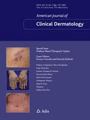
AMERICAN JOURNAL OF CLINICAL DERMATOLOGY
Scope & Guideline
Elevating Dermatological Research to New Heights
Introduction
Aims and Scopes
- Clinical Efficacy and Safety of Treatments:
The journal frequently publishes studies evaluating the clinical efficacy and safety of various dermatological treatments, including biologics, JAK inhibitors, and traditional therapies, using randomized controlled trials and real-world evidence. - Innovative Diagnostic and Therapeutic Approaches:
Research on innovative diagnostic techniques and therapeutic strategies, particularly in the context of emerging technologies like artificial intelligence and personalized medicine, is a consistent focus. - Pathophysiology of Skin Diseases:
The journal emphasizes understanding the underlying mechanisms of various skin diseases, including autoimmune conditions, inflammatory disorders, and skin cancers, providing insights that inform treatment. - Patient-Centered Care and Quality of Life:
The journal highlights the importance of patient-reported outcomes and quality of life in dermatological practice, advocating for approaches that consider the holistic impact of skin diseases on patients. - Emerging Trends in Dermatology:
The publication regularly addresses emerging trends and challenges in dermatology, including the impact of systemic diseases on skin health, the role of comorbidities, and the implications of climate change on dermatologic conditions.
Trending and Emerging
- Biologics and Targeted Therapies:
There is a significant increase in research dedicated to biologics and targeted therapies, particularly for chronic conditions like psoriasis and atopic dermatitis, highlighting their clinical efficacy and safety in diverse patient populations. - Artificial Intelligence in Dermatology:
The integration of artificial intelligence in diagnostic processes and patient management is on the rise, showcasing its potential to transform dermatological practices through enhanced accuracy and efficiency. - Impact of Comorbidities on Skin Diseases:
Emerging studies are increasingly exploring the relationship between skin conditions and systemic comorbidities, reflecting a growing understanding of how overall health influences dermatological outcomes. - Personalized Medicine Approaches:
There is a trend towards personalized medicine in dermatology, with research focusing on tailoring treatments based on individual patient characteristics, including genetic profiles and specific disease presentations. - Psychosocial Aspects and Quality of Life:
An increasing emphasis on the psychosocial aspects of skin diseases, including their impact on quality of life and mental health, indicates a broader approach to patient care that goes beyond physical symptoms.
Declining or Waning
- Traditional Therapeutics:
There is a noticeable decrease in publications centered around traditional dermatological treatments, such as topical corticosteroids and older systemic therapies, as newer biologics and targeted therapies gain attention. - General Reviews without New Insights:
General literature reviews lacking novel insights or updates on treatment paradigms have become less common, as the journal increasingly favors studies that present original research findings or significant advances. - Epidemiological Studies of Common Conditions:
Research focusing on the epidemiology of common dermatological conditions appears to be waning, possibly due to a shift toward more specific and mechanistic studies that delve deeper into pathophysiology. - Pharmacovigilance Studies:
Although important, studies focused solely on pharmacovigilance and adverse event reporting are less frequently featured, as the journal prioritizes comprehensive clinical trials and real-world efficacy studies.
Similar Journals
CLINICAL AND EXPERIMENTAL DERMATOLOGY
Transforming Clinical Insights into Experimental Breakthroughs.CLINICAL AND EXPERIMENTAL DERMATOLOGY is a prominent journal in the field of dermatology, published by Oxford University Press. With an ISSN of 0307-6938 and an E-ISSN of 1365-2230, this journal has been a vital resource for researchers and practitioners since its inception in 1976. Recognized as a Q2 journal within the category of dermatology for 2023, it holds a respectable position, ranking #54 among 142 journals in this discipline, placing it in the 62nd percentile on Scopus. The journal is dedicated to publishing high-quality research that spans clinical and experimental aspects of dermatological science, making it an essential source of knowledge for advancing understanding and treatment of skin disorders. Although it operates on a traditional subscription model without open access options, its contributions to the field are significant, influencing both clinical practices and academic research. Researchers, clinicians, and students alike will find vital insights and contemporary themes presented in its pages, supporting ongoing education and innovation in dermatology.
Indian Journal of Paediatric Dermatology
Leading the way in children's dermatological research.Indian Journal of Paediatric Dermatology (ISSN: 2319-7250; E-ISSN: 2319-7269), published by Wolters Kluwer Medknow Publications, stands as a pivotal resource in the specialized field of paediatric dermatology. As a peer-reviewed open access journal since 2013, it aims to disseminate cutting-edge research, clinical practices, and innovative developments that cater to the specific dermatological needs of children. The journal provides an essential forum for collaboration among researchers, clinicians, and students, facilitating the sharing of knowledge on a wide array of topics, including skin conditions unique to paediatric populations, treatment methodologies, and advancements in dermatological care. With a commitment to enhancing the understanding and treatment of paediatric skin diseases, this journal plays a critical role in shaping best practices and informing future research directions in a rapidly evolving field.
Nature Reviews Rheumatology
Empowering researchers, clinicians, and students.Nature Reviews Rheumatology is a premier academic journal published by NATURE PORTFOLIO, dedicated to the field of rheumatology. With an impressive impact factor reflecting its high citation rate and relevance within the scientific community, it ranks in the Q1 category for rheumatology, showcasing its essential role in disseminating cutting-edge research and reviews. The journal serves as a vital resource for researchers, clinicians, and students alike, presenting comprehensive articles that cover the latest developments, therapeutic advancements, and emerging trends in rheumatic diseases. With access options, including open access, it ensures that valuable insights are within reach for all stakeholders in the field. Situated in the United Kingdom and intersecting with a global audience, Nature Reviews Rheumatology stands as an authoritative voice, fostering education and innovation to improve patient outcomes and enhance the understanding of rheumatological conditions.

Postepy Dermatologii i Alergologii
Championing open access to vital health insights.Postepy Dermatologii i Alergologii is a distinguished Open Access journal published by TERMEDIA PUBLISHING HOUSE LTD, dedicated to advancing the fields of Dermatology and Immunology and Allergy. Since its inception in 2003, this journal has served as a vital platform for researchers and practitioners alike, promoting knowledge sharing and collaboration in Poland and beyond. With a current impact ranking placing it in the Q3 quartile for both Dermatology and Immunology and Allergy categories, it plays a significant role in contributing to academic discourse within these fields. The journal is indexed in Scopus, with respectable rankings reflecting its relevance and quality—#65/142 in Dermatology and #163/233 in Immunology and Allergy. Researchers are encouraged to explore a vast array of innovative studies and reviews, making it an essential resource for anyone seeking to stay at the forefront of dermatological and allergic research. For those interested in discovering groundbreaking findings and contributing to the ongoing dialogue in these disciplines, Postepy Dermatologii i Alergologii offers not only free accessibility but also a commitment to scholarly excellence.
Dermatology and Therapy
Bridging the gap between research and clinical practice.Dermatology and Therapy is a prestigious Open Access journal, published by ADIS INT LTD since 2011, that has quickly established itself as a vital resource in the field of dermatology. With an impressive Q1 ranking in the Dermatology category as of 2023 and a commitment to disseminating high-quality research, this journal fosters innovation and knowledge exchange among professionals, researchers, and students alike. Its broad scope encompasses the latest advancements in dermatological therapies, contributing significantly to both clinical practice and academic research. Based in Germany and operating under a global perspective, Dermatology and Therapy provides an essential platform for open access research, encouraging unrestricted access to groundbreaking studies and fostering collaboration across borders. Join the community of dermatology experts by exploring the wealth of knowledge available in this influential journal.
ANNALES DE DERMATOLOGIE ET DE VENEREOLOGIE
Fostering Excellence in Skin Research and PracticeANNALES DE DERMATOLOGIE ET DE VENEREOLOGIE is a distinguished journal that serves as a vital platform for disseminating innovative research and insightful reviews in the field of dermatology and venereology. Published by MASSON EDITEUR, this journal has been a cornerstone for professionals and researchers since its inception in 1977, offering a wealth of knowledge that spans decades. With its ISSN 0151-9638 and E-ISSN 2214-5451, it is indexed within leading databases, ensuring that the published work reaches a broad audience. The journal currently holds a Q3 ranking in the dermatology category, reflecting its commitment to quality and rigorous peer-review processes. While the journal is not open access, it provides an extensive archive of valuable studies that contribute to advancements in skin health and treatment methodologies. Located in Issy-les-Moulineaux, France, ANNALES DE DERMATOLOGIE ET DE VENEREOLOGIE continues to attract submissions from esteemed professionals, enhancing its reputation as a crucial resource for those dedicated to the ongoing development of dermatological sciences.
BRITISH JOURNAL OF DERMATOLOGY
Advancing dermatological excellence since 1892.The British Journal of Dermatology, published by Oxford University Press, stands as a premier platform for advancing the field of dermatological research and clinical practice since its inception in 1892. With a strong commitment to disseminating high-quality research, this esteemed journal is currently ranked in the Q1 category for both Dermatology and Miscellaneous Medicine in 2023, reflecting its influential position in the academic landscape. As the leading journal in its field, it enjoys a robust Scopus ranking of #1 out of 142 in dermatology, placing it in the 99th percentile globally. The journal covers a wide scope of subjects pertinent to dermatology, including clinical trials, treatment innovations, and epidemiological studies, making it an essential resource for researchers, healthcare professionals, and students alike. Although it is not an open-access publication, it ensures a broad reach through institutional subscriptions, fostering knowledge exchange across the global dermatological community. Based in the heart of the United Kingdom, the British Journal of Dermatology continues to play a crucial role in shaping the future of skin health and disease management.
JOURNAL OF DERMATOLOGICAL TREATMENT
Elevating standards in skin treatment and care.The JOURNAL OF DERMATOLOGICAL TREATMENT, published by TAYLOR & FRANCIS LTD, is a premier forum dedicated to advancing the field of dermatology through the dissemination of high-quality research. Since its inception in 1989, this journal has maintained a significant impact on the dermatological community, currently ranking in the top quartile (Q1) of the Dermatology category with an impressive Scopus ranking of #14 out of 142 journals, reflecting its reputation among peers and its contribution to the clinical and academic landscape. The journal shifted to Open Access in 2023, enhancing the accessibility of groundbreaking findings to researchers, clinicians, and students worldwide. With a commitment to publishing diverse articles, from innovative treatment modalities to comprehensive reviews, the JOURNAL OF DERMATOLOGICAL TREATMENT serves as an invaluable resource for professionals seeking to stay at the forefront of dermatological science in a rapidly evolving field.
Annals of Dermatology
Connecting researchers and clinicians for skin health advancements.Annals of Dermatology is a prestigious academic journal published by the Korean Dermatological Association, focusing on the latest research and advancements in the field of dermatology. With a commitment to advancing knowledge in skin health and disease, this journal serves as a vital resource for researchers, clinicians, and students working in dermatology and related disciplines. Since its inception in 1989, it has evolved to consolidate its position in the academic community, boasting a Q2 ranking in the 2023 Dermatology category and a Scopus rank of #87 out of 142, placing it in the 39th percentile. Although it operates under a subscription model, the journal's impact factor reflects its significance in advancing dermatological research, attracting innovative studies and reviews that shape clinical practice. With a publication history extending from 1989 to 1996 and then from 2008 to the present, Annals of Dermatology continues to be an essential publication for those devoted to improving skin health.
AKTUELLE DERMATOLOGIE
Pioneering Research in the World of DermatologyAKTUELLE DERMATOLOGIE is a distinguished journal in the field of Dermatology, published by GEORG THIEME VERLAG KG in Germany. With a commitment to advancing knowledge and practice in dermatological science, the journal has regularly featured research articles, reviews, and case studies since its inception in 1975 and continues to publish contributions through 2024. Despite being categorized in the lower quartile (Q4) of dermatology journals and holding a Scopus rank of #127 out of 142, it plays a pivotal role in disseminating valuable insights that support ongoing education and research in the discipline. The journal provides an essential platform for both seasoned professionals and budding researchers to share their findings, explore emerging trends, and discuss clinical practices, all while serving the needs of an evolving medical landscape. Access to its content may be restricted, but the journal remains a crucial reference for those invested in the future of dermatological research and patient care.