ANNALES DE CHIMIE-SCIENCE DES MATERIAUX
Scope & Guideline
Shaping the Future of Materials Chemistry Since 1947
Introduction
Aims and Scopes
- Materials Characterization and Development:
The journal emphasizes the characterization of materials, including their mechanical, thermal, and chemical properties. This includes innovative methods for synthesizing and modifying materials to enhance their performance. - Construction Materials and Concrete Technology:
A significant focus is on the development and optimization of construction materials, particularly concrete, including self-compacting concrete, eco-friendly alternatives, and the incorporation of waste materials. - Corrosion and Material Durability:
Research on the corrosion mechanisms and durability of materials in various environments is a core area, addressing challenges in maintaining structural integrity over time. - Advanced Manufacturing Techniques:
The journal explores advanced manufacturing processes such as additive manufacturing, laser sintering, and other innovative fabrication methods that influence material properties and applications. - Environmental Impact and Sustainability:
There is a strong emphasis on the environmental implications of material use and development, including recycling, waste utilization, and sustainable practices in material science.
Trending and Emerging
- Sustainability and Eco-Friendly Materials:
There is a growing trend towards the development of sustainable materials, emphasizing the use of waste products and local materials to reduce environmental impact in construction and manufacturing. - Nanomaterials and Advanced Composites:
The journal has seen an increase in research related to nanomaterials and their application in various fields, highlighting advancements in composite materials that leverage nanoscale properties for enhanced performance. - Smart Materials and Adaptive Structures:
Emerging research themes include smart materials that respond to environmental stimuli, leading to innovations in adaptive structures and applications in fields such as aerospace and civil engineering. - Computational Modeling and Simulation:
An increasing number of studies utilize computational methods, such as finite element analysis and machine learning, to predict material behavior and optimize processes, indicating a trend towards data-driven research. - Interdisciplinary Approaches in Materials Science:
There is a noticeable shift towards interdisciplinary research that combines materials science with fields such as biology, environmental science, and electronics, promoting innovative solutions to complex challenges.
Declining or Waning
- Traditional Steel and Alloy Studies:
Research specifically focused on conventional steel and alloy materials has seen a decline, likely due to the increasing interest in composite materials and advanced alloys that offer superior properties. - Basic Chemical Processes in Material Synthesis:
There appears to be a reduction in publications centered solely on fundamental chemical processes for material synthesis, as the field moves towards more application-driven and interdisciplinary approaches. - Non-Destructive Testing Techniques:
Although still relevant, the specific focus on traditional non-destructive testing methods has diminished as newer, more integrated approaches using advanced technologies gain traction. - Basic Theoretical Studies Without Practical Applications:
Research that does not directly translate into practical applications or that lacks interdisciplinary collaboration seems to be less frequently published, reflecting a shift towards more applied research.
Similar Journals

Cement Wapno Beton
Advancing the Future of Construction ScienceCement Wapno Beton is a renowned academic journal published by STOWARZYSZENIE PRODUCENTOW CEMENTU, focusing on the intricate fields of building and construction, as well as materials science. With the ISSN number 1425-8129, this publication has been committed to advancing knowledge and fostering innovation since its inception in 2007, and it will continue until 2024. The journal operates within a competitive landscape, as reflected in its 2023 Scopus rankings, placing it in the third quartile (Q3) in both Building and Construction and Materials Science categories. Although it currently does not offer open access options, Cement Wapno Beton remains an essential resource for researchers, professionals, and students seeking valuable insights into the latest developments and technologies in construction materials. Its scope encompasses a wide range of topics, including architectural advancements, sustainable building practices, and innovative material applications, making it an indispensable tool for those dedicated to the evolution of construction science.
STEEL RESEARCH INTERNATIONAL
Unveiling the Science Behind Steel and Alloys.STEEL RESEARCH INTERNATIONAL, published by WILEY-V C H VERLAG GMBH, is a premier journal that serves as a vital source of knowledge in the fields of condensed matter physics, materials chemistry, and metal and alloy research. With an ISSN of 1611-3683 and an E-ISSN of 1869-344X, this journal provides open access options that enhance its visibility and accessibility. Recognized for its scientific merit, it currently holds a Q2 ranking across multiple categories including Condensed Matter Physics and Materials Chemistry. This translates to an exceptional placement within the 64th percentile for Metals and Alloys and substantial recognition in other related fields according to Scopus rankings. By bridging theoretical concepts and practical applications, STEEL RESEARCH INTERNATIONAL aims to foster innovative research and dissemination of knowledge among researchers, professionals, and students focused on advancing the metallurgy and materials science domains. With a commitment to remain at the forefront of research from 2003 to 2024, the journal is poised to continue shaping the future of steel and alloy studies.
MATERIALS SCIENCE AND TECHNOLOGY
Innovative Discoveries Shaping the World of MaterialsMATERIALS SCIENCE AND TECHNOLOGY is a leading journal published by SAGE PUBLICATIONS INC, focusing on the interdisciplinary advancements in the field of materials science. Since its inception in 1984, the journal has provided a platform for researchers and industry professionals to present innovative findings through rigorous peer-reviewed articles. The journal holds a commendable impact factor and categorizes itself within the prestigious Q2 rank in various domains such as Condensed Matter Physics, Materials Science, Mechanical Engineering, and Mechanics of Materials according to the 2023 Quartiles. With no Open Access option, it primarily serves as a repository for in-depth studies and advancements that push the boundaries of materials engineering and application. Located in the United Kingdom, at 2455 TELLER RD, THOUSAND OAKS, CA 91320, the journal continues to attract a global readership, making it indispensable for academics, researchers, and students who aim to stay at the forefront of materials innovation.
JOURNAL OF MATERIALS IN CIVIL ENGINEERING
Transforming Ideas into Engineering SolutionsJOURNAL OF MATERIALS IN CIVIL ENGINEERING is a highly regarded publication within the field of civil engineering, published by the ASCE-American Society of Civil Engineers. This journal, which has been actively contributing to the discourse in building and construction materials since 1989, has established itself as a vital resource for researchers and practitioners alike, evidenced by its impressive Q1 rankings across multiple categories, including Building and Construction, Civil and Structural Engineering, Materials Science, and Mechanics of Materials as of 2023. With a strong focus on innovation and application in materials technology, it provides insights that are paramount for advancing practices in civil engineering. The journal's commitment to disseminating high-quality research is reflected in its exceptional standing within Scopus, where it ranks in the top quartile of its respective fields. Although not an open-access journal, it remains an essential platform for disseminating impactful research findings and fostering professional development in the materials science community. For more information or to explore the latest publications, researchers can access the journal through the ASCE library.
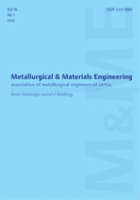
Metallurgical & Materials Engineering
Advancing the frontiers of metallurgical science.Metallurgical & Materials Engineering, published by Netherlands Press, is a prominent open access journal that has been advancing the field of metallurgical sciences and materials engineering since 2012. With an ISSN of 2217-8961 and an E-ISSN of 2812-9105, this journal provides a vital platform for researchers, professionals, and students to disseminate and access high-quality peer-reviewed research. As of 2023, it holds a Q4 quartile ranking in Mechanical Engineering and a Q3 ranking in Metals and Alloys, according to Scopus. This reflects its ongoing commitment to high standards despite being in a competitive sector. The journal covers a wide array of topics within the scope of materials science, with a focus on metallurgy and alloy technologies, and serves as a crucial resource for those engaged in innovative material development and application. Offering an open-access model emphasizes its dedication to making research widely available, thereby fostering collaboration and advancement in the materials engineering community. Join us in contributing to a dynamic and essential field of study.

REVIEWS ON ADVANCED MATERIALS SCIENCE
Pioneering Discoveries in Advanced MaterialsREVIEWS ON ADVANCED MATERIALS SCIENCE, published by De Gruyter Poland SP Z O O, is a preeminent open-access journal dedicated to disseminating cutting-edge research in the fields of condensed matter physics, materials science, and nanoscience. Since its inception in 2003, the journal has established itself as a crucial platform for scholars and practitioners to share innovative insights and advancements, achieving a commendable Q2 ranking in its respective categories for 2023. With its headquarters in the Russian Federation, the journal is not only committed to expanding the frontiers of scientific knowledge but also emphasizes inclusivity through its open-access model, which has been in effect since 2019, enabling universal access to its high-quality content. With an impactful standing illustrated by its Scopus rankings—136th in Condensed Matter Physics and 186th in General Materials Science—REVIEWS ON ADVANCED MATERIALS SCIENCE stands as a vital resource for researchers, professionals, and students eager to engage with contemporary discussions and discoveries in materials science.
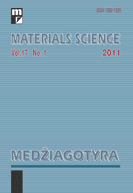
Materials Science-Medziagotyra
Exploring Innovative Materials for a Sustainable FutureMaterials Science-Medziagotyra is a prominent peer-reviewed journal dedicated to the field of materials science, published by Kaunas University of Technology in Lithuania. Since its transition to an Open Access model in 2012, it has facilitated broad dissemination of research findings, enhancing accessibility for researchers and professionals worldwide. This journal is indexed in Scopus and has consistently contributed to the academic community with a focus on innovative materials and their applications, ranking in the Q3 category of Materials Science (miscellaneous) as of 2023. With the responsibility of synthesizing substantial research from 2008 through 2024, Materials Science-Medziagotyra aims to bridge gaps in material research while fostering collaboration among scientists, students, and industry leaders. Its commitment to quality and rigor in scientific discourse underscores its relevance and importance in advancing the field.

Materia-Rio de Janeiro
Exploring the intersection of materials and innovation.Materia-Rio de Janeiro is a distinguished open-access journal published by UNIV FED RIO DE JANEIRO, LAB HIDROGENIO, dedicated to advancing knowledge in the fields of Chemistry, Materials Science, and Physics. Since its inception in 2006, the journal has established a platform for the dissemination of innovative research, fostering collaboration among researchers globally. The journal's commitment to open access promotes the widespread availability of valuable scientific findings, making it an essential resource for academia and industry professionals alike. With a focus on diverse disciplines, Materia-Rio de Janeiro holds a Q4 classification in multiple categories for 2023, indicating its relevance in the expansive landscape of materials research. Operating from Rio de Janeiro, Brazil, this journal serves as a vital conduit for emerging scientific insights, hence delivering impactful contributions to the global research community.
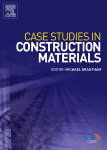
Case Studies in Construction Materials
Pioneering Research in Material Science ExcellenceCase Studies in Construction Materials, an esteemed journal published by Elsevier, provides a vital platform for the dissemination of scholarly research in the field of materials science, focusing particularly on innovations and advancements in construction materials. With its Q1 ranking in the 2023 Scopus category of Materials Science (Miscellaneous), the journal stands out for its high-impact contributions and commitment to enhancing industry practices. Open Access since 2014, Case Studies in Construction Materials promotes wide accessibility and engagement, encouraging collaborations among researchers, professionals, and students globally. Whether delving into innovative methodologies, sustainability in construction materials, or case studies that exemplify best practices, this journal is crucial for those seeking to advance the science and application of construction materials. Located in Amsterdam, Netherlands, its robust publication history from 2014 to 2024 ensures it remains a leading resource for contemporary research and academic exploration.
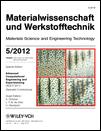
MATERIALWISSENSCHAFT UND WERKSTOFFTECHNIK
Advancing Knowledge in Material Engineering.MATERIALWISSENSCHAFT UND WERKSTOFFTECHNIK, published by WILEY-V C H VERLAG GMBH, is a prominent journal dedicated to the field of materials science and engineering. With its ISSN 0933-5137 and E-ISSN 1521-4052, this journal serves as a vital resource for researchers and professionals engaged in exploring the intricate relationships between the properties of materials and their applications. Established in 1970 and continuing through 2024, the journal has been consistently recognized in various categories, achieving a Q3 ranking in 2023 across Condensed Matter Physics, Materials Science (miscellaneous), Mechanical Engineering, and Mechanics of Materials. Although it does not offer open access, its high-quality peer-reviewed content is fundamental to the advancement of knowledge within its three key areas: novel material development, material characterization, and application of materials in engineering contexts. As a driving force in the scientific community, MATERIALWISSENSCHAFT UND WERKSTOFFTECHNIK continues to cater to the curiosity of aspiring students, seasoned professionals, and researchers alike, facilitating a deeper understanding of the complexities of material technology.