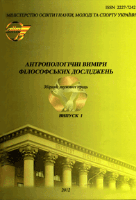
Anthropological Measurements of Philosophical Research
Scope & Guideline
Bridging Cultures and Concepts in Research
Introduction
Aims and Scopes
- Philosophical Anthropology:
The journal investigates the nature of human beings, exploring concepts like identity, existence, and freedom through philosophical frameworks. This includes historical perspectives and contemporary interpretations. - Cultural and Social Dynamics:
It focuses on the cultural and social dimensions of human life, examining how societal structures, traditions, and beliefs shape individual and collective identities. - Ethics and Human Values:
The exploration of ethical considerations in human behavior, including discussions on morality, justice, and the implications of technological advancements on human values. - Education and Human Development:
Researching the philosophical underpinnings of education and its role in human development, emphasizing human-centered approaches in educational philosophies. - Impact of Modernity and Technology:
Analyzing the effects of modernity, digitalization, and technological advancements on human existence and social relations, particularly in urban contexts.
Trending and Emerging
- Human-Centered Approaches:
There is an increasing emphasis on human-centered methodologies in education and social sciences, reflecting a broader trend towards prioritizing human experiences and values in research. - Interdisciplinary Perspectives:
The integration of various disciplines, including ecofeminism and digital anthropology, represents a growing trend in addressing complex issues that transcend traditional boundaries. - Philosophy of Technology:
Emerging discussions around the implications of artificial intelligence, digital identity, and technology on human existence are becoming more prominent, indicating a shift towards understanding modern challenges. - War and Human Values:
The impact of conflict on anthropological and philosophical values is gaining attention, particularly in relation to human rights, ethics, and the social fabric during wartime. - Empathy and Interpersonal Relations:
There is a notable increase in research focused on empathy, self-empathy, and their roles in contemporary society, reflecting the importance of emotional intelligence in human interactions.
Declining or Waning
- Traditional Historical Philosophies:
There seems to be a waning interest in purely historical philosophical analyses, such as the detailed examination of classical philosophers without a contemporary context. - Anthropocentrism:
The discussions around anthropocentrism and its critiques have decreased, possibly as the focus shifts towards more nuanced ethical frameworks that consider non-human perspectives. - Static Views of Identity:
Explorations of identity as fixed or singular concepts are less frequent, indicating a shift towards more dynamic and fluid understandings of identity in modern contexts.
Similar Journals

AUT AUT
Illuminating Contemporary Cultural and Philosophical DebatesAUT AUT is a prestigious journal published by GRUPPO EDITORIALE SAGGIATORE, focusing on the interdisciplinary fields of Cultural Studies and Philosophy. As an established publication since 2009, it is committed to fostering academic discourse through critical analyses, original research articles, and innovative theoretical explorations. While it is currently ranked in the Q4 quartile for both fields according to recent evaluations, its importance lies in its ability to provide a platform for emerging voices and established scholars alike. Although AUT AUT does not offer open access, its contributions are invaluable in enriching the cultural and philosophical dialogue within academia. Positioned in Italy at VIA MELZO 9, MILANO 20129, this journal is essential for researchers, professionals, and students seeking to engage with contemporary cultural debates and philosophical inquiries.

Enrahonar-Quaderns de Filosofia
Empowering innovative thought in the realm of philosophy.Enrahonar-Quaderns de Filosofia, published by Universitat Autònoma de Barcelona, stands as a significant academic journal in the field of Philosophy, offering open access to a diverse range of philosophical inquiries since its establishment in 1997. With an ISSN of 0211-402X and E-ISSN 2014-881X, it serves as a crucial conduit for scholars to disseminate their research globally. Positioned in the Q3 quartile of Philosophy journals according to 2023 metrics, and ranking #417 out of 806 in Scopus, it reflects a solid standing within the academic community. The journal is committed to advancing philosophical discourse by encouraging critical engagement and interdisciplinary collaboration, ultimately fostering a vibrant dialogue among researchers, professionals, and students. Located in Cerdanyola del Vallès, Barcelona, Spain, it aims to contribute to the European and global philosophical landscape by supporting innovative and rigorous scholarship through its accessible platform.

JOURNAL OF DHARMA
Bridging Minds: Where Philosophy Meets SpiritualityWelcome to the JOURNAL OF DHARMA, a distinguished publication in the realms of Philosophy and Religious Studies, published by Dharmaram College, India. This journal has carved out a niche in academic scholarship, achieving notable rankings in Scopus—#374 in Religious Studies and #511 in Philosophy—demonstrating its relevance and contribution to the respective fields. With its scope encompassing a diverse range of topics from philosophical inquiry to religious discourse, the journal reflects a commitment to promoting critical dialogue and interdisciplinary research. Although it operates without an open-access model, the JOURNAL OF DHARMA invites contributions from researchers, professionals, and students keen on exploring the intricacies of human thought and spiritual practices. As it continues to evolve, the journal remains a key resource for those seeking to deepen their understanding of philosophical and religious inquiries from 2002 to 2024.

Topicos-Revista de Filosofia
Exploring Diverse Philosophical Traditions and Innovative IdeasTopicos-Revista de Filosofia, published by UNIV PANAMERICANA, DEPT FILOSOFIA, stands as a significant academic platform within the field of philosophy, actively contributing to scholarly discourse since 2006 through its open access model. With an ISSN of 0188-6649 and an E-ISSN of 2007-8498, this journal is dedicated to fostering critical thought and philosophical inquiry in both regional and global contexts. Operating out of Mexico City, it provides a vital avenue for researchers, professionals, and students to engage with contemporary philosophical issues, reflected in its ranking of Q3 in the 2023 category for Philosophy and its position within the 33rd percentile among over 800 peer journals in the field according to Scopus. Topicos not only prioritizes accessibility to philosophical scholarship but also aims to propel academic discussions and elevate the standards of philosophical research. With coverage extending from 2013 to 2024, it invites contributions that bridge diverse philosophical traditions and innovative thought pathways, reinforcing its role as an influential resource for the philosophical community.

Bajo Palabra-Journal of Philosophy
Engaging Minds, Transforming IdeasBajo Palabra - Journal of Philosophy is an esteemed academic publication dedicated to the exploration and advancement of philosophical discourse. Published by the Universidad Autónoma de Madrid, Servicio Publicaciones, this Open Access journal has been making impactful contributions to the field since 2009, enabling unrestricted access to research findings for scholars around the globe. With an ISSN of 1576-3935 and an E-ISSN of 1887-505X, Bajo Palabra has established itself within the intellectual community, achieving a commendable Q2 category ranking in Philosophy for 2023, and being positioned at #374 out of 806 in the Scopus Arts and Humanities ranking, reflecting its solid reputation and relevance. Hailing from Madrid, Spain, the journal boasts a diverse scope, attracting research that challenges conventional thinking while fostering innovative approaches to philosophical inquiry. This journal serves as a vital platform for philosophers, researchers, and students alike, promoting thought-provoking discussions and facilitating knowledge sharing across various philosophical traditions and thematic concerns.
ANTHROPOLOGISCHER ANZEIGER
Bridging Anthropology, Animal Science, and EcologyANTHROPOLOGISCHER ANZEIGER, published by E Schweizerbart'sche Verlagsbuchhandlung, is a distinguished journal dedicated to the interdisciplinary fields of anthropology, animal science, and ecology, with a notable impact on advancing research in these areas. Since its inception in 1971, the journal has played a critical role in providing a platform for innovative research, fostering scholarly exchange, and enhancing the understanding of human and animal interactions and ecosystems. With its current quartile rankings—Q2 in Anthropology and Q3 in Animal Science and Zoology—it is well-positioned to serve as a vital resource for researchers, professionals, and students alike. Although it does not currently offer open access, the journal remains an essential asset for those looking to deepen their knowledge and contribute to ongoing discussions within these intersecting disciplines. For additional information, visit the publisher's office located at NAEGELE U OBERMILLER, SCIENCE PUBLISHERS, JOHANNESSTRASSE 3A, D 70176 STUTTGART, GERMANY.

Cosmos and History-The Journal of Natural and Social Philosophy
Cultivating Interdisciplinary Connections in PhilosophyCosmos and History - The Journal of Natural and Social Philosophy is a pioneering academic journal dedicated to the exploration of philosophical questions within both the natural and social realms. Published by COSMOS PUBL COOPERATIVE in Australia, this Open Access journal has been committed to disseminating knowledge freely since 2005, allowing researchers and scholars from around the globe to access cutting-edge philosophical discourse. With an impressive status, it ranks in the Q2 category for Philosophy in 2023, and holds a commendable position at rank #399 out of 806 in the Arts and Humanities - Philosophy category on Scopus, placing it within the 50th percentile of its field. The journal covers a wide spectrum of topics, pushing the boundaries of interdisciplinary thought and fostering robust academic discussions that contribute to both theoretical and practical applications of philosophy. By addressing pressing contemporary issues, Cosmos and History serves as an invaluable resource for researchers, professionals, and students engaged in the nuanced interplay between philosophical ideas and societal developments, paving the way for future inquiries and innovations.
DEUTSCHE ZEITSCHRIFT FUR PHILOSOPHIE
Elevating scholarly dialogue in the realm of philosophy.DEUTSCHE ZEITSCHRIFT FUR PHILOSOPHIE is a prominent academic journal dedicated to advancing the field of philosophy, published by WALTER DE GRUYTER GMBH. Since its inception in 1953 and extending its converged years to 2024, it has been a pivotal platform for scholarly discourse, fostering critical thought and innovative ideas in philosophical studies. With its ISSN 0012-1045 and E-ISSN 2192-1482, the journal holds a commendable position in the academic community, recognized as a Q2 journal in the 2023 Philosophy category, currently ranked #390 out of 806 in the Scopus Arts and Humanities rankings, placing it in the 51st percentile. Although it does not offer open access, its commitment to rigorous peer review ensures that each publication meets high academic standards, making it an invaluable resource for researchers, professionals, and students seeking to engage with contemporary philosophical debates and theories. The journal is situated in Berlin, Germany, at Genthiner Straße 13, D-10785 Berlin, Germany, and continues to be an essential outlet for philosophical inquiry and scholarly achievement.

TIJDSCHRIFT VOOR FILOSOFIE
Engaging Minds, Shaping IdeasTIJDSCHRIFT VOOR FILOSOFIE is a distinguished academic journal published by Peeters, dedicated to advancing critical discourse in the field of philosophy. Established in Belgium, this journal has been a platform for rigorous intellectual exploration since its inception. Recognized in 2023 within the Q4 category in Philosophy and ranked #721 out of 806 in Scopus’ Arts and Humanities division, it serves as a forum for researchers, professionals, and students to engage with contemporary philosophical debates and issues. Though not an Open Access journal, it provides a comprehensive collection of articles that contribute to the understanding and evolution of philosophical thought. With a commitment to scholarly excellence, TIJDSCHRIFT VOOR FILOSOFIE continues to foster a vibrant academic community, encouraging contributions that challenge, inform, and refine philosophical inquiries.
Reviews in Anthropology
Illuminating the Path of Anthropological InquiryReviews in Anthropology, published by Routledge Journals, Taylor & Francis Ltd, is a vital academic journal for scholars and practitioners in the fields of anthropology and cultural studies. With a history extending from 1974 to 2024, this journal reflects the evolving discourse within the social sciences, offering a collection of insightful reviews and critiques that shape contemporary anthropological thought. Although it operates under a non-open access model, its impact is underscored by its positioning in the Q3 quartile for both Anthropology and Cultural Studies, as well as respectable Scopus rankings. This journal serves as a platform for disseminating influential research, fostering academic dialogue, and enhancing understanding of diverse cultures and societies. Its robust editorial board and commitment to quality scholarship make it an essential resource for researchers, professionals, and students looking to deepen their knowledge and contribute to the ever-changing landscape of anthropology.