Archaeologies-Journal of the World Archaeological Congress
metrics 2024
Bridging Disciplines, Uncovering Stories
Introduction
Archaeologies: Journal of the World Archaeological Congress is a premier academic journal published by Springer, focusing on the dynamic and interdisciplinary field of archaeology. With an ISSN of 1555-8622 and an E-ISSN of 1935-3987, this journal serves as a significant platform for the dissemination of innovative research, theory, and practice within the archaeological community. Hailed for its rigorous peer-review process, Archaeologies consistently ranks in the 74th percentile among its peers, currently holding a Q2 category placement in the field of archaeology as per the 2023 Scopus rankings. The journal publishes original articles, critical essays, and case studies that emphasize the cultural, historical, and methodological aspects of archaeological research from a global perspective. As a key resource for researchers, professionals, and students alike, Archaeologies facilitates critical dialogue and enhances understanding of humanity's past through archaeology. Although the journal is not open access, it provides various subscription options to ensure its valuable content remains accessible to its diverse audience.
Metrics 2024
 0.310.300.8023
Metrics History
Rank 2024
Scopus
JCI (Web Of Science)
Quartile History
Similar Journals
JOURNAL OF FIELD ARCHAEOLOGY
Transforming Archaeological Inquiry into Impactful KnowledgeJOURNAL OF FIELD ARCHAEOLOGY, published by Routledge Journals, Taylor & Francis Ltd, is a premier scholarly publication dedicated to advancing the field of archaeology. With an impressive impact factor reflecting its significant contributions to both the arts and humanities, this journal ranks in the Q1 category for archaeology, with a remarkable position of #21/413 in the arts and humanities realm and #19/354 in social sciences, placing it in the 95th percentile among its peers. Catering to researchers, professionals, and students alike, the journal has continuously explored critical archaeological questions since its inception in 1974, with a commitment to disseminating high-quality research and innovative methodologies up to the present. Although it operates under a traditional access model, the journal engages a broad readership with its insightful studies and findings, making it an essential resource for anyone deeply involved in archaeology and its related disciplines.

Bulgarsko e-Spisanie za Arkheologiya-Bulgarian e-Journal of Archaeology
Fostering collaboration for groundbreaking archaeological insights.Bulgarsko e-Spisanie za Arkheologiya - Bulgarian e-Journal of Archaeology is a prominent open-access journal published by the ASSOC BULGARIAN ARCHAEOLOGISTS since 2011, serving as a vital platform for the dissemination of archaeological research and findings in Bulgaria and beyond. With the ISSN 1314-5088, this journal is dedicated to advancing knowledge in the field of archaeology, facilitating the sharing of innovative studies, fieldwork results, and theoretical discussions. It is particularly significant for researchers, professionals, and students who are interested in the archaeological heritage of Bulgaria, providing an accessible venue for high-quality scholarly contributions. The journal's commitment to open access ensures that its rich repository of knowledge is available to a global audience, enhancing collaboration and fostering new discoveries within the discipline.
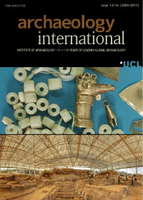
Archaeology International
Advancing archaeological knowledge for a global audience.Archaeology International is a prestigious open-access journal dedicated to advancing the field of archaeology since its inception in 1997. Published by UCL PRESS, the journal provides a platform for researchers, professionals, and students to disseminate their findings and share innovative ideas in archaeological studies. It features a rich array of articles that capture current trends, methodologies, and debates within the discipline, fostering a collaborative academic environment. Based in London, England, this journal is committed to accessibility and inclusivity, ensuring that valuable research is available to a global audience without subscription barriers. With a focus on interdisciplinary approaches, Archaeology International serves as an essential resource for those interested in the preservation of cultural heritage, and it actively encourages contributions that explore both past civilizations and contemporary archaeological practices.

Archeologia e Calcolatori
Pioneering Research in Archaeology and Computational TechniquesArcheologia e Calcolatori is a distinguished open-access journal published by EDIZIONI ALL INSEGNA GIGLIO SAS in collaboration with the Italian National Research Council, dedicated to advancing knowledge in the fields of archaeology and its intersections with computational methodologies. Since its inception in 1998, the journal has become a pivotal resource for researchers and practitioners, offering a platform for innovative studies and critical discussions at the forefront of archaeological science. With its current impact reflected in Scopus rankings, Archeologia e Calcolatori is placed in Q2 for both Archaeology and Archaeology (Arts and Humanities), and its commitment to quality scholarship is evident. The journal benefits from open access, ensuring that scholarly findings are readily available to a global audience. By prioritizing the dissemination of interdisciplinary research methods and explorative analyses, it aims to foster collaboration and inspire new directions in archaeological and computational research.

SOUTH AFRICAN ARCHAEOLOGICAL BULLETIN
Exploring the Depths of History in South Africa.Welcome to the SOUTH AFRICAN ARCHAEOLOGICAL BULLETIN, a premier academic journal dedicated to the dynamic field of archaeology in South Africa and beyond. Published by the SOUTH AFRICAN ARCHAEOLOGICAL SOC, this journal boasts an impressive Q1 ranking in both Archaeology (arts and humanities) and Archaeology categories as of 2023, placing it among the top tier of scientific journals in its discipline. With an extensive publication history spanning from 2002 to 2023, it serves as a crucial platform for disseminating pioneering research and scholarly discussions that illuminate the rich tapestry of South African archaeological heritage. Although it does not currently offer open access, the journal’s rigorous peer-review process, combined with its standing in the Scopus rankings—where it ranks 78 out of 413 in the arts and humanities and 75 out of 354 in social sciences—underscores its commitment to academic excellence. Researchers, professionals, and students alike will find this journal an essential resource for exploring innovative methodologies, archaeological discoveries, and theoretical advancements shaping the understanding of human history.
Palestine Exploration Quarterly
Fostering Discourse on Palestine's Archaeological TreasuresPalestine Exploration Quarterly, published by Routledge Journals, Taylor & Francis Ltd, is a leading academic journal that has been at the forefront of archaeological, historical, and cultural studies concerning Palestine since its inception in 1865. With an impressive Q1 ranking in multiple categories including Archaeology, History, Religious Studies, and Visual Arts and Performing Arts, the journal is recognized for its rigorous peer-reviewed content that significantly contributes to the understanding of cultural heritage and societal dynamics in the region. The UK-based journal offers an array of scholarly articles, reviews, and reports aimed at researchers, professionals, and students in the humanities and social sciences. With a strong focus on advancing knowledge and fostering academic discourse, the Palestine Exploration Quarterly remains an invaluable resource for those engaged in the exploration and interpretation of Palestine's rich history and heritage, now accessible through various academic libraries worldwide.

Revista de Arqueologia Historica Argentina y Latinoamericana
Advancing Knowledge in Historical Archaeology Across BordersRevista de Arqueologia Historica Argentina y Latinoamericana is a vital scholarly journal dedicated to the field of archaeology, with a particular focus on the historical dimensions of Argentina and Latin America. Published by the Assoc Professional Archaeologists Argentine Republic, this open-access journal has been enriching the archaeological discourse since 2007, making its valuable content freely accessible to researchers, professionals, and students around the globe. With an ISSN of 1851-3190 and an E-ISSN of 2344-9918, the journal aims to foster a deeper understanding of the archaeological heritage of the region by publishing innovative research articles, critical reviews, and methodological advancements in the study of historical archaeology. Positioned as a prominent platform for scholarship, it plays a crucial role in advancing archaeological knowledge while promoting interdisciplinary approaches within the field.
ACTA ARCHAEOLOGICA
Bridging Cultures Through Archaeological ResearchACTA ARCHAEOLOGICA is a highly regarded, peer-reviewed journal published by BRILL, focusing on the dynamic field of archaeology. With an ISSN of 0065-101X and an E-ISSN of 1600-0390, this journal disseminates innovative research, critical analyses, and comprehensive reviews that contribute to our understanding of human history, cultural heritage, and archaeological methodology. ACTA ARCHAEOLOGICA has excelled in its field, achieving a Q1 ranking in both the Arts and Humanities and Social Sciences categories for 2023, showcasing its impact and relevance in scholarly discourse. Though not currently open access, the journal caters to a diverse audience of researchers, professionals, and students, offering invaluable insights into archaeological studies from a global perspective. As it continues to foster academic dialogue, ACTA ARCHAEOLOGICA remains a cornerstone for those looking to deepen their knowledge and engage with cutting-edge archaeological research.

Archeologicke Rozhledy
Connecting disciplines, enriching archaeology.Archeologicke Rozhledy, published by the Academy of Sciences of the Czech Republic, Institute of Archaeology, is a pivotal open-access journal dedicated to advancing the field of archaeology. Since transitioning to open access in 2019, it has made significant strides in disseminating high-quality research, serving as a vital resource for researchers, professionals, and students alike. With an ISSN of 0323-1267, the journal has gained recognition for its contributions in the domains of arts and humanities, particularly archaeology, as evidenced by its 2023 Q2 ranking in both categories. Operating out of the historical city of Prague, the journal encompasses a broad scope of archaeological scholarship, reflecting a commitment to interdisciplinary approaches and fostering dialogue within the global archaeological community. With its notable Scopus rankings—#115/413 in Arts and Humanities and #113/354 in Social Sciences—Archeologicke Rozhledy stands as a crucial outlet for innovative research and scholarly exchange.

Cuadernos de Prehistoria y Arqueologia-Universidad Autonoma de Madrid
Uncovering the Past, Shaping the FutureCuadernos de Prehistoria y Arqueologia-Universidad Autonoma de Madrid is a distinguished academic journal dedicated to the fields of archaeology and prehistory, published by the Universidad Autonoma de Madrid, Departamento de Prehistoria y Arqueología. With an ISSN of 0211-1608, this journal plays a crucial role in disseminating significant research findings and theoretical advancements within these domains. Recognized for its scholarly excellence, it holds impressive quartile rankings in 2023, including Q2 in Archaeology and Q1 in History, reflecting its high impact within the academic community. While currently not an open-access publication, Cuadernos de Prehistoria y Arqueologia provides valuable insights to researchers, professionals, and students engaged in the exploration of human history and cultural heritage from 2018 to 2024 and beyond. With a commitment to fostering interdisciplinary dialogue, this journal serves as an essential platform for innovative studies and comprehensive reviews, contributing to the advancement of knowledge in archaeology and prehistory.