
Asia-Pacific Journal of Ophthalmology
metrics 2024
Shaping the future of ophthalmology, one study at a time.
Introduction
Asia-Pacific Journal of Ophthalmology is a distinguished open access journal published by the Asia-Pacific Academy of Ophthalmology (APAO), specializing in the latest advancements and research in ophthalmology. Since its inception in 2013, this journal has established itself as a vital platform for disseminating innovative findings and clinical practices across the Asia-Pacific region and beyond. With an impressive Scopus ranking of #10 out of 137 in the field of Medicine (Ophthalmology), placing it in the 93rd percentile, it garners significant attention and respect within the academic community. Currently holding a Q1 categorization in both Medicine (miscellaneous) and Ophthalmology, the journal embraces a broad scope that encompasses clinical studies, experimental research, and reviews aimed at enhancing the understanding and management of eye health. Its open access model since 2019 ensures that all published works are freely accessible, promoting greater collaboration and knowledge sharing among researchers, clinicians, and students. Situated in the Netherlands with a prominent address in Hong Kong, the journal serves as an essential resource for anyone dedicated to the field of ophthalmology.
Metrics 2024
 -3.703.90-
Metrics History
Rank 2024
IF (Web Of Science)
JCI (Web Of Science)
Quartile History
Similar Journals

Ophthalmologie
Illuminating the Path to Visionary CareOphthalmologie is a distinguished journal published by Springer Heidelberg, specializing in the broad and evolving field of ophthalmology. With an ISSN of 2731-720X and an E-ISSN of 2731-7218, the journal serves as a pivotal platform for disseminating cutting-edge research and clinical advancements in the realm of eye health. As of 2023, it ranks in the third quartile (Q3) within both the general medicine and ophthalmology categories, reflecting its substantial contribution to the academic community and the field's knowledge base. The journal aims to foster collaboration among researchers, medical professionals, and students by offering innovative findings that enhance understanding and treatment of ocular diseases. By nurturing high-quality scholarly discussions, Ophthalmologie plays an essential role in the ongoing development of therapeutic strategies and ophthalmic techniques that ultimately benefit patient care globally. This commitment to excellence is evident as it continues to evolve through its convergence from 1992 to 2023, staying relevant in an ever-changing scientific environment.

GRAEFES ARCHIVE FOR CLINICAL AND EXPERIMENTAL OPHTHALMOLOGY
Elevating Clinical and Experimental OphthalmologyGRAEFES ARCHIVE FOR CLINICAL AND EXPERIMENTAL OPHTHALMOLOGY, published by Springer, has established itself as a premier journal in the field of ophthalmology since its inception in 1870. With an ISSN of 0721-832X and an E-ISSN of 1435-702X, this esteemed journal enjoys a notable impact in the research community, ranking Q1 in Ophthalmology and Q1 in Sensory Systems, as per the latest 2023 journal category quartiles. GRAEFES Archive is dedicated to advancing our understanding of ocular health through both clinical and experimental studies, making it an essential resource for researchers, practitioners, and students alike. Its comprehensive scope covers various aspects of ophthalmic science, reflecting its long-standing commitment to quality and excellence. Although it currently operates on a subscription basis, the journal's significant Scopus rankings—24th out of 137 in Ophthalmology—underscore its relevance and influence within the scientific community. Situated in Germany, with its address in the United States, this international journal continues to shape the discourse on vision science and therapeutic innovation.
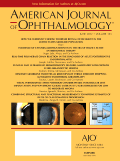
AMERICAN JOURNAL OF OPHTHALMOLOGY
Advancing the Frontiers of Eye HealthAmerican Journal of Ophthalmology, published by Elsevier Science Inc, stands as a premier outlet for significant advancements in the field of ophthalmology. Established in 1918, this journal has a long-standing tradition of disseminating high-quality research, which is reflected in its impressive Scopus ranking, positioned at #8 out of 137 in the ophthalmology category, placing it in the 94th percentile. With its 2023 designation as Q1 in Ophthalmology, it serves as a critical platform for researchers, practitioners, and students who seek to stay at the forefront of ocular health and visual science. Although the journal does not currently offer open access options, it provides an array of access formats, ensuring that valuable research is available to a broad audience dedicated to the exploration and understanding of eye diseases and treatments. As it continues to evolve towards 2024, the American Journal of Ophthalmology remains essential for anyone engaged in ophthalmic research and clinical practice.
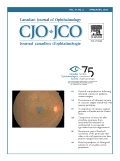
CANADIAN JOURNAL OF OPHTHALMOLOGY-JOURNAL CANADIEN D OPHTALMOLOGIE
Shaping the landscape of ophthalmology since 1966.Canadian Journal of Ophthalmology - Journal Canadien d'Ophtalmologie, published by the prestigious Canadian Ophthalmological Society, serves as a leading platform for disseminating cutting-edge research in the field of ophthalmology. With an ISSN of 0008-4182 and E-ISSN 1715-3360, the journal boasts a commendable impact factor and maintains a strong presence within the medicine and ophthalmology categories, ranking in the Q2 quartile. This journal not only provides significant insights into clinical practices and advancements but also contributes to the understanding of ocular health issues facing contemporary society. Since its inception in 1966, it has published high-quality research, making substantial strides in both practical and theoretical aspects of ophthalmology until 2024. Although it is not an open-access journal, it establishes a vital resource for researchers, professionals, and students alike, fostering an informed community dedicated to improving vision care.
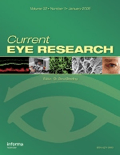
CURRENT EYE RESEARCH
Pioneering Research for a Brighter VisionCURRENT EYE RESEARCH is a prestigious academic journal published by Taylor & Francis Inc, focusing on advancing the field of ophthalmology and its intersection with cellular and molecular neuroscience. Since its inception in 1981, this journal has provided a vital platform for original research, reviews, and technical notes, presenting a wealth of knowledge to practitioners and researchers alike. With an impressive 2023 impact factor reflected in its ranking of Q2 in Ophthalmology and Q2 in Sensory Systems, and a Q3 ranking in Cellular and Molecular Neuroscience, CURRENT EYE RESEARCH plays a crucial role in fostering interdisciplinary collaboration and innovation. The journal is indexed in Scopus, where it holds strong positions in both the Medicine and Neuroscience categories, enhancing its visibility and reach. Researchers and professionals in these fields can access cutting-edge findings and contribute to the ongoing discourse surrounding eye health, making it an essential resource for anyone invested in advancing knowledge and treatment in ophthalmic science.
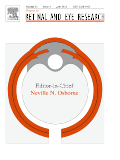
PROGRESS IN RETINAL AND EYE RESEARCH
Advancing the Frontiers of Vision SciencePROGRESS IN RETINAL AND EYE RESEARCH, published by PERGAMON-ELSEVIER SCIENCE LTD, is a premier journal dedicated to the advancement of knowledge in the fields of ophthalmology and sensory systems. With an impressive impact factor and a Q1 category ranking in both Ophthalmology and Sensory Systems as of 2023, this journal exemplifies excellence in research dissemination. Given its stature, it ranks #1 out of 137 in Ophthalmology and #1 out of 42 in Neuroscience - Sensory Systems, placing it within the top percentile of scientific publications in these domains. The journal has been actively contributing to the field since its inception in 1994 and continues to be a vital resource for researchers, clinicians, and students seeking the latest insights and breakthroughs in the understanding of retinal diseases and eye health. While it maintains a traditional subscription model, the journal remains committed to publishing high-quality, peer-reviewed articles that drive forward the frontiers of eye research and therapeutic innovation. With its strong scientific rigor and a vast array of articles, PROGRESS IN RETINAL AND EYE RESEARCH is indispensable for anyone invested in the study of visual sciences.
CLINICAL AND EXPERIMENTAL OPHTHALMOLOGY
Elevating Standards in Clinical Ophthalmic ResearchCLINICAL AND EXPERIMENTAL OPHTHALMOLOGY is a leading peer-reviewed journal published by Wiley, renowned for its commitment to advancing the field of ophthalmology. With an impressive impact factor reflecting its high-quality research contributions, this journal is ranked in the Q1 category both in Medicine (miscellaneous) and Ophthalmology, signifying its crucial role in shaping contemporary ophthalmic research. It boasts a remarkable position in the Scopus Ranks, standing at Rank #13 out of 137 in the field of Medicine and Ophthalmology, placing it within the 90th percentile among its peers. Having been in circulation since 1979, this journal encompasses a broad scope of topics that aim to disseminate groundbreaking findings and stimulate dialogue among researchers, clinicians, and students alike. It is easily accessible to a global audience, embodying the principles of open access, making valuable research available to all. For anyone seeking to stay at the forefront of ophthalmology, CLINICAL AND EXPERIMENTAL OPHTHALMOLOGY is an indispensable resource that fosters knowledge and innovation in the ever-evolving landscape of eye care.
Middle East African Journal of Ophthalmology
Illuminating the path of ocular innovation.The Middle East African Journal of Ophthalmology is a distinguished publication dedicated to advancing knowledge in the field of ophthalmology, published by Wolters Kluwer Medknow Publications in India. With a robust focus on contributions that bridge the gap between clinical practices and scientific research, this journal serves as a crucial platform for researchers, practitioners, and students alike. Since its inception, it has consistently disseminated high-impact research, achieving notable recognition with a Q3 ranking in both Medicine (miscellaneous) and Ophthalmology categories as of 2023. Despite being a newer entrant into the scholarly landscape, it features an array of innovative articles, highlighting significant advancements and emerging trends in ocular health. Researchers may access a wealth of knowledge through its open access articles, promoting the dissemination of vital ophthalmic research that is relevant in both Middle Eastern and African contexts. By fostering collaboration and communication among professionals in the field, the Middle East African Journal of Ophthalmology is committed to championing excellence in eye care and elevating the standard of research applicable to global populations.
OPHTHALMOLOGICA
Where Vision Meets Innovation and InsightOPHTHALMOLOGICA is a prestigious journal published by KARGER, dedicated to the dynamic field of ophthalmology and its interdisciplinary connections with medicine and sensory systems. With a rich history spanning over a century since its inception in 1899, this journal is esteemed for its high-quality research and impactful contributions, maintaining an impressive Q1 quartile ranking in both ophthalmology and miscellaneous medicine as of 2023, alongside a notable Q2 status in sensory systems. The journal's influence is reinforced by its Scopus rankings, where it ranks 26th out of 137 in ophthalmology, showcasing a strong percentile position of 81. Based in Basel, Switzerland, OPHTHALMOLOGICA serves as an essential platform for researchers, professionals, and students, providing essential insights, reviews, and studies that push the boundaries of knowledge in the vision sciences. Although it does not currently offer open access, its contributions are critical for those pursuing advancements in ocular health and related disciplines.
ARQUIVOS BRASILEIROS DE OFTALMOLOGIA
Empowering the global community with groundbreaking findings.ARQUIVOS BRASILEIROS DE OFTALMOLOGIA is a prominent peer-reviewed journal dedicated to the field of ophthalmology, published by CONSEL BRASIL OFTALMOLOGIA since its inception in 1945. With its commitment to disseminating high-quality research, the journal has transitioned to an Open Access model since 2001, ensuring that vital findings in ophthalmology are freely available to researchers, clinicians, and students alike. Located in São Paulo, Brazil, this esteemed publication occupies a significant position in the medical field, currently holding a Q3 ranking in both the miscellaneous medicine and ophthalmology categories. Although it maintains a legacy of fluctuating impact, recognized for its contribution to the academic community, ARQUIVOS BRASILEIROS DE OFTALMOLOGIA continues to attract a diverse international readership, making it a valuable resource for advancements in eye health, surgical techniques, and ocular research.