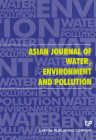
Asian Journal of Water Environment and Pollution
Scope & Guideline
Transforming water science through interdisciplinary research.
Introduction
Aims and Scopes
- Water Quality Assessment and Management:
The journal emphasizes research on evaluating the quality of water sources, using indices like the Water Quality Index (WQI), and exploring treatment technologies to ensure safe drinking water and sustainable water use. - Pollution Control Technologies:
It covers innovative methodologies for pollution reduction, including the use of nanomaterials, bioremediation techniques, and adsorption processes for contaminants removal from water and soil. - Environmental Impact Studies:
Research articles often assess the impacts of human activities on water bodies, including industrial pollution, agricultural runoff, and urbanization, enhancing understanding of anthropogenic effects on ecosystems. - Climate Change and Water Resources:
The journal discusses the implications of climate change on water resources, including hydrological modeling, drought assessments, and adaptation strategies for sustainable water management. - Waste Management and Resource Recovery:
It addresses the management of wastewater and solid waste, focusing on recycling, composting, and the use of waste materials in environmental applications.
Trending and Emerging
- Nanotechnology in Water Treatment:
There is a significant increase in research involving nanomaterials for the removal of pollutants from water, highlighting the growing interest in advanced materials for environmental applications. - Impact of Climate Change on Water Resources:
Recent publications increasingly address the challenges posed by climate change on water availability and quality, emphasizing the need for adaptive management strategies in response to shifting climatic patterns. - Microbial and Biochemical Remediation Techniques:
The use of biological methods, including microbial treatments and bioremediation, is trending as researchers explore sustainable and eco-friendly solutions for pollution management. - Smart Water Management Systems:
Emerging studies on IoT-based solutions and smart technologies for water distribution and management indicate a growing trend towards integrating technology for efficient water resource management. - Policy and Governance in Water Management:
There is an increasing emphasis on the role of policy and governance in addressing water pollution and management, reflecting the intersection of environmental science and social sciences.
Declining or Waning
- Traditional Water Treatment Methods:
Research on conventional methods for water treatment has decreased as newer, more efficient technologies and methodologies gain traction in the field. - Aquatic Biodiversity Studies:
Although still relevant, there seems to be a reduction in studies specifically focused on biodiversity in aquatic ecosystems, as attention shifts towards pollution and its management. - Historical Analysis of Pollution Trends:
The focus on historical pollution trends and their analyses has diminished, possibly due to a greater emphasis on current and emerging technologies for pollution control.
Similar Journals
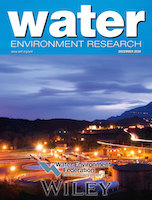
WATER ENVIRONMENT RESEARCH
Exploring the depths of water science and technology.WATER ENVIRONMENT RESEARCH is a leading scholarly journal dedicated to disseminating cutting-edge research in the fields of water science and technology. Published by WILEY, this esteemed journal (ISSN: 1061-4303; E-ISSN: 1554-7531) is renowned for its rigorous peer-reviewed articles that explore critical issues related to ecological modeling, environmental chemistry, pollution, and waste management. Established in 1992 and continuing through 2024, WATER ENVIRONMENT RESEARCH has secured a notable position within its category quartiles, ranking in the Q2 tier for several disciplines, including ecological modeling and water science and technology. It is highly regarded in the Scopus database, holding a rank of #53 out of 261 journals in Environmental Science related to Water Science and Technology, positioning it in the 79th percentile. As it continues to bridge research and practice, this journal serves as an essential resource for researchers, professionals, and students striving to advance knowledge and foster sustainable solutions within the water environment sector.
Water Economics and Policy
Transforming Insights into Action for Water SustainabilityWater Economics and Policy is a leading academic journal specializing in the interdisciplinary examination of water-related economic issues and policy frameworks. Published by WORLD SCIENTIFIC PUBL CO PTE LTD in Singapore, this journal serves as a pivotal platform for sharing innovative research, empirical studies, and theoretical developments that address the complex interactions between water resources management, economic sustainability, and policy formulation. With its impact factor reflecting its growing influence in the field, Water Economics and Policy is indexed in several key categories, ranking in the third quartile in areas such as Business and International Management, Economics and Econometrics, and Water Science and Technology. Launched in 2015, the journal embraces an open-access approach to enhance the dissemination of knowledge and insights among researchers, policymakers, and practitioners. Its commitment to fostering dialogue on critical water issues makes it an invaluable resource for anyone seeking to advance their understanding of water economics and contribute to the sustainable management of water resources.
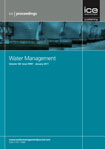
PROCEEDINGS OF THE INSTITUTION OF CIVIL ENGINEERS-WATER MANAGEMENT
Driving Change in Water Management through Scholarly ExcellencePROCEEDINGS OF THE INSTITUTION OF CIVIL ENGINEERS-WATER MANAGEMENT is a prestigious journal published by Emerald Group Publishing Ltd, dedicated to advancing the field of water management within civil engineering. With an ISSN of 1741-7589 and an E-ISSN of 1751-7729, this journal delivers peer-reviewed research that spans the critical intersections of water science and technology, contributing valuable insights into sustainable water management practices. As evidenced by its ranking in the 2023 Scopus categories, where it holds the Q3 quartile in Water Science and Technology, and a respectable position among its peers, the journal remains a vital resource for researchers, professionals, and students in the field. Though it is not an open-access journal, it offers accessible subscription options that facilitate worldwide dissemination of knowledge, enhancing its role as a fundamental reference point for cutting-edge developments in water management. For those looking to publish or stay updated on the latest research trends, this journal serves as an essential platform for promoting innovation and sustainable practices in civil engineering and water resources management.
Water Conservation Science and Engineering
Unveiling Innovations in Water Science and TechnologyWater Conservation Science and Engineering, published by SPRINGERNATURE, is a vital academic journal dedicated to advancing the fields of environmental engineering, ocean engineering, waste management, and water science and technology. Since its inception in 2016, the journal has quickly established itself within the academic community, achieving a commendable Q3 ranking across multiple categories in 2023. With an ISSN of 2366-3340 and an E-ISSN of 2364-5687, it is accessible to a global readership eager to explore the latest research and innovations in water conservation and sustainable practices. Although currently not open access, the journal is committed to publishing high-quality scholarly articles that provide insights into effective water management strategies, innovative engineering solutions, and the critical importance of preserving our water resources. Based in Singapore, Water Conservation Science and Engineering aims to foster interdisciplinary collaboration among researchers, professionals, and students, making it an essential resource for anyone passionate about environmental sustainability and preservation.
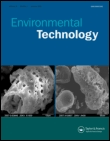
ENVIRONMENTAL TECHNOLOGY
Exploring the Frontiers of Environmental Science and TechnologyENVIRONMENTAL TECHNOLOGY, published by Taylor & Francis Ltd, is a prominent journal that serves as a crucial platform for disseminating pioneering research in the multifaceted fields of Environmental Science, Water Science and Technology, and Waste Management. With an impressive record spanning over three decades from 1990 to 2024, the journal holds significant rankings in various categories, including Q3 in Environmental Chemistry and Q2 in both Medicine (miscellaneous) and Water Science and Technology for 2023. Its Scopus rankings further position it within the top tiers of Environmental Science disciplines, reflecting its influence and relevance, particularly as it pertains to pressing global environmental challenges. While the journal does not offer an open access option, it remains dedicated to advancing knowledge and promoting innovative solutions among researchers, professionals, and students engaged in environmental studies. As it continues to attract high-quality submissions, ENVIRONMENTAL TECHNOLOGY plays a vital role in shaping future research and practices aimed at sustainable environmental management.
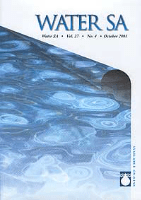
WATER SA
Connecting research and innovation in water management.WATER SA, published by the WATER RESEARCH COMMISSION, serves as a pivotal platform for interdisciplinary research in the areas of water science and technology. With an ISSN of 0378-4738 and an E-ISSN of 1816-7950, this open-access journal has been committed to disseminating knowledge since 2005, ensuring that research is freely accessible to a global audience. As of 2023, it holds a Q3 ranking in several key categories including Applied Microbiology and Biotechnology, Management, Monitoring, Policy and Law, Waste Management and Disposal, and Water Science and Technology. These rankings reflect its significant contribution to these disciplines, particularly in South Africa where it is based. With a history dating back to 1976 and converging research efforts extending through 2024, WATER SA aims to illuminate pressing water-related challenges and foster innovative solutions through rigorous scientific inquiry. Researchers, professionals, and students interested in the sustainability and management of water resources will find its comprehensive portfolio essential for advancing their work and understanding in an increasingly critical field.
Hydrologie und Wasserbewirtschaftung
Advancing water science for a sustainable future.Hydrologie und Wasserbewirtschaftung, published by the BUNDESANSTALT GEWASSERKUNDE-BFG, stands as a vital open access journal in the field of hydrology and water management since its inception in 1999. Based in Germany, this journal aims to disseminate high-quality research related to water resources, environmental sustainability, and innovative management strategies. Though it has a Q4 ranking in Water Science and Technology for 2023, and holds a Scopus rank of 113 out of 225, the journal provides an essential platform for researchers, professionals, and students interested in advancing their understanding of water science. With coverage spanning from 1999 to 2018 and a seamless move to an open access model, Hydrologie und Wasserbewirtschaftung remains committed to contributing to the ongoing dialogue around critical water issues. Researchers looking to publish their findings or stay abreast of developments in water science will find this journal indispensable.
Journal of Water Management Modeling
Pioneering Solutions for Today's Water ChallengesThe Journal of Water Management Modeling, published by COMPUTATIONAL HYDRAULICS INT, stands as a pivotal resource in the fields of Civil and Structural Engineering, Geography, Planning and Development, and Water Science and Technology. With an ISSN of 2292-6062, this Canadian-based journal has earned its reputation by exploring innovative modeling approaches to enhance water management, crucial in addressing today's environmental challenges. Despite its current Q3 status in Civil and Structural Engineering and Water Science categories, alongside a respectable Q2 rank in Geography, the journal is committed to advancing knowledge and fostering collaboration among researchers, practitioners, and students passionate about the sustainable management of water resources. The journal operates on an open-access model, ensuring research is readily available to a broad audience, and has converged its editorial focus from 2018 to 2024, continuously adapting to emerging trends and technologies within the discipline. As a part of the global conversation regarding effective water management, it plays a vital role in informing policies and practices that impact communities and ecosystems alike.
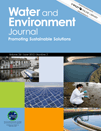
WATER AND ENVIRONMENT JOURNAL
Innovating research at the intersection of water and environment.WATER AND ENVIRONMENT JOURNAL is a prominent interdisciplinary journal dedicated to the latest research and advancements in the fields of water resources, environmental engineering, and pollution management. Published by WILEY, the journal has established itself as an essential resource for academics, practitioners, and policymakers since its inception in 1987. With an impressive impact factor reflecting its robust influence, it ranks in the Q2 and Q3 quartiles across multiple categories, including Water Science and Technology, Environmental Engineering, and Management, Monitoring, Policy and Law. The journal welcomes high-quality research articles, reviews, and case studies that address the critical challenges facing water and environmental sciences. As an open access publication, it provides a platform for widespread accessibility and engagement, ensuring that the knowledge generated is disseminated to a diverse audience. With a commitment to advancing understanding and solutions in water-related issues, WATER AND ENVIRONMENT JOURNAL plays a crucial role in shaping the future of environmental research and technology.
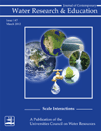
Journal of Contemporary Water Research & Education
Advancing Knowledge for Sustainable Water SolutionsJournal of Contemporary Water Research & Education is a leading publication in the field of water resources, committed to advancing the understanding and management of water-related issues through innovative research and education. Published by WILEY, this journal serves as a vital platform for researchers and practitioners to disseminate knowledge on contemporary water challenges, management strategies, and environmental policies. With an ISSN of 1936-7031 and an E-ISSN of 1936-704X, it provides a wealth of peer-reviewed articles that are essential for anyone interested in sustainable water resource practices. Although it does not currently operate under an open-access model, the journal's comprehensive content remains accessible through various institutional and personal subscriptions. As we face increasing water scarcity and quality issues globally, the Journal of Contemporary Water Research & Education strives to foster collaboration and innovation, playing a pivotal role in equipping scholars, professionals, and students with the knowledge necessary to tackle these pressing challenges.