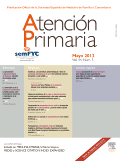
Atencion Primaria
Scope & Guideline
Pioneering Open Access Knowledge for Better Health Outcomes
Introduction
Aims and Scopes
- Primary Healthcare Quality Improvement:
Research aimed at identifying, evaluating, and implementing strategies to improve the quality and efficiency of primary healthcare services. - Chronic Disease Management:
Studies focused on effective management and treatment approaches for chronic diseases such as diabetes, hypertension, and obesity, particularly in primary care settings. - Mental Health in Primary Care:
Exploration of the role of primary care in addressing mental health issues, including integration of mental health services and addressing the psychological impact of chronic illnesses. - Health Education and Promotion:
Research on educational interventions aimed at promoting health, preventing disease, and improving patient self-management in various populations. - Community Health and Vulnerable Populations:
Investigations into health disparities, access to care, and tailored interventions for marginalized and vulnerable groups, including migrants and low-income communities. - Innovations in Health Technology:
Studies evaluating the impact of digital health technologies, including telemedicine and mobile health applications, on patient care and health outcomes. - Health Policy and System Reform:
Research discussing the implications of health policies on primary care delivery and the role of healthcare systems in promoting effective primary care.
Trending and Emerging
- Telehealth and Virtual Care:
The rapid adoption of telemedicine and virtual care solutions has been a significant trend, driven by the need for accessible healthcare during the COVID-19 pandemic and beyond. - Social Determinants of Health:
There is a growing focus on understanding how social, economic, and environmental factors affect health outcomes, particularly in the context of health equity. - Integrative Approaches to Health:
Emerging research emphasizes the integration of physical and mental health services, recognizing the importance of addressing the psychosocial aspects of health. - Patient-Centered Care Models:
A trend towards models of care that prioritize patient preferences, values, and involvement in their own healthcare decisions is becoming more prominent. - Public Health and Community Resilience:
Research is increasingly focusing on the role of primary care in enhancing community resilience and public health preparedness, particularly in response to pandemics. - Use of Artificial Intelligence in Healthcare:
Emerging studies are exploring the applications of AI and machine learning in improving diagnosis, treatment, and patient management in primary care settings.
Declining or Waning
- Traditional Clinical Practices:
Research related to conventional diagnostic and treatment methods appears to be waning, possibly due to a shift towards evidence-based and innovative practices. - Invasive Procedures in Primary Care:
There has been a noticeable decrease in studies focusing on invasive procedures performed in primary care settings, as non-invasive and more patient-centered approaches gain traction. - Pharmaceutical Interventions Without Comprehensive Management:
There is less emphasis on pharmacological treatments in isolation, indicating a move towards integrated care models that consider holistic patient management. - Single-Disease Focus Studies:
Research concentrating solely on individual diseases, without considering multi-morbidity and the interactions between different health conditions, is less prevalent.
Similar Journals

Family Medicine and Community Health
Transforming family medicine for a healthier tomorrow.Family Medicine and Community Health, published by the BMJ PUBLISHING GROUP, is a leading journal dedicated to advancing research and practice in the fields of family medicine and public health. With an impact factor placing it in the Q1 quartile for both Family Practice and Public Health, this journal is indispensable for researchers, clinicians, and policymakers aiming to shape healthcare practices effectively. Since becoming Open Access in 2013, it has prioritized the dissemination of high-quality, peer-reviewed articles to a global audience, ensuring that knowledge is accessible to all. The journal’s rigorous selection process has established its reputation, reflected in its exceptional Scopus rankings—ranked #3 out of 56 in Family Practice and #42 out of 665 in Public Health. By fostering dialogue among healthcare professionals and academic researchers, Family Medicine and Community Health plays a critical role in addressing contemporary health challenges and promoting community-oriented healthcare solutions.
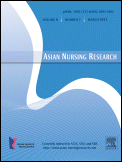
Asian Nursing Research
Advancing nursing knowledge for a healthier tomorrow.Asian Nursing Research is a prestigious open access journal published by ELSEVIER SCIENCE INC, located in South Korea. Since its inception in 2007, this journal has served as an essential platform for disseminating high-quality research in the field of nursing and healthcare, boasting a notable impact factor and categorized within the top quartiles of both Q1 in Nursing (miscellaneous) and Q2 in Medicine (miscellaneous) for 2023. It holds a commendable rank of #27 out of 139 in the general nursing category, placing it in the 80th percentile according to Scopus rankings. The journal's comprehensive scope encompasses a wide range of topics relevant to nursing practice and research, thereby addressing pressing healthcare challenges and promoting evidence-based clinical practices. By offering open access since 2007, Asian Nursing Research ensures that researchers, professionals, and students have unrestricted access to valuable insights and advancements in the nursing discipline, making it a critical resource for advancing knowledge and improving patient care across Asia and beyond.
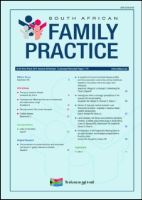
South African Family Practice
Innovating public health solutions for a healthier nation.South African Family Practice, with ISSN 2078-6190 and E-ISSN 2078-6204, is a leading journal published by AOSIS, dedicated to advancing research and knowledge in the fields of family practice and public health. As an Open Access journal since 2017, it aims to foster widespread dissemination of research findings, making them accessible to a diverse audience of researchers, healthcare professionals, and students. With its focus on the unique challenges and innovations in South African healthcare, the journal plays a critical role in addressing public health issues relevant to the region. Its classification in the Q3 quartile for family practice and public health, along with its Scopus rankings, underscores its commitment to quality and the significance of its contributions to the academic community. By serving as a platform for empirical studies, reviews, and case reports, the South African Family Practice continues to be a vital resource for those invested in improving healthcare delivery and health outcomes in South Africa and beyond.
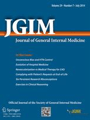
JOURNAL OF GENERAL INTERNAL MEDICINE
Navigating the Future of Internal Medicine TogetherJOURNAL OF GENERAL INTERNAL MEDICINE, a leading publication in the field of internal medicine, is published by Springer and boasts an impressive Q1 rank in internal medicine as of 2023, situating itself prominently at Rank #28 out of 167 in Scopus with an 83rd percentile. Since its inception in 1986, this esteemed journal has been at the forefront of disseminating high-quality research, clinical practices, and healthcare innovations that shape the landscape of internal medicine. The journal is recognized for its original research, systematic reviews, and practice guidelines that are essential for professionals navigating the complexities of patient care and clinical decision-making. With access options available, it serves as a critical resource for researchers, healthcare practitioners, and students alike, facilitating the enhancement of medical knowledge and evidence-based practice globally. The Journal's commitment to excellence is reflected in its ongoing contribution to advancing the field and ensuring that the latest findings reach those who need them most.

BJGP Open
Connecting researchers and clinicians for impactful outcomes.BJGP Open is a leading open-access journal published by the Royal College of General Practitioners, dedicated to advancing the field of family practice. Since its inception in 2017 and moving into its converged years until 2024, this journal has established itself as a pivotal resource for researchers, clinicians, and educators in the healthcare community. With an impressive Q1 ranking in Family Practice and a top 15% Scopus ranking, BJGP Open serves as a forum for high-quality, peer-reviewed research that directly impacts clinical practice in the United Kingdom and beyond. The journal underscores its commitment to accessible scholarly communication, having embraced open access since 2018, making its content freely available to all. This approach facilitates the dissemination of vital knowledge and practical insights, fostering improved patient care and professional development in the field of family medicine. Scholars and practitioners can benefit from BJGP Open's rigorous research, systematic reviews, and innovative approaches to health care. For more information, visit the journal's official site at 14 Princes Gate, Hyde Park, London SW7 1PU, England.
NURSING CLINICS OF NORTH AMERICA
Empowering healthcare professionals with cutting-edge insights.Nursing Clinics of North America is a premier peer-reviewed journal published by W B Saunders Co - Elsevier Inc, providing a vital platform for the dissemination of innovative research and clinical practice insights in the field of nursing and medicine. With an impressive impact factor reflecting its relevance in academic circles, this journal falls within the Q2 category in both Medicine and Nursing disciplines, showcasing its importance to professionals and researchers. Established in 1966 and continuing through to 2024, it offers valuable contributions across a wide array of topics, facilitated by its Scopus rank of #41 in General Nursing and a 70th percentile ranking, marking it as one of the leading publications in the field. Although not an open-access journal, it provides subscription-based access to critical information that supports advancing nursing knowledge and practices. The journal is dedicated to enhancing the skills and understanding of nurses, healthcare professionals, and students, making it an essential resource for those seeking to excel in nursing and allied health professions.

Australian Journal of General Practice
Connecting Research and Practice to Enhance HealthcareThe Australian Journal of General Practice, published by the Royal Australian College of General Practitioners, serves as a leading platform for the dissemination of high-quality research and insights in the field of family practice. With an E-ISSN of 2208-7958 and a notable impact factor reflecting its rigorous peer-review process, this open-access journal provides researchers, practitioners, and students in Australia and beyond with accessible content that enhances clinical knowledge and practice. While categorized in Q2 for Family Practice and Q3 for Medicine (miscellaneous), it remains steadfast in its commitment to addressing pertinent issues in general practice. As the journal converges its scope from 2018 to 2024, it continues to foster innovation and collaboration within the field, making it an essential resource for those striving to improve patient care and outcomes in diverse settings.
Journal of the American Board of Family Medicine
Elevating Evidence-Based Practice in Family Health.The Journal of the American Board of Family Medicine, with ISSN 1557-2625 and E-ISSN 1558-7118, is a prestigious publication dedicated to advancing the field of family medicine. Published by the American Board of Family Medicine, this journal has established itself as a vital resource for researchers, practitioners, and students interested in both family practice and public health. As of 2023, it boasts impressive rankings, being in the Q1 category of Family Practice and the Q2 category of Public Health, Environmental and Occupational Health according to Scopus metrics, reflecting its significant impact and influence in the academic community. The journal's focus on high-quality research ensures that it remains at the forefront of evidence-based practice, fostering the dissemination of knowledge that is critical for improving patient care and outcomes. This journal, although not open-access, provides a wealth of insights and findings relevant to professionals striving to enhance their understanding and implementation of best practices in family medicine. With a converged publication history starting in 2002, it continues to serve as an essential platform for innovative studies and discussions that shape the future of family medicine.

Investigacion y Educacion en Enfermeria
Transforming healthcare education, one study at a time.Investigacion y Educacion en Enfermeria, published by Universidad de Antioquia, Facultad de Enfermería, stands as a pivotal open-access journal since 1983, contributing significantly to the field of nursing and healthcare education within Colombia and beyond. With its ISSN 0120-5307 and E-ISSN 2216-0280, this journal aims to foster the dissemination of high-quality research, aiming to enhance nursing practices and education aligned with a wide array of domains including Community and Home Care, Family Practice, Geriatrics, and Maternity and Midwifery. The journal's impressive performance in the 2023 Scopus rankings places it in the top quartiles in several categories, reflecting its importance and influence, particularly in Nursing and Health Sciences. By encouraging collaboration and dialogue among researchers, practitioners, and students, Investigacion y Educacion en Enfermeria aspires to serve as an essential resource for advancements in nursing education and service delivery, making vital contributions to the evolving landscape of healthcare.
FAMILY MEDICINE
Transforming Patient Outcomes, One Article at a TimeFAMILY MEDICINE is a prestigious peer-reviewed journal published by the SOC TEACHERS FAMILY MEDICINE, dedicated to advancing the field of family practice. With an ISSN of 0742-3225 and an E-ISSN of 1938-3800, this journal serves as a vital resource for researchers, healthcare professionals, and students involved in family medicine. Founded in 1985, it has consistently contributed to the growth of knowledge in this critical area, showcasing a wide range of original research, reviews, and practical applications. Recognized for its impact, the journal holds a Q2 quartile ranking in Family Practice, placing it in the top tier within its category, and ranks 22nd out of 56 in the Scopus database, reflecting its influence and relevance. While the journal operates under a subscription model, it remains committed to providing high-quality discourse and insights that shape the practice of family medicine. With a focus on current issues and evidence-based practices, FAMILY MEDICINE continues to be an essential publication for those dedicated to improving patient outcomes and advancing the field.