
ATOMIC DATA AND NUCLEAR DATA TABLES
metrics 2024
Exploring the depths of atomic and nuclear science.
Introduction
ATOMIC DATA AND NUCLEAR DATA TABLES, published by Academic Press Inc Elsevier Science, is a leading journal in the fields of atomic and molecular physics, as well as nuclear and high energy physics. With an ISSN of 0092-640X and an E-ISSN of 1090-2090, this esteemed journal has been providing comprehensive data tables and significant research insights since its establishment in 1969. Spanning until 2024, it continues to serve as an invaluable resource for researchers and professionals aiming to deepen their understanding of atomic interactions and nuclear processes. Holding a commendable Q2 ranking in both relevant categories, it is recognized for its impact, reflected in Scopus rankings, where it ranks 25th out of 87 in Nuclear and High Energy Physics, and 87th out of 224 in Atomic and Molecular Physics. While it does not offer open access, the journal remains a crucial repository for high-quality data essential for scientific endeavors and advancements in these complex fields.
Metrics 2024
 0.492.702.4069
Metrics History
Rank 2024
Scopus
IF (Web Of Science)
JCI (Web Of Science)
Quartile History
Similar Journals

ACTA PHYSICA POLONICA B
Advancing Physics through Rigorous InquiryACTA PHYSICA POLONICA B is a distinguished journal published by Jagiellonian University Press, based in Poland. This peer-reviewed publication focuses on advancing the field of Physics and Astronomy with a mission to disseminate high-quality research that spans various subfields and interdisciplinary connections. Since its inception in 1980, the journal has steadily become a reliable source of scientific discourse, continuing its commitment through 2024. With a Q3 rank in the Physics and Astronomy category, it stands as an important resource for both established and budding researchers, contributing to a deeper understanding of complex physical phenomena. The journal is indexed by Scopus, ensuring a broad reach within the academic community, although it is not classified as an open-access resource. By promoting rigorous scientific inquiry and fostering connections within the global academic landscape, ACTA PHYSICA POLONICA B plays a vital role in shaping the future of physics research.
PHYSICAL REVIEW C
Pioneering Research in High-Energy DynamicsPHYSICAL REVIEW C is an esteemed journal published by the American Physical Society, dedicated to advancing knowledge in the fields of nuclear and high-energy physics. With a proud ISSN of 2469-9985 and an E-ISSN of 2469-9993, it has established itself as a leading journal, currently ranked in the Q1 category for its field in 2023, positioning itself in the top tier of scholarly publications. Based in the heart of the United States, at One Physics Ellipse, College Park, MD, PHYSICAL REVIEW C is known for its rigorous peer-review process and is a vital platform for researchers to share their pioneering findings. As part of a prestigious lineup backed by an impressive impact factor, this journal garners significant attention, reflected in its Scopus ranking as #18 out of 87 in the Nuclear and High Energy Physics category, placing it within the 79th percentile. While it currently does not offer open access options, it remains an essential resource for professionals and students seeking to deepen their understanding of nuclear interactions, reaction dynamics, and the fundamental principles governing subatomic particles. The convergence of innovative research from 2016 to 2024 makes it a timely reservoir for groundbreaking studies, thus reinforcing its importance in the scientific community.
INTERNATIONAL JOURNAL OF MODERN PHYSICS E
Advancing the Frontiers of Nuclear and High Energy PhysicsThe INTERNATIONAL JOURNAL OF MODERN PHYSICS E, published by WORLD SCIENTIFIC PUBL CO PTE LTD, serves as a distinctive platform for the dissemination of high-quality research in the fields of Nuclear and High Energy Physics, as well as Physics and Astronomy. With an ISSN of 0218-3013 and covering a timeline from 1996 to 2024, the journal has established itself within the academic community, achieving a respectable Q3 ranking in its respective categories for 2023, underscoring its commitment to advancing knowledge in modern physics. Although it operates without an open access model, the journal's curated content is accessible to a wide audience of researchers, professionals, and students engaged in cutting-edge physics. Set in Singapore, this journal not only contributes to scholarly discussions but also fosters a global collaboration among physicists, making it an invaluable resource for those seeking to deepen their understanding and contribute to ongoing dialogues in the scientific community.
SPECTROSCOPY LETTERS
Your Gateway to Cutting-Edge Spectroscopy ResearchSPECTROSCOPY LETTERS, published by Taylor & Francis Inc, is a pivotal journal that plays a significant role in the fields of Analytical Chemistry, Atomic and Molecular Physics, and Optics. With an ISSN of 0038-7010 and E-ISSN of 1532-2289, it provides a platform for the dissemination of cutting-edge research and developments in spectroscopy and its wide-ranging applications. As of 2023, the journal is ranked in the third quartile (Q3) across its relevant categories, reflecting its importance in these scientific domains. The journal has a continuous publication history from 1968 to 2024, establishing a rich legacy in academic literature. Although it currently does not offer Open Access options, SPECTROSCOPY LETTERS remains a valuable resource for researchers, professionals, and students seeking to advance their knowledge and applications in spectroscopy. For those in the arena of physics and chemistry, this journal is essential for keeping abreast of the latest findings and methodologies in the field.
EUROPEAN PHYSICAL JOURNAL A
Championing Open Access for Cutting-edge ResearchEUROPEAN PHYSICAL JOURNAL A (EPJ A), published by Springer, is a premier journal in the field of Nuclear and High Energy Physics, dedicated to fostering innovative research and scholarly communication within the scientific community. With an impressive impact factor that reflects its significant contribution to the discipline, EPJ A ranks in the Q1 category and boasts a Scopus rank of 24 out of 87, placing it in the 72nd percentile of its field for 2023. This journal, with its ISSN 1434-6001 and E-ISSN 1434-601X, embraces a commitment to open access, ensuring that cutting-edge research is accessible to a global audience. With coverage from 1998 to 2024, EPJ A continues to be a vital resource for researchers, professionals, and students alike, promoting collaboration, knowledge sharing, and advancements in the vast landscape of nuclear physics and high-energy interactions. Located in Germany with a representative address in New York City, this journal serves as a bridge for international scientific discourse.
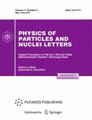
Physics of Particles and Nuclei Letters
Illuminating Innovations in Particle DynamicsPhysics of Particles and Nuclei Letters, published by PLEIADES PUBLISHING INC, serves as a pivotal platform for the dissemination of cutting-edge research in the domains of particle and nuclear physics. With an ISSN of 1547-4771 and an E-ISSN of 1531-8567, this journal has been actively contributing to the scientific community since its inception in 2006 and continues to be influential, with a convergence period extending to 2024. While its open access options are limited, the journal is recognized for its rigorous peer-review process and commitment to quality, as reflected in its Scopus rankings across multiple categories, including a Q3 in Nuclear and High Energy Physics and Radiation in 2023. The journal is positioned to be a vital resource for researchers aiming to bridge theoretical understanding with practical applications in these highly specialized fields, fostering advances that resonate within atomic and molecular physics, radiology, and beyond. Its relevance continues to grow as the global scientific community seeks innovative solutions to complex problems in modern physics.
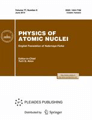
PHYSICS OF ATOMIC NUCLEI
Exploring the Core of Nuclear PhysicsPHYSICS OF ATOMIC NUCLEI is a distinguished journal dedicated to advancing the understanding of nuclear and particle physics, published by PLEIADES PUBLISHING INC. With its ISSN 1063-7788 and E-ISSN 1562-692X, this journal serves as a vital resource for researchers, professionals, and students in the fields of atomic and molecular physics, as well as high-energy physics. The journal has been actively contributing to the scientific community since its inception in 1996 and continues to publish valuable findings through 2024. Despite its current standing in the Q4 category for both Atomic and Molecular Physics, and Nuclear and High Energy Physics, there is an abundance of potential for growth and impact in these disciplines, as evidenced by its placement in the Scopus rankings. While the journal does not currently offer open access, it remains committed to disseminating quality research that informs and engages the scientific community. Explore PHYSICS OF ATOMIC NUCLEI to stay at the forefront of nuclear physics research and contribute to the dialogue in this critical area of study.
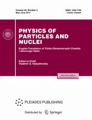
PHYSICS OF PARTICLES AND NUCLEI
Fostering Dialogue in Nuclear SciencePhysics of Particles and Nuclei is an esteemed journal within the field of nuclear and high energy physics, published by Pleiades Publishing Inc. Based in the United States, this journal has been a vital platform for disseminating cutting-edge research since its inception in 1996, with coverage extending until 2024. Indexed under the ISSN 1063-7796 and the E-ISSN 1531-8559, it has established itself as a noteworthy publication, currently categorized in the Q3 quartile according to the 2023 standards for Nuclear and High Energy Physics. With its Scopus ranking placing it at #62 out of 87 in its category, Physics of Particles and Nuclei provides unique insights and discussions that resonate with academics, researchers, and students alike. Although it does not offer open access, the journal continues to serve as a crucial resource for those looking to engage deeply with the latest advancements and theoretical explorations in particle and nuclear physics.

Nuclear Physics and Atomic Energy
Bridging gaps in nuclear and high-energy physics.Nuclear Physics and Atomic Energy is a reputable open-access journal that focuses on the fields of nuclear physics and high-energy physics, providing a forum for researchers, professionals, and students to share their findings and advancements. Published by the Institute of Nuclear Research, National Academy of Sciences of Ukraine, this journal has been committed to disseminating knowledge since its inception in 2006, ensuring that scientific advancements remain accessible to a global audience. With an ISSN of 1818-331X and an E-ISSN of 2074-0565, the journal features a diverse array of articles that span the continued exploration and application of nuclear phenomena. Although currently categorized in the Q4 quartile for Nuclear and High Energy Physics in 2023, the journal is steadily working towards increasing its impact and engagement within the academic community. With a Scopus rank of #74 out of 87 in its category, it serves as a valuable resource for advancing crucial research in a vital scientific area. Researchers are encouraged to contribute their innovative studies to foster collaboration and knowledge sharing in this dynamic field.
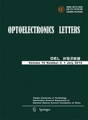
Optoelectronics Letters
Connecting Scholars in the Evolving World of OptoelectronicsOptoelectronics Letters, published by Tianjin University of Technology, is an esteemed platform for the dissemination of innovative research within the fields of atomic and molecular physics, optics, condensed matter physics, and electrical engineering. With its inaugural publication in 2007 and a convergence period extending to 2024, this journal aims to foster scholarly communication and collaboration among researchers and professionals. Although currently lacking an impact factor, it serves a vital niche in the rapidly evolving field of optoelectronics, evidenced by its categorization in the fourth quartile for various physics disciplines and the third quartile in electrical and electronic engineering. Given its ranking dynamics in Scopus, it is an emerging choice for authors seeking to convey their findings on electronic, optical, and magnetic materials. Researchers, students, and industry professionals alike can benefit from its open access options, encouraging a broad dissemination of cutting-edge knowledge that is essential in the advancement of technology and materials science.