Australasian Journal of Water Resources
Scope & Guideline
Pioneering Research in Water Science and Technology
Introduction
Aims and Scopes
- Water Resource Management and Policy:
The journal emphasizes research on the management and governance of water resources, particularly in the context of the Murray-Darling Basin and other critical Australian and New Zealand watersheds. It explores the implications of water policies, regulations, and community engagement. - Climate Change Impacts on Water Resources:
A significant focus is on understanding how climate change affects water availability, quality, and ecosystem health. The journal publishes studies that assess adaptation strategies and the resilience of water systems to changing climate conditions. - Hydrological Modeling and Forecasting:
Research on hydrological modeling techniques and demand forecasting is prevalent, providing insights into streamflow patterns, groundwater dynamics, and irrigation practices. This includes advancements in predictive modeling that aid in water resource planning. - Indigenous Water Rights and Cultural Values:
The journal highlights the importance of incorporating indigenous perspectives and rights into water management frameworks. It addresses the cultural significance of water and the need for equitable governance that respects traditional knowledge. - Water Quality and Public Health:
There is a strong emphasis on water quality issues and their implications for public health. The journal publishes research on contamination risks, treatment technologies, and the socio-economic factors influencing water safety.
Trending and Emerging
- Adaptive Management Strategies:
There is an increasing focus on adaptive management practices that respond to uncertainties in climate and hydrology. This trend underscores the importance of flexibility and responsiveness in water resource planning. - Community Engagement and Participatory Governance:
Research on community involvement in water governance is on the rise, highlighting the value of local knowledge and participatory approaches in decision-making processes. This reflects a broader trend towards inclusive governance models. - Technological Innovations in Water Management:
The integration of advanced technologies, such as Artificial Intelligence and data analytics, is becoming more prominent. These innovations aim to improve water quality monitoring, flood management, and resource allocation, reflecting the journal's commitment to modernizing water management practices. - Interconnections Between Water and Ecosystem Health:
There is a growing recognition of the linkages between water management and ecosystem health. Studies are increasingly addressing how water policies impact biodiversity and ecosystem services, emphasizing the need for sustainable practices that benefit both human and ecological communities.
Declining or Waning
- Traditional Water Supply Systems:
Research focused on conventional water supply systems and infrastructure management has seen a decline, as there is a growing emphasis on sustainable and integrated approaches to water management that consider ecological and community needs. - Single-Dimensional Water Quality Studies:
There is a noticeable shift away from studies that solely focus on individual water quality parameters without considering broader ecological impacts. The trend is toward more holistic assessments that integrate multiple factors affecting water quality. - Static Water Resource Assessment Methods:
The use of static or one-time assessments of water resources is decreasing, replaced by dynamic modeling and adaptive management approaches that recognize the variability and uncertainties inherent in water systems.
Similar Journals
Journal of Water and Climate Change
Exploring the Nexus of Water Resources and Climate DynamicsJournal of Water and Climate Change is a premier open-access journal published by IWA Publishing, dedicated to advancing the understanding of the interplay between water resources and climate change. With an ISSN of 2040-2244 and an E-ISSN of 2408-9354, this journal has established itself as a crucial platform for interdisciplinary research, publishing high-quality articles that address the challenges posed by climate variability on water systems globally. Since achieving open access status in 2021, the journal has fostered wider dissemination of knowledge among its audience, featuring works that span pivotal topics in Atmospheric Science, Global and Planetary Change, and Water Management. Notably ranked within the top quartiles in several relevant categories as of 2023, it occupies a vital position in the academic community, offering insights that are essential for policymakers, environmental scientists, and researchers striving to create sustainable solutions for water and climate challenges. Its commitment to excellence is reflected in its strong Scopus rankings, standing at the 66th percentile in Water Science and Technology and 65th percentile in Management, Monitoring, Policy, and Law. Located in the United Kingdom, this journal not only serves as a repository of cutting-edge research from 2010 to 2024 but also engages a diverse readership passionate about promoting sustainable water management practices.

Water Research X
Empowering researchers to tackle global water challenges.Water Research X is a prestigious journal published by ELSEVIER, focusing on the dynamic fields of water science and technology, pollution, ecological modeling, and waste management. Since its inception in 2018, this Open Access journal has become a cornerstone resource for researchers and professionals dedicated to advancing our understanding and management of water resources. Based in the United Kingdom, Water Research X holds an impressive ranking within the Scopus metrics, positioned in the Q1 category across multiple relevant disciplines, including Environmental Science, with a notable rank of 10/261 in Water Science and Technology and 3/41 in Ecological Modeling. This reflects its commitment to disseminating high-quality research that informs policy, supports sustainable practices, and fosters innovation in water management.
Hydrological Research Letters
Innovative Insights: Shaping the Future of Water ScienceHydrological Research Letters (ISSN: 1882-3416) is a distinguished peer-reviewed journal published by JSHWR, JAGH, JAHS, JSPH in Japan. Established with open access since 2007, this journal serves as a critical platform for the dissemination of innovative research in the field of hydrology, water science, and technology. With an increasing impact factor, currently positioned in the Q3 quartile for both Earth and Planetary Sciences and Water Science and Technology, it attracts a diverse readership keen to stay abreast of groundbreaking findings that shape water management and environmental policy. Researchers, professionals, and students alike will find this publication an invaluable resource for enhancing their understanding of hydrological processes and their implications. The journal is committed to fostering open academic dialogue and encouraging high-quality contributions during its converging years from 2015 to 2024. For more information, authors and readers can access the journal at its address, C/O INT ACAD PRINTING CO, LTD, Shinjuku-ku, Tokyo, Japan.
Hydrologie und Wasserbewirtschaftung
Empowering voices in hydrology and water management.Hydrologie und Wasserbewirtschaftung, published by the BUNDESANSTALT GEWASSERKUNDE-BFG, stands as a vital open access journal in the field of hydrology and water management since its inception in 1999. Based in Germany, this journal aims to disseminate high-quality research related to water resources, environmental sustainability, and innovative management strategies. Though it has a Q4 ranking in Water Science and Technology for 2023, and holds a Scopus rank of 113 out of 225, the journal provides an essential platform for researchers, professionals, and students interested in advancing their understanding of water science. With coverage spanning from 1999 to 2018 and a seamless move to an open access model, Hydrologie und Wasserbewirtschaftung remains committed to contributing to the ongoing dialogue around critical water issues. Researchers looking to publish their findings or stay abreast of developments in water science will find this journal indispensable.
Water Conservation Science and Engineering
Innovating Tomorrow's Water Conservation StrategiesWater Conservation Science and Engineering, published by SPRINGERNATURE, is a vital academic journal dedicated to advancing the fields of environmental engineering, ocean engineering, waste management, and water science and technology. Since its inception in 2016, the journal has quickly established itself within the academic community, achieving a commendable Q3 ranking across multiple categories in 2023. With an ISSN of 2366-3340 and an E-ISSN of 2364-5687, it is accessible to a global readership eager to explore the latest research and innovations in water conservation and sustainable practices. Although currently not open access, the journal is committed to publishing high-quality scholarly articles that provide insights into effective water management strategies, innovative engineering solutions, and the critical importance of preserving our water resources. Based in Singapore, Water Conservation Science and Engineering aims to foster interdisciplinary collaboration among researchers, professionals, and students, making it an essential resource for anyone passionate about environmental sustainability and preservation.
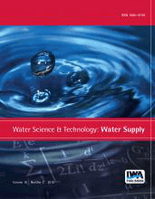
Water Supply
Driving progress in water supply management.Water Supply is an esteemed journal published by IWA PUBLISHING that plays a pivotal role in the field of water science and technology. With an ISSN of 1606-9749 and an E-ISSN of 1607-0798, this journal has been a key resource for researchers and professionals since its inception in 2001. Now covering a wide range of topics until 2024, it is recognized for its impactful contributions, holding a Q2 ranking in the Environmental Science: Water Science and Technology category, and currently stands at rank #125 out of 261 in Scopus, reflecting its relevance and influence in the academic community. The journal aims to disseminate significant research findings and innovations in water supply management, ensuring that professionals and students are equipped with the latest knowledge and practices in the sector. Despite not being an open-access journal, Water Supply continues to attract high-quality submissions that enhance our understanding and preservation of vital water resources. For those invested in sustainable water practices, this journal is an invaluable tool for continued learning and advancement.
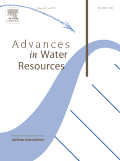
ADVANCES IN WATER RESOURCES
Pioneering research that shapes water sustainability.ADVANCES IN WATER RESOURCES is a premier peer-reviewed journal published by Elsevier Science Ltd, dedicated to advancing the field of water science and technology since its inception in 1977. With an impressive Q1 ranking in the field, this journal provides a vital platform for researchers, professionals, and students to disseminate cutting-edge research that addresses critical issues related to water resources management, hydrology, and environmental sustainability. The journal offers a comprehensive collection of articles that explore innovative methodologies, policy implications, and case studies that shape the future of water resource management. Although it does not provide open access, its impactful contributions are recognized globally, making it an essential resource for anyone engaged in water science. The journal continues to publish relevant research while looking forward to bridging the gap between theoretical insights and practical applications up until 2024.

Journal of Applied Water Engineering and Research
Innovating Solutions for Sustainable Water ManagementJournal of Applied Water Engineering and Research is a dynamic platform dedicated to the advancement of knowledge in the field of water science and technology. Published by Taylor & Francis Ltd, this journal aims to bridge the gap between theoretical research and practical applications in water engineering, providing a crucial resource for researchers, practitioners, and policymakers. With an ISSN of 2324-9676 and an impressive ranking in the Q3 category for Water Science and Technology, it occupies a distinctive position within the scholarly community. The journal covers a wide spectrum of topics, including innovative water management strategies, sustainable practices, and the integration of technology in water resource management, thus contributing significantly to the discourse surrounding environmental sustainability. With publication years converging from 2013 to 2024, the Journal of Applied Water Engineering and Research continues to foster impactful research, enhancing our understanding and management of vital water resources.
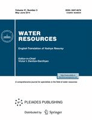
Water Resources
Fostering scholarly dialogue on critical water issues.Water Resources, a prominent journal published by MAIK NAUKA/INTERPERIODICA/SPRINGER, focuses on the critical and evolving field of water science and technology. Established in 1976 and with a long-standing commitment to advancing knowledge, this journal explores interdisciplinary research that addresses the challenges surrounding water resource management, quality, and sustainability. With an impact factor positioned within the Q3 category of its field, it holds a notable Scopus rank (#181/261) in Environmental Science, emphasizing its role in driving scholarly discourse. While currently not open access, Water Resources provides vital insights for researchers, professionals, and students, making it an essential resource for those seeking to innovate and implement effective water management solutions. To stay ahead in a domain that is increasingly paramount to global sustainability efforts, consider engaging with the latest research published in this vital journal.
PROCEEDINGS OF THE INSTITUTION OF CIVIL ENGINEERS-WATER MANAGEMENT
Advancing Sustainable Solutions in Water ManagementPROCEEDINGS OF THE INSTITUTION OF CIVIL ENGINEERS-WATER MANAGEMENT is a prestigious journal published by Emerald Group Publishing Ltd, dedicated to advancing the field of water management within civil engineering. With an ISSN of 1741-7589 and an E-ISSN of 1751-7729, this journal delivers peer-reviewed research that spans the critical intersections of water science and technology, contributing valuable insights into sustainable water management practices. As evidenced by its ranking in the 2023 Scopus categories, where it holds the Q3 quartile in Water Science and Technology, and a respectable position among its peers, the journal remains a vital resource for researchers, professionals, and students in the field. Though it is not an open-access journal, it offers accessible subscription options that facilitate worldwide dissemination of knowledge, enhancing its role as a fundamental reference point for cutting-edge developments in water management. For those looking to publish or stay updated on the latest research trends, this journal serves as an essential platform for promoting innovation and sustainable practices in civil engineering and water resources management.