
Bulletin of the Korean Mathematical Society
Scope & Guideline
Connecting Scholars Through Mathematics
Introduction
Aims and Scopes
- Pure Mathematics:
The journal publishes research in pure mathematics, including areas such as algebra, topology, and analysis, which contribute to the foundational aspects of the discipline. - Applied Mathematics:
There is a strong emphasis on applied mathematics, where research intersects with real-world problems, including mathematical modeling, computational methods, and statistical analysis. - Interdisciplinary Research:
The journal encourages interdisciplinary studies that incorporate mathematical methodologies into fields such as physics, engineering, and computer science, highlighting the applicability of mathematics. - Mathematical Education:
Research related to mathematics education and pedagogy is also within the scope of the journal, focusing on teaching methods and curriculum development.
Trending and Emerging
- Data Science and Statistics:
There is a growing trend towards research in data science and statistics, particularly in how mathematical techniques are applied to big data and machine learning, reflecting the increasing importance of these fields. - Nonlinear Dynamics and Chaos Theory:
Research focusing on nonlinear dynamics and chaos theory is on the rise, highlighting the interest in complex systems and their behaviors, which are relevant in various scientific disciplines. - Mathematical Biology:
The intersection of mathematics and biology is emerging as a significant area of focus, with studies exploring mathematical models in epidemiology, population dynamics, and ecological systems.
Declining or Waning
- Classical Geometric Analysis:
Research related to classical geometric analysis has seen a decline, possibly due to the increasing preference for more abstract and computational approaches in contemporary mathematics. - Historical Studies in Mathematics:
Papers examining the historical context and development of mathematical theories are becoming less frequent, potentially indicating a shift towards more modern and applied research themes. - Elementary Number Theory:
There has been a noticeable reduction in publications focused on elementary number theory, which may suggest a waning interest in traditional number theory topics in favor of more complex or applied areas.
Similar Journals
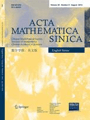
ACTA MATHEMATICA SINICA-ENGLISH SERIES
Connecting Ideas, Bridging Disciplines in MathematicsACTA MATHEMATICA SINICA-ENGLISH SERIES, published by SPRINGER HEIDELBERG, is a distinguished journal dedicated to the advancement of mathematical research across various domains, with a particular focus on both applied and theoretical mathematics. Established in Germany, this journal aims to foster a global dialogue among mathematicians by presenting high-quality articles that explore innovative methodologies, significant theoretical developments, and their applications in real-world problems. The journal is indexed in Scopus, achieving respectable rankings in its categories, particularly Q2 in Mathematics (miscellaneous) and Q3 in Applied Mathematics as of 2023. Though it does not offer open access, ACTA MATHEMATICA SINICA-ENGLISH SERIES remains a vital resource for researchers, professionals, and students seeking to stay informed on the latest mathematical findings and trends from 1991 to present. With its commitment to excellence, the journal serves as a platform for thought-provoking discussions and groundbreaking discoveries in the mathematical sciences.
Results in Mathematics
Exploring New Frontiers in Mathematical Research.Results in Mathematics, published by SPRINGER BASEL AG, is a prestigious academic journal dedicated to advancing the field of mathematics since its inception in 1978. Based in Switzerland, this journal has garnered a significant reputation, holding a Q2 ranking in both Applied Mathematics and miscellaneous Mathematics categories according to the latest 2023 metrics. The journal is a vital resource for researchers, professionals, and students, encouraging open dialogue about emerging mathematical concepts and methodologies. Our editorial objective is to publish high-quality research articles that contribute to theoretical advancements and practical applications in mathematics. Although it does not currently offer open access options, it provides in-depth studies and articles that fortify the knowledge base within the mathematical community. With a commitment to innovation and academic rigor, Results in Mathematics continues to serve as an essential platform for scholarly communication and exploration.

JOURNAL OF THE KOREAN MATHEMATICAL SOCIETY
Empowering mathematicians through rigorous scholarship.JOURNAL OF THE KOREAN MATHEMATICAL SOCIETY is a premier academic publication dedicated to advancing the field of mathematics through rigorous research and scholarly discourse. Published by the esteemed Korean Mathematical Society, this journal provides a platform for mathematicians and researchers to disseminate their findings, engage in innovative ideas, and connect with the global mathematical community. With an ISSN of 0304-9914 and E-ISSN 2234-3008, the journal has established itself as an important resource in the mathematical landscape, currently holding a Q3 classification in the ‘Mathematics (miscellaneous)’ category as per the 2023 rankings. Though not open access, the journal is committed to promoting high-quality contributions that span various mathematical disciplines, making it indispensable for students, researchers, and professionals alike. Operating from its base in Seoul, South Korea, it contributes to the international mathematics community by publishing cutting-edge research from 1997 to 2024 and beyond, facilitating an avenue for knowledge sharing and innovation in mathematics.

BOLETIN DE LA SOCIEDAD MATEMATICA MEXICANA
Exploring the Depths of Mathematical KnowledgeBOLETIN DE LA SOCIEDAD MATEMATICA MEXICANA, published by Springer International Publishing AG, is a pivotal journal in the field of mathematics, particularly recognized for its contributions to the miscellaneous mathematics category, holding a commendable Q2 ranking as of 2023. With an ISSN of 1405-213X and an E-ISSN of 2296-4495, the journal serves as a platform for disseminating high-quality research and innovations from both national and international scholars. Operating from Switzerland, the journal encompasses a broad range of topics within mathematics, supporting the development and communication of mathematical knowledge. Although it is not open access, it remains a respected source for researchers, professionals, and students seeking to deepen their understanding of mathematical concepts and applications. Published continuously and rigorously since its converged years, BOLETIN DE LA SOCIEDAD MATEMATICA MEXICANA plays a crucial role in advancing mathematical discourse and collaboration across disciplines.

BULLETIN OF THE BELGIAN MATHEMATICAL SOCIETY-SIMON STEVIN
Illuminating the Path of Mathematical DiscoveryBULLETIN OF THE BELGIAN MATHEMATICAL SOCIETY-SIMON STEVIN, published by the BELGIAN MATHEMATICAL SOC TRIOMPHE, is a pivotal journal in the field of mathematics that has been contributing to scholarly discourse since its inception in 1994. With an ISSN of 1370-1444 and an E-ISSN of 2034-1970, this quarterly journal offers a platform for mathematicians to present innovative research findings and foster collaboration across diverse mathematical disciplines. Its recent classification in the Q3 category within mathematics (miscellaneous) illustrates its role as a significant outlet for emerging ideas and developments in the field. Although the journal is not open access, its commitment to quality and academic rigor ensures that it remains a valuable resource for researchers, academics, and students seeking to stay abreast of current trends and advancements in mathematics. The journal's dedication to broadening the horizon of mathematical research in Belgium and beyond makes it essential for anyone interested in this critical area of study.
DOKLADY MATHEMATICS
Pioneering Research in Mathematical SciencesDOKLADY MATHEMATICS is a prestigious journal published by MAIK NAUKA/INTERPERIODICA/SPRINGER, recognized for its significant contributions to the field of mathematics. Since its inception in 1996, the journal has been delivering high-quality research articles, fostering advancement in diverse areas of mathematical sciences. With an ISSN of 1064-5624 and an E-ISSN of 1531-8362, it has established itself within the academic community and holds a respectable Q2 quartile ranking in Mathematics (miscellaneous), indicating its relevance and influence. Although it does not operate under an open-access model, the journal remains an invaluable resource for researchers, professionals, and students, propelling innovation and scholarship in mathematics until 2024. The Scopus ranking situates it at rank #254 out of 399 in the Mathematics General category, showcasing its position within the broader landscape of mathematical journals. This journal is essential for those aiming to stay abreast of the latest findings and theoretical advancements in the mathematics domain.
Lobachevskii Journal of Mathematics
Connecting Researchers to Groundbreaking Mathematical InsightsLobachevskii Journal of Mathematics is a distinguished academic journal published by MAIK NAUKA/INTERPERIODICA/SPRINGER, dedicated to advancing research in the diverse field of mathematics. With an ISSN of 1995-0802 and an E-ISSN of 1818-9962, it has been a vital resource for scholars since its inception in 1999. Recognized for its contributions to the field, the journal proudly holds a Q2 ranking in the 2023 Mathematics (miscellaneous) category, placing it among the top half of its peers in Scopus, with a rank of 174 out of 399 and a 56th percentile standing. While currently not classified as an open-access journal, it effectively reaches a global audience through comprehensive dissemination of innovative mathematical research until 2024. Researchers, professionals, and students alike will find the Lobachevskii Journal a significant platform for the latest developments and theories in general mathematics, fostering an environment of scholarly exchange and growth.
BULLETIN OF THE BRAZILIAN MATHEMATICAL SOCIETY
Pioneering Insights and Theories for the Mathematical CommunityBulletin of the Brazilian Mathematical Society is a distinguished journal published by Springer Heidelberg, aimed at advancing the field of mathematics through the dissemination of research findings and scholarly discourse. With an ISSN of 1678-7544 and an E-ISSN of 1678-7714, this journal is indexed within the Q2 quartile in the field of mathematics (miscellaneous), reflecting its impact and relevance in the academic community. The journal has been recognized for its commitment to quality, as evidenced by its Scopus ranking within the 58th percentile among general mathematics publications. Since its inception in 1996, the Bulletin has served as a vital platform for mathematicians to share innovative ideas, theoretical advancements, and practical applications, making it essential reading for researchers, professionals, and students alike. Open access options are available, ensuring that the latest research is accessible to a wide audience, thereby fostering collaboration and growth within the mathematics community.

Bulletin of the Institute of Mathematics Academia Sinica New Series
Exploring Innovative Theories, Bridging Global Knowledge.The Bulletin of the Institute of Mathematics Academia Sinica New Series is a prestigious international journal dedicated to the dissemination of high-quality research in the field of mathematics. Published by ACAD SINICA, this scholarly journal serves as a vital platform for researchers, professionals, and students alike to explore innovative mathematical theories, methodologies, and applications. With an ISSN of 2304-7909 and an E-ISSN of 2304-7895, the journal is committed to maintaining rigorous academic standards while fostering an environment of open discourse and collaboration within the mathematical community. Though specific impact metrics are still being developed, the journal is poised to contribute significantly to the advancement of mathematical knowledge, encouraging groundbreaking studies and interdisciplinary approaches. Researchers are invited to share their insights and benefit from this important resource, which supports the global advancement of mathematics from its base in Beijing, People's Republic of China.

Frontiers of Mathematics
Advancing Mathematical Frontiers for a Brighter TomorrowFrontiers of Mathematics, published by SPRINGER HEIDELBERG, is an emerging academic journal dedicated to fostering the advancement of mathematical sciences from 2023 to 2024. With an ISSN of 2731-8648 and E-ISSN of 2731-8656, this journal is positioned in the category of Q2 in the miscellaneous mathematics domain, showcasing its commitment to quality research and innovation. Although in its nascent stages, it has swiftly established a foothold within the global academic landscape, holding a Scopus rank of #198/399 and a median percentile of 50, indicating a promising trajectory. By providing an open-access option, Frontiers of Mathematics ensures broad dissemination of research findings, fostering collaboration and knowledge sharing across the mathematical community. Researchers, professionals, and students alike will find this journal to be an invaluable resource, contributing to important discussions and advancements in various mathematical fields.