Bulletin of the Malaysian Mathematical Sciences Society
Scope & Guideline
Empowering Innovations in Mathematics
Introduction
Aims and Scopes
- Pure Mathematics:
This includes research on fundamental mathematical theories and concepts, such as algebra, analysis, geometry, and topology. The journal publishes papers that contribute to the theoretical foundations of mathematics. - Applied Mathematics:
The journal emphasizes the application of mathematical theories and methods to solve real-world problems in various fields including physics, engineering, and finance. It promotes interdisciplinary research that bridges mathematics with other scientific domains. - Computational Mathematics:
Papers focusing on numerical methods, algorithms, and computational techniques are a significant part of the journal. This includes research on computational tools that aid in solving mathematical problems and modeling complex systems. - Statistics and Probability:
Research in statistical methods, probability theory, and their applications in data analysis and decision-making is highlighted. The journal aims to publish innovative approaches in statistical modeling and inference. - Graph Theory and Combinatorics:
The journal features research on graph theory, combinatorial structures, and their applications. It aims to explore connections between combinatorial mathematics and other areas such as computer science and network theory. - Differential Equations and Dynamical Systems:
Research related to ordinary and partial differential equations, dynamical systems, and their applications in modeling physical phenomena is a core area of focus for the journal.
Trending and Emerging
- Machine Learning and Data Science:
There is a growing trend towards integrating mathematical theories with machine learning and data science applications. Researchers are exploring mathematical models that enhance algorithms in data analysis, leading to innovative applications in various fields. - Nonlinear Dynamics and Complex Systems:
Research in nonlinear dynamics, chaos theory, and complex systems is emerging as a vital area of study. This trend reflects the increasing interest in understanding complex behaviors in various scientific phenomena. - Fractional Calculus and Its Applications:
Papers focusing on fractional calculus and its applications in modeling real-world phenomena are on the rise. This area is gaining popularity due to its relevance in various fields including physics, engineering, and finance. - Topological Data Analysis:
The integration of topology with data analysis is becoming a prominent theme. Researchers are applying topological methods to extract meaningful insights from complex datasets, marking a significant interdisciplinary approach. - Mathematical Biology and Epidemiology:
The journal is seeing an increase in research related to mathematical modeling in biology and epidemiology, particularly in light of recent global health challenges. This trend underscores the relevance of mathematical approaches in understanding biological processes.
Declining or Waning
- Classical Geometry:
Research in classical geometry, particularly topics related to Euclidean and non-Euclidean geometries, has seen a decline in the number of submissions. This could be due to the increasing focus on more applied aspects of geometry in recent years. - Elementary Number Theory:
Papers primarily focused on elementary techniques in number theory have become less common. The trend appears to be moving towards more advanced or computational approaches, leaving traditional methods less explored. - Certain Aspects of Mathematical Logic:
Research related to classical mathematical logic and foundational studies has diminished. The rise of applied mathematics and computational techniques may have overshadowed these traditional areas. - Traditional Combinatorial Enumeration:
While combinatorial research remains significant, specific topics in traditional enumeration techniques have seen reduced interest, possibly due to the development of more sophisticated combinatorial methods. - Historical Studies in Mathematics:
Papers focusing on the historical development of mathematical concepts or figures have become less frequent. This may reflect a shift towards more contemporary mathematical issues and applications.
Similar Journals

Frontiers of Mathematics
Connecting Scholars to Transform Mathematical KnowledgeFrontiers of Mathematics, published by SPRINGER HEIDELBERG, is an emerging academic journal dedicated to fostering the advancement of mathematical sciences from 2023 to 2024. With an ISSN of 2731-8648 and E-ISSN of 2731-8656, this journal is positioned in the category of Q2 in the miscellaneous mathematics domain, showcasing its commitment to quality research and innovation. Although in its nascent stages, it has swiftly established a foothold within the global academic landscape, holding a Scopus rank of #198/399 and a median percentile of 50, indicating a promising trajectory. By providing an open-access option, Frontiers of Mathematics ensures broad dissemination of research findings, fostering collaboration and knowledge sharing across the mathematical community. Researchers, professionals, and students alike will find this journal to be an invaluable resource, contributing to important discussions and advancements in various mathematical fields.
INDIAN JOURNAL OF PURE & APPLIED MATHEMATICS
Uniting Scholars in the Quest for Mathematical ExcellenceINDIAN JOURNAL OF PURE & APPLIED MATHEMATICS, published by the INDIAN NATIONAL SCIENCE ACADEMY, stands as a vital resource in the realm of pure and applied mathematics since its inception in 1996. With ISSN 0019-5588 and E-ISSN 0975-7465, this journal aims to disseminate original research that advances the understanding and application of mathematical principles. Operating out of New Delhi, India, it serves a diverse readership comprising researchers, scholars, and practitioners in the mathematical sciences. Recognized within the Q3 category in both Applied Mathematics and Miscellaneous Mathematics as per the 2023 category quartiles, the journal emphasizes rigorous peer-reviewed articles that contribute to its impact in academia, reflected in its Scopus rankings. Although it does not currently operate as an open-access journal, it maintains a commitment to quality and accessibility of scholarly content, striving to foster academic collaboration and innovation. The convergence of full-text issues from 1996 to 2024 highlights its ongoing dedication to the evolution of mathematical research.

Vietnam Journal of Mathematics
Bridging Theory and Application in MathematicsVietnam Journal of Mathematics, published by SPRINGER SINGAPORE PTE LTD, serves as a prominent platform for disseminating high-quality research in the field of mathematics. With an ISSN of 2305-221X and E-ISSN 2305-2228, this esteemed journal has established itself as a noteworthy contributor to the academic landscape since its inception in 2013, continuing its coverage until 2024. Enjoying a Q2 ranking in Mathematics (miscellaneous) for 2023, and holding a commendable Scopus rank of #126 out of 399 in General Mathematics, the journal stands at the intersection of innovation and scholarly excellence. Although still developing its open-access model, it provides a valuable resource for researchers, professionals, and students alike, who are keen to explore the vast universe of mathematical inquiry and application. As the journal progresses, it strives not only to publish original research but also to foster dialogue and collaboration within the global mathematics community.
INDAGATIONES MATHEMATICAE-NEW SERIES
Cultivating excellence in the mathematical sciences.INDAGATIONES MATHEMATICAE-NEW SERIES is a distinguished academic journal specializing in the field of mathematics, with a focus on both theoretical and applied aspects of the discipline. Published by Elsevier, a leading publisher in the scientific community, this journal has established itself as a crucial platform for the dissemination of high-quality research. With an ISSN of 0019-3577 and an E-ISSN of 1872-6100, it operates out of the Netherlands and has been a vital resource for academics since its inception in 1969. Currently, it holds a Q2 ranking in the mathematics category, signifying its relevance and impact in the field, with a Scopus rank of #222 out of 399 in General Mathematics, placing it in the 44th percentile. Although it does not currently offer Open Access options, INDAGATIONES MATHEMATICAE-NEW SERIES is committed to contributing to the advancement of mathematics by publishing original research articles, reviews, and notes that enrich the academic community. Researchers, students, and professionals alike will find invaluable insights and developments within its pages, making it a cornerstone journal for those keen on exploring the complexities of mathematics.

ANNALS OF MATHEMATICS
Elevating Mathematical Discourse to New HeightsANNALS OF MATHEMATICS is a prestigious peer-reviewed journal published by the Department of Mathematics at Princeton University, dedicated to the advancement of mathematical research across diverse fields, including mathematics, statistics, and probability. With an impressive impact factor reflecting its critical role in the academic community, this journal is categorized within the Q1 quartile rankings for both Mathematics and Statistics in 2023, evidencing its high circulation of influential and often-cited publications. Researchers can access the latest findings and theoretical advancements in an environment that fosters intellectual discourse and innovation, although the journal does not currently offer open access. Spanning a remarkable convergence period from 1996 to 2024, the ANNALS OF MATHEMATICS serves as a vital resource for mathematicians, statisticians, and analysts striving to push the boundaries of knowledge and application in these critical fields.
Missouri Journal of Mathematical Sciences
Connecting Scholars, Shaping the Future of MathematicsThe Missouri Journal of Mathematical Sciences, published by the CENTRAL MISSOURI STATE UNIVERSITY, DEPARTMENT OF MATHEMATICS & COMPUTER SCIENCE, serves as an essential platform for disseminating innovative research and advancements in the field of mathematics. Since its inception in 2001, this journal has provided a space for scholars, professionals, and students to exchange ideas and present their findings, contributing to the growing body of knowledge in mathematics. Despite its current category quartile ranking of Q4 in Mathematics (miscellaneous), the journal aims to enhance its impact further, encouraging contributions that push the boundaries of mathematical sciences. Although it operates without an open-access model, it is dedicated to fostering academic discourse and making a meaningful impact through its publications. Researchers interested in exploring mathematical concepts will find this journal to be a valuable resource as it continues to evolve through the years up to 2024, aiming to attract high-quality submissions that showcase significant and practical advancements in mathematics.
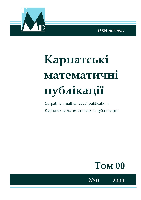
Carpathian Mathematical Publications
Showcasing Cutting-Edge Research from the Carpathians.Carpathian Mathematical Publications, published by Vasyl Stefanyk Precarpathian National University, stands as a significant contribution to the field of mathematics, particularly highlighted by its Q2 ranking in Mathematics (miscellaneous) for 2023. With an ISSN of 2075-9827 and E-ISSN of 2313-0210, this Open Access journal, initiated in 2009, enables researchers and practitioners worldwide to freely access cutting-edge mathematical research, thus promoting knowledge sharing and collaboration. Based in Ivano-Frankivsk, Ukraine, the journal focuses on a broad spectrum of mathematical topics while fostering innovative approaches and interdisciplinary connections within the mathematical community. Its current Scopus ranking of rank #122 out of 399 reflects its growing influence and importance, making it an ideal platform for scholars and students aiming to advance their research and stay abreast of the latest developments in general mathematics.

Analele Stiintifice ale Universitatii Ovidius Constanta-Seria Matematica
Empowering Researchers through Accessible Mathematical KnowledgeAnalele Stiintifice ale Universitatii Ovidius Constanta-Seria Matematica is a prominent open-access journal established by OVIDIUS UNIV PRESS in Romania, dedicated to advancing the fields of mathematics, specifically in Analysis and Applied Mathematics. Since its inception, the journal has emphasized the dissemination of high-quality research, making it accessible to a global audience. With an ISSN of 1224-1784 and E-ISSN 1844-0835, it has positioned itself within the academic community, achieving a respectable Q3 ranking in both analysis and applied mathematics in 2023, reflecting its commitment to rigorous scholarship. The journal spans a considerable publication window from 2009 to 2024, catering to the ongoing developments in mathematical sciences and their applications. Researchers, professionals, and students alike will find valuable insights and contributions that enrich their understanding and foster collaboration within the mathematical community. The journal's headquarters is based at the Faculty of Mathematics & Computer Science, Bulevardul Mamaia 124, Constanta, Romania.
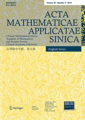
Acta Mathematicae Applicatae Sinica-English Series
Advancing Mathematical Solutions for Real-World ChallengesActa Mathematicae Applicatae Sinica-English Series, published by Springer Heidelberg, is a prominent journal in the field of Applied Mathematics, recognized for its contributions to the advancement of mathematical applications since its inception in 1984. With an ISSN of 0168-9673 and an E-ISSN of 1618-3932, this journal is indexed in Scopus, achieving a respectable ranking of #453 out of 635 in the category of Applied Mathematics, placing it in the 28th percentile. The journal serves as a critical platform for researchers, professionals, and students alike, aiming to disseminate high-quality original research, innovative methodologies, and applications of mathematics to solve real-world problems. Although it currently does not offer open access, its rigorous peer-review process ensures that only the most impactful studies are published. As part of its commitment to enhancing the mathematical sciences, Acta Mathematicae Applicatae Sinica-English Series plays a vital role in bridging theoretical research and practical applications, making significant contributions to the global scientific community.
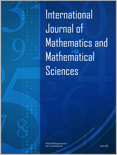
INTERNATIONAL JOURNAL OF MATHEMATICS AND MATHEMATICAL SCIENCES
Pioneering insights in the world of mathematical sciences.INTERNATIONAL JOURNAL OF MATHEMATICS AND MATHEMATICAL SCIENCES is a distinguished peer-reviewed journal published by HINDAWI LTD, dedicated to advancing the field of mathematics and its various applications. Since its inception in 1978, the journal has been committed to open access, ensuring that research is freely available to all, thereby fostering greater collaboration and dissemination of knowledge. With an impressive Q3 ranking in the Mathematics (miscellaneous) category and a notable Scopus rank in the 72nd percentile, this journal is a vital resource for researchers, professionals, and students. The journal covers a wide range of topics in mathematics, from theoretical explorations to applied methodologies, and it continues to serve as a platform for significant contributions in this evolving discipline. Its continuous publication from 1978 to present reflects its enduring relevance and impact in the mathematical sciences community.