BEST PRACTICE & RESEARCH IN CLINICAL RHEUMATOLOGY
Scope & Guideline
Shaping the Future of Rheumatology Care
Introduction
Aims and Scopes
- Clinical Management of Rheumatic Diseases:
The journal emphasizes practical approaches to managing rheumatic diseases, with a focus on evidence-based treatments and patient-centered care. - Innovations in Diagnostics and Therapeutics:
It explores advancements in diagnostic techniques and therapeutic interventions, aiming to improve patient outcomes and address unmet clinical needs. - Pediatric Rheumatology:
A significant focus is placed on pediatric rheumatology, addressing unique challenges and treatment strategies for younger populations with rheumatic conditions. - Personalized and Precision Medicine:
The journal advocates for personalized medicine approaches, integrating biomarkers and patient preferences to tailor treatments for rheumatic diseases. - Pathophysiology and Mechanisms of Disease:
Research on the underlying mechanisms of rheumatic diseases, including immunological and genetic factors, is a core aspect of the journal's content. - Multidisciplinary Approaches to Care:
The journal promotes the importance of multidisciplinary strategies in managing rheumatic diseases, considering comorbidities and the comprehensive needs of patients.
Trending and Emerging
- Pediatric Rheumatology Innovations:
Recent publications indicate a growing focus on pediatric rheumatology, highlighting the need for tailored approaches and advancements in treatment specific to children with rheumatic diseases. - Personalized Medicine and Biomarkers:
There is an increasing emphasis on personalized and precision medicine, with research exploring biomarkers that can guide treatment decisions and improve patient outcomes. - Microbiome and Its Role in Rheumatic Diseases:
Emerging research on the gut microbiome and its implications for rheumatic diseases suggests a novel area of exploration that could lead to innovative therapeutic strategies. - Pain Mechanisms and Management Advances:
The journal is trending towards exploring advanced pain mechanisms and management strategies, reflecting a shift towards understanding pain in the context of rheumatic diseases. - Telemedicine and Remote Patient Management:
In response to the COVID-19 pandemic, there is growing interest in telemedicine and remote management strategies for rheumatology patients, indicating a significant shift in clinical practice.
Declining or Waning
- Generalized Discussions on Osteoarthritis:
Although still relevant, the frequency of papers focusing on general osteoarthritis management has decreased, indicating a shift towards more targeted approaches and innovations in treatment. - Traditional Pain Management Strategies:
The focus on traditional pain management methods, such as opioids, has waned, likely due to increasing scrutiny regarding opioid misuse and a growing interest in alternative pain management modalities. - Broad Epidemiological Studies:
While epidemiological insights are important, there appears to be a decreasing emphasis on broad, generalized studies in favor of more specific, disease-focused research that addresses unique challenges in rheumatology. - Historical Perspectives on Rheumatic Diseases:
Papers that primarily provide historical context or broad overviews of rheumatic diseases have become less common, as the journal shifts to favor cutting-edge research and practical applications. - Single-Disease Focus in Research:
Research focusing exclusively on single diseases without considering comorbidities or multidisciplinary perspectives is less prevalent, reflecting a trend towards holistic approaches in rheumatology.
Similar Journals
Reumatismo
Exploring the forefront of rheumatology research and clinical practice.Reumatismo is a distinguished Open Access journal dedicated to the field of rheumatology, published by PAGEPRESS PUBL since 2001. With a rich history dating back to 1952, this journal has been pivotal in disseminating vital research on rheumatic diseases and related disorders. Based in Italy, Reumatismo has earned a reputation for its quality and relevance, achieving a Q3 category ranking in the 2023 Scopus metrics for Rheumatology, reflecting its significant contributions to the field. The journal is committed to providing a platform for the latest scientific developments and clinical innovations, thus aiding researchers, healthcare professionals, and students striving to enhance understanding and treatment of rheumatic conditions. For those seeking to access comprehensive research articles and studies, Reumatismo boasts an open access policy, ensuring that knowledge is freely available to all, fostering collaboration and advancement in rheumatology worldwide.
Rheumatology and Therapy
Fostering breakthroughs in immunology and rheumatology.Rheumatology and Therapy, published by Springer, stands as a prominent open-access journal within the fields of Immunology and Allergy and Rheumatology. Since its inception in 2014, the journal has made significant contributions to advancing the understanding, diagnosis, and treatment of rheumatic diseases, garnering a solid reputation with an impact factor that reflects its rigorous peer-review process and scholarly influence. Currently ranked in the Q2 quartile for both its categories according to 2023 metrics, it occupies a significant position among its peers, standing at Rank #21 out of 73 in Medicine Rheumatology and Rank #101 out of 233 for Medicine Immunology and Allergy. The journal's scope encompasses cutting-edge research, reviews, and clinical studies that aim to bridge the gap between laboratory findings and patient care, making it an invaluable resource for researchers, clinicians, and students alike. With its commitment to open access, Rheumatology and Therapy ensures that high-quality research is available to a global audience, fostering collaboration and innovation in rheumatology and immunology. To learn more, visit their official site and explore the wealth of knowledge available.

Journal of Rheumatic Diseases
Innovating research and practice in rheumatic diseases.Journal of Rheumatic Diseases, published by the Korean College of Rheumatology, stands as a pivotal platform in the field of rheumatology, contributing significantly to the advancement of knowledge and clinical practice since its inception. With an impact factor reflecting its esteemed position in the academic community, this open-access journal promotes accessibility to high-quality research, ensuring that groundbreaking discoveries are reachable to all stakeholders in the realm of rheumatic diseases. The journal has maintained its commitment to quality, evidenced by its ranking in the Q3 category for Rheumatology in 2023, and its presence among the top quartiles of medical research. Focusing on innovative therapeutic approaches, emerging diagnostic techniques, and comprehensive reviews, the Journal of Rheumatic Diseases seeks to foster collaboration and dialogue among researchers, clinicians, and students alike. For accessibility, the journal offers numerous articles since its transition to open access in 2017, thereby facilitating research dissemination across the globe. As it converges over the years from 2019 to 2024, the journal promises to be instrumental in shaping the future of rheumatic disease research, inviting contributions that inspire new frontiers in this essential field.
Current Rheumatology Reviews
Advancing knowledge in rheumatology.Current Rheumatology Reviews is an esteemed journal dedicated to publishing comprehensive reviews on advancements in the field of rheumatology. Established by Bentham Science Publishers, this journal has become a vital resource for researchers, clinicians, and students seeking to stay abreast of the latest developments and therapeutic strategies from 2006 to 2024. Located in the United Arab Emirates, it caters to a global audience, delivering insights that have been pivotal in shaping clinical practices. With an impact factor reflective of its Q3 status in Rheumatology by 2023, the journal ranks #46 out of 73 in the Scopus database, positioning it in the 37th percentile in the discipline. Although it operates without open access, its high-quality content ensures that each article undergoes rigorous peer review, making the Current Rheumatology Reviews a trusted platform for disseminating critical research findings and reviews that drive forward the understanding and treatment of rheumatic diseases.
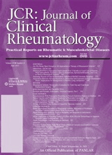
JCR-JOURNAL OF CLINICAL RHEUMATOLOGY
Connecting Clinical Excellence with Research RigorJCR-Journal of Clinical Rheumatology, published by Lippincott Williams & Wilkins, is a premier outlet dedicated to the field of rheumatology, recognized for its contributions and relevance among medical journals. Boasting an impact factor reflective of its vital role in disseminating innovative research, it currently holds a Q2 category ranking in Medicine (miscellaneous) and a Q3 ranking in Rheumatology as of 2023. With its convergence years spanning from 1995 to 2024, the journal aims to foster the advancement of knowledge in clinical practices, therapeutic advances, and patient management strategies concerning rheumatic diseases. Researchers, professionals, and students can access a wealth of benchmark studies and peer-reviewed articles, enhancing their understanding and collaboration within this dynamic field. By bridging clinical insights with rigorous research, the JCR-Journal of Clinical Rheumatology remains an important resource for advancing the understanding of rheumatologic disorders and improving patient care.
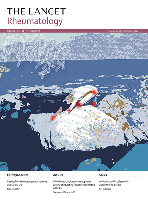
Lancet Rheumatology
Fostering collaboration for a deeper understanding of immunological diseases.The Lancet Rheumatology, published by Elsevier, is a premier academic journal dedicated to advancing the understanding of rheumatology and immunological diseases. Launched in 2019, this esteemed publication has quickly become a leading source of research, achieving an impressive Q1 ranking in both the fields of Rheumatology and Immunology as of 2023. With Scopus rankings placing it at #2 out of 73 in Medicine - Rheumatology and #6 out of 233 in Medicine - Immunology and Allergy, the journal serves as an essential platform for disseminating high-quality, peer-reviewed articles that address the latest findings and clinical practices in these domains. The journal, accessible in print and online, is committed to fostering knowledge and collaboration among researchers, healthcare professionals, and students alike, making it an invaluable resource for those seeking to deepen their expertise in rheumatology and its interrelated fields.
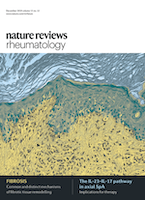
Nature Reviews Rheumatology
Unveiling the latest in rheumatic disease research.Nature Reviews Rheumatology is a premier academic journal published by NATURE PORTFOLIO, dedicated to the field of rheumatology. With an impressive impact factor reflecting its high citation rate and relevance within the scientific community, it ranks in the Q1 category for rheumatology, showcasing its essential role in disseminating cutting-edge research and reviews. The journal serves as a vital resource for researchers, clinicians, and students alike, presenting comprehensive articles that cover the latest developments, therapeutic advancements, and emerging trends in rheumatic diseases. With access options, including open access, it ensures that valuable insights are within reach for all stakeholders in the field. Situated in the United Kingdom and intersecting with a global audience, Nature Reviews Rheumatology stands as an authoritative voice, fostering education and innovation to improve patient outcomes and enhance the understanding of rheumatological conditions.

Rheumatology & Autoimmunity
Advancing knowledge in rheumatology and autoimmunity.Rheumatology & Autoimmunity, published by WILEY, is an emerging academic journal that delves into the intricacies of rheumatological diseases and autoimmune disorders, providing a critical platform for researchers and practitioners within the field. With an ISSN of 2767-1410 and E-ISSN 2767-1429, the journal aims to disseminate cutting-edge research in both clinical and laboratory settings, enhancing knowledge and understanding among professionals and scholars. Although currently classified in Q4 for Immunology and Allergy, and Q3 for Internal Medicine and Rheumatology as of 2023, the journal is positioned for growth and greater visibility in the scientific community. The three-year publishing span from 2021 to 2024 signifies a commitment to addressing contemporary issues and fostering collaboration among various disciplines related to immunology. As an open access journal, it provides wide accessibility, ensuring that groundbreaking research is available to a broad audience. This journal is poised to become a vital resource for those dedicated to advancing the understanding and treatment of autoimmune conditions.
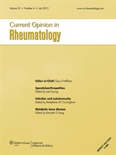
CURRENT OPINION IN RHEUMATOLOGY
Navigating the Frontiers of Rheumatic Disease ResearchCurrent Opinion in Rheumatology, published by Lippincott Williams & Wilkins, stands as a vital resource in the field of rheumatology. Since its inception in 1989, this prestigious journal has been at the forefront of disseminating cutting-edge research, with a notable Q1 ranking in the 2023 Rheumatology category and an impressive Scopus rank of 7 out of 73, placing it in the 91st percentile. The journal's commitment to presenting insightful reviews and critical analyses of recent advancements and treatment strategies makes it an essential read for professionals, researchers, and students dedicated to the study of rheumatic diseases. Although not an open-access journal, Current Opinion in Rheumatology continues to foster an informed dialogue within the academic community through its high-impact content, ensuring that the latest developments and practices are accessible to those at the vanguard of rheumatology research.
RMD Open
Connecting global minds in Immunology and Allergy.RMD Open, published by the BMJ Publishing Group, is a leading open-access journal that has made significant contributions to the fields of Immunology, Immunology and Allergy, and Rheumatology since its inception in 2015. With an impressive Q1 ranking in these categories for 2023, the journal has established itself as an essential platform for the dissemination of high-quality research, case studies, and reviews that advance understanding and treatment strategies in these critical areas of health. As an open-access publication, RMD Open ensures that its content is freely accessible to a global audience, promoting collaboration and knowledge sharing among researchers, clinicians, and students. Based in the United Kingdom at the British Medical Association House, RMD Open is not only dedicated to improving patient care but also to fostering innovative research and discussions in the rapidly evolving landscape of rheumatic diseases.