
BioData Mining
metrics 2024
Transforming Data into Discoveries in Life Sciences
Introduction
BioData Mining is a distinguished open access journal published by BMC, focusing on the dynamic intersection of bioinformatics, computational mathematics, and molecular biology. Since its inception in 2008, this journal has provided a critical platform for researchers and professionals to publish their findings, contributing significantly to the collective knowledge in fields such as biochemistry, computational theory, and genetics. With a robust impact factor and a commendable h-index, BioData Mining continues to be a vital resource for academic and industrial advancements, ranked in the top quartiles in various categories according to the 2023 metrics. The journal's commitment to open access ensures that cutting-edge research is readily available to the global scientific community, thereby enhancing visibility and fostering collaboration among scholars. Whether you are a researcher, student, or practitioner, engaging with BioData Mining will equip you with relevant insights and developments in the fast-evolving realm of bioinformatics.
Metrics 2024
 0.964.003.7038
Metrics History
Rank 2024
Scopus
IF (Web Of Science)
JCI (Web Of Science)
Quartile History
Similar Journals
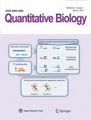
Quantitative Biology
Harnessing Mathematical Models to Illuminate Biological PhenomenaQuantitative Biology is a prestigious journal published by WILEY, focusing on the interdisciplinary study of quantitative approaches in the biological sciences. With an ISSN of 2095-4689 and an E-ISSN of 2095-4697, this journal has established itself as a critical platform for researchers exploring complex biological systems through mathematical and computational methodologies. Operating out of China, Quantitative Biology significantly contributes to its field, holding a Q2 ranking in various categories, including Applied Mathematics and Biochemistry, Genetics and Molecular Biology, according to the latest Scopus rankings. These rankings reflect the journal's commitment to publishing high-quality research that employs advanced modeling and simulation techniques. The journal's impact is evident with its position in the 84th percentile for Applied Mathematics, indicating its relevance and growth in a competitive academic landscape. Although it does not currently operate under an Open Access model, the journal is pivotal for professionals and students alike, aiming to bridge the gap between mathematical theories and biological applications. Researchers are encouraged to submit their innovative findings and engage with the vibrant community dedicated to advancing the quantitative understanding of biological phenomena.
IEEE-ACM Transactions on Computational Biology and Bioinformatics
Bridging Biology and Technology with Cutting-Edge ResearchIEEE-ACM Transactions on Computational Biology and Bioinformatics is a prestigious journal published by the IEEE Computer Society, focusing on the interdisciplinary field of computational biology and bioinformatics. Established in 2004, this journal has made significant strides in contributing to our understanding of complex biological systems through quantitative methods and computational techniques, and it spans a converged publication period through 2024. As a notable resource with an impact factor that positions it in the second quartile in the domains of Applied Mathematics, Biotechnology, and Genetics, it serves as an essential platform for researchers and professionals seeking to disseminate their findings to a global audience. The journal ranks impressively in Scopus, with Applied Mathematics holding a rank of #38 out of 635 (94th percentile) and Genetics at #86 out of 347 (75th percentile), highlighting its significant influence in the scientific community. While the journal is not open-access, it provides valuable insights and cutting-edge research that are crucial for advancing the fields of bioinformatics and computational biology, making it indispensable for students, researchers, and practitioners alike.
Journal of Algorithms & Computational Technology
Connecting Scholars to the Future of Computational InnovationJournal of Algorithms & Computational Technology, published by SAGE PUBLICATIONS LTD, serves as a noteworthy platform for scholars and practitioners in the realms of applied mathematics, computational mathematics, and numerical analysis. With an ISSN of 1748-3018 and an E-ISSN of 1748-3026, this Open Access journal has been disseminating high-quality research since 2007, ensuring that significant advancements in algorithmic techniques and computational methodologies are readily accessible to the global academic community. Based in the United Kingdom, this journal has steadily established itself within specialized quartiles, notably achieving Q3 ranking in Computational Mathematics and Q4 in both Applied Mathematics and Numerical Analysis for 2023, reflecting its growing influence in these fields. As the journal converges from 2011 to 2024, it aims to cater to the needs of researchers, professionals, and students by publishing innovative research that not only addresses theoretical frameworks but also provides practical applications. By leveraging its open-access model, the Journal of Algorithms & Computational Technology fosters a collaborative environment where knowledge can flourish, allowing for the continuous evolution of algorithms that drive technological advancement.

Intelligent Data Analysis
Empowering Scholars with Cutting-edge Data MethodologiesIntelligent Data Analysis is a highly regarded journal published by IOS Press, specializing in the fields of Artificial Intelligence, Computer Vision, and Pattern Recognition. With its ISSN 1088-467X and E-ISSN 1571-4128, the journal has been a cornerstone of scholarly communication since its inception in 1997, serving as a vital resource for researchers, professionals, and students engaged in advancing methodologies and applications in intelligent data analysis. The journal maintains its significance with impressive Scopus ranks, indicating its notable position within the academic community. Although currently not an Open Access journal, Intelligent Data Analysis offers a wealth of insights and findings, encouraging collaboration and knowledge exchange among its readership. With an impact factor reflective of its rigorous selection processes, the journal traverses a broad range of topics, contributing to ongoing discussions and innovations in its field. As the journal looks toward shaping future research until 2024 and beyond, it remains a pivotal platform for disseminating cutting-edge research and fostering academic inquiry.
COMPUTERS IN BIOLOGY AND MEDICINE
Innovating Solutions at the Intersection of Biology and MedicineCOMPUTERS IN BIOLOGY AND MEDICINE is a prestigious academic journal published by Pergamon-Elsevier Science Ltd, dedicated to advancing the fields of Computer Science Applications and Health Informatics. With an impressive impact factor and ranking within the Q1 quartile for both categories, this journal plays a crucial role in disseminating high-quality research findings that influence cutting-edge developments at the intersection of computing and healthcare. Covering a broad range of topics from computational biology to medical informatics, it serves as a vital resource for researchers, professionals, and students striving to harness technology for medical advancements. The journal has been publishing since 1970 and continues to evolve, incorporating the latest trends and innovations in the field, thereby ensuring that it remains a key contributor to scientific inquiry and knowledge. With accessible content and a global reach, COMPUTERS IN BIOLOGY AND MEDICINE invites submissions that elevate the understanding and application of computational methods in biological and medical contexts.

CANCER INVESTIGATION
Transforming knowledge into breakthroughs in cancer care.CANCER INVESTIGATION is a distinguished peer-reviewed journal published by Taylor & Francis Inc, dedicated to the advancing field of cancer research and oncology. With an ISSN of 0735-7907 and E-ISSN of 1532-4192, this journal has been a pivotal resource for professionals and researchers since its inception in 1983, continually contributing to the evolving landscape of cancer investigation until its convergence in 2024. CANCER INVESTIGATION boasts noteworthy rankings in 2023, including Q3 in Cancer Research and Q2 in Medicine (miscellaneous), highlighting its relevance and impact in these critical areas. The journal's commitment to disseminating innovative research and comprehensive reviews makes it an essential platform for those engaged in cancer studies and related disciplines. While currently not available as an open-access publication, CANCER INVESTIGATION remains an invaluable tool for understanding the complexities of cancer, offering insights that drive scientific advancements and improve patient outcomes.

ADVANCED ENGINEERING INFORMATICS
Transforming Insights into Engineering ExcellenceADVANCED ENGINEERING INFORMATICS is a prestigious journal published by Elsevier Science Ltd, dedicated to the interdisciplinary fields of Artificial Intelligence and Information Systems. Established in 2002, this journal serves as a vital platform for researchers and practitioners to disseminate groundbreaking insights and innovations that shape the future of engineering and technological integration. With an impressive impact factor and ranked in the Q1 category for both Artificial Intelligence and Information Systems in 2023, it holds a prominent position, with Scopus rankings placing it in the 92nd percentile among 394 journals in Computer Science Information Systems and the 87th percentile among 350 journals in Computer Science Artificial Intelligence. ADVANCED ENGINEERING INFORMATICS embraces an Open Access model, ensuring that cutting-edge research is accessible to a global audience, fostering collaboration and development across academic and professional circles. The journal is committed to advancing knowledge and influencing practice, paving the way for the next generation of technologies that enhance engineering informatics.
Journal of Bioinformatics and Computational Biology
Bridging Disciplines to Unravel Biological MysteriesThe Journal of Bioinformatics and Computational Biology, published by WORLD SCIENTIFIC PUBL CO PTE LTD, serves as a significant platform for disseminating innovative research in the dynamic fields of bioinformatics and computational biology. With an ISSN of 0219-7200 and an E-ISSN of 1757-6334, this journal facilitates the exchange of ideas and advancements from its inception in 2003 and continues to be pivotal through 2024. Despite its classification in the lower quartiles—Q4 in Biochemistry and Q4 in Molecular Biology, along with Q3 in Computer Science Applications—the journal remains a valuable resource for researchers and students alike, as it emphasizes interdisciplinary approaches essential for tackling complex biological problems through computational methods. Located in Singapore, the journal encourages submissions of high-quality, peer-reviewed articles that offer insights into computational techniques that empower biological research. Although this journal does not offer open access options, its contributions to research are increasingly recognized across various academic platforms. As the field evolves rapidly, this journal continues to attract a growing readership, making it an essential reference point for anyone interested in the intersection of biology and computer science.

Bioinformatics Advances
Exploring the Intersection of Biology and TechnologyBioinformatics Advances, published by Oxford University Press, is an esteemed academic journal that serves as a vital platform for the dissemination of innovative research in the rapidly evolving fields of bioinformatics and computational biology. With a promising E-ISSN of 2635-0041, this journal has made significant strides since its inception in 2021, achieving a commendable Q1 ranking in both the Computer Science Applications and Genetics categories, alongside respectable Q2 rankings in Molecular Biology and Structural Biology as of 2023. Though currently not an open-access publication, its critical insights cater to an audience keen on advancing knowledge and technology in genomic studies and data analytics. The journal emphasizes high-quality research and aims to facilitate the integration of computational techniques within biological sciences, making it an essential resource for researchers, professionals, and students alike who seek to stay at the forefront of bioinformatics advancements.
Journal of Integrative Bioinformatics
Empowering Researchers with Cutting-Edge Bioinformatics SolutionsJournal of Integrative Bioinformatics, published by WALTER DE GRUYTER GMBH, is a leading open-access journal that has been at the forefront of the field since its inception in 2004. With an E-ISSN of 1613-4516, it serves as a crucial platform for researchers engaged in the interdisciplinary study of bioinformatics, blending insights from biology, computer science, and mathematics. Based in Germany, the journal is recognized for its impact in the realm of general medicine, boasting a Scopus rank of #172 out of 636 and placing in the 73rd percentile of its category. The journal continuously strives to disseminate high-quality research contributions that unify experimental and computational approaches to address complex biomedical questions. Targeted towards academics, professionals, and students alike, the Journal of Integrative Bioinformatics provides essential access to innovative research that enhances our understanding of integrative methodologies in medicine and beyond, especially with converged years spanning from 2008 to 2024.