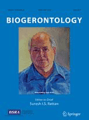
BIOGERONTOLOGY
metrics 2024
Advancing Understanding of Biological Aging Processes
Introduction
BIOGERONTOLOGY, published by SPRINGER, is a premier journal dedicated to the interdisciplinary study of biological aging processes and their implications for health and longevity. With an ISSN of 1389-5729 and an E-ISSN of 1573-6768, this journal features cutting-edge research that addresses critical questions in the fields of aging, geriatrics, and gerontology. Ranking impressively in the top quartiles, particularly as Q1 in Gerontology, BIOGERONTOLOGY is recognized for its contributions to advancing the understanding of aging at both molecular and systemic levels. The journal’s rich repository of scholarly articles provides valuable insights for researchers, healthcare professionals, and students alike, fostering a deeper comprehension of age-related biological mechanisms. Although not an open-access journal, it is highly regarded with an impact factor that reflects its significant role in the academic community. The journal spans from 2000 to 2024, ensuring a broad historical context for its studies, and is based in the Netherlands, with its administrative office located at One New York Plaza, Suite 4600, New York, NY 10004, United States. Engaging with BIOGERONTOLOGY means joining a global dialogue on the science of aging and the implications it holds for humanity.
Metrics 2024
 1.014.404.3091
Metrics History
Rank 2024
Scopus
IF (Web Of Science)
JCI (Web Of Science)
Quartile History
Similar Journals

npj Aging and Mechanisms of Disease
Decoding Aging: Bridging Biology and Healthnpj Aging and Mechanisms of Disease is a leading open-access journal dedicated to advancing the understanding of the biological mechanisms underlying aging and age-related diseases. Published by NATURE PORTFOLIO in the United Kingdom, this journal has established itself as a vital resource within the fields of Aging and Geriatrics and Gerontology, proudly holding a prestigious Q1 ranking in both categories as of 2023. With an impressive Scopus ranking, placing it in the top 10 for Geriatrics and Gerontology, and the top 9 for Aging, the journal is committed to disseminating high-quality, peer-reviewed research that offers innovative insights and fosters collaboration among researchers and practitioners. Since its inception in 2015, npj Aging and Mechanisms of Disease has embraced the open-access model, ensuring that groundbreaking findings are freely available to all, thereby promoting widespread knowledge-sharing within the scientific community. This journal serves as an essential platform for those seeking to explore the complex interplay of genetic, molecular, and environmental factors that influence aging and its associated challenges.

REJUVENATION RESEARCH
Illuminating the Future of Gerontology and RejuvenationRejuvenation Research is a premier journal dedicated to the advancing field of gerontology and aging research, published by Mary Ann Liebert, Inc. Established in 2000, the journal serves as a pivotal platform for the dissemination of scholarly articles that explore the complex mechanisms of aging and innovative approaches to rejuvenation. With an impact factor reflective of its robust scholarly contributions, the journal currently holds a Q4 ranking in Aging and a Q3 ranking in Geriatrics and Gerontology, showcasing its relevance in the academic community. This periodic publication, welcoming open access submissions, invites researchers, professionals, and students alike to engage with cutting-edge findings that could shape future geriatric practices and enhance quality of life. The journal underscores the importance of interdisciplinary collaboration, encouraging explorations that intersect with biochemistry, genetics, and other vital areas of study. Through its ongoing commitment to high-quality research, Rejuvenation Research remains a critical resource for understanding the biological underpinnings of aging and the strategies to mitigate its effects.
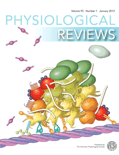
Physiological Reviews
Illuminating the Complexities of Life Through PhysiologyPhysiological Reviews is a prestigious journal published by the American Physiological Society, dedicated to advancing our understanding of physiology across various domains. With an impressive impact factor that places it in Q1 quartiles for medicine, molecular biology, and physiology as of 2023, this journal is recognized as a leading source of high-quality reviews and research analyses. The journal has been a vital resource for the scientific community since its inception in 1945, providing in-depth and comprehensive insights that are crucial for both scholars and practitioners in the field. Although not an open-access publication, it remains widely accessible through institutional subscriptions, ensuring that crucial research findings are disseminated efficiently. With Scopus rankings that place it in the top percentile across multiple categories, Physiological Reviews continues to be an essential platform for the latest advancements and discoveries in physiology, making it indispensable for researchers, professionals, and students alike.

CELL
Leading the charge in innovative biochemistry research.CELL is a premier academic journal in the field of Biochemistry, Genetics, and Molecular Biology, published by CELL PRESS. Founded in 1974, this esteemed journal has steadfastly contributed to advancing our understanding of cellular processes and organisms, making it integral for researchers and practitioners alike. With an impressive impact factor that places it in the Q1 category of its field, CELL ranks #1 out of 221 in general biochemistry and genetics, achieving a remarkable 99th percentile in Scopus rankings. Though it is not currently an open-access publication, the journal regularly disseminates high-quality research that impacts the scientific community significantly. Researchers, students, and professionals seeking to stay at the forefront of innovative discoveries and methodologies in molecular biology will find CELL an invaluable resource through its comprehensive articles and reviews.
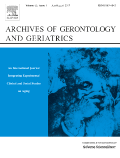
ARCHIVES OF GERONTOLOGY AND GERIATRICS
Pioneering research for the evolving landscape of aging.The Archives of Gerontology and Geriatrics, published by Elsevier Ireland Ltd, is a leading journal in the fields of Aging and Geriatrics and Gerontology. With an ISSN of 0167-4943 and an E-ISSN of 1872-6976, it has established itself as a crucial platform for disseminating high-quality research focused on the biological and psychosocial aspects of aging. The journal holds an impressive Q2 ranking in both Aging and Geriatrics and Gerontology, and a Q1 ranking in Gerontology and Health (Social Science) as of 2023, reflecting its significant impact in these disciplines. Additionally, the journal is ranked #33/371 in Social Sciences (Health) and #5/39 in Nursing (Gerontology) according to Scopus, showcasing its esteemed position in the academic community. Although currently not open access, the journal offers a wealth of research articles from 1982 to the upcoming 2025 that are vital for stakeholders including researchers, healthcare professionals, and students aiming to advance their understanding of aging processes and policies. Titles published within its pages contribute to shaping agendas in public health and gerontological practice, making it an essential resource for those involved in the study of the elderly population.

GeroScience
Unraveling the Mysteries of AgingGeroScience, published by Springer, is an esteemed open-access journal that focuses on the multidisciplinary field of aging research. Since its inception in 2017, the journal has quickly established itself as a leader in its field, achieving impressive Q1 quartile rankings across various categories, including Aging, Cardiology and Cardiovascular Medicine, Geriatrics and Gerontology, and Complementary and Alternative Medicine, as per 2023 evaluations. With a significant impact factor that underscores its influence and reach in academia, GeroScience aims to disseminate high-quality research that addresses the complex challenges and advancements related to aging. Its accessible publication format fosters greater dissemination of knowledge and encourages collaboration among researchers, practitioners, and students eager to contribute to the growing body of work on age-related health issues. As it continues to thrive, GeroScience remains a pivotal resource for anyone looking to stay at the forefront of aging research.
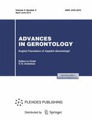
Advances in Gerontology
Elevating Research on the Aging ExperienceAdvances in Gerontology is a pivotal academic journal dedicated to the field of gerontology, published by PLEIADES PUBLISHING INC. With its ISSN 2079-0570 and E-ISSN 2079-0589, this journal serves as an essential platform for researchers, healthcare professionals, and students focused on aging and related health issues. Although currently not an open-access journal, it aspires to enrich the scholarly community by disseminating high-quality research from 2011 through 2024. The journal is recognized in the lower quartile of its category, ranking Q4 in both Geriatrics and Gerontology, reflecting its commitment to addressing emerging topics in the aging population despite its lower visibility in the competitive landscape. As it continues to explore critical areas in gerontology, Advances in Gerontology invites contributions that advance knowledge, foster understanding, and inform practices within this essential field of study.
Aging Medicine
Innovating Care Solutions for Tomorrow’s SeniorsAging Medicine, published by Wiley, is a pivotal open-access journal that has been at the forefront of research dedicated to the aging population since its inception in 2018. With a focus on both geriatric care and gerontology, the journal serves as a crucial resource for researchers, healthcare professionals, and students interested in understanding the complexities of aging and the related medical challenges. Although it holds a Q3 quartile ranking in the fields of Aging and Geriatrics and Gerontology according to the 2023 metrics, the journal continues to effectively disseminate valuable research and insights, helping to bridge gaps in knowledge and practice. With an E-ISSN of 2475-0360, it offers an open-access model that ensures broader accessibility to its published content, thus promoting collaboration and innovation across disciplines. As the journal converges towards 2024, it remains committed to evolving with the dynamics of aging research, making it a significant platform for the exchange of ideas and advancements in this essential field.
NEUROBIOLOGY OF AGING
Exploring the Intersection of Aging and NeurobiologyNEUROBIOLOGY OF AGING, published by Elsevier Science Inc, is a premier journal dedicated to advancing our understanding of the complex interactions between the aging process and neurobiological mechanisms. With an ISSN of 0197-4580 and E-ISSN 1558-1497, the journal has established itself as a critical resource in the fields of Aging, Developmental Biology, Geriatrics and Gerontology, Clinical Neurology, and Neuroscience. Boasting a Q1 ranking in multiple categories, the journal is positioned within the top echelons of scholarly publication, underscoring its significant impact with an impressive Scopus ranking in various subfields. Committed to disseminating high-quality, peer-reviewed research, NEUROBIOLOGY OF AGING welcomes original articles, reviews, and research notes aiming to uncover the underlying processes of aging on the nervous system, fostering collaboration among researchers, professionals, and students alike. Although primarily subscription-based, the journal continues to play a vital role in shaping the discourse on aging and neurobiology, making it an essential publication for those engaged in this dynamic field.
Nature Aging
Unraveling the Complexities of AgingNature Aging, published by SPRINGERNATURE in Germany, stands as a premier journal dedicated to advancing the field of aging research. With high-ranking performance indicators, including a Q1 classification in Aging, Geriatrics and Gerontology, and Neuroscience (miscellaneous), this journal emphasizes the interdisciplinary nature of aging studies. Its Scopus rankings highlight its impact, achieving remarkable positions such as #1 in Neuroscience and #2 in both Geriatrics and Biochemistry for aging-related research. Although currently not open access, Nature Aging provides a wealth of cutting-edge research and critical reviews that aid researchers and practitioners in understanding the complexities of aging mechanisms and their implications. As the field continues to evolve from 2021 through 2024, this journal not only facilitates the dissemination of knowledge but also fosters innovative discussions that propel the science of aging forward. Join the vibrant community of scholars and professionals dedicated to solving the challenges associated with aging by engaging with the content published in Nature Aging.