
En Blanco-Revista de Arquitectura
Scope & Guideline
Showcasing Cutting-Edge Research in Architecture
Introduction
Aims and Scopes
- Urban Renewal and Transformation:
The journal frequently addresses themes of urban renewal, focusing on the transformation of existing structures into new functions, such as educational institutions and community centers. - Sustainable and Contextual Design:
A consistent emphasis is placed on sustainable design practices that respect the local context, history, and environment, showcasing architecture that harmonizes with its surroundings. - Cultural and Historical Perspectives:
The journal often delves into the cultural significance of architecture, examining historical buildings and their relevance in contemporary settings. - Architectural Installations and Art:
There is a notable interest in architectural installations that blend art and functionality, exploring how temporary structures can engage with public spaces. - Educational Architecture:
The publication highlights the design and impact of educational buildings, reflecting on how architecture influences learning environments.
Trending and Emerging
- Adaptive Reuse:
There is a growing trend towards adaptive reuse of buildings, where existing structures are creatively repurposed for new functions, highlighting sustainability and resourcefulness in design. - Community-Centric Spaces:
Recent publications show an increasing focus on community-centric designs, emphasizing architecture that fosters social interaction and caters to the needs of local populations. - Digital and Parametric Design:
The integration of digital technologies and parametric design processes is becoming more prevalent, showcasing how technology influences contemporary architectural practices. - Environmental Resilience:
A heightened concern for environmental resilience is emerging, with a focus on designing buildings that can withstand climate change impacts and promote ecological balance. - Interdisciplinary Approaches:
There is an increasing trend towards interdisciplinary collaboration, where architects work alongside other fields such as urban planning, sociology, and environmental science to create holistic solutions.
Declining or Waning
- Traditional Residential Architecture:
There is a noticeable decline in articles focused on traditional residential designs, with fewer discussions around conventional housing styles and more emphasis on innovative, communal living solutions. - Historical Preservation:
The focus on the preservation of historical buildings has decreased, possibly overshadowed by a more contemporary approach to urban development and architectural innovation. - Monumental Architecture:
Fewer papers are dedicated to monumental architecture, as the journal shifts its attention towards more functional and socially responsive designs.
Similar Journals
VITRUVIO-International Journal of Architectural Technology and Sustainability
Advancing sustainable design for a better tomorrow.Welcome to the VITRUVIO-International Journal of Architectural Technology and Sustainability, a leading open-access journal published by UNIV POLITECNICA VALENCIA, EDITORIAL UPV since 2015 and based in Spain. With its ISSN 2444-9091, this journal is dedicated to advancing the field of architectural technology and sustainability, providing a vital platform for researchers, professionals, and students alike. The journal has made significant strides in the academic landscape, achieving a Q3 ranking in Architecture and a Q4 ranking in Building and Construction for 2023. It features a diverse range of scholarly articles that explore innovative practices, cutting-edge research, and sustainable solutions in architecture. With a Scopus ranking placing it at #70/189 in Architecture and #161/223 in Building and Construction, it is positioned within the 63rd percentile and 28th percentile respectively, demonstrating its increasing impact in these vital fields. We invite you to engage with our content and contribute to the ongoing discourse around sustainability in architectural practice.
Arqueologia de la Arquitectura
Advancing Knowledge in Architecture and ArchaeologyArqueologia de la Arquitectura is a premier scholarly journal published by CONSEJO SUPERIOR INVESTIGACIONES CIENTIFICAS-CSIC, specializing in the intricate intersections of architecture, archaeology, and conservation. Since its inception in 2002, this Open Access journal has provided researchers, professionals, and students with a platform to share innovative findings that deepen our understanding of architectural heritage and its archaeological contexts. Based in Spain, it has demonstrated remarkable academic rigor and impact, achieving Q1 rankings in multiple categories, including Architecture and Visual Arts and Performing Arts, alongside a Q2 in Archaeology as of 2023. With a robust presence in Scopus, ranking within the 88th percentile for Visual Arts and Performing Arts, Arqueologia de la Arquitectura stands as a crucial resource for those dedicated to the preservation and study of our built heritage, encouraging interdisciplinary dialogue and research advancements in these elegant fields of study.
International Journal of Islamic Architecture
Bridging Cultures Through Architectural InnovationThe International Journal of Islamic Architecture, published by INTELLECT LTD in the United Kingdom, is a pivotal scholarly resource dedicated to the exploration of Islamic architecture, design, and cultural expressions within a contemporary framework. With ISSN 2045-5895 and E-ISSN 2045-5909, this journal targets an interdisciplinary audience by bridging the gap between architecture, geography, urban studies, and the arts. Established in 2012, it has swiftly garnered recognition, achieving notable rankings such as Q3 in Architecture and Q2 in Visual Arts and Performing Arts by 2023. Although it currently does not offer open access, its articles are meticulously peer-reviewed, ensuring high academic standards and relevance. Emphasizing the significance of Islamic architectural heritage in global contexts, the journal seeks to foster innovative perspectives and critical discourse, making it an essential platform for researchers, professionals, and students alike to engage with contemporary architectural practices and cultural dialogues.

METU Journal of the Faculty of Architecture
Connecting scholars and practitioners in the realm of architecture.METU Journal of the Faculty of Architecture is a reputable academic publication dedicated to advancing research and discourse in the field of architecture. Published by MIDDLE EAST TECHNICAL UNIVERSITY in Turkey, this journal serves as a vital platform for scholars and practitioners, addressing both theoretical and practical topics relevant to contemporary architectural studies. With an impact factor that positions it in the Q3 category for architecture as of 2023, and a Scopus rank of #133 out of 189 in Engineering Architecture, the METU Journal is an influential resource for innovative ideas and studies. Encompassing a wide range of scholarly articles, it fosters academic collaboration between researchers and professionals, making it essential reading for anyone passionate about the evolution of architecture. Though not open access, it provides crucial insights and rigorous research from 2008 up until 2024, contributing significantly to the global discourse on architectural practices and theories.

ARCHITECTURAL HISTORY
Illuminating the Intersection of History and DesignARCHITECTURAL HISTORY is a renowned journal published by Cambridge University Press, dedicated to advancing the field of architecture through scholarly research and critical analysis. Operating under ISSN 0066-622X and E-ISSN 2059-5670, this academic journal plays a pivotal role in disseminating knowledge related to the historical and theoretical dimensions of architecture. Though currently not open access, it offers invaluable insights for researchers and professionals interested in the evolution of architectural practices, spanning from the year 2002 to 2009 and continuing from 2011 to 2023. With a Q4 ranking in Architecture and a Q3 ranking in Visual Arts and Performing Arts as of 2023, ARCHITECTURAL HISTORY is well-positioned to contribute to the ongoing discourse in these fields. Furthermore, it holds commendable placements within the Scopus rankings, specifically 322/667 in Visual Arts and Performing Arts and 139/189 in Architecture, reflecting its growing influence. This journal serves not only as a platform for in-depth research but also as a critical space for scholarly exchange, making it an essential resource for students and academics alike who aspire to deepen their understanding of architectural heritage and its impact on contemporary practices.
Technology-Architecture + Design
Exploring the Future of Built EnvironmentsTechnology-Architecture + Design is a pioneering academic journal published by Taylor & Francis Ltd, dedicated to exploring the intersection of technology within architectural and design practices. With an impactful presence in the field since its inception in 2017, the journal has quickly ascended in academic rankings, achieving a Q2 categorization in Architecture and a notable Q1 ranking in Visual Arts and Performing Arts, underscoring its significance in these dynamic areas of study. The journal aims to provide an open platform for innovative research that addresses contemporary challenges in architecture and urban planning, utilizing technological advancements as a central theme. As a vital resource for scholars, practitioners, and students alike, Technology-Architecture + Design publishes high-quality, peer-reviewed articles that contribute to the discourse surrounding sustainable design, digital fabrication, and smart urbanism, making it an essential read for those passionate about the future of built environments.

i2 Investigacion e Innovacion en Arquitectura y Territorio
Connecting research and real-world applications in dynamic landscapes.i2 Investigacion e Innovacion en Arquitectura y Territorio is a leading open-access journal published by the University of Alicante, dedicated to advancing research and innovation in the fields of architecture and territorial development. Since its inception in 2013, this journal has aimed to provide a robust platform for scholarly discourse, promoting interdisciplinary approaches that connect academic insights with practical applications in urban planning and environmental design. With its commitment to accessibility, the journal ensures that cutting-edge findings and case studies are readily available to researchers, professionals, and students alike, fostering collaboration and informed decision-making. As the landscape of architecture and geography continues to evolve, the i2 journal stands out as a crucial resource for enhancing knowledge and cultivating innovative practices in these dynamic fields.
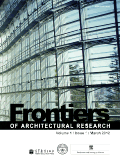
Frontiers of Architectural Research
Shaping the Future of Architecture Through Open ScholarshipFrontiers of Architectural Research, published by KEAI PUBLISHING LTD, stands at the forefront of interdisciplinary scholarship, addressing contemporary challenges in the fields of architecture, urban studies, building and construction, and archaeology. Since its establishment in 2012, this open-access journal has rapidly gained recognition, achieving prestigious rankings in the 2023 category quartiles, including Q1 placements in both Architecture and Archaeology. With an impressive Scopus rank of #5 out of 354 in Archaeology and #10 out of 189 in Engineering - Architecture, it demonstrates its significant influence and contribution to advancing architectural research. Frontiers of Architectural Research embraces a broad scope that fosters innovative discourse and practical solutions, catering to a diverse audience of researchers, professionals, and students keen on exploring the intersection of culture, environment, and technology. By ensuring immediate access to research findings, the journal not only enhances the visibility of scholarly work but also encourages collaborative dialogues that shape the future of architectural practice.

Studies in History and Theory of Architecture-Studii de Istoria si Teoria Arhitecturii
Challenging Paradigms in Architecture and Urban StudiesStudies in History and Theory of Architecture - Studii de Istoria si Teoria Arhitecturii, published by EDITURA UNIV ION MINCU in Romania, serves as a crucial platform for scholarly dialogue in the interdisciplinary fields of architecture, conservation, and urban studies. With an ISSN of 2344-6544 and E-ISSN 2457-1687, this open-access journal has been disseminating valuable research outputs since 2014, facilitating global access to knowledge. Although it currently holds a Q4 quartile ranking in multiple categories, including Conservation and Urban Studies, the journal aims to elevate discussions surrounding architectural theory and history, safety, risk, and reliability in built environments. Positioned at the intersection of arts and humanities, the journal encourages contributions that challenge conventional paradigms and enrich academic discourse. As a vital resource for researchers, professionals, and students alike, Studii de Istoria si Teoria Arhitecturii is dedicated to nurturing the growth of architectural knowledge and its practical applications in contemporary society.

Open House International
Exploring the Future of Urban Design and ArchitectureOpen House International is a distinguished peer-reviewed journal that serves as a vital resource in the fields of Architecture, Urban Studies, and Geography, Planning and Development. Published by Emerald Group Publishing Ltd, the journal circulates valuable insights and research findings that address contemporary challenges and innovations within urban environments. With an impressive 2023 Scopus ranking that places it in the Q2 category in Architecture and Q3 in Geography, Planning and Development, the journal is recognized for contributing significantly to scholarly discourse. Although it follows a traditional access model, the journal's commitment to curating high-quality content remains paramount. As it transitions into a new decade of publishing, from 2007 to 2024, Open House International continues to attract submissions that push the boundaries of knowledge in urban and architectural studies, engaging researchers, professionals, and students alike in the vibrant dialogue on the built environment.