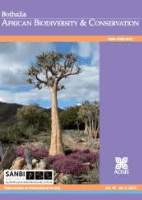
BOTHALIA
metrics 2024
Advancing biodiversity through open access research.
Introduction
BOTHALIA is a prominent open-access journal dedicated to advancing the fields of Ecology, Evolution, Behavior, and Systematics, as well as Plant Science. Published by the South African National Biodiversity Institute (SANBI), this journal has been disseminating valuable research since 1978 and has embraced open access since 2014 to enhance the visibility and accessibility of scientific knowledge. With an ISSN of 0006-8241 and E-ISSN of 2311-9284, BOTHALIA plays a pivotal role in promoting biodiversity research in South Africa and beyond. In the recent Scopus rankings, it has been positioned at Q4 in both relevant categories, highlighting its contributions within the broader scientific community, despite being in its growing phase amidst competitive rankings. The journal aims to publish high-quality articles that address critical issues in biodiversity and ecological sciences, making it an essential resource for researchers, professionals, and students committed to understanding and managing our planet's biological heritage.
Metrics 2024
 0.200.801.0026
Metrics History
Rank 2024
Scopus
IF (Web Of Science)
JCI (Web Of Science)
Quartile History
Similar Journals

Mediterranean Botany
Championing Open Access for Global Botanical DiscoveriesMediterranean Botany is a distinguished peer-reviewed journal dedicated to the flourishing fields of Ecology, Plant Science, and Ecology, Evolution, Behavior and Systematics. Published by the Universidad Complutense de Madrid, Servicio Publicaciones, this Open Access journal has been disseminating valuable research since 2018, ensuring that findings are accessible to a global audience, with an emphasis on Mediterranean vegetation and biodiversity. With an ISSN of 2603-9109, it contributes significantly to the academic discourse in its category quartiles, recently featuring in Q3 for Ecology and related fields. Notably, Mediterranean Botany ranks within the top half of its category in Scopus, highlighting its relevance and contribution to the scientific community. Researchers, professionals, and students alike will find the journal to be a vital resource for latest discoveries, trends, and conservation strategies in Mediterranean ecosystems, positioning it as an essential platform for advancing knowledge and fostering collaboration within the plant sciences.

Hacquetia
Bridging Disciplines for a Greener TomorrowHacquetia is an esteemed open-access journal dedicated to the interdisciplinary exploration of ecology, evolution, behavior, systematics, forestry, and plant science. Published by SCIENTO since 2007, this journal has established itself as a pivotal platform for researchers and academics looking to disseminate their findings in these critical fields. Nestled in the heart of Warsaw, Poland, Hacquetia offers unrestricted access to its content, promoting knowledge sharing among professionals, students, and enthusiasts alike. The journal, while ranked in the Q4 category across its relevant disciplines in 2023, serves as a valuable resource for those seeking to contribute to and engage with contemporary ecological and botanical research. Its commitment to open access ensures that cutting-edge research is available to a global audience, fostering innovation and collaboration in the scientific community.

PLANT SPECIES BIOLOGY
Championing the Study of Plant Diversity and EcologyPLANT SPECIES BIOLOGY, published by WILEY in the United Kingdom, is a prominent journal dedicated to advancing the understanding of plant species, their biology, ecology, and roles within ecosystems. With an impressive convergence of research dating back to 1986 and extending through 2024, this journal caters specifically to specialists in the fields of plant science and ecology. The journal's current impact factor further underscores its significance, ranking in the Q2 quartile across three relevant categories: Ecology, Ecology, Evolution, Behavior and Systematics, and Plant Science. As a member of the Scopus ranks, it holds respectable positions within its categories, evidencing its contribution to impactful scientific discussions and knowledge. Although it is not an open-access journal, PLANT SPECIES BIOLOGY provides essential insights, fostering interdisciplinary dialogue and discovery for researchers, professionals, and students dedicated to exploring the complexities of plant species and their ecosystems.
ADANSONIA
Advancing plant science through open dialogue.ADANSONIA is a distinguished, peer-reviewed open access journal dedicated to advancing the field of plant science. Published by the Publications Scientifiques du Museum in Paris since 2000, this journal serves as a critical platform for sharing innovative research and discoveries in botany, ecology, and related disciplines. With its ISSN 1280-8571 and E-ISSN 1639-4798, ADANSONIA boasts a notable Scopus rank of #383 in the Agricultural and Biological Sciences category and a 2023 category quartile ranking of Q3 in Plant Science, indicating a meaningful contribution to the academic community. The journal's scope encompasses a broad range of topics, making it a vital resource for researchers, professionals, and students alike who are exploring the complexities of plant biology. Based in France, ADANSONIA not only enhances visibility for groundbreaking research but also facilitates open communication amongst scholars, ensuring that knowledge on plant science is accessible worldwide. Located at CP 39-57, Rue Cuvier, F-75231 Paris Cedex 05, France, this journal stands as a testament to the collaborative efforts in the pursuit of scientific excellence in plant sciences.
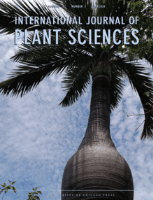
INTERNATIONAL JOURNAL OF PLANT SCIENCES
Elevating ecological understanding through rigorous research.The INTERNATIONAL JOURNAL OF PLANT SCIENCES, published by UNIV CHICAGO PRESS, is a leading journal dedicated to advancing knowledge in the fields of plant sciences and ecology. With an ISSN of 1058-5893 and an E-ISSN of 1537-5315, this journal has been a prominent platform for groundbreaking research since its establishment, featuring works from 1983 to present. It holds an impressive Q2 ranking in both Ecology, Evolution, Behavior and Systematics and Plant Science, reflecting its reputable standing within the academic community. The journal is well-regarded for its rigorous peer-review process and commitment to high-quality publication standards, making it a favored choice for researchers, students, and professionals eager to engage with the latest findings and innovative methodologies in plant research. While it does not currently operate under an Open Access model, the journal provides ample access options for institutions and individuals keen to explore its curated content. By presenting diverse studies that blend theoretical and practical insights, the INTERNATIONAL JOURNAL OF PLANT SCIENCES plays a critical role in fostering interdisciplinary dialogue and advancing the frontiers of plant science research.
FOLIA GEOBOTANICA
Fostering a deeper understanding of our planet's botanical history.FOLIA GEOBOTANICA, published by Springer, is a distinguished journal dedicated to advancing the fields of Paleontology and Plant Science through the dissemination of high-quality research. With an ISSN of 1211-9520 and an E-ISSN of 1874-9348, this journal has been pivotal in providing a platform for innovative studies from 1994 to 2024. Notably, FOLIA GEOBOTANICA holds a Q3 ranking in Paleontology and a Q2 ranking in Plant Science as of 2023, affirming its relevance and contribution to the scholarly community. The journal is located in the Netherlands at VAN GODEWIJCKSTRAAT 30, 3311 GZ DORDRECHT, and is not an Open Access publication, ensuring comprehensive review processes and scholarly integrity. With Scopus rankings that place it in the 50th percentile for Plant Science and 46th for Paleontology, FOLIA GEOBOTANICA continues to attract researchers, professionals, and students who are keen to explore the intricacies of plant ecology and fossil records, thereby fostering a deeper understanding of ecological and evolutionary patterns.

PHYTON-ANNALES REI BOTANICAE
Fostering innovation in the realm of plant biology.PHYTON-ANNALES REI BOTANICAE is a distinguished journal dedicated to the fields of plant science and ecology, published by Ferdinand Berger Soehne. With its origins tracing back to 1994, this journal has carved a niche in disseminating vital research findings and innovative studies pertaining to botany and environmental biology, despite its coverage being discontinued in Scopus since 2016. The journal's impact extends across various disciplines, reflected in its rankings within the categories of Agricultural and Biological Sciences and Environmental Science, underscoring its commitment to advancing knowledge in plant sciences. While it is not an open-access journal, its rigorous peer-review process ensures high-quality research that is valuable for researchers, professionals, and students alike. Located in Horn, Austria, PHYTON serves as a pivotal platform for sharing significant contributions to the field, fostering a deeper understanding of plant biology and ecology.

NEW ZEALAND JOURNAL OF BOTANY
Bridging Theory and Practice in Ecological StudiesThe New Zealand Journal of Botany, published by the esteemed Taylor & Francis Ltd, serves as a pivotal platform for disseminating significant research in the fields of Ecology, Evolution, Behavior and Systematics, as well as Plant Science. With a rich history dating back to 1963 and an impressive convergence extending to 2024, this journal has established itself as an essential resource for researchers and professionals dedicated to understanding the complexities of plant life and ecological systems in New Zealand and beyond. The journal is currently categorized in the Q3 quartile for both relevant disciplines as of 2023, reflecting its balanced influence within the global academic community. Although not an open access journal, it retains a significant impact factor, evidenced by its Scopus rankings, which place it within the top half of its categories. This makes it an invaluable tool for students, researchers, and academics aiming to engage with robust, peer-reviewed scientific findings and contribute to the evolving discourse surrounding botany and ecological research.
Botany Letters
Innovating for Tomorrow’s Agricultural ChallengesBotany Letters, published by Taylor & Francis Ltd, is a prominent journal in the field of Plant Science based in the United Kingdom. With its ISSN 2381-8107 and E-ISSN 2381-8115, the journal has established itself as an essential resource for researchers, professionals, and students alike, focusing on innovative studies and findings in botany. As a Q2 ranked journal in its category (2023) and holding a respectable Scopus rank of #200 out of 516 in Agricultural and Biological Sciences, it reflects a robust commitment to quality and relevance in the field. The journal's open access model ensures that groundbreaking research is readily accessible, fostering collaboration and knowledge sharing among the global scientific community. Covering a broad spectrum of topics within plant science from 2016, Botany Letters aims to catalyze advancements in the understanding and management of plant biodiversity and sustainability, ultimately contributing to conservation efforts and agricultural innovation.

ACTA SOCIETATIS BOTANICORUM POLONIAE
Pioneering Discoveries in Plant Science and EcologyACTA SOCIETATIS BOTANICORUM POLONIAE is a reputable open-access journal dedicated to the field of Plant Science, published by the Polskie Towarzystwo Botaniczne since 1923. With an ISSN of 0001-6977 and an E-ISSN of 2083-9480, this journal has made significant contributions to the botanical sciences, fostering the dissemination of research from Poland and beyond. The journal has ranked in the third quartile (Q3) within its category in the 2023 journal metrics, demonstrating a strong presence in the global academic community, as evidenced by its Scopus ranking of 291/516 within the Agricultural and Biological Sciences sector, placing it in the 43rd percentile. While specific H-Index data are currently not available, ACTA continues to attract submissions from a broad international audience and publishes a wide range of studies that advance the understanding of plant biology, ecology, and conservation. The journal remains a vital resource for researchers, professionals, and students alike, committed to enhancing knowledge and collaboration in botanical science.