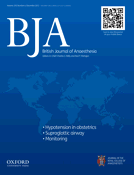
BRITISH JOURNAL OF ANAESTHESIA
Scope & Guideline
Elevating Standards in Anesthesiology and Pain Medicine
Introduction
Aims and Scopes
- Clinical Anaesthesia and Pain Management:
Focuses on the application of anaesthetic techniques and pain management strategies, including regional anaesthesia, sedation, and multimodal analgesia, to improve patient outcomes. - Perioperative Medicine:
Covers the comprehensive care of surgical patients before, during, and after surgery, including risk assessment, optimization of medical conditions, and postoperative recovery. - Pharmacology and Drug Development:
Explores pharmacokinetics and pharmacodynamics of anaesthetic agents, analgesics, and adjunct medications, as well as the development of new drugs and delivery systems. - Patient Safety and Quality Improvement:
Investigates factors affecting patient safety in the perioperative setting, including communication, teamwork, and the implementation of safety protocols. - Technological Innovations in Anaesthesia:
Discusses advancements in technology related to anaesthesia practice, such as monitoring devices, machine learning applications, and simulation training. - Epidemiology and Public Health:
Examines the epidemiological aspects of anaesthesia practice, including the impact of public health initiatives, surgical outcomes, and healthcare disparities. - Education and Training in Anaesthesia:
Addresses educational methodologies, curriculum development, and competency assessments for anaesthesiology training programs.
Trending and Emerging
- Artificial Intelligence and Machine Learning:
Research on the application of AI and machine learning in anaesthesia is rapidly growing, focusing on predictive modeling, risk assessment, and optimizing anaesthetic techniques. - Enhanced Recovery After Surgery (ERAS) Protocols:
There is an increasing emphasis on ERAS protocols, which aim to improve postoperative recovery through evidence-based practices that minimize surgical stress and enhance patient outcomes. - Perioperative Neurocognitive Disorders:
The exploration of cognitive outcomes related to anaesthetic techniques and postoperative care is trending, particularly in older populations susceptible to postoperative delirium and cognitive decline. - Sustainability in Anaesthesia Practice:
Research addressing the environmental impact of anaesthesia practice is on the rise, focusing on reducing carbon footprints and waste associated with anaesthetic agents and equipment. - Patient-Centered Care and Shared Decision-Making:
There is a growing trend towards integrating patient preferences into anaesthesia practice, emphasizing shared decision-making and personalized approaches to care. - Regional Anaesthesia Innovations:
Innovations in regional anaesthesia techniques, such as the erector spinae plane block and ultrasound-guided approaches, are increasingly featured, reflecting their growing adoption in clinical practice.
Declining or Waning
- Traditional Anaesthesia Techniques:
There has been a noticeable decline in papers focusing solely on traditional anaesthesia techniques, such as basic inhalational or intravenous anaesthesia, as newer methods and multimodal approaches gain traction. - General Anaesthesia for Minor Procedures:
Research on general anaesthesia for minor surgical procedures has decreased, with a shift towards regional anaesthesia and sedation techniques that enhance patient recovery and comfort. - Invasive Monitoring Techniques:
The frequency of studies on invasive monitoring techniques has waned, possibly due to the increasing reliance on non-invasive alternatives and advancements in technology that provide adequate monitoring without invasive procedures. - Opioid-based Analgesia:
As the focus on opioid-sparing strategies grows due to concerns about addiction and side effects, research centered on traditional opioid therapies has become less common. - Single-Center Observational Studies:
There is a trend away from single-center studies, with a preference for multicenter trials that provide broader applicability and more robust data.
Similar Journals
ANESTHESIOLOGY
Elevating Anesthesia: Insights from the Field's Best MindsANESTHESIOLOGY, the premier journal in the field of anesthesiology and pain medicine, is published by Lippincott Williams & Wilkins and holds a prestigious Q1 category ranking as of 2023. With a rich history dating back to 1945, this journal serves as a vital resource for the dissemination of cutting-edge research, expert reviews, and clinical practice guidelines aimed at improving patient care and safety in anesthesia. With a remarkable impact factor and an esteemed ranking of 5 out of 136 in the category of medicine, it showcases work from leading researchers in the field, contributing to a 96th percentile Scopus rank. Although it does not offer open access, ANESTHESIOLOGY provides numerous subscription options that ensure comprehensive access to pivotal findings and advancements that shape modern anesthetic practice. This journal is indispensable for anesthesiologists, clinicians, and researchers dedicated to the innovation and refinement of anesthetic techniques, pain management, and perioperative care.
Journal of Perioperative Practice
Exploring the forefront of surgical and anesthetic innovation.The Journal of Perioperative Practice, published by SAGE Publications Ltd, serves as a premier platform for the dissemination of high-quality research and clinical insights within the dynamic field of perioperative medicine. With an ISSN of 1750-4589 and an E-ISSN of 2515-7949, this journal aims to bridge the gap between theory and practice, focusing on evidence-based practices that enhance patient care and surgical outcomes. Operating from the United Kingdom, it has established a significant presence since its inception in 2006, converging years of important research up to 2024. The journal is currently ranked in the Q3 category in fields such as Anesthesiology and Pain Medicine and holds a commendable Q2 ranking in Medical and Surgical Nursing, indicating its relevance and impact in these disciplines. For those aspiring to stay at the forefront of perioperative care, this journal provides a collection of peer-reviewed articles, clinical reviews, and case studies that are invaluable for researchers, practitioners, and students alike. With a strong emphasis on practical applications and multidisciplinary approaches, the Journal of Perioperative Practice continues to contribute significantly to advancing perioperative standards and patient safety.
BMC Anesthesiology
Connecting Research and Practice in AnesthesiologyBMC Anesthesiology, published by BMC, is a distinguished open-access journal that has been serving the anesthesiology community since its inception in 2001. With an ISSN of 1471-2253, this journal fosters the dissemination of high-quality research in the fields of anesthesiology and pain medicine. As of 2023, it holds a commendable Q2 ranking in its category, demonstrating its significant contribution to the field, supported by its Scopus rank of #51 out of 136, placing it in the 62nd percentile. Operating out of London, United Kingdom, BMC Anesthesiology embraces an open-access model, ensuring that research is readily available to professionals, researchers, and students, thereby advancing knowledge and collaboration within the anesthesiology domain. With an ambitious scope covering a wide array of topics related to anesthesia and pain management, the journal aims to enhance clinical practices and promote innovative research methodologies, making it an essential resource for anyone engaged in this critical area of medicine.
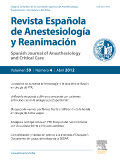
Revista Espanola de Anestesiologia y Reanimacion
Fostering collaboration in anesthesiology research.Revista Española de Anestesiología y Reanimación, an esteemed journal published by Elsevier, serves as a pivotal resource at the intersection of anesthesiology, critical care, and pain medicine. Established in 1963, this journal has continually contributed to the evolving dialogue in these fields, showcasing innovative research that informs practice and enhances patient care. With a current Q3 ranking in both anesthesiology and critical care disciplines as of 2023, it represents a vital platform for clinicians and researchers alike, who are committed to advancing knowledge and improving clinical outcomes. Though not an open-access publication, Revista Española de Anestesiología y Reanimación ensures rigorous peer-review processes and offers insights from leading experts around the globe, making it an invaluable reference for professionals seeking to stay abreast of the latest advancements and trends. Its bibliometric indicators and Scopus rankings affirm its relevance and influence within the academic community, solidifying its role as a cornerstone of anesthesiology and intensive care research.
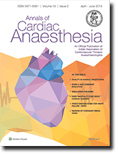
Annals of Cardiac Anaesthesia
Exploring the Frontiers of Cardiac Anaesthesia.Annals of Cardiac Anaesthesia is a distinguished open-access journal published by Wolters Kluwer Medknow Publications since 2008, focusing on the interplay between anaesthesia practices and cardiovascular health. With an ISSN of 0971-9784 and an E-ISSN of 0974-5181, this journal serves as a vital resource for researchers, practitioners, and students in the fields of Anesthesiology, Cardiology, and Medicine. Operating in India and contributing significantly to the global medical community, it ranks in the Q3 category for both Anesthesiology and Pain Medicine, as well as Cardiology and Cardiovascular Medicine, reflecting its growing impact within these domains. The journal encompasses a wide array of topics, from surgical anaesthesia techniques to cardiovascular physiology, aiming to enhance clinical practice and outcomes. With Scopus rankings placing it at 75th in Anesthesiology and 267th in Cardiology, Annals of Cardiac Anaesthesia strives to foster knowledge exchange and innovation, making it an essential platform for those committed to advancing cardiac anaesthesia science.
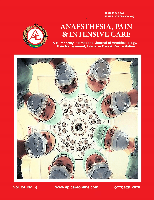
Anaesthesia Pain & Intensive Care
Uniting researchers and practitioners for better patient outcomes.Anaesthesia Pain & Intensive Care is an esteemed, open-access journal that has been at the forefront of disseminating pivotal research since 1999. Published by ANAESTHESIA PAIN & INTENSIVE CARE, this journal focuses on the critical fields of anesthesiology, pain management, and intensive care medicine, engaging a diverse audience of researchers, healthcare professionals, and students. Operating from Islamabad, Pakistan, it aims to foster knowledge exchange and innovative practices within its community. With a reputation indexed in Scopus and categorized in the fourth quartile for both anesthesiology and critical care, the journal provides a platform for emerging ideas and findings, inviting contributions that enhance the global discourse in these vital areas of medicine. For those seeking to stay at the forefront of clinical advancements, Anaesthesia Pain & Intensive Care is a valuable resource, promoting open access to ensure that critical information is available to all stakeholders.

Canadian Journal of Anesthesia-Journal canadien d anesthesie
Innovative Insights: Shaping the Future of AnesthesiologyThe Canadian Journal of Anesthesia - Journal canadien d anesthésie, published by Springer, stands as a premier peer-reviewed publication in the field of anesthesiology and pain medicine, making significant contributions to the advancement of clinical practices and research since its inception in 1987. With an impressive impact factor and consistently ranked in the Q1 category for both anesthesiology and miscellaneous medicine, this journal is recognized for its high-caliber research, positioning it within the top 10 in its category according to Scopus rankings. The journal aims to disseminate innovative findings, clinical methodologies, and review articles that inspire advances in the management of anesthesia and pain, making it an invaluable resource for researchers, practitioners, and students worldwide. While it does not currently offer Open Access options, the journal’s comprehensive studies and expert insights continue to attract a vast readership eager to enhance their knowledge in these critical medical fields.

Current Anesthesiology Reports
Advancing Anesthesiology Through Innovative ResearchCurrent Anesthesiology Reports is a prominent journal published by Springer Nature, dedicated to advancing the field of anesthesiology and pain medicine. With a focus on the latest clinical and research developments, this journal serves as a vital resource for researchers, clinicians, and students alike. As of 2023, it holds a respectable Q2 quartile ranking in its category, highlighting its impact and relevance within the discipline, while also ranking 59th out of 136 in Scopus, placing it in the 56th percentile for anesthesiology and pain medicine. The journal is indexed with the E-ISSN 2167-6275 and offers an open-access model that enhances visibility and accessibility of knowledge across the global medical community. Spanning research from 2013 to 2024, Current Anesthesiology Reports aims to contribute significantly to the understanding and practice of anesthesiology, reflecting the rapidly evolving landscape of the discipline.
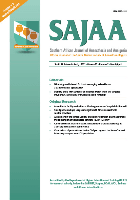
Southern African Journal of Anaesthesia and Analgesia
Fostering Excellence in Anesthesia and Analgesia PracticesThe Southern African Journal of Anaesthesia and Analgesia, published by MEDPHARM PUBLICATIONS PTY LTD, serves as a vital resource in the field of anesthesiology and pain medicine, particularly within the South African context. With an ISSN of 2220-1181 and E-ISSN 2220-1173, this journal has established itself as a significant platform for disseminating research from 2008 through to 2024, boasting a Q3 quartile ranking in anesthesiology and pain management for the year 2023. Although currently listed as non-open access, the journal aims to bridge the gap between innovative clinical practices and evidence-based research. Researchers, healthcare professionals, and students will find in this journal a repository of cutting-edge studies, reviews, and case reports that cater to the evolving needs of the field. Its trajectory within the Scopus ranks, placing it at rank #97 out of 136 in the category, underscores its commitment to advancing the science and practice of anesthesia in Africa and beyond.

ACTA ANAESTHESIOLOGICA BELGICA
Exploring the Frontiers of Anesthesiology and Pain MedicineACTA ANAESTHESIOLOGICA BELGICA, ISSN 0001-5164, is a prestigious academic journal published by ACTA MEDICAL BELGICA, dedicated to the field of anesthesiology and pain medicine. Established in the 1950s, this journal has continued to serve as a vital platform for disseminating innovative research and evidence-based practices within the discipline. Though currently positioned in the Q4 quartile in both Anesthesiology and Pain Medicine categories, it still plays a significant role in advancing knowledge and bridging gaps related to anesthesia techniques, outcomes, and patient safety. The journal is available in both print and electronic formats, with an E-ISSN of 2736-5239. Operating from Brussels, Belgium, ACTA ANAESTHESIOLOGICA BELGICA fosters an inclusive community of researchers, clinicians, and students, all dedicated to enhancing patient care and safety through the sharing of impactful findings and clinical insights.