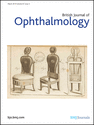
BRITISH JOURNAL OF OPHTHALMOLOGY
Scope & Guideline
Illuminating the Path to Better Vision
Introduction
Aims and Scopes
- Clinical Ophthalmology:
The journal emphasizes studies that investigate clinical outcomes, treatment effectiveness, and patient management strategies for various ocular diseases, including glaucoma, diabetic retinopathy, and age-related macular degeneration. - Innovative Surgical Techniques:
Research on novel surgical techniques and technologies, such as advanced cataract surgery methods, retinal detachment repair techniques, and the use of intraocular devices, is a core focus area. - Genetics and Molecular Ophthalmology:
There is a significant emphasis on genetic studies related to inherited retinal diseases, providing insights into gene mutations and their implications for patient care. - Artificial Intelligence in Ophthalmology:
The journal explores the integration of artificial intelligence and machine learning in diagnosing and managing ocular diseases, reflecting a growing trend towards technological innovation in the field. - Epidemiology and Public Health:
Epidemiological studies that assess the prevalence, risk factors, and societal impact of ocular diseases, particularly in diverse populations, are also a significant focus.
Trending and Emerging
- Telemedicine and Remote Patient Monitoring:
The rise of telemedicine in ophthalmology is increasingly evident, with studies exploring its effectiveness in managing patient care and screening for ocular diseases, particularly in the context of the COVID-19 pandemic. - Myopia Control Strategies:
There is a notable increase in research focusing on myopia control, including the efficacy of various interventions such as atropine, orthokeratology, and the impact of environmental factors, reflecting a growing public health concern. - Artificial Intelligence Applications:
The application of artificial intelligence in diagnosing and managing ocular diseases is a rapidly growing field, with numerous studies developing algorithms for automated detection of conditions such as diabetic retinopathy and glaucoma. - Ocular Surface Disease and Dry Eye Research:
Research on ocular surface diseases, particularly dry eye syndrome, is gaining prominence, focusing on new treatment modalities and the impact of systemic health on ocular surface integrity. - Genetic and Genomic Studies:
An increasing trend towards understanding the genetic basis of ocular diseases is evident, with studies investigating gene therapy and genetic predispositions to conditions like retinitis pigmentosa and age-related macular degeneration.
Declining or Waning
- Traditional Pharmacological Studies:
There seems to be a decreasing focus on traditional pharmacological studies comparing established treatments for common ocular conditions, as newer therapeutic approaches and technologies gain traction. - Basic Science Research:
Research that primarily focuses on basic science without direct clinical application appears to be waning, as there is a stronger push towards translational studies that connect laboratory findings with clinical practice. - Longitudinal Studies on Rare Ocular Conditions:
The frequency of longitudinal studies focusing on rare ocular diseases has declined, possibly due to the challenges in recruitment and the limited patient populations available for such research.
Similar Journals
OPHTHALMOLOGICA
Connecting Disciplines to Enhance Vision CareOPHTHALMOLOGICA is a prestigious journal published by KARGER, dedicated to the dynamic field of ophthalmology and its interdisciplinary connections with medicine and sensory systems. With a rich history spanning over a century since its inception in 1899, this journal is esteemed for its high-quality research and impactful contributions, maintaining an impressive Q1 quartile ranking in both ophthalmology and miscellaneous medicine as of 2023, alongside a notable Q2 status in sensory systems. The journal's influence is reinforced by its Scopus rankings, where it ranks 26th out of 137 in ophthalmology, showcasing a strong percentile position of 81. Based in Basel, Switzerland, OPHTHALMOLOGICA serves as an essential platform for researchers, professionals, and students, providing essential insights, reviews, and studies that push the boundaries of knowledge in the vision sciences. Although it does not currently offer open access, its contributions are critical for those pursuing advancements in ocular health and related disciplines.

Ophthalmologie
Advancing the Frontiers of Eye HealthOphthalmologie is a distinguished journal published by Springer Heidelberg, specializing in the broad and evolving field of ophthalmology. With an ISSN of 2731-720X and an E-ISSN of 2731-7218, the journal serves as a pivotal platform for disseminating cutting-edge research and clinical advancements in the realm of eye health. As of 2023, it ranks in the third quartile (Q3) within both the general medicine and ophthalmology categories, reflecting its substantial contribution to the academic community and the field's knowledge base. The journal aims to foster collaboration among researchers, medical professionals, and students by offering innovative findings that enhance understanding and treatment of ocular diseases. By nurturing high-quality scholarly discussions, Ophthalmologie plays an essential role in the ongoing development of therapeutic strategies and ophthalmic techniques that ultimately benefit patient care globally. This commitment to excellence is evident as it continues to evolve through its convergence from 1992 to 2023, staying relevant in an ever-changing scientific environment.
ACTA OPHTHALMOLOGICA
Illuminating the Future of Ophthalmological ResearchACTA OPHTHALMOLOGICA, published by Wiley, is a premier academic journal dedicated to advancing the field of ophthalmology and related medical disciplines. Established in 1923 and maintaining esteemed status through converged years until 1994, and then from 2008 to the present, this journal has consistently delivered pioneering research, reviews, and clinical advancements essential for both practitioners and researchers in eye care. With an impressive impact factor and ranking within the top 15 of its category, ACTA OPHTHALMOLOGICA stands as a Q1 journal in both Medicine (Miscellaneous) and Ophthalmology, reflecting its significant contribution to the field. Although it is not an open-access journal, it continues to offer valuable insights and empirical findings that inform clinical practices and innovative research approaches. As such, it remains a vital resource for scholars, clinicians, and students keen to stay at the forefront of ophthalmological science.

Journal of Ophthalmology
Fostering Collaboration for a Brighter VisionThe Journal of Ophthalmology, published by HINDAWI LTD, is an esteemed open-access journal that has been disseminating significant research in the field of ophthalmology since 2009. With an ISSN of 2090-004X and an E-ISSN of 2090-0058, this journal facilitates global access to cutting-edge studies, making it an essential resource for researchers, clinicians, and students alike. Ranked in the Q2 category of ophthalmology for 2023, the journal holds a commendable position with a Scopus rank of #37 out of 137 in its field, placing it in the 73rd percentile. The journal encompasses a variety of topics such as clinical advancements, surgical techniques, and innovative technologies in eye care, aiming to advance scientific knowledge and clinical practice in ophthalmology. By providing a platform for both novel research and comprehensive reviews, the Journal of Ophthalmology is instrumental in fostering collaboration and scholarly communication within the global eye health community, and its commitment to open access ensures that impactful research reaches a wide audience without barriers.

RETINA-THE JOURNAL OF RETINAL AND VITREOUS DISEASES
Leading the Way in Retinal and Vitreous DiscoveriesRETINA - THE JOURNAL OF RETINAL AND VITREOUS DISEASES is a premier peer-reviewed journal dedicated to advancing the knowledge and practice of retinal and vitreous disorders. Published by LIPPINCOTT WILLIAMS & WILKINS, this esteemed journal boasts a significant impact factor, affirming its standing in the academic community. With a long history of publication since 1981, its scope covers cutting-edge research and innovations aimed at improving patient outcomes in ophthalmology. As evidenced by its recent categorization in the Q1 quartile for both Medicine (miscellaneous) and Ophthalmology in 2023, the journal ranks impressively, placing it in the 84th percentile among its peers. Researchers, clinicians, and students will find valuable insights and evidence-based articles that contribute to the ever-evolving landscape of retinal health. RETINA remains committed to fostering an environment for scholarly dialogue and dissemination of knowledge, ensuring its readers are at the forefront of advancements in their field.
Seminars in Ophthalmology
Fostering Collaboration in Ophthalmic ResearchSeminars in Ophthalmology is a prestigious journal published by Taylor & Francis Inc, dedicated to advancing knowledge in the field of ophthalmology and related medical areas. Established in 1986, this journal has consistently provided a platform for high-quality research and insights, supporting the community with its impactful publications. With an impressive ranking of #55 out of 137 in the Ophthalmology category, the journal currently holds a Q2 quartile in both ophthalmology and miscellaneous medicine as of 2023, reflecting its significant contribution to the discipline. Researchers and practitioners can access a wealth of information covering a comprehensive range of topics, bolstering both clinical practice and academic inquiry. While not an open-access publication, Seminars in Ophthalmology remains a crucial resource for advancing ophthalmic research, fostering collaboration, and disseminating valuable findings in a rapidly evolving specialty.

Translational Vision Science & Technology
Connecting Science and Technology for Visual HealthTranslational Vision Science & Technology is a premier open access journal dedicated to the advancement of the field of ophthalmology and biomedical engineering. Published by the Association for Research in Vision and Ophthalmology, Inc., this journal has established itself as a leading source of high-quality research since its inception in 2013, achieving a remarkable impact factor reflective of its influential contribution to the field. With an impressive ranking of #21 in Ophthalmology and #120 in Biomedical Engineering within the Scopus database, it sits within the prestigious Q1 quartile for both categories as of 2023, further validating its significance. The journal's scope encompasses a wide variety of topics focused on the intersection of ophthalmological science and technological innovation, welcoming contributions that promote the understanding and treatment of visual disorders. Available as an Open Access publication since 2016, it ensures that cutting-edge research is freely accessible to researchers, practitioners, and students worldwide, facilitating the rapid dissemination of knowledge essential for the advancement of vision science.
CURRENT EYE RESEARCH
Illuminating Innovations in Eye HealthCURRENT EYE RESEARCH is a prestigious academic journal published by Taylor & Francis Inc, focusing on advancing the field of ophthalmology and its intersection with cellular and molecular neuroscience. Since its inception in 1981, this journal has provided a vital platform for original research, reviews, and technical notes, presenting a wealth of knowledge to practitioners and researchers alike. With an impressive 2023 impact factor reflected in its ranking of Q2 in Ophthalmology and Q2 in Sensory Systems, and a Q3 ranking in Cellular and Molecular Neuroscience, CURRENT EYE RESEARCH plays a crucial role in fostering interdisciplinary collaboration and innovation. The journal is indexed in Scopus, where it holds strong positions in both the Medicine and Neuroscience categories, enhancing its visibility and reach. Researchers and professionals in these fields can access cutting-edge findings and contribute to the ongoing discourse surrounding eye health, making it an essential resource for anyone invested in advancing knowledge and treatment in ophthalmic science.
Eye and Vision
Connecting global minds in the pursuit of vision advancements.Eye and Vision, published by BMC, is a leading open-access journal dedicated to the dynamic field of ophthalmology and visual sciences. With its ISSN 2326-0246 and E-ISSN 2326-0254, the journal has established itself as a premier platform for innovative research and clinical studies, achieving impressive rankings in 2023 as Q1 in both Health Professions (Miscellaneous) and Ophthalmology categories. The journal's commitment to accessible knowledge since its transition to open access in 2015 enhances its global reach, allowing researchers, clinicians, and students to share and access top-tier studies and advancements in the field. Located in the United Kingdom and delivering influential insights from 2014 through to 2024, Eye and Vision holds significant relevance, with a Scopus ranking placing it in the 99th percentile for Health Professions and the 93rd percentile for Ophthalmology, making it an essential resource for those looking to stay at the forefront of eye research and vision science.
JAMA Ophthalmology
Illuminating the Path to Better VisionJAMA Ophthalmology, the premier journal in the field of ophthalmology, is published by the esteemed American Medical Association. Renowned for its rigorous peer-review process and commitment to advancing eye health research, JAMA Ophthalmology holds a prestigious position in the scientific community, boasting an impressive impact factor and ranking as Q1 in the category of Ophthalmology. With a Scopus rank of #3 out of 137 in its field and a remarkable 98th percentile, the journal serves as an invaluable resource for researchers, healthcare professionals, and students dedicated to the ophthalmic sciences. Readers can explore a wealth of cutting-edge findings, clinical studies, and review articles that not only contribute to the sustainable advancement of ophthalmic knowledge but also foster innovative approaches in patient care. As we converge into 2024, the journal continues to embrace open access principles, ensuring that groundbreaking research is readily available to a global audience, enhancing collaborative efforts and furthering the development of the ophthalmology discipline.