
BUILDING ACOUSTICS
Scope & Guideline
Advancing Acoustical Excellence in Building Design
Introduction
Aims and Scopes
- Acoustic Performance Assessment:
The journal emphasizes the assessment of acoustic performance in various building materials and design scenarios, employing both numerical and experimental methodologies. - Noise Mitigation Strategies:
Research focuses on innovative strategies for noise reduction in urban environments, including the use of green walls, sonic crystals, and other architectural elements. - Acoustic Modeling and Simulation:
A core area includes the development and application of acoustic models, such as finite element and wave-based methods, to predict sound behavior in different environments. - Human-Centric Acoustics:
The journal explores the relationship between acoustic environments and human comfort, cognition, and well-being, particularly in educational and communal spaces. - Sustainable Acoustic Solutions:
There is a consistent focus on sustainable materials and design practices that enhance acoustic performance while minimizing environmental impact.
Trending and Emerging
- Data-Driven Acoustic Design:
There is a growing trend towards utilizing data-driven approaches and machine learning techniques in acoustic design, enhancing prediction accuracy and system identification. - Acoustic Comfort in Educational Settings:
Recent publications increasingly address the importance of acoustic comfort in classrooms and educational spaces, reflecting a broader awareness of how acoustics affect learning outcomes. - Integration of Green Technologies:
The incorporation of green technologies, such as vertical greening systems and eco-friendly materials, for noise mitigation is emerging as a critical area of research. - Impact of Acoustics on Well-Being:
Studies exploring the psychological and physiological impacts of acoustic environments on occupants' health and well-being are gaining prominence. - Innovative Acoustic Materials:
Research into novel materials, such as composites made from recycled waste or metamaterials, is on the rise as researchers seek sustainable solutions to acoustic challenges.
Declining or Waning
- Traditional Acoustic Materials:
Research on conventional acoustic materials, such as basic sound-absorbing panels, has decreased as more innovative materials and composites gain attention. - Non-Integrated Acoustic Solutions:
There is a waning focus on standalone acoustic solutions that do not consider integration with other building systems, as interdisciplinary approaches become more favored. - Historical Acoustic Studies:
While the historical analysis of acoustics in ancient structures was once prominent, recent publications indicate a shift towards contemporary applications and technologies. - Basic Noise Measurement Techniques:
The use of basic and traditional noise measurement techniques is declining, with a shift towards more sophisticated, data-driven methodologies.
Similar Journals

International Journal of Aeroacoustics
Bridging Theory and Application in Aeroacoustic ResearchThe International Journal of Aeroacoustics, published by SAGE Publications Inc, is a prominent platform that explores the interplay between aeroacoustic phenomena and engineering applications. With an ISSN of 1475-472X and an E-ISSN of 2048-4003, this journal is dedicated to publishing high-quality, peer-reviewed research that addresses both fundamental and applied aspects of aeroacoustics within the fields of Acoustics and Ultrasonics, as well as Aerospace Engineering. Recognized for its scholarly contribution, it achieved a 2023 Q2 ranking in Acoustics and Ultrasonics and a Q3 ranking in Aerospace Engineering. Although it operates under a traditional access model, it remains accessible to a diverse audience through institutional subscriptions and comprehensive archives. With a convergence timeline from 2011 to 2024, the journal aims to foster innovation and collaboration among researchers, professionals, and students by disseminating cutting-edge findings that tackle current challenges in aerodynamics and noise control. As a valued resource in academia, it addresses critical issues impacting the aerospace industry and promotes advancements in engineering solutions for noise reduction.
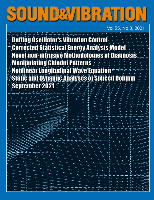
SOUND AND VIBRATION
Navigating the Nuances of Sound in EngineeringSOUND AND VIBRATION, published by TECH SCIENCE PRESS, is a pivotal journal in the fields of Acoustics and Ultrasonics, Mechanical Engineering, and Safety, Risk, Reliability, and Quality. With an ISSN of 1541-0161, this journal has been a reliable source of innovative research and developments from its inception in 1976 through to 2024. Although it currently ranks in the Q4 category on Scopus, it serves as a vital platform for the dissemination of studies focusing on sound and vibration phenomena, contributing to the understanding and advancement of engineering principles. Researchers and professionals are encouraged to utilize this journal to gain insights into critical acoustic applications and mechanical dynamics. While SOUND AND VIBRATION does not operate under an Open Access model, it remains a valuable asset for anyone committed to exploring the various ramifications of sound and vibration in engineering and applied sciences.

International Journal of Acoustics and Vibration
Fostering Collaboration in Acoustics and Vibration ResearchInternational Journal of Acoustics and Vibration is a leading peer-reviewed journal published by the International Institute of Acoustics & Vibration, focusing on the diverse fields of acoustics and vibration. With an ISSN of 1027-5851, this journal has been a pivotal resource since its establishment in 2000, examining both fundamental and applied aspects of sound and vibration phenomena that are critical for advancements in engineering and related sciences. Although it does not offer open-access options, it adheres to rigorous standards of academic excellence, as evidenced by its Q3 category rankings in Acoustics and Ultrasonics and Mechanical Engineering, according to the 2023 assessments. The journal's scope encompasses innovative research, theoretical studies, and practical applications, making it essential reading for researchers, professionals, and students aiming to stay updated with the latest developments in these disciplines. With the growing relevance of acoustics and vibration in numerous industries, the International Journal of Acoustics and Vibration serves as a vital platform for disseminating knowledge and fostering collaboration among scholars and practitioners alike.

JOURNAL OF SOUND AND VIBRATION
Exploring the dynamics of acoustics and engineering.The JOURNAL OF SOUND AND VIBRATION, published by Academic Press Ltd - Elsevier Science Ltd, stands as a pivotal platform in the fields of Acoustics and Ultrasonics, Mechanical Engineering, and Mechanics of Materials. Since its inception in 1964, the journal has served as a beacon for researchers and practitioners looking to share and advance their knowledge on sound and vibration phenomena. With an impressive Q1 ranking in multiple categories and a Scopus ranking placing it in the top 10% of significant journals in related fields, it offers a high-impact venue for disseminating innovative research. The journal's well-rounded scope intersects fundamental and applied science, ensuring it remains relevant to a diverse audience, including students and professionals aiming to deepen their understanding of dynamic mechanical systems. Although primarily subscription-based, the journal's commitment to academic excellence makes it a valuable resource for all involved in the study and application of sound and vibration research, contributing significantly to advancements across engineering and physics disciplines.
JOURNAL OF LOW FREQUENCY NOISE VIBRATION AND ACTIVE CONTROL
Pioneering Active Control Technologies for a Quieter FutureJOURNAL OF LOW FREQUENCY NOISE VIBRATION AND ACTIVE CONTROL is a premier peer-reviewed publication, dedicated to advancing the understanding and applications of low-frequency noise, vibration, and active control technologies. Published by SAGE PUBLICATIONS LTD, this journal has established itself as a critical resource in its field, boasting an impressive range of quartile rankings in key academic categories including Acoustics and Ultrasonics, Building and Construction, and Geophysics. With an Open Access model since 2017, it has expanded its reach to a global audience, enabling researchers, professionals, and students alike to easily access cutting-edge research. The journal aims to foster collaboration and innovation, serving as a vital platform for the dissemination of findings that address real-world challenges in noise and vibration control across various engineering disciplines. Residing at the intersection of mechanical, civil, and geophysical engineering, its convergence from 1996 to 2024 ensures a comprehensive repository of knowledge for continued interdisciplinary exploration. For those committed to pushing the boundaries of engineering science, JOURNAL OF LOW FREQUENCY NOISE VIBRATION AND ACTIVE CONTROL stands out as an essential publication that reflects the latest advancements and encourages groundbreaking research.
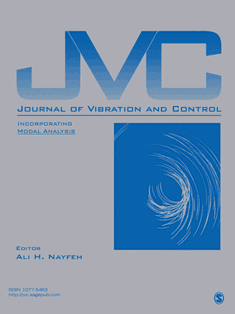
JOURNAL OF VIBRATION AND CONTROL
Driving Excellence in Aerospace and Mechanical EngineeringJOURNAL OF VIBRATION AND CONTROL, published by SAGE PUBLICATIONS LTD, is a distinguished peer-reviewed journal that serves as a pivotal resource for researchers and professionals in the fields of aerospace, automotive, materials science, and mechanical engineering. Since its inception in 1995, this journal has been instrumental in disseminating cutting-edge findings on the dynamics of vibrations and control systems, addressing both theoretical developments and practical applications. With an impressive array of impact metrics—ranking in the top quartile (Q2) across various engineering categories—it ensures that high-quality research is accessible to its audience, fostering innovation and collaboration. Although currently not an open-access journal, it remains influential within its domain, indexing a breadth of topics that bridge fundamental science and engineering practices. Researchers and students interested in exploring the dynamics of materials and structures will find the JOURNAL OF VIBRATION AND CONTROL an invaluable tool for advancing their knowledge and contributing to ongoing discussions in the field.

Acoustical Science and Technology
Advancing Knowledge in Acoustics and UltrasonicsAcoustical Science and Technology, published by the Acoustical Society of Japan, is a pivotal journal in the field of acoustics and ultrasonics, serving as a platform for innovative research and advancements from 2000 to 2024. Featuring an ISSN of 1346-3969 and E-ISSN 1347-5177, this journal comprises scholarly articles that cater to both theoretical and practical aspects of acoustical science, appealing to research professionals, academics, and students alike. Although currently not designated as an open-access publication, Acoustical Science and Technology holds a respectable Q3 ranking in the 2023 Acoustics and Ultrasonics category, indicating its significance within the academic community. With a Scopus rank of 28 out of 44 in its field, the journal continues to contribute valuable knowledge for acoustic innovation and application while fostering a deeper understanding of sound phenomena globally. For those who seek to explore cutting-edge findings and methodologies in this essential area of study, this journal is an invaluable resource.

Acoustics
Exploring the Soundscape: Where Research Meets InnovationAcoustics is a dynamic, peer-reviewed open access journal published by MDPI, dedicated to advancing the field of acoustics since its inception in 2019. With an E-ISSN of 2624-599X, this journal serves as a pivotal platform for researchers, professionals, and students engaged in the study of sound, its generation, transmission, and reception, as well as its applications across various domains, such as engineering, environmental science, and health. Based in Switzerland, Acoustics has quickly established its reputation, achieving a commendable Q2 ranking in the Acoustics and Ultrasonics category, as well as a noteworthy 16th position out of 44 in Scopus ranking, placing it in the 64th percentile among its peers. The journal aims to provide a comprehensive understanding of acoustic phenomena through interdisciplinary collaborations and innovative research, while ensuring immediate and free access to all published articles. For those vested in the ever-evolving landscape of acoustics, this journal represents a crucial resource for the latest developments and findings in the field.

Construction and Building Materials
Pioneering research at the intersection of materials and engineering.Construction and Building Materials, published by ELSEVIER SCI LTD, is a highly regarded journal in the fields of Construction and Building, Civil and Structural Engineering, and Materials Science. With an impressive Q1 ranking across multiple categories in 2023, the journal is recognized for its high-impact research, reflected in its Scopus rankings—13th out of 379 in Civil and Structural Engineering and 9th out of 223 in Building and Construction. Spanning from 1987 to 2024, it serves as a pivotal resource for researchers, professionals, and students aiming to explore advances in materials used in construction and their applications. However, it does not currently offer Open Access options. The journal stands as a vital platform for disseminating cutting-edge findings that can drive innovation and efficiency in the construction industry while addressing contemporary challenges, thus reinforcing its significance in shaping sustainable practices and technological advancements.
JASA Express Letters
Elevating the discourse in music and arts with timely research.JASA Express Letters is a distinguished open-access journal published by AIP Publishing, dedicated to fostering rapid dissemination of high-quality research in the field of acoustics and related areas of music and arts. With an E-ISSN of 2691-1191, this journal strives to provide a platform for innovative and impactful studies, showcasing research that bridges disciplines and advances our understanding of acoustic phenomena. Since transitioning to open access in 2021, the journal has gained a reputation for swift publication, accommodating the needs of researchers eager to share their findings with a global audience. Notably, JASA Express Letters ranks in the top quartile for music and arts-related disciplines, standing at Rank #25/180 and Rank #174/552 respectively, reflecting its significance and influence within the academic community. This journal serves not only as a valuable resource for scholars and practitioners but also aims to inspire new directions in both theoretical and applied research, enhancing collaborative efforts in the vibrant fields of acoustics and the arts.