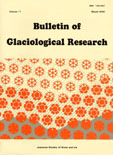
Bulletin of Glaciological Research
Scope & Guideline
Exploring the icy frontiers of Earth’s surface processes.
Introduction
Aims and Scopes
- Multidisciplinary Research:
The journal emphasizes the integration of various scientific disciplines, including climatology, ecology, and local governance, to explore complex interactions in glaciological contexts. - Regional Studies:
Research articles often focus on specific geographic regions, such as Japan and Nepal, providing localized insights into snow and ice dynamics and their implications for local communities. - Climate Change Impact Assessments:
There is a consistent focus on assessing the impacts of climate change on snow cover, precipitation, and temperature variations, crucial for understanding future glaciological trends. - Community Engagement and Applied Research:
The journal highlights studies that involve co-creation with local stakeholders, such as governments and ski resorts, to enhance safety and inform management practices in relation to avalanches and other hazards. - Longitudinal Observations:
Research that involves long-term monitoring and data collection, particularly regarding ice cores and environmental conditions, is a key component of the journal's contributions.
Trending and Emerging
- Avalanche Hazard Management:
Recent publications indicate a growing emphasis on avalanche hazard mapping and management, particularly in collaboration with local ski resorts and governments, highlighting the importance of safety in mountain environments. - Ecological Studies of Snow and Ice:
The study of biological phenomena, such as snow algal blooms, is gaining traction, reflecting an increasing interest in the ecological implications of snow and ice dynamics. - Climate Variability Assessments:
Research focused on long-term assessments of precipitation and temperature variations during snow cover periods is becoming more prevalent, underscoring the need for understanding climate impacts on glacial systems. - Community and Stakeholder Collaboration:
There is a noticeable trend towards research that involves co-creation with local communities and stakeholders, which is vital for ensuring that scientific findings are applicable and beneficial to those affected by glaciological changes. - Integrated Environmental Studies:
An increasing number of studies are adopting an integrated approach to examine the interactions between atmosphere, sea ice, and ocean systems, reflecting a holistic view of glaciological research.
Declining or Waning
- Traditional Ice Core Studies:
Though still relevant, the frequency of traditional ice core drilling studies has decreased, suggesting a potential shift towards more applied and interdisciplinary research approaches. - Generalized Climate Modeling:
Research that focuses solely on generalized climate modeling without specific case studies or local applications seems to be waning, as the journal trends towards more localized and practical applications. - Static Observational Studies:
There appears to be a decline in purely observational studies that do not involve community engagement or practical implications, indicating a preference for research that has direct societal relevance.
Similar Journals
SOUTH AFRICAN JOURNAL OF SCIENCE
Bridging Disciplines, Empowering KnowledgeThe SOUTH AFRICAN JOURNAL OF SCIENCE, published by the Academy of Science of South Africa (ASSAf), is a prestigious open-access journal dedicated to the advancement and dissemination of scientific knowledge across various disciplines. Since its inception in 1973, the journal has played a pivotal role in fostering scientific communication within South Africa and beyond, ranking in the Q2 and Q3 quartiles across critical categories such as Agricultural and Biological Sciences, Biochemistry, Genetics and Molecular Biology, and Earth and Planetary Sciences as of 2023. With an ISSN of 0038-2353 and E-ISSN 1996-7489, this journal embraces modern publishing practices, having adopted an open-access model in 2009, which ensures that research is readily accessible to a global audience. The journal aims to promote interdisciplinary research and facilitate collaboration among scientists, making it an essential resource for researchers, professionals, and students eager to contribute to and learn from the dynamic landscape of scientific inquiry. For further information, collaborators and correspondents may reach out to the journal through its contact address: PO BOX 72135, LYNWOOD RIDGE 0040, SOUTH AFRICA.

ECOLOGY AND SOCIETY
Fostering interdisciplinary dialogue for a sustainable future.ECOLOGY AND SOCIETY, published by the esteemed Resilience Alliance, stands as a paramount open-access journal in the field of ecology, having served the academic community since its establishment in 1997. With an impressive Q1 ranking in Ecology and an Scopus rank of 77 out of 461 in Environmental Science, this journal is dedicated to advancing our understanding of the interconnectedness between human societies and ecological systems. As a pioneer of open-access publishing since 2004, it ensures that cutting-edge research is freely accessible to all, thereby promoting knowledge sharing and collaboration among researchers, professionals, and students alike. The journal fosters interdisciplinary discourse and provides a platform for innovative studies that address pressing environmental challenges, making it a vital resource for anyone engaged in ecological research and practice.
Led i Sneg-Ice and Snow
Exploring the intersection of climate and environmental science.Led i Sneg-Ice and Snow is a distinguished academic journal dedicated to advancing research in the fields of Earth-surface processes, geochemistry, petrology, and water science. Published by the Institute of Geography, Russian Academy of Sciences, this journal has embraced Open Access since 2015, ensuring that valuable scientific findings are accessible to researchers and professionals globally. With an ISSN of 2076-6734 and an E-ISSN of 2412-3765, the journal has made significant contributions within its converged years, spanning from 2017 to 2024. Notably, it holds a respectable position in various Scopus ranks, showcasing its impact, including a Q2 category in Earth-Surface Processes for 2023, indicating its relevance and importance in the scientific community. As a key resource for those studying Earth's climatic changes and environmental challenges, Led i Sneg-Ice and Snow serves as a vital platform for disseminating innovative research and fostering collaboration among academics, professionals, and students in the environmental sciences.
ANTARCTIC SCIENCE
Advancing Understanding of Antarctica's EcosystemsANTARCTIC SCIENCE is a premier journal dedicated to the multidisciplinary study of Antarctica, encompassing its ecology, geology, and oceanography. Published by Cambridge University Press, this journal provides a vital platform for researchers, professionals, and students eager to explore the complexities of polar science. With an impressive Scopus ranking placing it in the 70th percentile for geology and 65th for ecology, ANTARCTIC SCIENCE stands out as a Q2 journal in both Ecology, Evolution, Behavior and Systematics and Oceanography categories, reflecting its significant impact in the field. The journal invites submissions that contribute to the understanding of Antarctic environments, wildlife, and climatic changes since its inception in 1986. While not openly accessible, it presents rich accessibility options for institutions and researchers, making cutting-edge research available to its audience. Join the global conversation in advancing polar research and understanding at ANTARCTIC SCIENCE.

Sciences in Cold and Arid Regions
Advancing knowledge for resilient ecosystems.Sciences in Cold and Arid Regions, published by SCIENCE PRESS, is a pivotal open-access journal dedicated to advancing the understanding of environmental science and engineering in cold and arid environments. With an ISSN of 1674-3822, this journal provides a platform for researchers to share innovative studies and breakthroughs that address the unique challenges faced in these regions, encompassing vital areas such as earth-surface processes and environmental engineering. Although its coverage in Scopus has been discontinued since 2022, it continues to maintain importance within its specialized field, as evidenced by its rankings among other environmental science and earth sciences journals. By embracing open access, Sciences in Cold and Arid Regions ensures that cutting-edge research is freely available to a global audience, fostering collaboration and knowledge exchange among professionals and students alike, and emphasizing the critical need for adaptable strategies in managing cold and arid ecosystems.
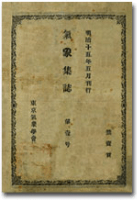
JOURNAL OF THE METEOROLOGICAL SOCIETY OF JAPAN
Unlocking Insights into Weather and Climate DynamicsJournal of the Meteorological Society of Japan, ISSN 0026-1165 (E-ISSN 2186-9057), is a leading academic journal published by the Meteorological Society of Japan, dedicated to advancing the field of atmospheric sciences. Established in 1905, the journal has a long-standing tradition of publishing high-quality research that contributes to our understanding of meteorology, climatology, and environmental science. As an Open Access journal since 2018, it ensures wide dissemination of knowledge, allowing researchers, professionals, and students to access cutting-edge studies without barriers. With an impressive impact factor and ranked in the Q1 category in Atmospheric Science, it is recognized for its significant contributions, currently holding a Scopus rank of #36 out of 148 in the field. The journal serves as a vital resource for those involved in meteorological research, policy-making, and education, fostering collaboration and innovation within and beyond Japan.

Jokull
Charting the Course of Climate ResearchJokull is a distinguished journal published by the ICELAND GLACIOLOGICAL SOC, dedicated to advancing knowledge in the field of Earth and Planetary Sciences. Since its inception, Jokull has served as a vital platform for the dissemination of research findings pertaining to glaciology, geomorphology, and related environmental studies, with a rich history spanning from 1980 to 2021. Although the journal's coverage has been discontinued in Scopus, it remains an important resource for academics and practitioners interested in Iceland’s unique geography and climate dynamics. Classified in the Q4 category in the 2023 rankings of Earth and Planetary Sciences, it stands as a testament to the evolving discourse in this vital field of study. Researchers and professionals looking to contribute to or engage with pioneering research are encouraged to explore the insights and findings shared within these pages, even in the absence of open access options. With its headquarters in Reykjavik, Iceland, Jokull continues to facilitate critical discussions and collaborations that shape our understanding of the planet's changing environments.
INTERNATIONAL JOURNAL OF CLIMATOLOGY
Illuminating the path to informed climate policy.INTERNATIONAL JOURNAL OF CLIMATOLOGY, published by WILEY, is a leading peer-reviewed journal dedicated to advancing our understanding of climate science. As a prominent periodical within the Q2 category of Atmospheric Science, it encompasses a wide range of topics related to climatology, including climate variability, modeling, and impacts of climate change, making it an essential resource for researchers, professionals, and students in the field. With a history of publication spanning from 1989 to 2024, the journal has established a strong reputation for disseminating high-quality research that informs policy and practice. Though it does not offer Open Access options, its articles are accessible to a broad audience through institutional subscriptions, ensuring that significant findings can reach those who need them most. The INTERNATIONAL JOURNAL OF CLIMATOLOGY plays a crucial role in connecting academia with pressing environmental issues, thus fostering dialogue and innovation in climate research.
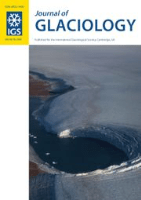
JOURNAL OF GLACIOLOGY
Illuminating the science behind glacial change and environmental impact.JOURNAL OF GLACIOLOGY, published by Cambridge University Press, is a leading open-access journal dedicated to advancing the scientific study of glaciers and ice sheets, with a particular focus on their interactions within Earth’s systems. With an ISSN of 0022-1430 and E-ISSN of 1727-5652, this journal has established itself as an influential platform since its inception, currently ranked in the Q1 category of Earth-Surface Processes in 2023. The journal is based in the United Kingdom and has witnessed a convergence of pivotal research from various periods spanning from 1977 through to 2024. It enjoys a commendable Scopus rank of #29 out of 179 in Earth and Planetary Sciences, affirming its impact with an impressive 84th percentile. The open-access model adopted since 2016 enhances its accessibility, enabling a wider audience of researchers, students, and professionals to engage with high-quality research on glaciology, climate change, and environmental systems. By fostering interdisciplinary dialogue and disseminating innovative findings, the JOURNAL OF GLACIOLOGY plays a crucial role in enhancing our understanding of glacial dynamics and their significance in our rapidly changing world.
Atmospheric and Oceanic Science Letters
Exploring the Frontiers of Atmospheric and Oceanic ResearchAtmospheric and Oceanic Science Letters is a premier open-access journal dedicated to the rapidly evolving fields of atmospheric science and oceanography. Published by KEAI PUBLISHING LTD, this journal aims to foster research dissemination and collaboration by providing a platform for high-quality research articles, reviews, and case studies that address critical issues impacting atmospheric and oceanic systems. With an impressive impact factor reflecting its esteemed position—including being ranked Q2 in Atmospheric Science and Q1 in Oceanography in 2023—this journal is an essential resource for researchers, professionals, and students alike. The journal's Open Access model, adopted since 2016, ensures that groundbreaking research is readily available to a global audience, enhancing knowledge transfer and facilitating innovative solutions to environmental challenges. Operating out of the United Kingdom and reaching an international readership, Atmospheric and Oceanic Science Letters plays a pivotal role in shaping our understanding of the interactions between the atmosphere and oceans, making it a vital publication for anyone aiming to stay at the forefront of these dynamic scientific fields.