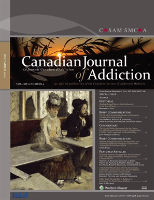
Canadian Journal of Addiction
Scope & Guideline
Transforming addiction research into actionable knowledge.
Introduction
Aims and Scopes
- Substance Use and Treatment Interventions:
The journal focuses on a wide array of substance use disorders, emphasizing effective treatment modalities, including opioid agonist therapy, harm reduction strategies, and the role of clinical pharmacists in addiction care. - Public Health and Policy Impact:
It explores the broader implications of addiction on public health, including the evaluation of policies surrounding substance use, such as cannabis legalization and opioid prescribing practices. - Interdisciplinary Research:
The journal encourages interdisciplinary approaches, integrating insights from psychology, sociology, and medicine to address the multifaceted nature of addiction and its impact on individuals and communities. - Emerging Trends in Addictive Behaviors:
Research on emerging addictive behaviors, such as gaming and gambling disorders, is a key area of focus, aiming to understand their prevalence, treatment, and societal implications. - Community and Equity Considerations:
The journal highlights issues of equity in access to addiction services, particularly among marginalized communities, ensuring that diverse voices are represented in addiction discourse.
Trending and Emerging
- Harm Reduction Strategies:
There is an increasing emphasis on harm reduction techniques, such as safer supply models and peer-administered naloxone programs, reflecting a progressive approach to substance use that prioritizes community health and safety. - Digital Health Interventions:
The rise of digital health resources for addiction treatment, particularly in response to the COVID-19 pandemic, highlights the journal's focus on integrating technology into addiction care. - Impact of COVID-19 on Substance Use:
Research exploring the effects of the COVID-19 pandemic on substance use patterns and treatment access is a significant emerging theme, as it addresses timely and relevant public health concerns. - Youth and Emerging Addictive Behaviors:
There is a notable trend towards studying youth-related issues, particularly concerning gaming and gambling disorders, as well as the impact of substance use on young populations. - Culturally Informed Practices:
The journal is increasingly recognizing the importance of culturally informed addiction treatment practices, particularly for Indigenous and minority communities, to address unique challenges and improve service equity.
Declining or Waning
- Traditional Substance Use Disorders:
Research focusing solely on traditional substance use disorders, such as alcohol and heroin, has seen a decline as the journal pivots towards more contemporary issues like polysubstance use and newer addiction patterns. - Involuntary Treatment Approaches:
There appears to be a decreasing trend in the publication of studies advocating for involuntary treatment for substance use disorders, suggesting a shift towards more patient-centered and voluntary treatment models. - Single Substance Research:
The focus on single substance use research is diminishing in favor of studies that explore the interplay of various substances, reflecting a growing recognition of the complexities of addiction. - Psychiatric Comorbidities in Isolation:
While the intersection of psychiatric disorders and addiction remains relevant, research focusing on these comorbidities in isolation is less frequent, with a preference for integrative approaches that consider multiple factors. - Generalized Addiction Treatment Models:
The journal has moved away from generalized treatment models, favoring specific, evidence-based interventions tailored to diverse populations and contexts.
Similar Journals
ADDICTION BIOLOGY
Unraveling the Complexities of Addictive BehaviorsADDICTION BIOLOGY, published by Wiley, is a leading peer-reviewed journal dedicated to advancing the understanding of addiction science. With an impressive impact factor and recognized as a Q1 journal in Medicine, Pharmacology, and Psychiatry and Mental Health, ADDICTION BIOLOGY occupies a crucial position in the scientific discourse surrounding the biological and neurochemical underpinnings of addictive behaviors. Since its inception in 1996, the journal has been at the forefront of research, fostering interdisciplinary collaborations and promoting innovative studies that explore the complexities of addiction. Researchers and professionals benefit from the journal's commitment to high-quality manuscripts, offering essential insights into prevention, treatment, and rehabilitation strategies for substance use disorders. Although it does not offer open access, ADDICTION BIOLOGY remains accessible through various academic libraries, ensuring that groundbreaking studies reach a global audience. This journal is indispensable for anyone seeking to deepen their knowledge in the rapidly evolving field of addiction research.
Substance Abuse-Research and Treatment
Transforming research into impactful treatments for substance abuse.Substance Abuse: Research and Treatment is a premier open-access journal published by SAGE Publications Ltd, focusing on the multifaceted aspects of substance use and its impact on mental health. Since its establishment in 2008, this journal has been dedicated to disseminating innovative research findings, case studies, and reviews that enhance understanding and treatment of substance-related disorders. With an impact factor that reflects its standing in the field, currently ranked in the Q2 category of Psychiatry and Mental Health, Substance Abuse: Research and Treatment strives to foster interdisciplinary dialogue among researchers, practitioners, and students. By making its content freely accessible, the journal encourages widespread engagement and application of evidence-based practices to mitigate substance abuse issues. The journal’s diverse global perspectives make it a vital resource for anyone invested in advancing knowledge and improving treatment outcomes in this critical area of public health.
DRUG AND ALCOHOL DEPENDENCE
Innovating solutions for addiction and dependency issues.Drug and Alcohol Dependence is a premier journal published by Elsevier Ireland Ltd, dedicated to the rigorous exploration and analysis of substance use disorders, including drug and alcohol dependencies. With its established history since 1975 and a remarkable convergence of research extending to 2024, the journal holds a prestigious position within the academic community, evidenced by its Q1 ranking in multiple categories, including Pharmacology, Psychiatry and Mental Health, and Toxicology for 2023. It ranks impressively among its peers, underscored by Scopus rankings of #46, #99, and #27 in key fields related to medical pharmacology and toxicology. As a non-open access title, it caters to a global readership of researchers, professionals, and students, providing them with peer-reviewed insights into critical developments and innovative methodologies in the field. The journal’s commitment to advancing knowledge and understanding of drug and alcohol dependence is essential for addressing the global challenges posed by substance use, making it a valuable resource for all stakeholders in public health and clinical practice.

Harm Reduction Journal
Advancing harm reduction for a healthier tomorrow.Welcome to the Harm Reduction Journal, a premier academic platform published by BMC, dedicated to advancing the field of harm reduction since its inception in 2004. With an impressive track record as an Open Access publication, this journal addresses critical topics within the broad scope of medicine, psychiatry, and public health, making it indispensable for researchers, healthcare professionals, and students alike. As of 2023, it proudly holds a Q1 ranking in prestigious categories including Medicine (Miscellaneous), Psychiatry and Mental Health, and Public Health, Environmental and Occupational Health, reflecting its high impact and significance in the academic community. The journal is notable for its comprehensive discussions on innovative harm reduction strategies, public policy considerations, and evidence-based practice, fostering collaboration and knowledge exchange. With a global reach and commitment to enhancing health outcomes, the Harm Reduction Journal serves as a vital resource in the ever-evolving landscape of public health and addiction research.

Journal of Substance Use & Addiction Treatment
Empowering research, enhancing treatment.Journal of Substance Use & Addiction Treatment is a premier scholarly publication dedicated to advancing the understanding and treatment of substance use disorders and addictive behaviors. Published by Elsevier Science Inc, this journal serves as a vital platform for researchers, clinicians, and students in the fields of psychology, psychiatry, public health, and addiction studies. With its commitment to Open Access, the journal facilitates wide dissemination of cutting-edge research, enabling practitioners and policymakers to access critical findings that inform treatment approaches and public health strategies. As an essential resource in addiction treatment and research, the Journal of Substance Use & Addiction Treatment aims to foster interdisciplinary collaboration and innovation, ultimately improving outcomes for individuals affected by addiction.

PSYCHOLOGY OF ADDICTIVE BEHAVIORS
Transforming Understanding of Addictive BehaviorsPsychology of Addictive Behaviors, published by the Educational Publishing Foundation of the American Psychological Association, is a distinguished peer-reviewed journal dedicated to advancing the understanding of addiction through rigorous psychological research. With an impressive impact factor and a reputation for excellence, this journal holds a prestigious Q1 quartile ranking in Clinical Psychology, Medicine (miscellaneous), and Psychiatry and Mental Health as of 2023. Since its inception in 1993, it has provided a vital platform for the dissemination of high-quality studies, fostering collaboration and knowledge exchange amidst researchers, clinicians, and students in the mental health arena. The journal is particularly noted for its comprehensive coverage of diverse topics related to addictive behaviors, thereby contributing significantly to the field's evidence base and clinical practices. Although currently not open access, its commitment to scholarly excellence ensures that subscribers benefit from invaluable insights into the complexities of addiction. With the culmination of research spanning from 1993 to 2024, Psychology of Addictive Behaviors stands as a cornerstone for those striving to understand and combat the challenges of addiction.
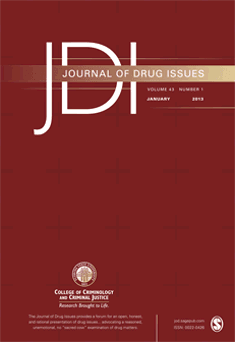
JOURNAL OF DRUG ISSUES
Fostering Informed Discussions on Drug IssuesJOURNAL OF DRUG ISSUES, published by SAGE PUBLICATIONS INC, serves as a pivotal platform for researchers and professionals dedicated to the multifaceted exploration of drug-related topics across various fields, including health, medicine, psychiatry, and public health. With an ISSN of 0022-0426 and an E-ISSN of 1945-1369, this esteemed journal has maintained a consistent output since its inception in 1971 and is set to continue its contributions through 2024. Reflecting its high academic standards, it has achieved a Q2 ranking in Health (Social Science) and Q3 rankings in several related categories, underscoring its relevance and influence among scholarly work. The journal is indexed in Scopus, with respectable rankings in various medical and health-related disciplines, highlighting its role as an essential resource for those invested in the vigorous discourse surrounding drug issues. Although not an open-access publication, the journal ensures that access to its extensive research findings remains available to a broad audience, solidifying its importance in advancing knowledge and informing best practices in the field.
Journal of Addiction Medicine
Elevating Knowledge in the Field of AddictionWelcome to the Journal of Addiction Medicine, a premier academic resource devoted to the field of addiction studies, published by LIPPINCOTT WILLIAMS & WILKINS. Since its inception in 2007, this esteemed journal has become a leader in disseminating groundbreaking research, with impressive rankings in the Q1 quartile across key disciplines such as Medicine (Miscellaneous), Pharmacology (Medical), and Psychiatry and Mental Health, reflecting its significance in the scholarly community. With an ISSN of 1932-0620 and an E-ISSN of 1935-3227, it caters to a diverse audience of researchers, clinicians, and students seeking to expand their understanding of addiction medicine. The journal's articles are primarily published in a non-open access format, ensuring high-quality research is accessible through institutional subscriptions. With a Scopus ranking that positions it within the top tiers of several relevant categories, the Journal of Addiction Medicine is essential for anyone committed to advancing knowledge in the field and addressing the complexities surrounding addiction.
Current Addiction Reports
Illuminating the path to understanding addiction.Current Addiction Reports, published by SPRINGERNATURE, is a leading journal dedicated to the comprehensive study of addiction in its various dimensions, with a particular focus on the latest clinical developments and research in Clinical Psychology and Psychiatry and Mental Health. Since its inception in 2014 and through to 2024, the journal has established itself as a pivotal resource for researchers, professionals, and students alike, currently holding a prestigious Q1 ranking in both relevant categories. With an impressive Scopus rank of #46 in Clinical Psychology and #129 in Psychiatry and Mental Health, it occupies a significant position within the field, reflecting its commitment to high-quality scholarship and impactful findings. The journal offers open access options, ensuring that vital research is readily available to a global audience. By fostering a deeper understanding of addiction trends and innovative treatment methodologies, Current Addiction Reports plays an essential role in advancing knowledge and improving clinical practices.
ADDICTIVE BEHAVIORS
Unraveling the Complexities of AddictionADDICTIVE BEHAVIORS is a prestigious journal published by PERGAMON-ELSEVIER SCIENCE LTD, specializing in the critical examination and exploration of addiction-related issues across diverse fields including Clinical Psychology, Psychiatry and Mental Health, and Toxicology. With a robust history dating back to 1975 and convergence extending to 2024, the journal is esteemed for its rigorous peer-reviewed research that contributes significantly to understanding addiction phenomena. Ranked in the Q1 category for its focus areas, it stands out within the academic community, evidenced by its impressive Scopus rankings—25th in Clinical Psychology and 14th in Toxicology—placing it in the top tier of its disciplines. This journal offers valuable insights into addiction behaviors, treatment methodologies, and public health implications, making it an essential resource for researchers, practitioners, and students seeking to advance their knowledge and impact the field. Although not Open Access, it provides vital access options for institutions and individuals invested in addiction studies.