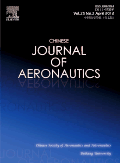
Chinese Journal of Aeronautics
Scope & Guideline
Navigating the forefront of aeronautical science.
Introduction
Aims and Scopes
- Aerospace Engineering and Technology:
Research focusing on the design, development, and testing of aircraft and spacecraft systems, including propulsion, aerodynamics, and structural integrity. - Advanced Materials and Manufacturing Processes:
Exploration of new materials and manufacturing techniques, particularly in relation to aerospace applications, such as composites, metallic alloys, and additive manufacturing. - Control Systems and Navigation:
Innovative methodologies for flight control, navigation, and guidance systems for various aerospace vehicles, including UAVs and traditional aircraft. - Fluid Dynamics and Aerodynamics:
Studies on fluid mechanics, including turbulence modeling, flow control, and aerodynamic characteristics of different configurations and flight conditions. - Reliability and Safety Assessment:
Research dedicated to the reliability, safety, and maintenance of aerospace systems, focusing on failure mechanisms and risk management strategies. - Robotics and Autonomous Systems:
Development and application of robotic systems and autonomous technologies in aerospace, including UAV swarm technologies and space exploration.
Trending and Emerging
- Artificial Intelligence and Machine Learning in Aerospace:
An increasing number of studies are incorporating AI and machine learning techniques for applications in navigation, predictive maintenance, and optimization of aerospace systems. - Sustainable Aviation Technologies:
Research focusing on reducing environmental impact, including studies on hybrid-electric propulsion, alternative fuels, and energy-efficient designs, is gaining traction. - Advanced Simulation and Computational Methods:
There is a growing interest in utilizing advanced computational techniques such as high-fidelity simulations, machine learning-based models, and real-time data integration for performance assessment and design optimization. - Unmanned Aerial Vehicles (UAVs) and Autonomous Systems:
The development and optimization of UAV technologies, including swarm intelligence and autonomous navigation, are becoming increasingly prominent within the journal's publications. - Hypersonic Flight and Space Exploration Technologies:
Research related to hypersonic vehicles and space exploration missions is emerging as a significant area of interest, reflecting advancements in aerospace capabilities and the need for innovative solutions.
Declining or Waning
- Conventional Aerodynamics Studies:
There seems to be a declining emphasis on traditional aerodynamic studies, particularly those that do not incorporate advanced computational methods or innovative experimental techniques. - Static Analysis of Aerospace Structures:
Research focusing solely on static analysis without considering dynamic interactions and real-time operational conditions appears less frequently, indicating a shift towards more comprehensive modeling approaches. - Basic Materials Research:
Investigations into basic material properties without application to advanced manufacturing processes or aerospace-specific challenges are becoming less prominent, as the field moves towards integrating materials research with practical aerospace applications.
Similar Journals

International Journal of Turbomachinery Propulsion and Power
Connecting scholars to propel the field of turbomachinery forward.The International Journal of Turbomachinery Propulsion and Power, published by MDPI, is a pivotal scholarly platform devoted to advancing the field of turbomachinery, propulsion technology, and power systems. Since its inception in 2016, this open-access journal has provided an invaluable resource for researchers, professionals, and students within the realms of Aerospace Engineering, Energy Engineering, and Mechanical Engineering. With its current ranking in the Q3 category across these disciplines and its strategic placement in Scopus, the journal facilitates the dissemination of cutting-edge research findings and innovative solutions. The commitment to open access, effective from 2017, ensures that high-quality research is readily accessible, fostering collaboration and knowledge sharing in the global academic community. As it continues to expand its scope through 2024, the journal remains a crucial avenue for discussion, experimentation, and advancement in turbomachinery and energy-related studies.
CEAS Space Journal
Connecting research and innovation in the realm of space.CEAS Space Journal, published by SPRINGER WIEN, serves as a critical platform for advancing knowledge in the fields of aerospace engineering and space science. With an ISSN of 1868-2502 and an E-ISSN of 1868-2510, this journal has been at the forefront of scholarly communication since its inception in 2011, showcasing cutting-edge research that spans to the present day (2024). The journal holds a solid reputation, ranking in the Q2 quartile for Aerospace Engineering and Q3 for Space and Planetary Science as of 2023, illustrating its impactful contributions within these disciplines. Scopus rankings further underline its prominence, placing it in the 70th percentile among aerospace engineering journals. Although it is not an open access publication, the insights published in the CEAS Space Journal are invaluable for researchers, professionals, and students alike, providing essential studies and reviews that push the boundaries of aerospace innovation and planetary exploration. The journal's commitment to quality and rigor makes it an indispensable resource for anyone looking to deepen their understanding of contemporary challenges and technological advancements in space science.
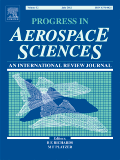
PROGRESS IN AEROSPACE SCIENCES
Leading the charge in aerospace engineering excellence.PROGRESS IN AEROSPACE SCIENCES is a prestigious journal published by PERGAMON-ELSEVIER SCIENCE LTD, recognized as a leading platform in the field of aerospace engineering, mechanical engineering, and mechanics of materials. With an impressive history dating back to 1961, the journal covers a wide spectrum of topics pivotal to advancing aerospace technology and innovation. Its recent ranking as Q1 in multiple engineering categories underscores its significance, ranking #1 in Aerospace Engineering and placing within the top 20 percentile in both Mechanical Engineering and Mechanics of Materials, according to Scopus assessments. Researchers, professionals, and students looking to engage with high-impact research will find PROGRESS IN AEROSPACE SCIENCES an invaluable resource, offering insights into cutting-edge developments and methodologies. Although it does not operate under an open-access model, the journal upholds rigorous peer-review standards, ensuring that the published content meets the highest academic integrity. Situated in the United Kingdom, it plays a critical role in fostering international collaboration and knowledge-sharing in the aerospace sector.

Journal of the Korean Society for Aeronautical and Space Sciences
Fostering Excellence in Aerospace ScholarshipThe Journal of the Korean Society for Aeronautical and Space Sciences is a dedicated platform for the dissemination of cutting-edge research in the fields of aerospace engineering and space sciences. Published by the esteemed Korean Society for Aeronautical & Space Sciences, this journal aims to bring together innovative findings and technological advancements from around the globe, thereby contributing to the ongoing development of the aerospace sector. Operating from South Korea, the journal holds an ISSN of 1225-1348 and an E-ISSN of 2287-6871, catering to both print and digital scholarly communication. Although categorized in Q4 within the Aerospace Engineering segment and ranked 139 out of 153 on Scopus, the journal plays a crucial role in fostering research collaboration and knowledge exchange among professionals, researchers, and students alike. With converged years from 2019 to 2024, it continuously seeks to enhance its contributions to the academic community through rigorous peer review and publication of original research. Given the evolution of aerospace technologies, this journal is vital for anyone involved in aeronautical research, ensuring that their work reaches the right audience.
Aerospace
Fostering Collaboration in Aerospace ExcellenceAerospace is a premier open-access journal published by MDPI, established in 2014 and dedicated to the dynamic field of aerospace engineering. With an impressive Q2 ranking in the 2023 category of Aerospace Engineering, this journal is a vital resource for researchers, professionals, and students interested in advancements and innovations in aerodynamics, avionics, propulsion, and more. Operating from Switzerland, Aerospace provides a platform for the dissemination of high-quality research articles and reviews, contributing to the ongoing dialogue in the aerospace community. This journal not only enhances visibility through its open access model but also ensures that critical knowledge is freely available, fostering collaborative efforts and inspiring the next generation of aerospace engineers. With a Scopus ranking of #60 out of 153 in the Aerospace Engineering category, it plays a significant role in shaping the future of aviation and space exploration.
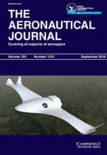
AERONAUTICAL JOURNAL
Advancing aerospace knowledge since 1969.Aeronautical Journal, published by Cambridge University Press, is a premier scholarly journal dedicated to advancing the field of aerospace engineering. With a notable impact factor, this journal holds a strong position in the academic community, ranked #53 out of 153 in the Scopus category of Aerospace Engineering, placing it in the 65th percentile. The journal has been providing a platform for groundbreaking research since its inception in 1969, and continues to be a vital resource for researchers, professionals, and students involved in aeronautics. As a Q2 journal in the 2023 Aerospace Engineering category, it offers high-quality articles that cover a range of topics within the discipline, contributing to the ongoing discourse and innovation in aerospace technologies. Although not an open-access journal, it remains accessible to a vast readership through institutional subscriptions and partnerships. The Aeronautical Journal is a crucial publication for those seeking to stay at the forefront of aerospace research and development.
Advances in Mechanical Engineering
Pioneering Research for Tomorrow's Engineering ChallengesAdvances in Mechanical Engineering is a premier open-access journal published by SAGE Publications Ltd, dedicated to the advancement of theoretical and applied research in the field of mechanical engineering. With an ISSN of 1687-8132 and an E-ISSN of 1687-8140, this journal has been a vital resource for scholars and practitioners since its inception in 2009. Housed in the United States, it operates under a commitment to ensure free and immediate access to its high-quality content, enhancing collaboration and innovation across the global engineering community. With a noteworthy Q2 ranking in the mechanical engineering category and a solid Scopus rank placing it in the 59th percentile, the journal serves as an influential platform for cutting-edge research, theoretical advancements, and comprehensive reviews. As the field evolves, Advances in Mechanical Engineering continues to cater to the rigorous needs of researchers, professionals, and students, striving to transform knowledge into tangible engineering solutions. This journal's commitment to excellence makes it a significant contributor to the mechanical engineering field, encouraging dynamic discussions and implications for the future.
TRANSACTIONS OF THE JAPAN SOCIETY FOR AERONAUTICAL AND SPACE SCIENCES
Exploring the Frontiers of Aerospace InnovationTRANSACTIONS OF THE JAPAN SOCIETY FOR AERONAUTICAL AND SPACE SCIENCES is a distinguished journal published by the Japan Society for Aeronautical and Space Sciences, focusing on the latest advancements and research in the fields of aerospace engineering and space and planetary science. With a broad range covering theoretical studies, practical applications, and experimental research, this journal serves as a vital platform for researchers, professionals, and students keen to explore the intricacies of aeronautics and space technologies. Although currently closed to open access, the journal maintains a significant presence in the academic community, boasting a 2023 Scopus ranking of Q3 in both of its respective fields and offering insights that contribute to ongoing discussions and innovations in aerospace. Since its inception in 1969 and with publications extending to 2024, the journal not only reflects the evolving landscape of aeronautics and space sciences but also encourages discourse that paves the way for future breakthroughs. For your engagement and contributions to this dynamic field, the TRANSACTIONS OF THE JAPAN SOCIETY FOR AERONAUTICAL AND SPACE SCIENCES stands as an essential resource.

JOURNAL OF TURBOMACHINERY-TRANSACTIONS OF THE ASME
Innovating Fluid Dynamics for Tomorrow's TechnologiesJOURNAL OF TURBOMACHINERY-TRANSACTIONS OF THE ASME is a premier publication in the field of mechanical engineering, specifically focusing on the innovative aspects of turbomachinery. Published by the renowned American Society of Mechanical Engineers (ASME), this journal has established itself as a key resource for both researchers and professionals in the industry, featuring cutting-edge research, reviews, and technical papers. With an impressive impact factor and a 2023 ranking placing it in the top quartile (Q1) of mechanical engineering journals, the Journal of Turbomachinery is dedicated to advancing the understanding of fluid dynamics, thermodynamics, and mechanical design as they pertain to turbomachinery applications. The journal's broad scope, covering everything from fundamental research to practical applications, is designed to foster innovation and encourage collaboration in this vital area of engineering. While the journal operates under a subscription model, its impact on the community is substantial, making it an essential read for anyone involved in mechanical engineering research or practice.
SAE International Journal of Aerospace
Fostering the Future of Aerospace Technologies.The SAE International Journal of Aerospace, published by SAE International, serves as a critical platform for innovative research and advancements within the field of aerospace engineering. With an ISSN of 1946-3855 and an E-ISSN of 1946-3901, this esteemed journal contributes significantly to the body of knowledge in the aerospace sector, boasting a convergence span from 2008 to 2024. While currently categorized in Q4 of Aerospace Engineering, the journal is dedicated to fostering emerging ideas, technologies, and methodologies that could eventually elevate its standing. Although it does not offer open access options, the journal ensures wide dissemination of its well-curated articles to aid researchers, professionals, and students in staying abreast of the latest developments and trends. Given its distinct focus and commitment to the aerospace community, the SAE International Journal of Aerospace plays an essential role in bridging theory and practice, making it a valuable resource for those within this vital and evolving field.