
COLLOQUIUM MATHEMATICUM
metrics 2024
Elevating mathematical discourse from Warsaw to the world.
Introduction
COLLOQUIUM MATHEMATICUM, published by ARS POLONA-RUCH, serves as an essential platform for the dissemination of innovative research in the field of mathematics. With an ISSN of 0010-1354 and a dedicated E-ISSN of 1730-6302, this journal plays a crucial role in advancing mathematical knowledge and fostering collaboration within the academic community. Although it is categorized in the Q3 quartile for miscellaneous mathematics, its content consistently attracts a diverse readership, reflecting a wide array of mathematical disciplines. Spanning publication years from 2001 to 2009 and resuming from 2011 to the present, *COLLOQUIUM MATHEMATICUM* offers researchers, professionals, and students the unique opportunity to engage with groundbreaking concepts and methodologies. With its home base in Warsaw, Poland, this journal not only contributes to the regional mathematical landscape but also impacts the broader global community. While currently not adopting an open access model, the journal remains committed to quality research, evidenced by its Scopus ranking within the general mathematics category. Engage with *COLLOQUIUM MATHEMATICUM* to be at the forefront of mathematical exploration.
Metrics 2024
 0.350.400.4030
Metrics History
Rank 2024
Scopus
IF (Web Of Science)
JCI (Web Of Science)
Quartile History
Similar Journals
PROCEEDINGS OF THE INDIAN ACADEMY OF SCIENCES-MATHEMATICAL SCIENCES
Advancing Mathematical Frontiers through Quality ResearchPROCEEDINGS OF THE INDIAN ACADEMY OF SCIENCES-MATHEMATICAL SCIENCES is a premier journal published by Springer India, dedicated to advancing the field of mathematics through the dissemination of high-quality research. With its foundation dating back to 1978, the journal serves as a pivotal platform for researchers, professionals, and students alike, fostering a vibrant academic community focused on the latest developments in mathematical sciences. Although currently positioned in the Q3 category for Mathematics (miscellaneous) with a Scopus rank of #340/399, the journal holds immense potential for growth and wider recognition within the academic sphere. It features articles that span various mathematical disciplines, encouraging innovative ideas and methodologies that contribute significantly to the field. The journal's contributions are especially relevant in the context of expanding mathematical applications in science and technology. Though it operates without an Open Access option, the journal remains an invaluable resource for anyone engaged in mathematical research, offering insights that inspire future studies and collaborations.
Mediterranean Journal of Mathematics
Bridging Theory and Practice in the World of MathematicsThe Mediterranean Journal of Mathematics, published by SPRINGER BASEL AG, is a prominent platform dedicated to the advancement of mathematical research and education. Since its inception in 2004, this journal has been pivotal in disseminating high-quality research across various fields of mathematics, currently holding a notable Q2 ranking in the miscellaneous mathematics category as of 2023. With its ISSN 1660-5446 and E-ISSN 1660-5454, the journal enjoys a respected position in the academic community, evident by its Scopus rank of 129 out of 399 in General Mathematics, placing it in the 67th percentile. While primarily a subscription-based journal, it remains committed to providing a comprehensive resource for researchers, professionals, and students, fostering dialogue and exploration within the mathematical sciences. The Mediterranean Journal of Mathematics, based in Basel, Switzerland, continues to contribute significantly to the evolution of mathematical theory and practice, marking its relevance as we approach its 20th anniversary in 2024.

Pure and Applied Mathematics Quarterly
Connecting Mathematicians Through Quality ResearchPure and Applied Mathematics Quarterly is a prestigious journal published by INT PRESS BOSTON, INC, focusing on the diverse and evolving field of mathematics. Since its inception in 2007, this journal has grown significantly, currently holding a Q1 ranking in the Mathematics (Miscellaneous) category for 2023, positioning it among the leading publications in the discipline. With a commitment to publishing high-quality research, Pure and Applied Mathematics Quarterly fosters innovation and dialogue within the mathematical community by providing a platform for theoretical advancements and practical applications. The journal remains accessible to researchers and professionals through its ISSN 1558-8599 and E-ISSN 1558-8602, although it does not currently offer open access. As a vital resource for mathematicians, educators, and students, this journal endeavors to expand the frontiers of mathematical knowledge and contribute to the academic dialogue surrounding this fundamental science.

Bulletin Mathematique de la Societe des Sciences Mathematiques de Roumanie
Pioneering Insights in the World of MathematicsThe Bulletin Mathematique de la Societe des Sciences Mathematiques de Roumanie, published by SOC MATEMATICE ROMANIA, is a distinguished platform dedicated to the dissemination of advanced mathematical research and developments. With ISSN 1220-3874 and E-ISSN 2065-0264, this journal serves the global mathematical community, particularly in Romania, fostering collaboration and innovation in varied mathematical disciplines. Despite being categorized in the Q3 quartile of the *Mathematics (miscellaneous)* field and holding a Scopus rank placing it in the 19th percentile, the journal remains committed to publishing high-quality articles that explore theoretical and applied mathematics. Running from 2008 to 2024, it aims to encourage the sharing of knowledge and advancements within both academic and practical domains, affirming its importance as a valuable resource for researchers, professionals, and students alike. Although the journal does not currently offer open access, it contributes to the mathematical discourse through the rigorous selection of papers that adhere to high scholarly standards.
Periodica Mathematica Hungarica
Pioneering Insights in the World of Mathematics.Periodica Mathematica Hungarica is a prestigious academic journal published by Springer, focusing on the field of mathematics, with a particular emphasis on miscellaneous mathematical studies. Established in 1971, this journal has maintained its commitment to advancing mathematical research and its applications, making significant contributions over its converged years through 2024. With a Q2 ranking in the mathematics category as of 2023, it establishes itself as a vital resource within the mathematical community. Researchers and academics will find its inclusion in the Scopus database, ranking #189 out of 399 in general mathematics, indicative of its impact and relevance. Although it does not feature open access, the journal provides a wealth of high-quality peer-reviewed articles, thereby serving as an essential platform for the dissemination of innovative mathematical theories, methodologies, and findings. Engaging with the content of Periodica Mathematica Hungarica is crucial for anyone looking to stay at the forefront of mathematical research and development.

European Journal of Mathematics
Connecting Researchers to Emerging TrendsWelcome to the European Journal of Mathematics, a prominent publication that serves as a vital platform for disseminating high-quality research in the field of mathematics. Published by Springer International Publishing AG, this journal has witnessed significant growth since its inception in 2015 and is recognized for its contributions within the Q2 category of Mathematics (miscellaneous) as per the 2023 rankings. With an ISSN of 2199-675X and an E-ISSN of 2199-6768, the journal aims to foster innovation and collaboration among researchers, professionals, and students alike. Although it operates under a traditional access model, the journal's commitment to advancing mathematical knowledge and applications cannot be overstated. Positioned among the top-tier publications, the European Journal of Mathematics is an essential resource that encourages the exploration of emerging trends and theories in mathematics, making it indispensable for anyone striving to stay at the forefront of this dynamic field.

Rad Hrvatske Akademije Znanosti i Umjetnosti-Matematicke Znanosti
Fostering Collaboration through Mathematical ResearchRad Hrvatske Akademije Znanosti i Umjetnosti-Matematicke Znanosti is a distinguished journal published by the Croatian Academy of Sciences and Arts, focusing on the vast domain of mathematics and its multifaceted applications. Established in Croatia, this journal serves as a vital platform for scholars and practitioners to disseminate innovative and significant research findings in mathematical science. With an ISSN of 1849-2215, it has been indexed in Scopus, achieving a notable Q3 ranking in the miscellaneous category of mathematics, which reflects its influence and reach within the academic community. While currently not classified as an open-access journal, it endeavors to offer accessible insights and foster collaboration among researchers, professionals, and students. Published annually, it spans diverse topics critical to advancing mathematical understanding and promotes the exchange of ideas across international boundaries. Emphasizing quality, this journal contributes to the ongoing dialogue in the mathematical sciences, thereby strengthening academic ties and enhancing knowledge dissemination.
JOURNAL OF THE EUROPEAN MATHEMATICAL SOCIETY
Pioneering Open Access in MathematicsThe JOURNAL OF THE EUROPEAN MATHEMATICAL SOCIETY, published by the EUROPEAN MATHEMATICAL SOCIETY (EMS), stands as a premier platform in the field of mathematics, known for its rigorous editorial standards and impactful contributions to both applied and theoretical aspects of the discipline. With a commendable Q1 ranking in both Applied Mathematics and Miscellaneous Mathematics categories, alongside a Scopus rank of 32 out of 399 in General Mathematics, this journal has established itself as a crucial resource for researchers and professionals. Since achieving Open Access status in 2021, it has expanded its reach, making cutting-edge research more accessible to a global audience. With a publication horizon extending from 2002 to 2024 and a dedicated focus on high-quality mathematical scholarship, the journal continues to foster innovation and collaboration within the mathematical community.

Forum of Mathematics Sigma
Fostering collaboration in the world of mathematics.Forum of Mathematics Sigma is a premier open access journal published by Cambridge University Press that has been at the forefront of mathematical research since its inception in 2013. With a strong emphasis on advancing the fields of mathematics, the journal consistently achieves Q1 rankings across multiple categories, including Algebra and Number Theory, Analysis, and Computational Mathematics. This distinction highlights its impact and relevance within the scholarly community. The journal prides itself on providing a platform for innovative research, fostering collaboration among researchers and practitioners across various mathematical disciplines. Open access publication ensures that cutting-edge findings are widely available to readers globally, enhancing the dissemination of knowledge. With an address in the heart of Cambridge, England, Forum of Mathematics Sigma is dedicated to promoting high-quality research and making significant contributions to the development of mathematics.
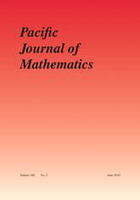
PACIFIC JOURNAL OF MATHEMATICS
Unveiling Innovative Research in the Realm of MathematicsThe PACIFIC JOURNAL OF MATHEMATICS, established in 1951 and published by Mathematical Sciences Publishers, is a premier peer-reviewed journal in the field of mathematics, renowned for its rigorous scholarship and impactful research contributions. With an HIndex that reflects its sustained academic influence, this journal has been categorized within the Q1 quartile in the field of mathematics (miscellaneous) as of 2023, showcasing its position among the top-tier mathematics journals globally. Although the journal operates under a traditional subscription model rather than an Open Access format, it remains dedicated to disseminating original research that spans various domains within mathematics. Researchers, professionals, and students alike will find the journal's breadth of topics and commitment to quality work instrumental in advancing their understanding and exploration of mathematical concepts. This esteemed journal continues to thrive as a vital resource for the mathematical community through its comprehensive collection of articles from a diverse range of mathematical disciplines, thus maintaining a significant role in shaping the future of mathematical inquiry.