Communications Physics
metrics 2024
Empowering global research through open access.
Introduction
Communications Physics is a premier open access journal published by Nature Portfolio, dedicated to disseminating high-quality research in the field of Physics and Astronomy. Since its inception in 2018, the journal has rapidly established itself as a vital platform for innovative scientific communication, boasting an impressive Impact Factor and achieving Q1 status in the 2023 category of Physics and Astronomy (miscellaneous). With a Scopus rank of #31 out of 243, placing it within the 87th percentile, Communications Physics attracts a global audience of researchers, professionals, and students eager to engage with cutting-edge findings. The journal supports open access, ensuring that research is freely available to the public, which enhances its visibility and encourages broader discussions within the scientific community. Located in Berlin, Germany, Communications Physics aims to bridge the gap between various disciplines within physics, fostering interdisciplinary collaboration and inspiring future research endeavors.
Metrics 2024
 1.765.405.7050
Metrics History
Rank 2024
Scopus
IF (Web Of Science)
JCI (Web Of Science)
Quartile History
Similar Journals

Lithuanian Journal of Physics
Empowering Discoveries in Physics and AstronomyWelcome to the Lithuanian Journal of Physics, an esteemed publication helmed by the Lithuanian Physical Society, dedicated to advancing the field of physics and astronomy. Established in 2008 and continually publishing insightful research through 2024, this journal aims to provide a platform for high-quality scholarly articles that contribute to the understanding of various physical phenomena. With a steady presence in the academic landscape, the journal is currently ranked in the fourth quartile of the Physics and Astronomy category and is positioned at the 18th percentile in its Scopus ranking, reflecting its niche focus and accessibility for researchers and students alike. Although currently not operating under an open access model, the journal remains a vital resource for professionals seeking to stay informed on the latest developments in the field. The Lithuanian Journal of Physics invites contributions that inspire collaboration and innovation in physical sciences, making it an invaluable resource for the global scientific community seeking to expand knowledge within this dynamic field.

ACTA PHYSICA SINICA
Empowering Researchers with Groundbreaking InsightsACTA PHYSICA SINICA is a prominent journal published by the Chinese Physical Society, dedicated to the dissemination of groundbreaking research in the field of physics and astronomy. Established in 1993, this journal has consistently contributed to the scientific community by publishing high-quality articles that cover a wide range of topics within general physics and related disciplines. Although currently classified in Q4 of the physics and astronomy category by Scopus, ACTA PHYSICA SINICA plays an important role in fostering collaboration and communication among researchers in China and around the world. With a substantial readership, this journal is poised to remain a valuable resource for professionals, researchers, and students alike. By providing in-depth analysis and insights, it aims to advance the understanding and application of physical principles in various technological and scientific advancements. The journal is accessible via subscription, ensuring that contributors and readers can engage with the evolving landscape of physics research. For more information, visit the publisher's website.
PHYSICAL REVIEW E
Pioneering Discoveries in Physics Since 1993PHYSICAL REVIEW E, published by the American Physical Society, stands as a premier journal in the fields of condensed matter physics, statistical and nonlinear physics, and statistics and probability. With an ISSN of 2470-0045 and an E-ISSN of 2470-0053, this journal prides itself on providing cutting-edge research and insights, contributing significantly to the advancement of knowledge since its inception in 1993. Currently, it boasts a Q1 ranking in Condensed Matter Physics and a Q2 ranking in both Statistical and Nonlinear Physics and Statistics and Probability, highlighting its relevance and impact within these fields. PHYSICAL REVIEW E is particularly renowned for its commitment to disseminating high-quality, peer-reviewed articles that address fundamental questions and emergent phenomena, making it an essential resource for researchers, professionals, and students alike. As it converges years from 1993 to 2024, the journal continues to foster a collaborative environment for innovative research while maintaining accessibility for a global audience.

REVISTA MEXICANA DE FISICA
Exploring the Frontiers of Physics Education and ResearchREVISTA MEXICANA DE FISICA is a prominent academic journal dedicated to advancing knowledge in the fields of Physics and Education. Published by the SOC MEXICANA FISICA, this journal plays a pivotal role in disseminating innovative research and educational methodologies from Mexico and beyond. With a publication history that spans from 1991 to 2024, it has established itself as an essential resource for researchers, professionals, and students who seek to deepen their understanding of general physics and astronomy. The journal is classified in the Q3 quartile in both education and physics & astronomy, showcasing its quality and relevance within the academic landscape. While the journal currently operates on a subscription basis, it provides a valuable platform for emerging voices and established scholars alike. By fostering a collaborative environment for scientific discourse, REVISTA MEXICANA DE FISICA continues to be an important channel for the ongoing evolution of scientific education and exploration in the physical sciences.
JOURNAL OF STATISTICAL PHYSICS
Unraveling the complexities of Mathematical Physics since 1969.The Journal of Statistical Physics, published by Springer, is a premier academic journal that has made significant contributions to the fields of Mathematical Physics and Statistical and Nonlinear Physics since its inception in 1969. With a strong reputation reflected in its 2023 rankings—placing it in Q2 of both categories and achieving an impressive Scopus rank of #22 in Mathematical Physics and #25 in Statistical and Nonlinear Physics—this journal serves as a vital platform for researchers, professionals, and students. The impact factor of the journal underscores its importance in disseminating cutting-edge research and theoretical developments. Authors are invited to submit original research articles that explore the intricate complexities of statistical mechanics, quantum physics, and related disciplines, fostering deep insights and academic discourse. Although the journal does not currently offer open access, its robust editorial standards and commitment to advancing knowledge make it an essential resource for those engaged in these dynamic fields.
Science China-Physics Mechanics & Astronomy
Exploring the Frontiers of Mechanics and AstronomyScience China-Physics Mechanics & Astronomy, published by SCIENCE PRESS, stands as a prestigious journal within the Physics and Astronomy domain, particularly recognized for its contributions to the understanding of fundamental and applied physics. With an exhilarating Q1 ranking in the 2023 category and earning a remarkable scopus rank of #21 out of 243, the journal demonstrates its significant impact, being positioned in the 91st percentile of its field. Operating under an Open Access model, it facilitates the broad dissemination of high-quality research, ensuring accessibility for researchers, professionals, and students worldwide. Its scope covers a variety of essential topics in physics and astronomy, promoting a comprehensive understanding of the latest advancements from 2010 through 2024. The journal is a vital resource for anyone aiming to stay at the forefront of research in these dynamic fields, with its prominent address located in Beijing, China, symbolizing its global influence.
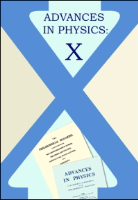
Advances in Physics-X
Elevating Research Standards in Physics and AstronomyAdvances in Physics-X is a premier open-access journal published by Taylor & Francis Ltd, dedicated to advancing the frontiers of knowledge in the field of Physics and Astronomy. Since its inception in 2016, the journal has established itself as a vital platform for researchers and professionals, showcasing innovative research and cutting-edge theories that influence a broad array of sub-disciplines within physics. With an impressive impact factor and ranked in the 94th percentile among its peers, it resides in the Q1 category for Physics and Astronomy (miscellaneous), indicating its significant contributions to the academic community. Located in the United Kingdom, the journal encourages open access to foster wider dissemination and visibility of scholarly works, aligning with contemporary academic trends that prioritize global knowledge sharing. The ongoing commitment to publishing high-quality research ensures that Advances in Physics-X remains an essential resource for students, industry experts, and academics alike, helping to shape the future of physics research through collaboration and innovation.

Physical Review Research
Showcasing the best in rigorous physics research.Physical Review Research, published by the American Physical Society, is a premier open access journal dedicated to the dissemination of high-quality research across all areas of physics and astronomy. Since its inception in 2019, this journal has quickly established itself as a vital platform for researchers, achieving a prestigious Q1 ranking in the dynamics of Physics and Astronomy (miscellaneous) and holding a commendable position in the Scopus Rankings with a rank of #29 out of 243, placing it in the 88th percentile. With the commitment to fostering scientific collaboration and transparency, Physical Review Research offers unrestricted access to valuable findings, enabling researchers, professionals, and students alike to engage with cutting-edge contributions in general physics and astronomy. As it converges into its forthcoming years of publication, the journal remains dedicated to showcasing rigorous research and innovative ideas that drive the field forward.
JETP LETTERS
Connecting Ideas, Transforming KnowledgeJETP LETTERS, published by MAIK NAUKA/INTERPERIODICA/SPRINGER, is a prestigious journal in the field of physics and astronomy, which plays a pivotal role in disseminating groundbreaking research and innovative ideas since its inception in 1969. With an ISSN of 0021-3640 and an E-ISSN of 1090-6487, this journal aligns well with the interests of both seasoned researchers and emerging scholars, having achieved a 2023 category rank of Q3 for miscellaneous topics within physics and astronomy. Located in the United States at 233 SPRING ST, NEW YORK, NY 10013-1578, JETP LETTERS serves as a critical resource for its readership, offering exclusive insights and advancements across diverse areas of physics. While not open access, it hosts a collection of articles that refine theoretical approaches and experimental methods, providing both knowledge and inspiration to professionals and academics seeking to make impactful contributions to the scientific community. The journal’s quality is reflected in its Scopus ranking, where it stands at 39 out of 81 in the multidisciplinary category, placing it in the 52nd percentile, thus underscoring its significance and reliability as a scholarly outlet.
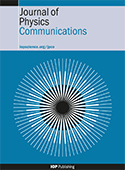
Journal of Physics Communications
Shaping the Landscape of Physics InnovationJournal of Physics Communications, published by IOP Publishing Ltd, serves as a significant platform for the dissemination of innovative research in the realm of physics and astronomy. Since its inception in 2017, this Open Access journal has fostered a collaborative environment, allowing researchers, professionals, and students to share their findings and ideas without barriers. With an ISSN of 2399-6528, the journal has established its credibility in the academic community, achieving a ranking of Q3 in the 2023 category of Physics and Astronomy (miscellaneous), as well as a respectable position in Scopus with a rank of #122 out of 243 in its field. The journal's focus is on bridging theoretical concepts and practical applications, making it an essential resource for those engaged in the evolving landscape of physics. The Journal of Physics Communications not only aims to advance knowledge but also to inspire interdisciplinary collaboration, inviting contributions from diverse areas within physics. Authors and readers alike will find this journal particularly beneficial to stay updated on emerging trends and innovative research.