COMPUTERS & STRUCTURES
metrics 2024
Exploring New Frontiers in Engineering Methodologies
Introduction
COMPUTERS & STRUCTURES is a leading interdisciplinary journal published by Pergamon-Elsevier Science Ltd, focusing on the application of computer methods in the fields of civil and structural engineering, mechanical engineering, materials science, and modeling and simulation. With a prestigious history dating back to its inception in 1971, this journal is committed to advancing the knowledge and methodologies that integrate computational techniques with structural analysis and design. Recognized in 2023 with a Q1 ranking across several categories, including Civil and Structural Engineering and Computer Science Applications, COMPUTERS & STRUCTURES emphasizes the importance of innovative research that pushes the boundaries of traditional engineering practices. Although the journal does not currently offer open access, it remains an invaluable resource for researchers, professionals, and students seeking to disseminate and discuss groundbreaking findings that are shaping the future of engineering and materials science. The rigorous peer-review process ensures the publication of high-quality articles that contribute to the global discourse in these critical fields.
Metrics 2024
 1.274.404.50161
Metrics History
Rank 2024
Scopus
IF (Web Of Science)
JCI (Web Of Science)
Quartile History
Similar Journals
Bridge Structures
Transforming Engineering Challenges into Bridge SuccessesBridge Structures is an esteemed academic journal dedicated to the field of structural engineering, particularly focusing on the design, analysis, and maintenance of bridge systems. Published by IOS PRESS, a reputable publisher known for its contributions to various scientific fields, the journal serves as an integral platform for disseminating innovative research and advancements within the domain. With an ISSN of 1573-2487 and an E-ISSN of 1744-8999, Bridge Structures has established itself over the years—covering contributions from 2005 to 2024. The journal has attained a commendable ranking within the Q3 category in Building and Construction and holds a position within the 28th percentile among its peers according to the Scopus rankings. Though the journal operates on a subscription basis, its commitment to advancing engineering knowledge is paramount, making it essential reading for researchers, practitioners, and students eager to deepen their understanding of bridge engineering. The journal not only explores theoretical advancements but also emphasizes practical applications, providing a well-rounded perspective on current challenges and solutions in the field of bridge structures.

Advanced Steel Construction
Fostering Collaboration in Steel Research and DevelopmentAdvanced Steel Construction is a prominent journal published by the Hong Kong Institute of Steel Construction, dedicated to the field of structural engineering and material sciences with a specific focus on steel construction techniques and advancements. Since its inception in 2005, the journal has established itself as a valuable resource for researchers, professionals, and students alike, offering insights into the latest developments and innovative practices within the realms of building construction, civil engineering, and materials mechanics. With its recognition as a Q2 journal across multiple engineering categories, including Building and Construction, Civil and Structural Engineering, Mechanical Engineering, and Mechanics of Materials, it ranks competitively in Scopus rankings, highlighting its significance in academic discourse. The journal is based in China, at the Hong Kong Polytechnic University, and provides an essential platform for sharing groundbreaking research and fostering collaboration within the engineering community.
Structure and Infrastructure Engineering
Advancing the Future of Engineering ExcellenceStructure and Infrastructure Engineering, published by TAYLOR & FRANCIS LTD, is a premier academic journal that serves as a vital resource in the fields of engineering and construction. Featuring an ISSN of 1573-2479 and an E-ISSN of 1744-8980, this journal has established its reputation as a leader in disseminating high-quality research. Since its inception, it has successfully transitioned through converged years from 2007 to 2024, earning a prestigious position within the Q1 quartile across multiple engineering disciplines, including Building and Construction, Civil and Structural Engineering, and Ocean Engineering, among others. Its impact is underscored by impressive Scopus rankings, particularly its 5th rank in Ocean Engineering within the top 95th percentile. The journal’s commitment to advancing knowledge in safety, risk, reliability, and quality makes it an indispensable platform for researchers, professionals, and students aiming to stay at the forefront of engineering innovations. Access to its comprehensive articles allows for a deeper understanding of contemporary challenges and solutions in infrastructure development.
THIN-WALLED STRUCTURES
Innovating Design for Safer, Efficient StructuresTHIN-WALLED STRUCTURES is a premier international journal published by Elsevier Science Ltd, focusing on the critical areas of Building and Construction, Civil and Structural Engineering, and Mechanical Engineering. With an impressive impact factor and categorization in the Q1 quartile of each respective field, this journal stands at the forefront of engineering research, boasting commendable Scopus rankings—52nd for Mechanical Engineering, 18th for Building and Construction, and 32nd for Civil and Structural Engineering. Since its inception in 1983, THIN-WALLED STRUCTURES has provided a vital platform for disseminating innovative research, practical applications, and theoretical advancements in thin-walled structures, encouraging the development of safer and more efficient design methodologies. Although it operates on a traditional access model, the journal is committed to maintaining high-quality peer review and publishing, making it an essential resource for researchers, professionals, and students aiming to contribute to and benefit from the latest advancements in this dynamic field.
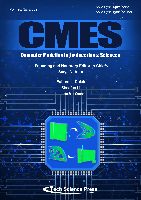
CMES-COMPUTER MODELING IN ENGINEERING & SCIENCES
Fostering Collaboration in Computational MethodologiesCMES-COMPUTER MODELING IN ENGINEERING & SCIENCES is a premier journal published by Tech Science Press, dedicated to advancing knowledge in the fields of computer science applications, modeling and simulation, and software engineering. With an impressive convergence of research from 2000 to 2024, this journal stands out as a vital resource for researchers, professionals, and students alike, fostering innovation and collaboration in computational methodologies. The journal currently holds a Q3 category ranking in multiple disciplines according to the latest metrics, including Scopus, which reflects its growing significance in the academic community. By providing a platform for high-quality research and open discourse, CMES aims to enhance the understanding of complex systems through effective modeling techniques and computational tools. Despite its current classification under open access, the journal remains a cornerstone for those looking to deepen their expertise in cutting-edge computational engineering and science.
MECHANICS OF ADVANCED MATERIALS AND STRUCTURES
Exploring innovative insights into complex materials and structures.Mechanics of Advanced Materials and Structures is a distinguished journal published by Taylor & Francis Inc, focusing on the innovative fields of Civil and Structural Engineering, Materials Science, Mechanical Engineering, and Mechanics of Materials. With ISSN 1537-6494 and E-ISSN 1537-6532, this journal is positioned within the Q2 quartile rankings of its categories, demonstrating its significant scholarly impact. It has been a pivotal platform since its inception in 1997, providing researchers and professionals with comprehensive insights and the latest findings, until the expected closure in 2024. Situated in the United Kingdom, the journal is dedicated to enhancing the understanding of complex materials and structural behavior through rigorous peer-reviewed articles. Its high visibility in Scopus rankings further underscores its importance, making it an essential resource for those engaged in advanced materials research and structural analysis. With options for open access, the journal ensures broad dissemination of knowledge, fostering a collaborative environment for researchers, practitioners, and students alike.
Frontiers of Structural and Civil Engineering
Elevating Standards in Structural and Civil EngineeringFrontiers of Structural and Civil Engineering, published by HIGHER EDUCATION PRESS, is a premier academic journal dedicated to advancing the fields of architecture, civil, and structural engineering. With an ISSN of 2095-2430 and E-ISSN of 2095-2449, this journal caters to the dissemination of high-quality research and innovative practices from 2012 onwards, highlighting important developments up until 2024. Ranked in the top quartile (Q1) for Architecture and Q2 for Civil and Structural Engineering in 2023, it holds an impressive Scopus ranking of #19 out of 189 in Architecture and #101 out of 379 in Civil and Structural Engineering, reflecting its impact and relevance in the scientific community. This journal invites contributions that demonstrate pioneering approaches, fostering collaboration among researchers, professionals, and students alike, and significantly contributes to the global knowledge base in the engineering disciplines.

FINITE ELEMENTS IN ANALYSIS AND DESIGN
Elevating the standards of finite element research.FINITE ELEMENTS IN ANALYSIS AND DESIGN, published by Elsevier, is a leading international journal dedicated to advancing the field of engineering analysis using finite element techniques. With a strong focus on theoretical and applied contributions, the journal spans a broad spectrum of subjects, including structural analysis, computational mechanics, and computer graphics applications, making it an essential resource for researchers, professionals, and students alike. As evidenced by its impressive Q1 ranking in multiple categories, including Analysis and Computer Graphics, and its Scopus rankings placing it in the top 10% across several fields, it serves as a vital platform for disseminating cutting-edge research and innovative applications within the field. The journal, with an ISSN of 0168-874X and an E-ISSN of 1872-6925, publishes articles that emphasize rigorous mathematical methodologies and computational advancements, ensuring high relevance for contemporary engineering challenges. With a history extending from 1985 to 2024, it continues to shape the discourse and progress within the finite element community.
Journal of Civil Structural Health Monitoring
Transforming civil engineering with rigorous studies and groundbreaking technologies.The Journal of Civil Structural Health Monitoring, published by SPRINGER HEIDELBERG, is a premier academic journal dedicated to advancing the field of civil and structural engineering, with a specific focus on the health monitoring of infrastructure systems. With an ISSN of 2190-5452 and an E-ISSN of 2190-5479, the journal has established itself as a leading source of rigorous research, evidenced by its impressive Q1 rankings in both Civil and Structural Engineering and Safety, Risk, Reliability, and Quality categories for 2023. As a widely respected platform, the journal offers researchers and practitioners access to high-impact studies, innovative technologies, and insights into the ongoing efforts to enhance infrastructure resilience. Despite its lack of an open-access model, the journal's content is accessible through institutional libraries, ensuring that a wide audience of engineers and scientists can benefit from the latest advancements. With its converged years from 2011 to 2024, the journal continues to play a vital role in shaping best practices and policy decisions in civil engineering, making it an invaluable resource for professionals, scholars, and students alike.
COMPUTER-AIDED DESIGN
Pioneering the Future of Computer-Aided CreativityCOMPUTER-AIDED DESIGN is a premier journal published by Elsevier Science Ltd, dedicated to the dynamic fields of Computer Graphics and Computer-Aided Design, as well as Industrial and Manufacturing Engineering. With a long-standing history since its inception in 1968, this journal plays a vital role in disseminating high-quality research and innovative methodologies that shape the future of design and engineering practices. It is positioned in the upper quartiles (Q1 and Q2) across multiple categories, highlighting its impact and reputation, with a notable 74th percentile ranking in Computer Graphics and Computer-Aided Design related fields. Researchers, professionals, and students will find valuable insights and advancements that not only push the boundaries of knowledge but also facilitate practical applications in the industry. The journal's emphasis on enhancing collaboration between academia and industry aligns with contemporary trends towards integrated design and manufacturing processes, making it an essential resource for anyone looking to stay at the forefront of technological advancement. Authors are encouraged to submit original articles that contribute to the multidisciplinary discourse within these domains.