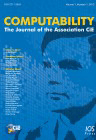
Computability-The Journal of the Association CiE
metrics 2024
Advancing the Frontiers of Computational Theory
Introduction
Computability - The Journal of the Association CiE, published by IOS PRESS, is a premier academic journal dedicated to advancing the field of computational theory and its applications. Established in 2012, this journal serves a diverse audience, including researchers, professionals, and students involved in the realms of Artificial Intelligence, Computational Theory and Mathematics, and Theoretical Computer Science. With robust categorization in Q2 and Q3 quartiles for various related fields, it provides a vital platform for innovative research and discussions that shape the landscape of computational technologies. Although it operates under a subscription model, the quality of published content ensures significant academic contributions and offers valuable insights relevant to contemporary scientific challenges. Researchers interested in the intersection of computation and its practical implications will find Computability an essential resource for exploring cutting-edge developments and fostering scholarly exchange.
Metrics 2024
 0.600.300.4012
Metrics History
Rank 2024
Scopus
IF (Web Of Science)
JCI (Web Of Science)
Quartile History
Similar Journals

Theory of Computing
Exploring the Depths of Theoretical FrameworksTheory of Computing, published by the University of Chicago, Department of Computer Science, is a prestigious journal that has established itself as a leading platform in the fields of Computational Theory and Theoretical Computer Science. With its ISSN 1557-2862, the journal has earned a reputation for high-quality, peer-reviewed research, positioning itself in the Q1 quartile for both Computational Theory and Mathematics, as well as Theoretical Computer Science as of 2023. Despite its limited open access options, the journal remains a vital resource for researchers and academics, providing insights that push the boundaries of theoretical frameworks and methodologies in computer science. The journal's commitment to rigorous scholarship serves to foster innovation and deepen understanding in a rapidly evolving field, making it an essential reference for professionals, students, and practitioners alike.

JOURNAL OF LOGIC AND COMPUTATION
Transforming Ideas into Theoretical InnovationsJOURNAL OF LOGIC AND COMPUTATION, published by Oxford University Press, is a leading peer-reviewed journal dedicated to advancing research in the intersections of logic, computation, and theoretical frameworks of computer science. With an ISSN of 0955-792X and an E-ISSN of 1465-363X, the journal has established itself within academic circles, boasting significant impact evidenced by its category quartiles, including a Q1 ranking in Arts and Humanities (miscellaneous) and a Q2 in Logic for 2023. This prestigious journal emphasizes interdisciplinary approaches to understanding computational systems, hence targeting a diverse audience of researchers, professionals, and students keen on exploring provocative questions in logic and computation. Although not open access, the content is highly valuable, reflecting contemporary challenges and advancements in the field. With over three decades of published work, spanning from 1990 to 2024, the journal continues to contribute richly to the discourse surrounding logical methodologies and computational innovations, making it an essential resource for those engaged in these dynamic areas of study.
Algebra and Logic
Elevating Mathematical Discourse for Over 50 Years.Algebra and Logic is a prestigious journal published by Springer, focusing on the intricate fields of algebra, number theory, analysis, and logic. With a history spanning over five decades since its inception in 1968, the journal serves as a critical platform for scholars and practitioners to disseminate cutting-edge research, theoretical advancements, and practical applications within these mathematical domains. Notably, it holds a distinguished Q2 ranking in its categories for 2023, reflecting its impact and relevance in the academic landscape. Though the journal does not currently offer open access options, its rigorous peer-review process ensures the highest standards of scholarly integrity and quality. Additionally, its Scopus rankings further underline its significance, with placements in the competitive percentiles in various subfields. Algebra and Logic is essential reading for anyone involved in mathematical research, providing invaluable insights and fostering dialogue among researchers, professionals, and students alike.
JOURNAL OF THE AUSTRALIAN MATHEMATICAL SOCIETY
Unlocking the potential of mathematics for all.JOURNAL OF THE AUSTRALIAN MATHEMATICAL SOCIETY, published by Cambridge University Press, is a prestigious journal dedicated to advancing research and scholarship in the field of mathematics. With a long-standing history since its inception in 1959, the journal has established itself as a vital resource for mathematicians, researchers, and students worldwide. Operating under an Open Access model, it ensures that high-quality research is accessible to all, enhancing the dissemination of knowledge and fostering collaboration in the mathematical community. The journal holds a commendable Q2 ranking in the 2023 Mathematics (miscellaneous) category and is ranked #145 in Scopus among general mathematics journals, placing it in the 63rd percentile, which reflects its significant influence and reputation in the discipline. The JOURNAL OF THE AUSTRALIAN MATHEMATICAL SOCIETY continues to provide a platform for innovative mathematical research and critical discourse within the field, making it an invaluable asset for professionals and aspiring mathematicians alike.
ANNALS OF PURE AND APPLIED LOGIC
Pioneering Insights in Mathematical LogicANNALS OF PURE AND APPLIED LOGIC is a premier academic journal published by Elsevier, specializing in the foundational aspects of logic since its inception in 1974. With a strong commitment to disseminating original research, the journal focuses on both pure and applied logic, making significant contributions to the fields of mathematics and computer science. The journal is recognized for its rigorous peer-review process and is currently ranked Q1 in Logic, reflecting its status among the top-tier publications in the discipline. Researchers will find valuable insights and advancements in logical theory and practice in its pages, while the journal's Scopus ranking further positions it strategically within the mathematical logic community. Although it is not an open-access publication, it offers convenient access options for institutions and subscribers, ensuring a wide reach for groundbreaking findings. The ANNALS OF PURE AND APPLIED LOGIC continues to be an essential resource for professionals, students, and academics alike, facilitating a deeper understanding of logical frameworks and their applications.
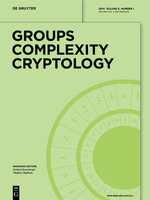
Groups Complexity Cryptology
Exploring the Intersection of Mathematics and SecurityGroups Complexity Cryptology, published by EPISCIENCES, is an esteemed Open Access journal that has been contributing to the fields of Applied Mathematics, Computational Mathematics, Computational Theory, and Computer Networks and Communications since its inception in 2009. With its headquarters located in France, this journal serves as a crucial platform for disseminating innovative research and solutions in cryptology and related areas. As of 2023, it proudly holds Q4 rankings across several categories in Scopus, indicating its recognized, yet emerging position within the academic community. Additionally, it is indexed under various categories such as Applied Mathematics, where it ranks in the 24th percentile, showcasing its potential for growth and increased visibility among researchers. The journal adheres to an open-access model introduced in 2020, allowing for widespread accessibility and engagement with cutting-edge research. This enhances the journal's mission to foster academic communication and collaboration among researchers, professionals, and students interested in the complex interplay of groups, complexity, and cryptography.
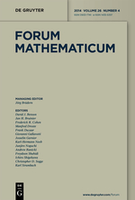
FORUM MATHEMATICUM
Advancing Mathematical Frontiers with Insightful ResearchFORUM MATHEMATICUM, published by WALTER DE GRUYTER GMBH, is a distinguished academic journal based in Germany, known for its significant contributions to the field of mathematics. With an ISSN of 0933-7741 and an E-ISSN of 1435-5337, the journal features comprehensive studies ranging from applied mathematics to diverse mathematical disciplines. Having maintained a commendable presence since 1989, FORUM MATHEMATICUM has achieved notable classification rankings, including Q2 in Applied Mathematics and Q1 in miscellaneous Mathematics as of 2023. Additionally, it holds a Scopus rank within the top 60th percentile in General Mathematics, making it a prominent platform for researchers and professionals seeking rigorous analysis and innovative methodologies in mathematics. While the journal does not currently offer open access, its rich content is pivotal for advancing mathematical theory and applications, appealing to students and seasoned academics alike.
Moscow University Mathematics Bulletin
Advancing Mathematical Discourse and DiscoveryMoscow University Mathematics Bulletin is a distinguished academic journal published by Springer International Publishing AG, focusing on the dynamic field of mathematics. With an ISSN of 0027-1322 and an E-ISSN of 1934-8444, this journal serves as a platform for innovative research and developments in various mathematics sub-disciplines, making significant contributions to both theoretical and applied mathematics. While it holds a Q3 ranking in the field of Mathematics (miscellaneous) for 2023, this journal remains dedicated to fostering academic discourse among mathematicians. Researchers, professionals, and students will find value in the diverse range of articles that embody rigor and creativity. Although currently not an Open Access publication, the journal provides numerous access options through institutional or personal subscriptions. From its inception in 2007 to its expected continuity until 2024, the Moscow University Mathematics Bulletin is committed to enhancing the understanding and appreciation of mathematical sciences.
COMPUTATIONAL COMPLEXITY
Shaping the Future of Theoretical Computer ScienceCOMPUTATIONAL COMPLEXITY is a pivotal peer-reviewed journal published by SPRINGER BASEL AG, dedicated to advancing the field of computational theory and mathematics. Established as a key resource since its inception in 1991, the journal's scope encompasses significant areas including computational complexity, algorithmic processes, and mathematical innovations that shape theoretical computer science. With an impressive history of dissemination and influence, it holds a 2023 category quartile ranking of Q2 and Q3 across various mathematics and computer science disciplines, indicating its substantial contribution to academic discourse. Notably, researchers and practitioners should be aware that while the journal is not an open-access publication, it remains accessible via institutional subscriptions and may include selective open-access options for individual articles. By fostering rigorous scholarly communication, COMPUTATIONAL COMPLEXITY continues to attract a diverse readership of academics, professionals, and students who are keen to explore emerging trends and foundational theories in this dynamic field.
THEORY OF COMPUTING SYSTEMS
Connecting Theoretical Principles with Practical ApplicationsTHEORY OF COMPUTING SYSTEMS, published by SPRINGER, is a renowned journal that has been a cornerstone in the fields of computational theory and theoretical computer science since its inception in 1996. With an ISSN of 1432-4350 and an E-ISSN of 1433-0490, this journal is committed to disseminating high-quality research that explores the underlying principles of computing systems and their theoretical foundations. Positioned in the Q2 category for both Computational Theory and Mathematics and Theoretical Computer Science, it plays a vital role in advancing scholarly dialogue and innovation within these disciplines, as evidenced by its rankings within the Scopus index. Researchers and professionals can access this journal in various formats, ensuring that cutting-edge research is readily available for a global audience. With a clear focus on fostering interdisciplinary collaboration and exploring emerging trends, THEORY OF COMPUTING SYSTEMS is essential reading for anyone interested in the evolution of computing theory and its applications.