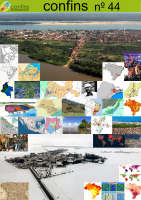
Confins-Revue Franco-Bresilienne de Geographie-Revista Franco-Brasileira de Geografia
Scope & Guideline
Uniting Perspectives, Shaping Understanding
Introduction
Aims and Scopes
- Geopolitical and Socioeconomic Analysis:
The journal emphasizes analyses of geopolitical situations, socioeconomic conditions, and urban-rural dynamics, particularly in Brazil and its metropolitan areas. - Environmental Geography and Sustainability:
A core focus is placed on environmental issues, sustainable practices, and the impact of human activities on ecosystems, including agriculture, urbanization, and resource management. - Cultural Geography and Identity:
The exploration of cultural identities and their geographical implications, especially in the context of indigenous populations and marginalized communities, is a significant theme. - Food Systems and Policies:
Research on food security, agricultural practices, and food policies within urban and rural contexts highlights the importance of food systems in geographical studies. - Technological and Digital Geography:
The journal integrates discussions of technology's role in geography, including the use of digital tools for spatial analysis and public policy development. - Historical and Geohistorical Perspectives:
Historical analyses of territorial transformations and their impacts on current geographical and social structures are also prevalent.
Trending and Emerging
- Interdisciplinary Approaches to Geography:
There is a growing trend towards interdisciplinary research that combines geography with sociology, political science, and environmental studies, enhancing the depth and applicability of geographical analyses. - Impact of Climate Change and Environmental Degradation:
Research focusing on climate change effects and environmental degradation is on the rise, highlighting the urgency of these issues in geographical studies and policy discussions. - Urban Resilience and Adaptation Strategies:
Emerging themes around urban resilience and adaptation strategies in response to global crises, such as the COVID-19 pandemic, underscore the importance of adaptive urban planning. - Food Security and Urban Agriculture:
The exploration of food security issues and urban agriculture practices is increasingly prominent, reflecting a heightened awareness of food systems' role in urban resilience. - Digital Technologies in Geography:
The integration of digital technologies and data analytics in geographical research is gaining traction, emphasizing the role of technology in modern geographic practices.
Declining or Waning
- Traditional Rural Studies:
Research specifically focused on traditional rural practices and lifestyles has seen a decline, possibly as urbanization and modern agricultural practices gain more attention. - Static Cultural Representations:
There is a noticeable reduction in studies that address fixed cultural representations, suggesting a shift towards more dynamic and fluid understandings of culture and identity. - Historical Geography of Non-Brazilian Contexts:
Articles focusing exclusively on historical geography outside Brazil have decreased, indicating a trend towards more localized studies relevant to Brazilian contexts. - Conventional Urban Studies:
Traditional urban studies that do not incorporate contemporary issues like sustainability or digitalization are becoming less frequent, reflecting a need for more integrated approaches.
Similar Journals

Boletin Goiano de Geografia
Charting New Territories in Geographic ScholarshipBoletin Goiano de Geografia is a distinguished academic journal dedicated to the field of Geography, published by the Universidade Federal de Goiás, Instituto de Estudos Socio-Ambientais. Since its inception in 1981, this Open Access journal has provided invaluable insights into the geographical dynamics of Brazil and beyond, promoting scholarly research and dialogue among geographers, environmentalists, and social scientists. The journal seeks to advance knowledge through the dissemination of research articles, reviews, and case studies that address contemporary issues in human and physical geography. With a commitment to fostering interdisciplinary collaboration, Boletin Goiano de Geografia serves as a vital resource for researchers, professionals, and students seeking to explore the complex interactions between society and the environment. Situated in the vibrant academic landscape of Goiana, Brazil, this journal enhances the global discourse on geographical studies and sustainability.

Entorno Geografico
Innovating Solutions for Environmental ChallengesEntorno Geográfico is a premier open-access journal published by University of Valle, dedicated to the field of geography and environmental studies. Since its inception in 2002, this journal has provided a dynamic platform for researchers, professionals, and students to disseminate innovative findings and engage in critical discussions regarding geographical phenomena and environmental challenges. With an ISSN of 1692-0074 and an E-ISSN of 2382-3518, it is recognized for its commitment to high-quality peer-reviewed content that reflects cutting-edge research trends within the discipline. The journal aims to enhance understanding of socio-environmental processes and contribute to the formulation of sustainable solutions to pressing geographical issues. By fostering an open-access model, Entorno Geográfico ensures that valuable knowledge is widely accessible, encouraging collaboration and advancing education in the field. Located in Cali, Colombia, the journal reflects a strong regional focus while embracing a global perspective, making it an essential resource for the international geography community.

Annals of the American Association of Geographers
Connecting Researchers and Practitioners in Geographic InquiryAnnals of the American Association of Geographers is a leading academic journal published by Routledge Journals, Taylor & Francis Ltd, and is based in the United Kingdom. With an impact factor positioning it in the Q1 category for both Earth-Surface Processes and Geography, Planning and Development, it stands as a pivotal resource for researchers and professionals in the fields of geography and environmental sciences. The journal’s broad scope accommodates a diverse range of topics, including spatial analysis, environmental change, and human geography, reflecting the dynamic nature of geographical research. Accessible in both print and digital formats, the journal encourages open dialogue and dissemination of knowledge among its authors, readers, and the academic community. As it converges through the years from 2016 to 2024, the Annals continues to showcase high-quality research that influences geographic thought and practice, making it essential reading for students, academics, and practitioners alike.

Biblio 3W-Barcelona
Unlocking insights into the complexities of information dissemination.Biblio 3W-Barcelona is a prominent academic journal published by the Universitat de Barcelona, Servei Publicacions, focusing on the dynamic field of library and information science. Established to foster scholarly communication, this journal provides a platform for researchers, professionals, and students dedicated to the advancement of bibliographic studies and library management. Despite lacking a current impact factor, Biblio 3W-Barcelona is recognized for its commitment to high-quality research and its contribution to the field, making it a valuable resource for those engaged in understanding the complexities of information dissemination in modern society. The journal features original research articles, critical reviews, and case studies that invite varied perspectives within the realm of librarianship. Readers can access its comprehensive body of work freely, enriching their knowledge and fostering practical applications in library science. For submission guidelines and further information, visit their website.

Geograficando
Bridging Theory and Application in the World of GeographyGeograficando is a distinguished scholarly journal dedicated to the field of geography and its interdisciplinary applications, published by the Universidad Nacional de La Plata, in collaboration with the Facultad de Humanidades y Ciencias de la Educación. Since its establishment, this Open Access journal has made significant strides in advancing geographical research and discourse, enhancing visibility and accessibility for scholars around the globe since 2013. With an ISSN of 1850-1885 and an E-ISSN of 2346-898X, Geograficando provides a platform for innovative research articles, critical reviews, and case studies that address contemporary geographical challenges and promote sustainable development practices. The journal serves as a vital resource for researchers, professionals, and students alike, fostering a rich exchange of ideas and findings that contribute to both academic and practical advancements in the field.

Fennia-International Journal of Geography
Pioneering open access to vital geographical knowledge.Fennia-International Journal of Geography is a prominent peer-reviewed journal published by the Geographical Society of Finland, dedicated to advancing the field of geography through innovative research and critical discourse. With an ISSN of 0015-0010 and an E-ISSN of 1798-5617, this journal has established itself as a vital resource for academics and professionals alike since its inception in 1976. Notably transitioning to an Open Access model in 2010, Fennia provides wide accessibility to its content, fostering a global exchange of ideas and findings in various sub-disciplines of geography. The journal is currently categorized in the Q2 quartiles for Ecology, Forestry, and Geography, Planning and Development, indicating its influential standing among scholarly publications. Its Scopus rankings reflect its relevance and significance, including a 63rd percentile rank in Agricultural and Biological Sciences, and a 59th percentile in Social Sciences. Fennia serves as a crucial platform for the dissemination of research findings, policy analysis, and theoretical explorations, thereby greatly contributing to the understanding and development of geographical sciences globally.

Revista Geografica Venezolana
Charting New Territories in Geographical Research and ConservationRevista Geografica Venezolana is a prominent academic journal published by the Instituto de Geografía y Conservación de Recursos Naturales, Universidad de los Andes, Venezuela. With ISSN 1012-1617 and E-ISSN 2244-8853, it has been a vital platform for scholarly discourse since its inception in 1981, addressing essential topics within the fields of Earth-Surface Processes and Geography, Planning, and Development. Despite its current categorization in Q4 quartiles and lower rankings in Scopus, the journal serves as an important resource for researchers and practitioners, offering insights that contribute to the understanding of geographical and environmental challenges in Latin America and beyond. The journal aspires to foster interdisciplinary dialogue and promote research that tackles pressing societal issues through geographical perspectives. Readers are encouraged to explore its rich content and engage with contemporary research methodologies and findings in the geographical sciences, making it a critical reference for students, researchers, and professionals in the field.

GEOgraphia-UFF
Unlocking the Secrets of Spatial AnalysisGEOgraphia-UFF is an esteemed open-access journal dedicated to the dissemination of innovative research and scholarship in the field of geography. Published by Universidade Federal Fluminense since 2014, this journal serves as a vital platform for researchers, professionals, and students to explore a diverse array of geographical topics, from human-environment interactions to urban studies and spatial analysis. With a pronounced commitment to accessibility and knowledge sharing, GEOgraphia-UFF promotes a collaborative academic environment, fostering dialogue and critical engagement among scholars worldwide. Located in the picturesque region of Rio de Janeiro, Brazil, the journal aims to bridge local insights with global geographical challenges, ensuring relevance and impact in the ever-evolving discourse of our discipline. This journal is an indispensable resource for anyone looking to stay at the forefront of geographical research.

Revista Acta Geografica
Innovating Research for a Sustainable PlanetRevista Acta Geografica is a prestigious academic journal published by the Universidade Federal de Roraima, specializing in the dynamic field of geography. With the ISSN 1980-5772 and E-ISSN 2177-4307, this journal provides a platform for interdisciplinary research that addresses geographical phenomena, spatial analysis, and environmental concerns primarily relevant to the Brazilian context but also extending to global studies. As an open-access journal, it aims to foster knowledge distribution among researchers, professionals, and students without financial barriers, promoting wider dissemination of scientific outcomes. The journal continues to play a critical role in advancing geographical scholarship, emphasizing both theoretical frameworks and applied methodologies. With a commitment to quality and innovation, Revista Acta Geografica is an essential resource for anyone invested in geographical research and practice.

Hungarian Geographical Bulletin
Connecting researchers with cutting-edge insights in geography.Hungarian Geographical Bulletin, with ISSN 2064-5031 and E-ISSN 2064-5147, is a premier open-access journal published by the CSFK GEOGRAPHICAL INSTITUTE that has been an influential resource since 2009, dedicated to advancing the fields of geography, cultural studies, and agronomy. Located in Budapest, Hungary, this journal aims to disseminate high-quality research and engage a diverse audience of researchers, professionals, and students. The journal's reputation is underscored by its impressive category quartiles in 2023, ranking Q2 in Agronomy and Crop Science, Q1 in Cultural Studies, and Q2 across several other areas, including Geography and Earth and Planetary Sciences. With a Scopus ranking that places it in the top percentiles in multiple fields, the Hungarian Geographical Bulletin serves as an essential platform for innovative ideas and discussions that drive geographical scholarship and practice forward, specifically during its converged years from 2014 to 2024. Whether you are a seasoned researcher or an enthusiastic student, this journal presents a wealth of knowledge that is easily accessible due to its open-access format.