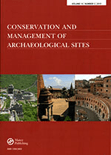
Conservation and Management of Archaeological Sites
metrics 2024
Fostering Dialogue for Sustainable Heritage Practices.
Introduction
Conservation and Management of Archaeological Sites is a pivotal academic journal published by Routledge Journals, Taylor & Francis Ltd, focusing on the interdisciplinary fields of archaeology and conservation. With an ISSN of 1350-5033 and an E-ISSN of 1753-5522, this journal strives to publish high-quality research that addresses critical topics related to the conservation and management of archaeological sites, fostering dialogue between practitioners, researchers, and policymakers. Despite being categorized in the third quartile (Q3) across multiple relevant categories such as Archaeology and Conservation in the 2023 rankings, it remains a significant resource for professionals seeking to enhance their understanding and application of best practices in site management. The journal plays a crucial role in disseminating knowledge that contributes to the preservation of cultural heritage, making it an essential read for anyone involved in these vital fields. Published since 1995, the journal not only reflects the growing importance of archaeology in today's society but also provides a platform for emerging research that will shape future conservation strategies.
Metrics 2024
 0.130.30-16
Metrics History
Rank 2024
Scopus
JCI (Web Of Science)
Quartile History
Similar Journals

DENKMALPFLEGE
Exploring the Art of Conservation.DENKMALPFLEGE is a prestigious journal published by DEUTSCHER KUNSTVERLAG GMBH, focusing on the field of cultural heritage conservation and restoration. With its ISSN 0947-031X and E-ISSN 2569-1589, this publication serves as an essential resource for researchers, professionals, and students dedicated to the preservation of historical monuments and sites. Although the journal does not currently offer open access, it provides a valuable wealth of scholarly articles, case studies, and reviews that critically engage with contemporary debates in conservation practices. Published in Munich, Germany, it bridges academic research with practical applications, underlining its importance in enhancing the discourse surrounding heritage preservation. Alongside its historical coverage from 2009 to 2012, DENKMALPFLEGE continues to be a vital platform for advancing knowledge in the field, promoting best practices, and fostering collaboration among experts.
ACTA ARCHAEOLOGICA
Exploring Archaeology's Rich TapestryACTA ARCHAEOLOGICA is a highly regarded, peer-reviewed journal published by BRILL, focusing on the dynamic field of archaeology. With an ISSN of 0065-101X and an E-ISSN of 1600-0390, this journal disseminates innovative research, critical analyses, and comprehensive reviews that contribute to our understanding of human history, cultural heritage, and archaeological methodology. ACTA ARCHAEOLOGICA has excelled in its field, achieving a Q1 ranking in both the Arts and Humanities and Social Sciences categories for 2023, showcasing its impact and relevance in scholarly discourse. Though not currently open access, the journal caters to a diverse audience of researchers, professionals, and students, offering invaluable insights into archaeological studies from a global perspective. As it continues to foster academic dialogue, ACTA ARCHAEOLOGICA remains a cornerstone for those looking to deepen their knowledge and engage with cutting-edge archaeological research.
Heritage Science
Fostering Critical Discussions in Heritage ScienceHeritage Science is a prestigious open-access journal, published by Springer since 2013, dedicated to the fields of heritage conservation and archaeology. With an ISSN of 2050-7445, it offers a platform for innovative research and critical discussions, encompassing interdisciplinary approaches that bridge the gap between art, science, and technology. The journal proudly ranks in the Q1 category for both Archaeology (arts and humanities) and Conservation, highlighting its influence and reputation within these scholarly realms. Furthermore, its presence in Scopus with impressive percentile rankings—such as #7 in Conservation and #23 in Archaeology (arts and humanities)—asserts its role as a leading voice in heritage studies. The journal's commitment to open access enhances the dissemination of knowledge, making it an essential resource for researchers, professionals, and students engaged in the preservation and interpretation of cultural heritage. Heritage Science continues to set standards in research quality, encouraging contributions that advance the understanding and sustainability of our shared heritage.

Conservar Patrimonio
Connecting Researchers and Practitioners in Cultural Heritage.Conservar Patrimonio is a leading academic journal dedicated to the fields of conservation and museology, published by the ASSOC PROFISSIONAL CONSERVADORES-RESTAURADORES PORTUGAL. Established as an open access platform since 2005, it aims to disseminate high-quality research and innovations essential for the preservation of cultural heritage. With an impressive 2023 impact factor, Conservar Patrimonio holds a Q2 ranking in Conservation and a Q1 ranking in Museology, reflecting its significant contribution to both disciplines. The journal is indexed amongst the top 30% of publications in the Museology category and offers valuable insights into the methodologies and practices that shape the conservation of cultural artifacts. Researchers, professionals, and students are encouraged to engage with the latest findings, case studies, and theoretical explorations presented in this esteemed journal based in Portugal, enhancing the global dialogue on conservation practices.

Complutum
Advancing Knowledge in Archeology and HistoryComplutum, published by the Universidad Complutense de Madrid, serves as a leading academic journal in the fields of Archeology and History. With a notable track record since its inception and a convergence stretching from 2011 to 2024, the journal has established itself as a pivotal platform for scholarly discourse in these disciplines. Recognized in 2023 with a Q2 ranking in Archeology and Arts and Humanities, as well as a Q1 ranking in History, Complutum demonstrates its commitment to quality research, attracting contributions from leading experts and emerging scholars alike. The journal's impact is further evidenced by its competitive ranks within various Scopus categories, particularly its placement in the 77th percentile for History and 64th for Archeology. As a printed publication without open access options, Complutum caters to a specialized audience, providing a forum for in-depth analysis and discussion on archaeological findings and historical interpretations. Researchers, professionals, and students engaged in these fields will find Complutum an invaluable resource for advancing knowledge and fostering academic collaboration.

Archaeologia Maritima Mediterranea-An International Journal on Underwater Archaeology
Exploring the Depths of Underwater ArchaeologyArchaeologia Maritima Mediterranea is a prestigious international journal focused on the vital field of underwater archaeology, published by FABRIZIO SERRA EDITORE. With an ISSN of 1724-6091 and E-ISSN 1825-3881, this journal has been a cornerstone for scholars and enthusiasts alike in the study of maritime cultures, shipwrecks, and submerged sites around the Mediterranean region since its inception. Operating from its base in Pisa, Italy, the journal has a commendable academic presence, reflected in its recent Scopus rankings which place it in the lower quartiles in both Arts and Humanities, and Social Sciences subcategories within archaeology. Despite its current Q4 categorization, it serves as an important platform for emerging research and advancements in the field, aiming to foster collaboration and knowledge exchange amongst researchers, practitioners, and students. While the journal is accessible through traditional subscription models, the lack of open access emphasizes the publisher's commitment to maintaining high academic standards. The collection of issues from 2011 to 2023 showcases a rich tapestry of research that contributes significantly to our understanding of underwater cultural heritage.
Archivo Espanol de Arqueologia
Discovering the past, shaping the future of archaeology.Archivo Español de Arqueología is a prestigious journal published by the Consejo Superior de Investigaciones Científicas (CSIC), dedicated to the field of archaeology and the historical sciences. Since its transition to Open Access in 1991, this journal has been a significant resource for scholars and practitioners in Spain and beyond, ensuring the dissemination of high-quality research to a broad audience. With an impressive Scopus ranking that places it within the top 20% of journals in the disciplines of History and Archaeology, Archivo Español de Arqueología plays a crucial role in advancing academic discourse and promoting innovative archaeological methodologies. The journal has maintained rigorous standards, reflected in its placement within the Q2 and Q3 quartiles, enabling it to establish a reputation for excellence and reliability in archaeological scholarship. Researchers, professionals, and students are encouraged to explore the journal's diverse array of articles from its foundation year of 2009 to the present, enriching their understanding of the past through the latest findings and theoretical advancements in archaeology.

International Journal of Conservation Science
Uniting Experts to Preserve Our Natural HeritageThe International Journal of Conservation Science, published by the Romanian Inventors Forum, is a premier, Open Access journal dedicated to advancing the field of conservation science since its foundation in 2010. With a strong emphasis on interdisciplinary research, the journal welcomes contributions that explore innovative methodologies and sustainable practices in conservation. Based in Romania, the journal boasts an impact factor that positions it as a leading voice in its field, reflected by its Q1 ranking in Conservation and notable placements within its categories in Scopus. With coverage spanning diverse areas from natural resource management to environmental education, the journal serves as a crucial platform for researchers, policymakers, and practitioners aiming to drive impactful conservation strategies globally. The International Journal of Conservation Science not only enhances the visibility of significant research but also promotes open dialogue and collaboration among professionals committed to preserving our natural heritage.
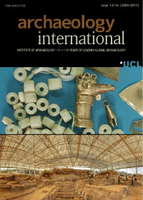
Archaeology International
Bridging disciplines to preserve our shared human heritage.Archaeology International is a prestigious open-access journal dedicated to advancing the field of archaeology since its inception in 1997. Published by UCL PRESS, the journal provides a platform for researchers, professionals, and students to disseminate their findings and share innovative ideas in archaeological studies. It features a rich array of articles that capture current trends, methodologies, and debates within the discipline, fostering a collaborative academic environment. Based in London, England, this journal is committed to accessibility and inclusivity, ensuring that valuable research is available to a global audience without subscription barriers. With a focus on interdisciplinary approaches, Archaeology International serves as an essential resource for those interested in the preservation of cultural heritage, and it actively encourages contributions that explore both past civilizations and contemporary archaeological practices.

Egyptian Journal of Archaeological and Restoration Studies
Illuminating Egypt's Archaeological Treasures.Welcome to the Egyptian Journal of Archaeological and Restoration Studies, a vital resource for scholars and practitioners in the field of archaeology and restoration. Published by the renowned SOHAG UNIV PUBLICATION CENTER-SUPC, this journal aims to disseminate cutting-edge research that illuminates the rich archaeological heritage of Egypt and beyond. With ISSN 2090-4932 and E-ISSN 2090-4940, this journal showcases innovative methodologies and interdisciplinary approaches, significantly contributing to our understanding of cultural heritage preservation. The journal's growing influence is reflected in its Q3 ranking in multiple categories, including Archaeology, Conservation, and Cultural Studies as of 2023, alongside its noteworthy placement within the Social Sciences. Open access options provide wider accessibility to essential studies, making it an indispensable tool for researchers, professionals, and students alike. Join us in exploring the past and shaping the future of archaeological scholarship.