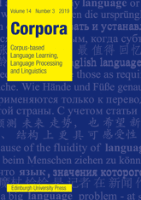
Corpora
metrics 2024
Connecting Scholars through Rigorous Discourse
Introduction
Corpora is a leading journal in the field of Linguistics and Language, published by Edinburgh University Press. Since its inception in 2006, Corpora has established itself as a pivotal platform for scholarly discourse, focusing on the analysis and interpretation of linguistic corpora across various contexts. The journal is recognized for its rigorous peer-review process and boasts a commendable impact within its category, achieving a Q2 ranking in the 2023 Linguistics and Language quartiles. Moreover, it ranks in the 79th percentile in Arts and Humanities Language and Linguistics and in the 77th percentile in Social Sciences Linguistics and Language, underlining its significance in the academic community. While currently not an open-access journal, Corpora is accessible to a broad audience, encouraging contributions from researchers, professionals, and students eager to advance the field of linguistics through innovative research and insightful discourse. For those invested in linguistic studies and corpora analysis, Corpora offers a vital resource and forum for the dissemination of high-quality research.
Metrics 2024
 0.280.801.3031
Metrics History
Rank 2024
Scopus
IF (Web Of Science)
JCI (Web Of Science)
Quartile History
Similar Journals

Glottometrics
Bridging Linguistics and Mathematics for Innovative ResearchGlottometrics is an esteemed academic journal dedicated to the intersection of linguistics and quantitative methods, published by the International Quantitative Linguistics Association (IQLA). Based in Germany, this journal serves as a vital platform for researchers and professionals in the fields of linguistics and applied mathematics, fostering the exploration of quantitative approaches to language studies. With its impact factor reflecting its commitment to high-quality research, Glottometrics has established a robust presence in the academic community, as denoted by its categorization in the Q2 quartile in Linguistics and Language and Q4 in Applied Mathematics. While the journal operates on a subscription-based model, it has made significant strides in the ranking hierarchy, securing positions in the 44th to 48th percentiles across various relevant categories in Scopus. Spanning the years 2017 to 2024, Glottometrics invites contributions that harness innovative quantitative methodologies for linguistics research, making it an essential resource for students, researchers, and professionals engaged in the dynamic analysis of language.

Onomazein
Fostering Innovative Research in LinguisticsOnomazein is an esteemed academic journal published by the Pontificia Universidad Catolica de Chile, Facultad de Letras, featuring a dedicated focus on the field of Linguistics and Language. With an established presence since 2011, it reaches an international audience and is recognized for its contributions within the Q2 category of Linguistics as per the latest rankings, underscoring its significance in the academic community. The journal holds a commendable position in Scopus, ranking 470th out of 1088 in Arts and Humanities and 549th out of 1167 in Social Sciences, reflecting its relevance and impact in the domain. Although it does not currently offer an open access option, Onomazein remains a critical platform for researchers, professionals, and students seeking to advance their understanding of linguistic phenomena and engage with contemporary debates in language studies. For submissions and more information, please refer to the university’s address at AV Vicuna Mackenna 4860, Santiago, Chile.
Australian Journal of Linguistics
Pioneering New Paths in Language StudiesThe Australian Journal of Linguistics, published by Routledge Journals, Taylor & Francis Ltd, stands as a distinguished platform in the field of linguistics, fostering rigorous academic discourse since its inception in 1981. With an ISSN of 0726-8602 and an E-ISSN of 1469-2996, the journal has achieved a notable Q2 ranking in the linguistics and language category for 2023, indicating its quality and relevance within the academic community. With a Scopus ranking of #316 in Arts & Humanities and #373 in Social Sciences, it sits in the 71st and 68th percentiles respectively, underscoring its impact in the fields it encompasses. The journal aims to publish high-quality research articles that contribute to the understanding of linguistic theory, sociolinguistics, and applied linguistics, making it an essential resource for researchers, professionals, and students alike. The journal is based in the United Kingdom, at 2-4 Park Square, Milton Park, Abingdon OX14 4RN, Oxon, England, and actively encourages contributions that can expand the current linguistic discourse, reinforcing its commitment to highlighting diverse perspectives in language research.
Journal of Quantitative Linguistics
Exploring the Intersection of Data and LanguageThe Journal of Quantitative Linguistics, published by Routledge Journals, Taylor & Francis Ltd, stands as a pivotal resource in the field of linguistics, particularly in the rigorous application of quantitative methodologies to language research. Since its inception in 1994, this esteemed journal has contributed significantly to the understanding of linguistic phenomena through empirical data analysis, and it continues to maintain its esteemed Q1 ranking in the linguistics and language category as of 2023. Researchers and professionals will find a wealth of knowledge within its pages, as it publishes original articles, critical reviews, and methodological developments that push the boundaries of language study. While the journal is not open access, it remains widely accessible through institutional subscriptions, ensuring that a diverse readership can engage with the latest findings and theoretical advancements. As the journal looks forward to celebrating 30 years of impactful research by 2024, it remains dedicated to fostering discourse and innovation in the examination of language using quantitative approaches.
LINGUA
Exploring the depths of language and communication.LINGUA is a premier academic journal dedicated to the field of linguistics, published by ELSEVIER and based in the Netherlands. With an ISSN of 0024-3841 and an E-ISSN of 1872-6135, this esteemed journal has garnered a reputation for excellence, evidenced by its position in the top Q1 quartile in Linguistics and Language as of 2023. LINGUA serves as a vital platform for scholars, researchers, and students, showcasing innovative research and critical discussions across various linguistic subfields. The journal has demonstrated impressive Scopus rankings—151 out of 1088 for Language and Linguistics, and 176 out of 1167 in Social Sciences—placing it in the 86th and 84th percentiles, respectively. By providing a forum for the dissemination of advanced linguistic theories and their applications, LINGUA continues to significantly contribute to the academic community, making it an essential resource for anyone engaged in the study of language.
Linguamatica
Shaping the Future of Language Studies Together.Linguamatica is a prominent open-access journal published by UNIV MINHO, INST EDUCACAO, CENTRO INVESTIGACAO EDUCACAO in Portugal, with the objective of advancing the field of linguistics and language studies. Since its establishment in 2009, the journal has served as a vital platform for disseminating high-quality research and innovative studies in linguistics, emphasizing both theoretical and applied perspectives. With an impressive Scopus ranking placing it in the 76th percentile in Arts and Humanities and the 73rd percentile in Social Sciences, Linguamatica is recognized for its significant contributions and rigorous peer-review process. The journal's commitment to open-access publishing ensures that research findings are accessible to a wider audience, fostering collaboration and knowledge sharing among researchers, professionals, and students. Located at CAMPUS GUALTAR, BRAGA 4710, PORTUGAL, Linguamatica aims to be a leading source of valuable insights in linguistics, covering a diverse array of topics from language acquisition to sociolinguistics, thereby playing a crucial role in shaping contemporary language research.
Southern African Linguistics and Applied Language Studies
Championing Research in Linguistics and Language PolicySouthern African Linguistics and Applied Language Studies is a prestigious journal dedicated to the exploration and analysis of linguistics and applied language studies within the Southern African context. Published by Taylor & Francis Ltd, this esteemed journal has established itself as a significant platform for scholars and practitioners since its inception in 2003. With an impressive Q2 ranking in the Linguistics and Language category and a current Scopus rank of #430 out of 1167, it occupies a vital position in the academic landscape, appealing to a diverse readership keen on linguistic research, language policy, and applied linguistics. While the journal is not currently open access, it provides comprehensive insights and scholarly articles that foster understanding and innovation in linguistic practices and language education. As of 2024, the journal continues to deepen its impact through rigorous peer-review and a commitment to advancing knowledge, making it a key resource for researchers, educators, and students seeking to navigate the complexities of language within the Southern African region and beyond.
ZEITSCHRIFT FUR GERMANISTISCHE LINGUISTIK
Advancing the Study of Language NuancesZEITSCHRIFT FUR GERMANISTISCHE LINGUISTIK, published by WALTER DE GRUYTER GMBH, stands as a pivotal resource in the field of linguistics since its inception in 1973. With its ISSN 0301-3294 and E-ISSN 1613-0626, this esteemed journal serves as an essential platform for researchers and academics focused on the nuances of the German language and its linguistic frameworks. Catering to a diverse audience, the journal features high-impact articles and contributions consistent with rigorous academic standards, as evident from its Q1 categorization in Linguistics and Language and its notable rankings in both the Arts and Humanities and Social Sciences domains. The journal's commitment to advancing knowledge in linguistics fosters a scholarly environment conducive to both emerging and established linguists. While not available through open access, ZEITSCHRIFT FUR GERMANISTISCHE LINGUISTIK remains influential, drawing readers keen on exploring developmental and educational paradigms alongside linguistic theories. With a convergence of research that spans until 2024, it represents a comprehensive body of work integral to the evolving landscape of linguistic studies in Germany and beyond.

Studii de Lingvistica
Navigating the complexities of language and thought.Studii de Lingvistica is a premier open-access journal committed to advancing the field of linguistics and language studies since its inception in 2011. Published by EDITURA UNIV ORADEA in Romania, this scholarly platform aims to disseminate high-quality research that encompasses various aspects of linguistics, encouraging contributions from researchers and professionals worldwide. With an impact factor that reflects its relevance, the journal holds a prestigious position in the Q2 category of Linguistics and Language for 2023. Despite its relatively nascent H-index, Studii de Lingvistica has carved a niche for itself, ranking 1017th and 1094th in Scopus across Arts and Humanities and Social Sciences, respectively. Researchers, scholars, and students alike will find valuable insights and pioneering studies within its pages, making it a vital resource for those engaged in the nuanced exploration of language and its cognitive dimensions. Located at UNIVERSITATII ST NO 1, PAVILION C, ORADEA, BIHOR, ROMANIA, this journal continues to foster academic dialogue and innovation within the linguistics community.

Voprosy Yazykoznaniya
Innovating Perspectives in Language and SocietyVoprosy Yazykoznaniya, published by the esteemed Russian Academy of Sciences and the State Academy of Humanities (GAUGN), stands as a leading journal in the field of linguistics and language studies. With an impressive Q2 rank in Linguistics and Language for 2023 and a strong position within Scopus rankings, this journal fosters scholarly dialogue and pushes the boundaries of linguistic research by providing a platform for innovative studies, reviews, and analyses. Although not open access, its publication ensures high academic standards and visibility within the global academic community. Researchers, professionals, and students alike can benefit from the rich insights and diverse perspectives presented in this journal, serving as a vital resource for anyone interested in the intricacies of language and its role in society. Operating since 2009 and continuing to 2024, Voprosy Yazykoznaniya is an essential reference point for contemporary linguistic scholarship in the Russian Federation and beyond.