Critical Care Nursing Clinics of North America
Scope & Guideline
Enhancing Patient Outcomes Through Expert Insights.
Introduction
Aims and Scopes
- Critical Care Nursing Practice Optimization:
The journal emphasizes the enhancement of nursing practices in critical care environments, providing insights into best practices and innovative care strategies. - Interdisciplinary Collaboration:
It promotes collaborative approaches among healthcare professionals to improve patient care outcomes, highlighting the importance of teamwork in critical care settings. - Nursing Education and Leadership Development:
The journal addresses the need for ongoing education and leadership skills among nurses, particularly in critical care, to prepare them for the evolving challenges in healthcare. - Patient Safety and Quality of Care:
A core focus is on improving patient safety and quality of care through research and implementation of effective protocols and guidelines. - Emerging Health Issues and Trends:
The journal explores emerging health issues, such as the impact of pandemics on nursing practice and patient care, ensuring that critical care nursing remains relevant and responsive to current health crises.
Trending and Emerging
- Impact of COVID-19 on Nursing Practice:
A significant trend is the exploration of the COVID-19 pandemic's impact on nursing practice, education, and patient care, emphasizing the need for resilience and adaptation in critical care. - Health Equity and Access to Care:
There is an increasing focus on health equity, particularly regarding the needs of marginalized populations and those with limited English proficiency, reflecting a broader societal push for equitable healthcare. - Mental Health and Well-Being of Nurses:
Emerging themes include the mental health and well-being of nurses, particularly in high-stress environments like critical care, highlighting the importance of support systems and resilience. - Family-Centered Care Approaches:
The journal is trending towards incorporating family-centered care models, recognizing the critical role of family in the recovery process of patients in critical care settings. - Telehealth and Technological Innovations:
There is an increasing emphasis on telehealth and technological innovations in patient care, reflecting the changing landscape of healthcare delivery and the need for adaptability in nursing practices.
Declining or Waning
- Traditional Invasive Procedures:
There is a noticeable decrease in publications focusing on traditional invasive procedures, possibly due to a shift towards non-invasive techniques and a focus on patient-centered care. - Generalized Nursing Practices:
The emphasis on broad, generalized nursing practices is waning, as the journal increasingly focuses on specialized areas within critical care nursing, such as neonatal and geriatric care. - Static Protocols and Guidelines:
The frequency of papers discussing static protocols and guidelines is decreasing, indicating a movement towards more dynamic, adaptable care strategies that respond to individual patient needs. - Historical Perspectives on Critical Care:
There seems to be a decline in interest regarding historical perspectives of critical care nursing, as current issues and innovations take precedence over past practices. - Non-Evidence-Based Practices:
There is a diminishing focus on practices that lack robust evidence, as the journal prioritizes research-backed approaches to enhance patient care.
Similar Journals
Enfermeria Clinica
Bridging research and practice for enhanced patient care.Enfermeria Clinica is a distinguished journal published by Elsevier España SLU, dedicated to advancing the field of nursing through robust scholarly research and clinical practice. With an ISSN of 1130-8621 and E-ISSN of 1579-2013, this esteemed journal serves as a vital resource for nurses, healthcare professionals, and researchers. Operating from Spain, it has established a reputation for excellence, notably achieving Q3 ranking in the categories of Fundamentals and Skills, Nursing (miscellaneous), and Research and Theory in 2023, indicating a solid influence within the academic community. The journal is devoted to disseminating innovative research that informs nursing practices and improves patient care. Although it operates on a subscription basis, the insights and findings published in Enfermeria Clinica are invaluable for those looking to enhance their knowledge in nursing evidenced-based practice. The journal’s commitment to bridging research with real-world application makes it an essential tool for both emerging and established professionals in the nursing field.
Dimensions of Critical Care Nursing
Shaping the Future of Critical Care with Cutting-Edge ResearchDimensions of Critical Care Nursing, published by Lippincott Williams & Wilkins, is a premier journal dedicated to advancing the knowledge and practices within the fields of critical care and emergency nursing. With a distinguished history dating back to 1982, this journal plays a vital role in disseminating cutting-edge research, clinical advancements, and educational resources aimed at enhancing patient care in high-stakes environments. The journal is ranked in the Q2 quartile for both Critical Care Nursing and Emergency Nursing, reflecting its significant impact on the nursing field, with Scopus rankings placing it at #11 in Critical Care Nursing and #14 in Emergency Nursing. Targeting a multidisciplinary audience of researchers, clinicians, and students, the journal serves as a critical platform for discussions surrounding innovative patient care strategies, evidence-based practices, and emerging trends in critical nursing. Although it is not an open-access journal, it provides valuable insights that are essential for shaping the future of nursing practice. Stay informed on the latest research and contribute to the evolving landscape of critical and emergency care through Dimensions of Critical Care Nursing.

Revista Rol de Enfermeria
Empowering Nursing Excellence Since 1980Revista Rol de Enfermeria, published by EDICIONES ROL S L, is a distinguished peer-reviewed journal that has been a cornerstone of nursing knowledge and practice since its inception in 1980. With a specific focus on the field of nursing and healthcare, this journal serves as a vital platform for researchers, clinicians, and educators to disseminate their findings, enhance professional practices, and support the development of evidence-based nursing care. Although its coverage in Scopus has been discontinued as of 2016, the journal has maintained an essential role in the nursing community, contributing to the advancement of general medicine as evidenced by its ranking in Scopus at #679 out of 862, placing it within the 21st percentile. While Revista Rol de Enfermeria does not currently offer an open access model, its historical significance and thematic relevance make it a valuable resource for professionals seeking to stay informed about the latest developments in nursing research and education. Situated in Barcelona, Spain, it continues to reflect the dynamic evolution of nursing practice across diverse healthcare landscapes.
AMERICAN JOURNAL OF CRITICAL CARE
Transforming patient outcomes through dedicated scholarship.Welcome to the American Journal of Critical Care, a premier publication dedicated to advancing the field of critical care nursing and enriching the understanding of critical care practices. Established in 1992 and published by the American Association of Critical Care Nurses, this journal serves as a vital resource for researchers, practitioners, and students alike, providing cutting-edge research, insightful reviews, and evidence-based practices that shape modern critical care. With an impressive impact factor and distinguished rankings—ranking in Q1 for Critical Care Nursing and Q2 for miscellaneous Medicine in 2023—this journal underscores its significance in the healthcare landscape. Although it does not currently offer Open Access, the American Journal of Critical Care remains committed to disseminating high-quality knowledge that drives innovation and improves patient care in critical settings. Join us as we explore the latest advancements and pivotal studies that influence patient outcomes and shape the future of nursing practice.
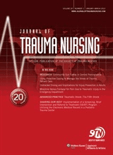
Journal of Trauma Nursing
Enhancing Patient Outcomes with Evidence-Based PracticesJournal of Trauma Nursing, published by LIPPINCOTT WILLIAMS & WILKINS, is a pivotal resource in the fields of trauma, critical care, and emergency nursing. With an ISSN of 1078-7496 and an E-ISSN of 1932-3883, this journal has been at the forefront of disseminating cutting-edge research and innovative practices since its inception in 1995, continuing through 2024. Positioned within the Q3 quartile of the Advanced and Specialized Nursing, Critical Care Nursing, and Emergency Nursing categories, it provides valuable insights into trauma care that enhance clinical practice and patient outcomes. The journal is recognized for its commitment to advancing knowledge and improving the quality of nursing care, making it an essential publication for researchers, practitioners, and students who are dedicated to the fields of trauma and emergency nursing. While currently not available as Open Access, it remains a reputable source of peer-reviewed content aimed at fostering a comprehensive understanding of trauma nursing. Located in the United States at TWO COMMERCE SQ, 2001 MARKET ST, PHILADELPHIA, PA 19103, the Journal of Trauma Nursing continues to impact the profession significantly.
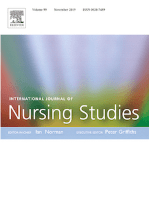
INTERNATIONAL JOURNAL OF NURSING STUDIES
Advancing nursing knowledge for a healthier tomorrow.INTERNATIONAL JOURNAL OF NURSING STUDIES, published by PERGAMON-ELSEVIER SCIENCE LTD, stands as a leading journal in the field of nursing, holding a remarkable impact in the academic community with its prestigious Q1 ranking in Nursing (miscellaneous) and a commendable position in the 99th percentile of General Nursing according to Scopus rankings. Since its inception in 1963, the journal has consistently aimed to foster the dissemination of significant research, innovative practices, and comprehensive reviews relevant to nursing and healthcare disciplines. With a commitment to high-quality, peer-reviewed content, it serves as an invaluable resource for researchers, healthcare professionals, and students alike, seeking to advance knowledge and improve patient care outcomes. While it is not an open-access journal, the impactful research published within its pages is vital for the development of nursing science globally, making it a cornerstone of current nursing scholarship.
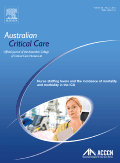
Australian Critical Care
Elevating standards in critical care and emergency nursing.Australian Critical Care is a preeminent journal published by Elsevier Science Inc, dedicated to advancing the field of critical and emergency nursing. With an impressive impact factor reflective of its significant contribution to the discipline, this journal holds a prestigious position within the academic community, currently ranking #3/32 in Emergency Nursing and #3/27 in Critical Care Nursing, placing it within the top percentiles of its category. Furthermore, it is noted for its rigorous scholarship, evident in its Q1 ranking for both critical care and emergency nursing categories in 2023. Since its inception in 1992, Australian Critical Care has been a vital forum for researchers and practitioners, publishing cutting-edge research, reviews, and clinical studies that foster innovation and improve patient outcomes in critical care settings. Although it does not currently offer open access options, its extensive reach and well-curated content continue to attract a dedicated readership, promoting knowledge dissemination in this essential field.
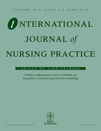
International Journal of Nursing Practice
Enriching global nursing discourse for better healthcare outcomes.International Journal of Nursing Practice, published by WILEY, is a premier academic journal dedicated to the field of nursing, with a keen emphasis on innovative nursing practices and advancements in healthcare. Established in 1995, the journal has successfully bridged a vital gap in nursing research and practice, featuring rigorous peer-reviewed articles that cater to both academic and clinical audiences. Rated as a Q1 journal in Nursing (miscellaneous) for 2023, it ranks at an impressive #29 out of 139 in General Nursing on Scopus, placing it firmly within the top 21% of its category. The journal serves as an essential resource for nursing professionals, researchers, and students alike, fostering evidence-based practices and enriching the global discourse in nursing. With an increasing focus on interdisciplinary work, the International Journal of Nursing Practice aims to enhance the quality of care provided to patients and support the continuous education of healthcare providers. Stay updated with cutting-edge research and share your contributions to this dynamic field!
Nursing in Critical Care
Advancing critical care nursing knowledge for better patient outcomes.Nursing in Critical Care is a premier journal dedicated to the advancement of knowledge and practice in the field of critical care nursing. Published by WILEY, this esteemed journal has established itself as a leader in the domain, holding a prestigious Q1 ranking in Critical Care Nursing as of 2023, and ranking as the 2nd out of 27 in its category according to Scopus, with an impressive 94th percentile. Since its inception in 1996, it has been an essential platform for disseminating cutting-edge research, evidence-based practices, and critical insights that directly impact patient outcomes in high-stakes environments. While not an Open Access journal, it offers accessible options for institutions and individuals dedicated to the continuous evolution of nursing practices in critical care settings. The journal promises to remain at the forefront of the discipline, providing invaluable resources for researchers, practitioners, and students alike who aspire to enhance their expertise and improve the standards of care within intensive health scenarios.

Nephrology Nursing Journal
Championing the Future of Nephrology Nursing ExcellenceNephrology Nursing Journal, published by Jannetti Publications, Inc, serves as an essential platform for the dissemination of cutting-edge research and practical insights in the field of nephrology nursing. With an ISSN of 1526-744X and an E-ISSN of 2163-5390, this journal ensures access to high-quality content for professionals dedicated to improving patient care in renal health. Since its inception in 2000, the journal has maintained its role in advancing the profession, as evidenced by its categorization in Q3 in Advanced and Specialized Nursing and Nephrology, as well as Q4 in Medicine (miscellaneous) for 2023. Although it does not currently offer Open Access, the journal still holds a significant position within the academic community, ranking #406 out of 636 in the broader field of General Medicine, reflecting its contribution to knowledge and practice in nephrology nursing. With an unwavering focus on improving nursing practices and patient outcomes, the Nephrology Nursing Journal continues to be a vital resource for researchers, educators, and healthcare professionals alike.