CRITICAL REVIEWS IN SOLID STATE AND MATERIALS SCIENCES
Scope & Guideline
Advancing the Frontiers of Materials Science
Introduction
Aims and Scopes
- Solid-State Materials Research:
The journal emphasizes the study of solid-state materials, including metals, ceramics, polymers, and composites, exploring their properties and potential applications in various fields. - Nanotechnology and Nanocomposites:
A significant focus on nanomaterials and nanocomposites, including their synthesis, properties, and applications, particularly in energy storage, sensors, and biomedical devices. - Advanced Characterization Techniques:
The use of advanced characterization techniques to understand the microstructural, mechanical, and electrochemical properties of materials, providing insights into their performance. - Processing Techniques and Innovations:
Exploration of innovative processing methods such as additive manufacturing, friction stir welding, and atomic layer deposition, and their impact on material properties. - Sustainability and Green Materials:
A growing emphasis on sustainable materials and environmentally friendly processes, including the development of biodegradable composites and energy-efficient materials.
Trending and Emerging
- Graphene and 2D Materials:
There is a significant increase in research surrounding graphene and other 2D materials, particularly their applications in energy storage, sensors, and advanced composites. - Energy Storage Technologies:
Emerging themes in energy storage, including lithium and sodium-ion batteries, supercapacitors, and advanced materials for energy conversion, reflect a strong focus on sustainable energy solutions. - Biomedical Applications of Materials:
An increasing emphasis on materials for biomedical applications, including bioimplants and drug delivery systems, showcases the journal's commitment to addressing healthcare challenges. - Electromagnetic Interference Shielding:
Research related to materials designed for electromagnetic interference shielding is on the rise, highlighting the need for advanced materials in electronic and communication technologies. - Sustainable and Green Materials:
A trend towards sustainable materials, including biodegradable composites and eco-friendly processing techniques, reflects growing environmental concerns and the push for greener technologies.
Declining or Waning
- Traditional Metal Alloys:
Research focused solely on traditional metal alloys without innovative modifications or applications is less frequently addressed, as the journal shifts towards more advanced materials and composites. - Basic Theoretical Studies:
There is a noticeable decline in purely theoretical studies that do not relate to practical applications or advanced material processing, as the journal increasingly favors applied research. - Conventional Coatings and Treatments:
The coverage of traditional coatings and surface treatments has decreased as the journal explores more advanced and multifunctional coatings, particularly those involving nanotechnology.
Similar Journals

POLYMERS & POLYMER COMPOSITES
Fostering Collaboration in Material AdvancementsPOLYMERS & POLYMER COMPOSITES, published by SAGE Publications Ltd, is a prestigious journal dedicated to the exploration of significant advancements in the diverse fields of polymers, composite materials, and their innovative applications. With an ISSN of 0967-3911 and E-ISSN of 1478-2391, this journal plays a crucial role in the academic community, boasting an impressive ranking in the Q2 quartile across pivotal categories such as Ceramics and Composites, Materials Chemistry, and Polymers and Plastics in 2023. Positioned in the United Kingdom, it serves as a vital resource for researchers and professionals, providing insights into current trends and future directions in material science. Despite its availability not extending to Open Access, the journal aims to promote rigorous peer-reviewed research, thus fostering knowledge and collaboration among scholars. With publication convergence from 1993 to 2024, POLYMERS & POLYMER COMPOSITES stands as a cornerstone for those pursuing advanced understanding and excellence in material innovation.
METALS AND MATERIALS INTERNATIONAL
Connecting researchers to the forefront of materials science.METALS AND MATERIALS INTERNATIONAL, published by the Korean Institute of Metals and Materials, is a prestigious journal dedicated to the advancement of research in the fields of materials science and engineering. With an ISSN of 1598-9623 and a robust e-ISSN of 2005-4149, this journal has established itself as a crucial platform for disseminating innovative findings and key advancements that span condensed matter physics, materials chemistry, mechanics of materials, and the technology of metals and alloys. Its Q1 rankings in multiple categories attest to its high impact and relevance in the academic community, placing it among the top journals in its fields with Scopus rankings that reflect a strong international footprint. Here, researchers, professionals, and students can access cutting-edge research and insights, fostering collaboration and exploration of new materials and their applications. With a commitment to excellence and a convergence of knowledge from 1996 to 2024, METALS AND MATERIALS INTERNATIONAL continues to enhance our understanding of materials and their transformative impact on technology and engineering.
JOURNAL OF MATERIALS ENGINEERING AND PERFORMANCE
Transforming Ideas into Engineering ExcellenceJOURNAL OF MATERIALS ENGINEERING AND PERFORMANCE, published by Springer, serves as a vital resource for researchers and professionals in the fields of materials science, mechanical engineering, and mechanics of materials. With an ISSN of 1059-9495 and E-ISSN of 1544-1024, this journal boasts a commendable track record since its inception in 1992 and is set to continue providing valuable insights until 2024. Positioned in the Q2 quartile of its categories, the journal is ranked #246 in Mechanical Engineering and #168 in Mechanics of Materials according to Scopus, reflecting its commitment to high-quality research. While currently not adopting an open access model, it remains accessible to academic professionals and students eager to advance their knowledge in the rapidly evolving domain of materials engineering. The scope encompasses innovative research focused on material performance, engineering applications, and technological advancements, making it an indispensable tool for those at the forefront of the field.

AIMS Materials Science
Exploring the Dynamics of Innovative MaterialsAIMS Materials Science is an esteemed open-access journal dedicated to advancing the field of materials science. Published by the American Institute of Mathematical Sciences (AIMS), this journal has been a vital resource for researchers, professionals, and students since its inception in 2014. With an ISSN of 2372-0468 and an E-ISSN of 2372-0484, it focuses on disseminating high-quality research in materials science, ranging from general materials science to cutting-edge advancements in innovative materials applications. Currently ranked Q3 in the 2023 Scopus Materials Science (miscellaneous) category, with a ranking of 253/463, AIMS Materials Science strives to provide an open forum for scholarly dialogue and collaboration, ensuring valuable insights are accessible to the global scientific community. The journal's commitment to open access enhances its visibility and reach, further promoting impactful research in this dynamic field.
Journal of Science-Advanced Materials and Devices
Innovating for Impact: Your Gateway to Advanced MaterialsJournal of Science-Advanced Materials and Devices is a leading open-access journal published by Vietnam National University, dedicated to advancing the field of materials science through cutting-edge research and innovative developments. Since its inception in 2016, this journal has become a pivotal platform for sharing insights and discoveries in various subfields, including biomaterials, ceramics and composites, and electronic, optical, and magnetic materials. With impressive quartile rankings, including Q1 across multiple categories in 2023, and a notable Scopus ranking placing it in the top 15th percentile for ceramics and composites, it highlights the journal’s influence and prestige within the global academic community. Open Access since its launch, the journal aims to facilitate unrestricted dissemination of scholarly work, empowering researchers, professionals, and students to engage with the latest advancements. The Journal of Science-Advanced Materials and Devices is vital for those seeking high-quality contributions that influence both theoretical understanding and practical applications in the ever-evolving landscape of materials science.
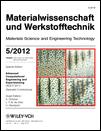
MATERIALWISSENSCHAFT UND WERKSTOFFTECHNIK
Transforming Ideas into Material Solutions.MATERIALWISSENSCHAFT UND WERKSTOFFTECHNIK, published by WILEY-V C H VERLAG GMBH, is a prominent journal dedicated to the field of materials science and engineering. With its ISSN 0933-5137 and E-ISSN 1521-4052, this journal serves as a vital resource for researchers and professionals engaged in exploring the intricate relationships between the properties of materials and their applications. Established in 1970 and continuing through 2024, the journal has been consistently recognized in various categories, achieving a Q3 ranking in 2023 across Condensed Matter Physics, Materials Science (miscellaneous), Mechanical Engineering, and Mechanics of Materials. Although it does not offer open access, its high-quality peer-reviewed content is fundamental to the advancement of knowledge within its three key areas: novel material development, material characterization, and application of materials in engineering contexts. As a driving force in the scientific community, MATERIALWISSENSCHAFT UND WERKSTOFFTECHNIK continues to cater to the curiosity of aspiring students, seasoned professionals, and researchers alike, facilitating a deeper understanding of the complexities of material technology.
INTERNATIONAL MATERIALS REVIEWS
Transforming Research into Practical ApplicationsINTERNATIONAL MATERIALS REVIEWS, published by SAGE Publications Inc, is a leading journal dedicated to the comprehensive analysis of contemporary research in the fields of materials chemistry, mechanical engineering, mechanics of materials, and the study of metals and alloys. With an impressive impact factor and a Q1 ranking across multiple categories such as Materials Chemistry and Mechanical Engineering in 2023, it ranks amongst the top journals for innovative materials research. The journal has a long-standing history since its inception in 1987 and continues to serve as a crucial resource for academics and professionals alike. Although it is not open access, it is renowned for its rigorous peer-review process and its commitment to disseminating high-quality materials science research globally. Researchers, students, and industry professionals benefit greatly from the journal's insightful reviews, both for the advancement of theoretical knowledge and practical applications within the fast-evolving materials field.

Solids is a distinguished peer-reviewed journal published by MDPI, dedicated to the comprehensive exploration of the properties, applications, and advancements in solid materials. Starting its journey in 2020, this Open Access journal provides a dynamic platform for researchers and professionals in the fields of physics, astronomy, materials science, and chemistry, enabling them to disseminate their findings to a global audience without barriers. With an emerging presence in the academic landscape, Solids has established a reputation reflected in its Scopus rankings, including a commendable position of #28 out of 81 in Physics and Astronomy and #83 out of 196 in Materials Science, demonstrating its impact and relevance within these vibrant fields. The journal's objectives extend to fostering interdisciplinary discussions and collaboration, making it an essential resource for those seeking to advance their understanding of solid materials and their innovative applications. Researchers and students alike are encouraged to contribute to this essential dialogue, engaging with the latest research and insights in solid-state science from around the globe.

Tungsten
Unveiling the potential of tungsten for innovative applications.Tungsten, published by SpringerNature, is a prestigious academic journal dedicated to advancing the field of materials science with a specific focus on tungsten and its diverse applications. Launched in 2019, the journal has quickly established itself as a leading resource in its domain, achieving a remarkable Q1 ranking across multiple categories including Materials Chemistry, Materials Science (miscellaneous), Metals and Alloys, and Surfaces, Coatings and Films. With robust performance reflected in its Scopus rankings—holding significant positions such as rank #20 in Metals and Alloys (88th percentile)—Tungsten serves as a vital platform for researchers and professionals seeking to disseminate innovative findings and foster collaboration in the materials science community. Although not an Open Access publication, this journal offers a well-curated collection of high-quality research articles, reviews, and technical notes aimed at driving forward the understanding and application of tungsten in various scientific sectors. Operating out of the United States, Tungsten is committed to providing an essential resource for academia and industry alike, making a significant contribution to the evolving landscape of materials research.
MATERIALS SCIENCE AND TECHNOLOGY
Exploring Interdisciplinary Breakthroughs in Materials ScienceMATERIALS SCIENCE AND TECHNOLOGY is a leading journal published by SAGE PUBLICATIONS INC, focusing on the interdisciplinary advancements in the field of materials science. Since its inception in 1984, the journal has provided a platform for researchers and industry professionals to present innovative findings through rigorous peer-reviewed articles. The journal holds a commendable impact factor and categorizes itself within the prestigious Q2 rank in various domains such as Condensed Matter Physics, Materials Science, Mechanical Engineering, and Mechanics of Materials according to the 2023 Quartiles. With no Open Access option, it primarily serves as a repository for in-depth studies and advancements that push the boundaries of materials engineering and application. Located in the United Kingdom, at 2455 TELLER RD, THOUSAND OAKS, CA 91320, the journal continues to attract a global readership, making it indispensable for academics, researchers, and students who aim to stay at the forefront of materials innovation.