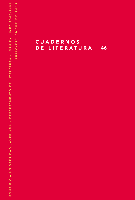
Cuadernos de Literatura
Scope & Guideline
Illuminating the Landscape of Literary Research
Introduction
Aims and Scopes
- Cultural Identity and Transculturation:
The journal focuses on the dynamics of cultural identity, especially in relation to transculturation in Latin America, analyzing how literature reflects and shapes these identities. - Historical and Political Contexts:
It examines the intersection of literature with historical and political contexts, highlighting how literary works engage with issues such as colonialism, gender, and social justice. - Gender Studies and Feminist Perspectives:
A significant area of focus is the exploration of gender through feminist lenses, investigating women's roles in literature and the broader cultural narratives. - Interdisciplinary Approaches:
The journal employs interdisciplinary methodologies, integrating insights from sociology, history, and cultural studies to provide a richer understanding of literary texts. - Global South Perspectives:
Cuadernos de Literatura emphasizes voices and narratives from the Global South, contributing to the discourse on postcolonial studies and the representation of marginalized communities.
Trending and Emerging
- Postcolonial and Decolonial Narratives:
Recent publications increasingly engage with postcolonial and decolonial narratives, reflecting a growing interest in how literature can challenge colonial legacies and assert cultural identities. - Intersectionality in Gender Studies:
There is a rising trend in the exploration of intersectionality within gender studies, examining how various identities (race, class, sexuality) intersect in literary representations. - Environmental and Ecological Literature:
Emerging themes related to environmental issues and ecological literature are gaining traction, emphasizing the importance of sustainability and the representation of nature in Latin American texts. - Digital Humanities and New Media:
The integration of digital humanities and analyses of new media forms in literature is becoming a focal point, showcasing how technology influences narrative structures and literary production. - Globalization and Cultural Exchange:
An increasing emphasis on globalization and cultural exchange is evident, exploring how these dynamics influence literary creation and identity formation in contemporary Latin America.
Declining or Waning
- Traditional Literary Criticism:
There seems to be a waning interest in conventional literary criticism that focuses solely on textual analysis without considering broader cultural and political contexts. - Historical Narratives in Isolation:
Themes centered around historical narratives devoid of contemporary relevance are becoming less frequent, as the journal increasingly prioritizes works that connect past and present. - Static Gender Roles:
Discussions that reinforce traditional, static gender roles in literature are declining, giving way to more dynamic and intersectional analyses of gender. - Eurocentric Literary Frameworks:
There is a noticeable decrease in the application of Eurocentric frameworks to analyze Latin American literature, as scholars seek more localized and culturally relevant approaches. - Purely Aesthetic Analyses:
The emphasis on purely aesthetic evaluations of literary works is diminishing, with a shift toward understanding the socio-political implications of literature.
Similar Journals
RUSSIAN LITERATURE
Cultivating Scholarly Excellence in Russian LiteratureRUSSIAN LITERATURE is a premier academic journal published by ELSEVIER, dedicated to advancing the study of Russian literary traditions, critical theory, and cultural contexts. With an ISSN of 0304-3479 and an E-ISSN of 1878-3678, this journal has firmly established itself as a vital resource in the field, achieving a commendable Q1 ranking in Literature and Literary Theory as of 2023. The journal benefits from a strong impact factor and ranks #178 out of 1106 in the Scopus database, placing it in the 83rd percentile of arts and humanities research. RUSSIAN LITERATURE covers an extensive timeline, converging years from 1971 to 1974 and from 1976 to 2023, reflecting its rich academic lineage. Although not an open-access publication, the journal remains influential among scholars, professionals, and students seeking in-depth analyses and critical insights into Russian literature and literary theory. Its commitment to scholarly rigor makes it an essential read for anyone engaging with the complexities of literary studies.

Revue Italienne d'Etudes Francaises
Connecting Historical Insights with Contemporary French StudiesRevue Italienne d'Etudes Francaises, published by SEMINARIO FILOLOGIA FRANCESE, is a pivotal open access journal dedicated to the exploration and analysis of French studies within the broader context of history, linguistics, and literary theory. Since its inception in 2011, this journal has fostered scholarly dialogue and critical discourse, offering a platform for researchers, professionals, and students alike to disseminate their work and engage with contemporary issues in these fields. With an ISSN and E-ISSN of 2240-7456, the journal has established itself within the academic community, although it currently ranks in the lower quartiles across various disciplines, as indicated by its Scopus metrics. Nevertheless, the Revue Italienne d'Etudes Francaises remains an essential resource for those seeking to deepen their understanding of Francophone literature, culture, and linguistic dynamics from its base in Rome, Italy, at C/O Fondazione Primoli. As the field of French studies continues to evolve, this journal plays an important role in highlighting the latest research findings and theoretical advancements.
Revista Hispanica Moderna
Navigating the Complexities of Hispanic Literary TraditionsRevista Hispanica Moderna, published by University of Pennsylvania Press, is a scholarly journal dedicated to exploring the rich tapestry of Hispanic cultural, historical, and literary studies. With an ISSN of 0034-9593 and an E-ISSN of 1944-6446, this esteemed publication operates within the United States, ensuring a broad international reach. While it currently does not offer Open Access, the journal provides significant insights across diverse fields, categorized as Q4 in Cultural Studies, History, and Literature and Literary Theory as per the 2023 standards. Although the journal ranks in the lower quartiles of its fields, its systematic approach to modern Hispanic studies offers valuable opportunities for gaining perspectives that are often underrepresented. Researchers, professionals, and students are encouraged to engage with its content as it navigates the complexities of cultural identities and historical narratives from 2019 to 2024 and beyond, making important contributions to the ongoing discourse in the humanities.

PAMIETNIK LITERACKI
Unveiling the Art of Literary ExplorationPAMIETNIK LITERACKI is a distinguished peer-reviewed journal dedicated to advancing the fields of Literature and Literary Theory, published by WYDAWNICTWO PAN, INST BADAN LITERACKICH PAN in Poland. With an ISSN of 0031-0514 and E-ISSN of 0031-0514, this journal has been operating under an Open Access model since 2012, ensuring wide accessibility and dissemination of scholarly work. The journal has undergone a journey through various categories, currently positioned in the Q4 quartile according to the 2023 category rankings in Literature and Literary Theory, with a Scopus rank of #1009/1106 placing it in the 8th percentile. PAMIETNIK LITERACKI serves as a critical platform for scholars, providing a venue for innovative research, discussions, and reviews that shape the literary discourse in Poland and beyond. For those passionate about literary studies, this journal represents a vital resource for both established researchers and emerging voices in the field.

REVISTA CHILENA DE LITERATURA
Advancing literary scholarship and dialogue.REVISTA CHILENA DE LITERATURA, published by Universidad de Chile, Facultad de Filosofía y Humanidades, is a premier open-access journal that has been at the forefront of literary scholarship since its inception in 2004. With its ISSN 0718-2295, the journal focuses on a wide array of topics within the field of literature and literary theory, striving to foster intellectual discourse and innovation. It has gained notable recognition, reflected in its Q2 category ranking in 2023, positioning it among the top journals in its field within the Scopus database, where it ranks #513 out of 1106 journals, placing it in the 53rd percentile. Hailing from Chile, the journal also serves as a vital platform for researchers and students to disseminate their work, enhancing the global dialogue in literature. With a history of convergence from 2007 to 2023, REVISTA CHILENA DE LITERATURA is committed to advancing literary research and its implications in contemporary contexts, making it an essential resource for anyone engaged in literary studies.

ItinerArios-Revista de Literatura
Navigating the Rich Tapestry of LiteratureItinerArios-Revista de Literatura is a distinguished academic journal published by Universidade Estadual Paulista (UNESP), located in the vibrant city of Araraquara, Brazil. With a commitment to exploring the depths of literary analysis and theory, this journal serves as a crucial platform for scholars, researchers, and students to disseminate their work in the field of literature. Though the journal does not currently offer open access, it boasts a comprehensive focus on various literary traditions, critical interpretations, and emerging trends within the literary landscape. The ISSN for the print edition is 0103-815X, ensuring its recognition in the academic community. By providing a valuable forum for innovative research and engaging discussions, ItinerArios plays an essential role in enriching the discourse in the realm of literary studies, appealing to professionals and enthusiasts alike who are eager to contribute to and engage with contemporary literary scholarship.

Dirasat Hispanicas-Revista Tunecina de Estudios Hispanicos
Unveiling New Perspectives in Hispanic StudiesDirasat Hispanicas-Revista Tunecina de Estudios Hispanicos is a pivotal academic journal published by UNIV TUNIS MANAR, INST SUPERIEUR SCIENCES HUMAINES TUNIS, dedicated to the exploration and analysis of Hispanic studies within the broader context of history, linguistics, and literature. Established in Tunisia, this journal has transitioned to an Open Access model since 2014, promoting the dissemination of knowledge and fostering scholarly exchange among researchers, professionals, and students globally. With its ISSN 2286-5977 and esteemed recognition in various categories, including Q4 in History and Linguistics and Q3 in Literature and Literary Theory, Dirasat Hispanicas strives to bridge gaps in Hispanic scholarship by inviting diverse critical perspectives and innovative research. While its Scopus rankings reflect an evolving presence in the academic landscape, the journal remains committed to enhancing the visibility and impact of Hispanic studies. The journal continues to encourage submissions that contribute to its mission of intellectual advancement, making it an essential resource for those engaged in the rich tapestry of Hispanic cultural and linguistic heritage.
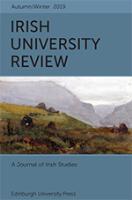
IRISH UNIVERSITY REVIEW
Connecting Scholars with the Heart of Irish LiteratureIRISH UNIVERSITY REVIEW is a distinguished academic journal published by Edinburgh University Press, specializing in the fields of Literature and Literary Theory. With an ISSN of 0021-1427 and an E-ISSN of 2047-2153, this journal serves as a vital platform for scholarly discourse on contemporary and historical literary studies related to Ireland and its cultural contexts. Located in the United Kingdom, the journal has achieved an impressive Q2 ranking in the 2023 category of Literature and Literary Theory, placing it in the 81st percentile among peer-reviewed arts and humanities journals globally, as per Scopus rankings. IRISH UNIVERSITY REVIEW is committed to fostering academic excellence and offers a range of access options for its readers, promoting both traditional and digital scholarship. With a publication timeline extending from 2002 to 2024, the journal is dedicated to enhancing understanding and appreciation of Irish literature through critical essays, reviews, and innovative research, making it an essential resource for researchers, professionals, and students alike.

Expressions maghrebines
Empowering Research in Maghreb Literary TraditionsExpressions maghrebines, an esteemed journal published by Florida State University, fosters scholarly dialogue in the realm of Literature and Literary Theory, focusing on the vibrant narratives and critical discourses emerging from the Maghreb region. Established in 2002, this journal has become a vital resource for researchers, professionals, and students, illustrating a commitment to exploring contemporary trends in Francophone literature. With an impressive Q3 rank in 2023, it stands within the top echelon of its category, offering insightful analyses and innovative perspectives to enhance academic understanding. Though not an open-access publication, Expressions maghrebines is indispensable for those seeking to delve into the cultural and intellectual currents that shape Maghreb literary landscapes, thus reinforcing its position as a significant contributor to the academic community's exploration of Francophone studies.
Journal of Literary Studies
Illuminating the landscape of contemporary literary studies.Journal of Literary Studies, published by UNISA PRESS, is a premier open access journal dedicated to advancing the field of literature and literary theory. With its ISSN 0256-4718 and E-ISSN 1753-5387, the journal has established itself as a leading platform for innovative research since its inception in 1985, with a notable convergence period running through to 2024. Recognized in the Q1 quartile of literature and literary theory, the journal ranks impressively at #236 out of 1106 in its category according to Scopus, highlighting its impact in the arts and humanities with a percentile rank of 78th. The journal's open access model, adopted in 2022, reflects its commitment to accessibility and dissemination of knowledge globally, making it an essential resource for researchers, academics, and students alike. With an editorial focus on interdisciplinary approaches and contemporary critical discourse, the Journal of Literary Studies serves as a vital vessel for the exchange of ideas and scholarly dialogue in the intricate landscape of literary studies.