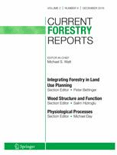
Current Forestry Reports
Scope & Guideline
Advancing sustainable forestry research for a greener tomorrow.
Introduction
Aims and Scopes
- Ecological and Environmental Studies:
The journal emphasizes research on ecological functions, biodiversity, and ecosystem services provided by forests, including the impact of forest structure on wildlife and the interrelations between forest health and environmental factors. - Sustainable Forestry Practices:
There is a strong focus on sustainable management practices that balance economic viability with ecological integrity, including studies on forest operations, management strategies, and the integration of modern technologies. - Technological Innovations in Forestry:
Current Forestry Reports highlights the role of technology in forestry, including the application of remote sensing, machine learning, and software solutions to enhance forest management and monitoring. - Forest Health and Disease Management:
Research on forest health, including the study of pests, pathogens, and their management, is a core area, addressing the challenges posed by climate change and anthropogenic disturbances. - Socio-economic Aspects of Forestry:
The journal explores the socio-economic dimensions of forestry, discussing the implications of forest management on local communities, economies, and the global market.
Trending and Emerging
- Digitalization and Smart Forestry:
The integration of digital technologies and AI in forestry management is a growing theme, addressing how Industry 5.0 principles can transform traditional practices and enhance efficiency. - Climate Change Adaptation Strategies:
Research focused on adapting forestry practices to mitigate climate change effects is increasingly prominent, highlighting the need for resilience in forest ecosystems and management strategies. - Circular Economy in Forestry:
The theme of sustainability through circular economy principles in wood-based industries is emerging, emphasizing resource efficiency and waste reduction in forestry practices. - Interdisciplinary Approaches:
There is a rising trend towards interdisciplinary research that combines ecology, technology, and socio-economic factors, fostering holistic approaches to forestry challenges. - Forest Health and Biotic Interactions:
The focus on forest health, particularly regarding biotic interactions among trees, pests, and pathogens, is becoming more prevalent, reflecting growing concerns over biodiversity and ecosystem stability.
Declining or Waning
- Traditional Silvicultural Practices:
Research on conventional silviculture techniques appears to be decreasing, likely as the field moves towards more innovative and adaptive management strategies that consider ecological complexities and climate change impacts. - Basic Forest Inventory Techniques:
There seems to be a reduced emphasis on basic forest inventory methods, as the field increasingly adopts advanced technologies such as remote sensing and data analytics for forest assessment. - Historical Forest Management Practices:
Studies focusing on historical management practices are less frequent, indicating a shift towards contemporary challenges and innovative solutions rather than retrospective analyses.
Similar Journals

Revista Forestal Mesoamerica Kuru-RFMK
Connecting researchers to nurture Mesoamerican forests.Revista Forestal Mesoamerica Kuru-RFMK is a vital academic platform dedicated to the advancement of forest science and management within the Mesoamerican region. Published by the Instituto Tecnológico de Costa Rica, this journal has been an Open Access resource since 2011, ensuring that critical research is accessible to a global audience. With an ISSN of 2215-2504, it aims to foster collaboration and knowledge exchange among researchers, professionals, and students eager to address the pressing challenges facing forests in Central America. The journal prioritizes interdisciplinary studies related to forest ecology, conservation, and sustainable management practices, making it an indispensable reference for anyone interested in enhancing forest health and biodiversity. By contributing to this resource, scholars can impact policy and practice while enriching the academic community’s understanding of Mesoamerica's unique forest ecosystems.
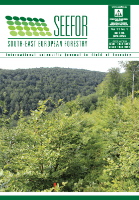
SEEFOR-South-East European Forestry
Innovating solutions for forestry management and conservation.SEEFOR-South-East European Forestry is a premier open-access journal dedicated to advancing knowledge in the field of forestry and environmental science. Published by the CROATIAN FOREST RESEARCH INSTITUTE, this journal has been operational since 2010, providing a platform for research that focuses on the unique forestry dynamics of the South-East European region. With an ISSN of 1847-6481 and an E-ISSN of 1849-0891, SEEFOR is recognized for its commitment to disseminating high-quality research that addresses critical issues in forestry management, conservation, and sustainable development. The journal is indexed in Scopus, placing it within the third quartile (Q3) of forestry journals, reflecting its significance within the academic community. SEEFOR aims to connect researchers, practitioners, and policymakers, fostering collaboration and innovation in fostering sustainable forestry practices in Croatia and beyond. Submissions are welcome in a range of areas including forest ecology, policy development, and socio-economic impacts, making it an invaluable resource for professionals and students alike.
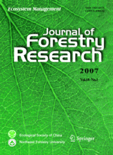
JOURNAL OF FORESTRY RESEARCH
Driving sustainable solutions through rigorous research.JOURNAL OF FORESTRY RESEARCH, published by Northeast Forestry University in China, stands as a pivotal platform for advancing the field of forestry science. With an ISSN of 1007-662X and an E-ISSN of 1993-0607, this esteemed journal has maintained its commitment to disseminating high-quality research since its inception in 1997, converging into a recognized authority through the years. Currently boasting a Q1 ranking in the Forestry category for 2023, it ranks 18th out of 174 journals in its field on Scopus, highlighting its vital role in shaping contemporary forestry studies. The journal focuses on a broad spectrum of topics pertinent to forestry, including sustainable forest management, ecology, and conservation efforts, making it an indispensable resource for researchers, professionals, and students alike. Although it is not an open-access publication, the insights shared within its pages promise to contribute significantly to the advancement of knowledge and practices in forestry. The journal's significant impact and relevance are underscored by its operations from Harbin, People's Republic of China, where it continues to foster scholarly communication in the world of forestry research.

BALTIC FORESTRY
Transforming Forestry Through Cutting-Edge ResearchBALTIC FORESTRY, published by the INST FORESTRY LRCAF in Lithuania, is a prominent academic journal that serves as a platform for disseminating cutting-edge research in the field of forestry. With an ISSN of 1392-1355, this journal is dedicated to advancing knowledge on sustainable forest management, ecological impacts, and resource conservation, among other vital topics. As of 2023, it has been categorized in the Q3 quartile for forestry in Scopus, indicating its solid reputation among peer-reviewed publications, ranking #95 out of 174 in the realm of Agricultural and Biological Sciences. BALTIC FORESTRY features contributions from researchers across the globe and encourages innovative approaches to solving contemporary challenges in forestry, making it an essential resource for professionals, scholars, and students alike. Although it operates under subscription-based access options, the journal's commitment to fostering academic discourse is unwavering, aiming to bridge the gap between theory and practice in forest science.

Austrian Journal of Forest Science
Exploring the intersection of ecology and forest management.Austrian Journal of Forest Science, published by OSTERREICHISCHER AGRARVERLAG, is a distinguished peer-reviewed journal dedicated to advancing knowledge in the fields of forestry and ecological science. With an ISSN of 0379-5292 and an E-ISSN of 0375-524X, this journal serves as a vital platform for researchers, professionals, and students alike, aiming to disseminate innovative research findings, methodologies, and case studies pertinent to forest conservation, management, and policy. Situated in Austria, its diverse scope encompasses critical topics within ecology, evolution, and biodiversity, evidenced by its competitive quartile rankings in 2023, placing it in Q2 for Forestry and Q3 in other related fields. The journal is committed to fostering a deeper understanding of forest ecosystems, making it an essential resource for anyone invested in sustainable forestry practices and environmental policy.
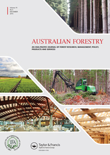
AUSTRALIAN FORESTRY
Cultivating a Deeper Understanding of ForestryAustralian Forestry is an esteemed journal dedicated to advancing knowledge in the field of forestry and related environmental science. Published by Taylor & Francis Australia, this journal plays a pivotal role in disseminating high-quality research that spans various aspects of forestry, including sustainable management, conservation practices, and policy analysis. With an impact factor reflecting its significance in the academic community and a Scopus rank of #44 out of 174 in the category of Agricultural and Biological Sciences, Australian Forestry proudly holds a Q2 ranking in its field as of 2023. The journal has maintained a continuous publication record since its inception in 1936, with a commitment to addressing contemporary challenges within forestry. Researchers, professionals, and students alike are invited to engage with this vital resource that fosters insightful dialogue, innovative solutions, and a deeper understanding of forestry science.
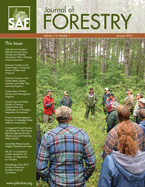
JOURNAL OF FORESTRY
Fostering interdisciplinary collaboration for a greener future.JOURNAL OF FORESTRY, published by OXFORD UNIV PRESS INC, is a premier academic journal dedicated to advancing the field of forestry and plant sciences. With a distinguished history dating back to 1919, the journal has evolved to address contemporary challenges and innovations in these critical domains of environmental science. As evidenced by its impressive Q1 rankings in both Forestry and Plant Science categories for 2023, the journal is recognized for its contribution to scholarly research, occupying a significant position among its peers with a Scopus rank of #33 in Forestry and #122 in Plant Science. Researchers and practitioners can access the journal’s articles to stay updated on cutting-edge research, methodologies, and practices that influence sustainable forest management and conservation efforts. By fostering interdisciplinary collaboration, the JOURNAL OF FORESTRY plays a pivotal role in shaping the discourse surrounding forest ecosystems, promoting the integration of science with practice, and facilitating knowledge transfer in academia and industry. As a vital resource for researchers, professionals, and students alike, this journal serves as an essential platform for disseminating high-quality research that addresses pressing environmental concerns.
Journal of Sustainable Forestry
Exploring the intersection of ecology and forest management.Journal of Sustainable Forestry is a premier academic publication dedicated to advancing knowledge and practices in the field of sustainable forestry and environmental management. Published by Taylor & Francis Inc in the United Kingdom, this journal has been a cornerstone for researchers and professionals since its inception in 1992. With an impressive reputation, it boasts a 2023 Q2 ranking in Food Science, Forestry, and Geography, Planning and Development, highlighting its significant contribution to interrelated disciplines. The journal’s impact is further underscored by its Scopus ranking, especially in Forestry where it holds the 43rd position out of 174 publications, placing it in the 75th percentile. Although not open access, the journal remains committed to providing innovative research and practical insights into forest management, ecological sustainability, and policy development. As the field of sustainable forestry continues to evolve, the Journal of Sustainable Forestry serves as an essential resource for those committed to advancing sustainable practices globally, fostering a deeper understanding of how sustainable forestry can contribute to environmental resilience and biodiversity conservation.

Central European Forestry Journal
Fostering innovation in forest management and conservation.Central European Forestry Journal, published by SCIENDO, is a pivotal platform dedicated to advancing research and knowledge in the field of forestry. Since its inception in 2009, this Open Access journal has provided scholars and practitioners with unrestricted access to cutting-edge research findings, promoting collaboration and innovation within the forestry community. Based in Poland, the journal serves as a crucial resource for researchers, professionals, and students alike, addressing critical topics relevant to the management, conservation, and sustainable utilization of forest resources. The journal holds a commendable Q2 ranking in Forestry, with a notable rank of 51 out of 174 and a 70th percentile in Scopus's Agricultural and Biological Sciences category. With converged publication from 2017 to 2024, the Central European Forestry Journal represents an essential avenue for disseminating knowledge and fostering dialogue in an increasingly important field.
Cerne
Pioneering Research for the Future of ForestryCerne is a distinguished open-access journal dedicated to advancing knowledge in the field of forestry, published by the Universidade Federal de Lavras (UFLA). Since its inception in 1994, the journal has actively contributed to the global discourse on sustainable forest management and biodiversity conservation, presenting research findings that are both relevant and impactful. With its ISSN 0104-7760, Cerne aims to foster collaboration among researchers, professionals, and students, enhancing the understanding of forestry practices in Brazil and beyond. As of 2023, it holds a respectable Q3 ranking in the forestry category, further cementing its position within the academic community, illustrated by a Scopus ranking of #97 out of 174 in the Agricultural and Biological Sciences - Forestry field. Operating under an open-access model allows for wide dissemination of research outputs, ensuring that critical findings reach a broad audience, fueling further innovation and discovery in the field. With converged years extending from 2007 to 2024, Cerne continues to be a vital resource for anyone engaged in forestry research and practices.