
DISCRETE MATHEMATICS
metrics 2024
Pioneering research in discrete mathematics and beyond.
Introduction
DISCRETE MATHEMATICS, published by Elsevier, is a leading journal dedicated to the field of discrete mathematics and combinatorics, with a distinguished presence in the academic community since its inception in 1971. With an ISSN of 0012-365X and an E-ISSN of 1872-681X, this esteemed journal has firmly established itself within the Q1 category for Discrete Mathematics and Combinatorics, and Q2 for Theoretical Computer Science as per the 2023 metrics, underscoring its pivotal role in advancing research in these vital areas. DISCRETE MATHEMATICS is highly regarded, reflected in its Scopus rankings, where it stands at #44 out of 92 in its primary category, contributing significantly to the global discourse on complex mathematical theories and applications. Published from the Netherlands, the journal serves as a crucial resource for researchers, professionals, and students looking to stay informed about the latest innovations and methodologies in discrete mathematics. Though currently not an open-access journal, DISCRETE MATHEMATICS continues to foster a vibrant scholarly community through rigorous peer-reviewed research, promoting a deeper understanding of the mathematical structures that underpin both theoretical and applied science.
Metrics 2024
 0.800.700.8088
Metrics History
Rank 2024
Scopus
IF (Web Of Science)
JCI (Web Of Science)
Quartile History
Similar Journals

Journal of Combinatorics
Pioneering Discoveries in Combinatorial OptimizationJournal of Combinatorics is a premier academic journal dedicated to advancing the field of combinatorial theory and its applications. Published by INT PRESS BOSTON, INC, it aims to provide a robust platform for researchers, professionals, and students to disseminate their findings and engage with cutting-edge developments in combinatorics. With a focus on high-quality, peer-reviewed articles, the journal fosters rigorous mathematical discussions surrounding various facets of combinatorial structures, graph theory, design theory, and combinatorial optimization. Although currently not available as an Open Access journal, the Journal of Combinatorics plays a vital role in enriching the mathematical sciences and serves as an essential resource for academics seeking to stay updated with the latest trends in combinatorial research. By maintaining a commitment to excellence and innovation, this journal is indispensable for anyone looking to deepen their understanding in this critical area of study.

Prikladnaya Diskretnaya Matematika
Exploring the Intersection of Theory and Practice in Mathematics.Prikladnaya Diskretnaya Matematika, published by the PUBLISHING HOUSE SCIENTIFIC & TECHNICAL LITERATURE in the Russian Federation, serves as a vital resource for scholars and practitioners in the realms of applied mathematics, computational theory, and discrete mathematics. With an ISSN of 2071-0410 and an E-ISSN of 2311-2263, this journal has been actively contributing to the academic discourse since its inception in 2016, with expectations to continue until at least 2024. Although currently positioned in the Q4 category across several disciplines—including applied mathematics, computational theory, and signal processing—this journal offers a unique opportunity for researchers to contribute to an evolving field, despite facing competitive rankings in the Scopus database. The open access nature of the journal reflects a commitment to disseminating knowledge broadly, albeit details regarding access options remain unspecified. As a publication dedicated to fostering innovation and collaboration in theoretical and practical applications, Prikladnaya Diskretnaya Matematika plays an important role in advancing mathematical theories and practices, making it pertinent for those engaged in research and application within these critical domains.

Journal of Combinatorial Algebra
Fostering Collaboration in Mathematical DiscoveriesThe Journal of Combinatorial Algebra, published by the European Mathematical Society (EMS), is a pioneering open-access journal dedicated to advancing research in the fields of Algebra and Number Theory, as well as Discrete Mathematics and Combinatorics. Since its inception in 2018, the journal has been committed to promoting high-quality, rigorous research, evidenced by its 2023 scopus rankings placing it in the second quartile across both disciplines. It serves as a vital platform for academics, researchers, and students to share innovative findings, methodologies, and theoretical advancements within combinatorial algebra, facilitating collaboration and knowledge dissemination in the mathematical community. With its open access policy adopted in 2021, the journal ensures that its content is freely available to a global audience, further enriching the landscape of mathematical research. The journal's editorial board, composed of leading experts, guarantees the integrity and academic excellence of published articles, making it an essential resource for those engaged in the dynamic fields of combinatorics and algebra.

Australasian Journal of Combinatorics
Empowering Scholars in Discrete MathematicsThe Australasian Journal of Combinatorics, published by the CENTRE DISCRETE MATHEMATICS & COMPUTING, serves as a vital platform for researchers and professionals engaged in the dynamic field of discrete mathematics and combinatorics. With an ISSN of 2202-3518 and an E-ISSN of the same, this journal has been committed to open access since 2014, ensuring that groundbreaking research is readily available to a global audience. Based in Australia, specifically at the Department of Mathematics, University of Queensland, this journal spans the years from 1996 to 2024, showcasing the evolution of combinatorial research over nearly three decades. Recognized in the 2023 category quartiles as Q3 in Discrete Mathematics and Combinatorics, it ranks 68th out of 92 in Scopus, reflecting its growing influence despite its current percentile of 26th. The Australasian Journal of Combinatorics is dedicated to fostering innovative research and theoretical development, making it a valuable resource for academics and students alike.
Discrete Mathematics and Applications
Empowering Research in Discrete Mathematics and Its Applications.Discrete Mathematics and Applications, published by WALTER DE GRUYTER GMBH, is a vital academic journal catering to the expansive fields of Discrete Mathematics and Applied Mathematics. With an ISSN of 0924-9265 and an E-ISSN of 1569-3929, it serves as a reputable platform for disseminating innovative research and developments within these domains. The journal has been contributing to the academic landscape since its inception in 1991 and continues to actively publish impactful studies through 2024. Despite its current positioning in Q4 of both the Applied Mathematics and Discrete Mathematics and Combinatorics categories, the journal is dedicated to fostering essential discussions that advance understanding and application of discrete mathematical concepts. It provides researchers, professionals, and students with access to a wealth of knowledge, encouraging collaboration and growth within the field. With its strategic German headquarters in Berlin and a focused aim to enhance the visibility and significance of discrete mathematics in real-world applications, Discrete Mathematics and Applications stands out as an important resource for those seeking to contribute to the ongoing evolution of mathematical sciences.
JOURNAL OF ALGEBRAIC COMBINATORICS
Advancing the frontier of algebra and combinatorics.JOURNAL OF ALGEBRAIC COMBINATORICS, published by SPRINGER, stands as a premier resource in the fields of algebra and combinatorics, playing a pivotal role in advancing research in these disciplines. With an esteemed impact factor reflective of its academic rigor, it holds a prestigious Q1 ranking in both Algebra and Number Theory, as well as in Discrete Mathematics and Combinatorics, according to 2023 assessments. Established in 1992, this journal features contributions from leading experts worldwide, offering insights into the latest developments and methodologies. Although not an open-access journal, it provides a wealth of valuable information and research findings focusing on combinatorial structures, theory, and applications that are essential for advancing academic inquiry. As a vital publication for researchers, professionals, and students alike, JOURNAL OF ALGEBRAIC COMBINATORICS continues to shape the conversation within the mathematical community and beyond, making it indispensable for those engaged in the dynamic landscape of mathematical sciences.
JOURNAL OF COMBINATORIAL THEORY SERIES A
Championing Excellence in Combinatorial Research.JOURNAL OF COMBINATORIAL THEORY SERIES A, published by Academic Press Inc. Elsevier Science, stands as a pivotal platform for researchers in the realm of combinatorial mathematics and theoretical computer science. With an impact factor that underscores its influence and a well-respected reputation reflected in its rapid ascent to Q1 rankings in discrete mathematics and computational theory, this journal serves as a critical resource for academics seeking to advance their understanding of complex combinatorial structures and algorithms.
Founded in 1971, the journal covers a wide spectrum of topics within combinatorial theory, providing a robust forum for innovative research and theoretical advancements until 2025. Including a strong position in the Scopus rankings—notably, it ranks #10 out of 92 in discrete mathematics—the journal is essential for both emerging scholars and established professionals committed to pushing the boundaries of mathematical and computational inquiry. Researchers are encouraged to submit their findings to this esteemed publication, as it offers a non-open-access model that ensures rigorous peer review and high visibility within the academic community.
Discrete Mathematics Algorithms and Applications
Empowering Research in Discrete Mathematics and Combinatorics.Discrete Mathematics Algorithms and Applications, published by World Scientific Publishing Co Pte Ltd, stands as a pivotal resource in the field of discrete mathematics and combinatorics since its inception in 2009, with a convergence period extending to 2024. The journal holds an esteemed position within its category, ranked in the Q3 quartile according to latest metrics, recognized for its qualitative contributions to the academic community. With an ISSN of 1793-8309 and an E-ISSN of 1793-8317, it serves as a vital conduit for disseminating innovative research focused on algorithms and their applications within discrete mathematics. Although currently not an open access journal, it provides access to valuable insights and findings that are crucial for researchers, professionals, and students seeking to advance their understanding and application of discrete mathematical concepts. Based in Singapore, the journal continues to promote rigorous scholarly discourse and is a key publication for those involved in advancing the discipline.
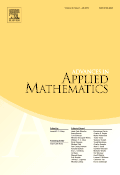
ADVANCES IN APPLIED MATHEMATICS
Unlocking the Potential of Mathematics for TomorrowADVANCES IN APPLIED MATHEMATICS, published by ACADEMIC PRESS INC ELSEVIER SCIENCE, is a prestigious journal that has served the mathematical community since 1980. With its ISSN 0196-8858 and E-ISSN 1090-2074, the journal is based in the United States, specifically in San Diego, CA. As a leading periodical in the field, it holds a notable Q2 ranking in Applied Mathematics and has been consistently ranked in the 43rd percentile among similar journals, illustrating its relevance and impact within the discipline. Although not an Open Access journal, ADVANCES IN APPLIED MATHEMATICS plays a crucial role in disseminating significant research findings, theoretical studies, and innovative applications of mathematics that address real-world problems. Researchers, professionals, and students alike will find valuable insights in its carefully curated publications, making it an essential resource for those looking to advance their understanding and application of mathematics.
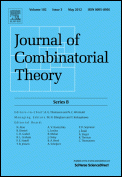
JOURNAL OF COMBINATORIAL THEORY SERIES B
Driving the Evolution of Computational TheoryJOURNAL OF COMBINATORIAL THEORY SERIES B, published by Academic Press Inc., Elsevier Science, is an esteemed journal within the discipline of combinatorial theory, discrete mathematics, and theoretical computer science. With a rich history since its inception in 1971 and ongoing publication through 2025, this journal has established itself as a pillar in its field, currently holding Q1 category rankings in multiple areas including Computational Theory and Mathematics, Discrete Mathematics and Combinatorics, and Theoretical Computer Science. The journal features cutting-edge research and developments, attracting contributions from both established professionals and emerging scholars. Despite the absence of an open access option, the journal's strong impact reflected in its Scopus ranks—such as being number 16 out of 92 in Discrete Mathematics and Combinatorics (83rd percentile)—signifies its influential role in advancing knowledge and innovation. Researchers seeking to share impactful findings and connect with a vibrant academic community will find the JOURNAL OF COMBINATORIAL THEORY SERIES B an essential resource.