DOKLADY CHEMISTRY
metrics 2024
Bridging theory and practice in the world of chemistry.
Introduction
DOKLADY CHEMISTRY is an esteemed academic journal published by MAIK NAUKA/INTERPERIODICA/SPRINGER, focusing on the dynamic field of chemistry. Established in 1996, this journal serves as a significant platform for disseminating cutting-edge research, reviews, and significant developments in various areas of chemistry, including but not limited to general and miscellaneous chemistry. Currently indexed with an ISSN of 0012-5008 and E-ISSN of 1608-3113, DOKLADY CHEMISTRY maintains a commitment to academic rigor and integrity, contributing critical insights to the scientific community. Despite its Q4 ranking in the 2023 Chemistry category and a Scopus rank of #314 out of 408, this journal remains an important resource for researchers, professionals, and students eager to explore emerging trends and innovative methodologies in the field. The journal operates under a model that supports comprehensive scholarly communication, making it a key fixture among established chemistry publications.
Metrics 2024
 0.190.800.7025
Metrics History
Rank 2024
Scopus
IF (Web Of Science)
JCI (Web Of Science)
Quartile History
Similar Journals
MENDELEEV COMMUNICATIONS
Connecting Chemists to Propel Scientific Discovery.Mendeleev Communications, published by Elsevier, is a prominent journal within the field of chemistry that has been providing a platform for innovative research since its inception in 1991. Based in the Netherlands, this journal serves as a vital resource for researchers, professionals, and students looking to advance their understanding of miscellaneous chemistry topics. With a current Q3 ranking in the broad category of Chemistry (miscellaneous) and positioning within the 46th percentile of its field according to Scopus rankings, Mendeleev Communications is committed to disseminating high-quality, original contributions to the scientific community. While the journal is not currently an open-access platform, it ensures rigorous peer-review and editorial standards that contribute to its academic reputation. As it moves toward 2024, Mendeleev Communications continues to play a crucial role in fostering communication among chemists and promoting cutting-edge research that drives the discipline forward.
Chemistry Journal of Moldova
Enriching Minds: The Nexus of Chemistry Research and TechnologyChemistry Journal of Moldova is a pioneering open-access journal dedicated to fostering the dissemination of significant research in the diverse fields of chemistry, including Environmental Chemistry, Process Chemistry and Technology, and more. Published by the esteemed Academia Sciences Moldova, Institute of Chemistry, this journal has been at the forefront of scientific inquiry since its establishment in 2006. With an ISSN of 1857-1727 and a digital presence through its E-ISSN of 2345-1688, it provides an accessible platform for researchers, students, and professionals to share and engage with cutting-edge findings. Although currently ranked in the Q4 quartile in several chemistry categories, the journal is committed to improving its impact within the academic community and aims to highlight emerging trends and technologies in the chemistry domain. The journal's office is located at 3 Academiei Str, Chisinau MD-2028, Moldova. As it converges its publication years from 2016 to 2024, the Chemistry Journal of Moldova invites all contributors and readers to explore its rich repository of research that bridges innovative ideas to practical applications.
JOURNAL OF THE INDIAN CHEMICAL SOCIETY
Showcasing the Evolution of Chemical Sciences since 1973Journal of the Indian Chemical Society, published by Elsevier, stands as a cornerstone in the field of chemistry, particularly representing the rich chemical research emanating from India.
With a significant history dating back to its establishment, this journal encompasses diverse disciplines including Drug Discovery, Electrochemistry, Inorganic Chemistry, Organic Chemistry, and Physical and Theoretical Chemistry, reflecting the evolving landscape of chemical sciences.
Despite being positioned in the Q3 category across multiple quarters, the journal demonstrates promising rankings in various chemistries, highlighting its commitment to advancing the knowledge and application of chemical sciences. While currently not available as an open access journal, the Journal of the Indian Chemical Society is dedicated to providing a platform for high-quality research that fosters innovation and collaboration among researchers, professionals, and students worldwide.
With its continuous publication from 1973 to the present, it serves as an essential repository for cutting-edge findings and developments in chemistry, striving to connect academia with industry and practice.
JOURNAL OF HETEROCYCLIC CHEMISTRY
Elevating Heterocyclic Research to New HeightsJournal of Heterocyclic Chemistry, published by Wiley, stands as a key resource in the field of organic chemistry, offering in-depth research articles and insights spanning from 1966 to 2024. With its strong Scopus ranking of #83 out of 211 in the Organic Chemistry category, placing it in the 60th percentile, the journal maintains its significance and relevance within the academic community. Although it does not currently offer open access options, it provides extensive coverage of heterocyclic compounds, which are vital to various applications in pharmaceuticals and material sciences. The journal's commitment to high-quality research is further reflected in its classification as Q3 in the 2023 quartiles for Organic Chemistry. Researchers, professionals, and students alike will find valuable contributions to the intricate studies of heterocycles, enhancing their understanding and exploration of this fascinating area of chemistry.
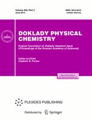
DOKLADY PHYSICAL CHEMISTRY
Catalyzing Scientific Dialogue in Theoretical ChemistryDOKLADY PHYSICAL CHEMISTRY is a prominent peer-reviewed journal published by MAIK NAUKA/INTERPERIODICA/SPRINGER, focusing on advancements and research in the field of Physical and Theoretical Chemistry. With the ISSN 0012-5016 and E-ISSN 1608-3121, this journal serves as a vital platform for researchers and practitioners to disseminate their findings and insights from 1996 to the present. Despite its current Q4 ranking in the 2023 category of Physical and Theoretical Chemistry, the journal has shown significant potential for visibility and engagement within the academic community, ranking #149 out of 189 in its respective field according to Scopus metrics, highlighting its dedicated readership. While the journal is not open access, it remains an essential resource for those seeking in-depth research articles, reviews, and commentary within this dynamic discipline. As the field continues to evolve, DOKLADY PHYSICAL CHEMISTRY plays a crucial role in fostering scientific dialogue and collaboration among researchers, professionals, and students worldwide.
Heterocyclic Letters
Showcasing Breakthroughs in Heterocyclic CompoundsHeterocyclic Letters is an esteemed journal in the field of synthetic organic chemistry, published by RAMAN PUBL. With ISSN 2231-3087 and E-ISSN 2230-9632, this journal aims to disseminate original research and innovative findings related to heterocyclic compounds, which play a crucial role in medicinal chemistry, material science, and agricultural chemistry. Heterocyclic Letters provides a platform for researchers, professionals, and students to share their insights and advancements, thus fostering academic collaboration and knowledge transfer. The journal is dedicated to maintaining high-quality standards in research publication, making it an essential resource for anyone focused on the latest developments in heterocyclic chemistry. Although it does not currently offer Open Access options, the journal’s rigorous peer-review process ensures that only the most credible and impactful studies are published, contributing significantly to the advancement of the field.
Chemical Methodologies
Empowering Researchers with Open Access to ChemistryWelcome to Chemical Methodologies, a premier journal published by SAMI PUBLISHING CO-SPC, dedicated to advancing the field of chemistry through innovative research and methodologies. With an ISSN of 2645-7776 and an E-ISSN of 2588-4344, this journal provides a vital platform for researchers and scholars to share their findings in areas encompassing physical, theoretical, and organic chemistry. Despite its initial HIndex and quartile rankings still being established, the journal's evolving impact within the academic landscape is underscored by its Scopus Ranks, which place it in the 35th percentile for physical and theoretical chemistry and the 33rd percentile for organic chemistry. Since its inception in 2022, and continuing through 2024, Chemical Methodologies aims to foster collaboration and knowledge dissemination among academics and practitioners alike, bridging theoretical concepts and practical applications. This open-access platform enhances accessibility for researchers and students worldwide, ensuring that groundbreaking contributions to chemical science reach a broad audience.
BULLETIN OF THE CHEMICAL SOCIETY OF ETHIOPIA
Driving Knowledge Forward in the World of ChemistryBULLETIN OF THE CHEMICAL SOCIETY OF ETHIOPIA (ISSN: 1011-3924; E-ISSN: 1726-801X), published by the Chemical Society of Ethiopia, serves as a pivotal platform for the dissemination of innovative research and developments within the field of chemistry. Since its inception in 1996 and now an open access journal since 2012, it has provided researchers, academics, and students with unrestricted access to critical studies and findings, thus fostering collaboration and the advancement of knowledge in the discipline. The journal's current standing in the Q3 quartile in the 2023 Chemistry category underlines its commitment to maintaining high academic standards, while its Scopus ranking, positioned at #250 out of 408 in general chemistry, showcases its growing influence and contribution to the scientific community. Hailing from Ethiopia and targeted toward a global readership, the journal aims to highlight local and international research, engaging scholars and practitioners alike in discussions that propel the science of chemistry forward.
ORGANOMETALLICS
Pioneering Research in Organometallic ChemistryORGANOMETALLICS is a prestigious journal published by the American Chemical Society, specializing in the multidisciplinary field of organometallic chemistry. With an impressive history spanning from 1982 to 2024, this journal has established itself as a critical resource in the scientific community, holding a distinguished Q1 ranking in Inorganic Chemistry and Q2 rankings in both Organic Chemistry and Physical and Theoretical Chemistry for 2023. The journal's robust impact factor reflects its significance, ranking among the top-tier publications in its category; for instance, it ranks 27th out of 79 in Inorganic Chemistry. Researchers and professionals in the field eagerly contribute their findings, ensuring the journal remains at the forefront of contemporary chemical research. Although ORGANOMETALLICS does not currently offer open access options, it provides an essential forum for innovative research, discussions, and advancements in organometallic science. Its commitment to excellence makes it an invaluable resource for researchers, professionals, and students dedicated to exploring the rich interplay between metals and organic compounds.
Journal of the Iranian Chemical Society
Elevating Chemical Knowledge with Every PublicationThe Journal of the Iranian Chemical Society, published by SPRINGER, is a prominent academic journal dedicated to advancing the field of chemistry. With an ISSN of 1735-207X and an E-ISSN of 1735-2428, this quarterly journal has been contributing valuable research from 2006 to 2024. Situated in Germany, it serves as a vital platform for chemists and researchers to disseminate their findings, particularly within the miscellaneous chemistry category, where it ranks in the Q3 quartile for 2023. Despite its current lack of open access options, the journal maintains a solid presence in the academic community, evidenced by its Scopus ranking of #165 out of 408 in general chemistry and a commendable 59th percentile. The journal's objective aims to foster innovation and collaboration in chemical research, making it an essential resource for professionals and students keen on pioneering developments in the field. As a subscriber, you will gain insights into cutting-edge research that drives the future of chemistry.