
Droit et Cultures
Scope & Guideline
Connecting Scholars in Law, Culture, and Social Sciences
Introduction
Aims and Scopes
- Interdisciplinary Exploration of Law and Culture:
The journal emphasizes a multidisciplinary approach, integrating perspectives from law, sociology, anthropology, and history to understand how legal systems shape and are shaped by cultural contexts. - Focus on Bodily Autonomy and Representation:
Recent publications highlight themes of bodily autonomy, particularly in relation to tattooing and body art, examining legal implications and cultural narratives surrounding personal expression. - Historical Contextualization of Legal Practices:
The journal frequently publishes articles that delve into historical legal practices, providing insights into how contemporary legal frameworks have evolved from past societal norms and practices. - Ethical and Legal Issues in Cultural Practices:
There is a consistent focus on ethical dilemmas and legal challenges arising from cultural practices, such as the treatment of indigenous rights, biodiversity, and the legal status of cultural heritage. - Rights and Justice Perspectives:
The journal addresses issues of justice, particularly in relation to marginalized communities, exploring how law interacts with social justice movements and cultural identity.
Trending and Emerging
- Tattooing and Legal Identity:
A significant trend has emerged around the legal implications of tattooing, exploring issues of copyright, bodily autonomy, and identity. This reflects a growing societal interest in body art as a form of personal and cultural expression. - Agrobiodiversity and Legal Recognition:
Recent publications emphasize the legal frameworks surrounding agrobiodiversity, highlighting the need for recognition of community-based practices and collective responsibilities in managing agricultural resources. - Ecological Solidarity and Environmental Law:
Emerging discussions focus on ecological solidarity and legal solutions to environmental challenges, indicating a trend towards integrating environmental concerns within legal discourse. - Cultural Heritage and Legal Challenges:
There is an increasing interest in the legal challenges surrounding cultural heritage, particularly in relation to indigenous rights and the definition of heritage, which reflects broader societal movements advocating for cultural recognition. - Intersection of Law, Gender, and Body Politics:
The intersection of law, gender, and body politics is gaining prominence, with a focus on how legal frameworks impact gender identities and bodily autonomy, indicating a shift towards contemporary social justice themes.
Declining or Waning
- Historical Legal Practices of Secrecy:
Themes related to the historical practices of secrecy in legal contexts, such as the treatment of secrets in judicial processes, have seen a decline, indicating a possible shift towards more contemporary legal issues. - Traditional Concepts of Heritage:
While discussions of heritage have been prevalent, the specific focus on traditional concepts of heritage, particularly in relation to property and possession, appears to be less frequent in recent publications. - Gendered Perspectives on Legal History:
Although gender remains an important theme, the specific examination of women's roles in historical legal contexts has become less prominent, suggesting a potential shift towards broader discussions of gender in contemporary legal frameworks. - Customary Law and Practices:
The exploration of customary law and its interaction with state law is less frequently addressed, indicating a waning interest in the tension between traditional legal practices and modern legal systems.
Similar Journals

Derecho y Ciencias Sociales
Illuminating the Intersection of Law and CultureDerecho y Ciencias Sociales is a leading academic journal published by the National University of La Plata under the auspices of the Faculty of Humanities and Social Sciences. With ISSN 1853-0982 and E-ISSN 1852-2971, this journal specializes in the interdisciplinary exploration of legal frameworks, social structures, and cultural studies, making it an essential resource for researchers, professionals, and students in the fields of law and social sciences. Though currently not an open access journal, it provides a critical platform for rigorous scholarly dialogue, contributing to the advancement of knowledge and practice within its disciplines. The journal aims to engage with contemporary issues and methodologies, fostering an environment that promotes intellectual exchange and the development of innovative solutions to societal challenges. Published in La Plata, Buenos Aires, Derecho y Ciencias Sociales stands out for its commitment to academic excellence and its role in shaping the discourse in the interconnected realms of law and social sciences.

Jewish History
Advancing Scholarship in Jewish Historical NarrativesJewish History is a significant academic journal published by Springer, focusing on the multifaceted historical narratives of Jewish communities worldwide. With roots tracing back to 1986, this esteemed journal offers an intellectual platform where researchers and scholars can engage critically with the vast and rich tapestry of Jewish heritage, culture, and experiences. Although it operates under a traditional subscription model, the journal has gained a notable standing in recent years, achieving a Q4 ranking in Cultural Studies and a Q3 ranking in History for 2023, reflecting its robust scholarly contributions. The journal is indexed in Scopus, with a rank of #808 in Arts and Humanities History and #754 in Social Sciences Cultural Studies, placing it within the competitive landscape of academic publishing. Its commitment to advancing the field of Jewish studies makes it an essential resource for researchers, professionals, and students alike, who seek to deepen their understanding of Jewish history from historical, cultural, and social perspectives.
Griffith Law Review
Navigating the intersection of theory and practice in law.Griffith Law Review is a distinguished academic journal dedicated to the exploration and discussion of contemporary legal issues, established as a key resource for scholars, practitioners, and students in the field of law. Published by Routledge Journals, Taylor & Francis Ltd, this journal features a diverse range of articles that reflect rigorous theoretical and empirical research, contributing significantly to the legal scholarship landscape. With an impressive Q2 ranking in Law for 2023, it maintains a robust commitment to advancing legal discourse and fostering a deeper understanding of both domestic and international legal frameworks. While currently not offering Open Access options, the journal is available for subscription and is indexed in prominent databases, ensuring wide visibility among legal academics and professionals. The Griffith Law Review, covering converged years from 2003 to 2006 and from 2008 to 2024, is essential for anyone looking to engage with cutting-edge legal theories and practices.
Canadian Journal of Law and Society
Bridging Legal Theory and Societal ImpactThe Canadian Journal of Law and Society, published by Cambridge University Press, is a distinguished academic journal dedicated to the multidisciplinary exploration of legal systems, social dynamics, and the intricate relationships that shape law and society. With an ISSN of 0829-3201 and an E-ISSN of 1911-0227, this journal has made significant contributions to the fields of Law, Sociology, and Political Science since its inception in 1986. Recognized in the 2023 category quartiles as Q3 in both Law and Sociology and Political Science, it stands as a credible platform for critical research, theoretical discussions, and empirical studies. Although not an open-access journal, it provides valuable insights that foster academic discourse and enhance understanding within the legal and social sciences domains. Addressed from the Edinburgh Building, Shaftesbury Road, Cambridge, England, the journal serves as an essential resource for researchers, practitioners, and students seeking to navigate the complexities of law and its societal impacts.

COLUMBIA JOURNAL OF LAW AND SOCIAL PROBLEMS
Unpacking Legal Frameworks for Social ChangeCOLUMBIA JOURNAL OF LAW AND SOCIAL PROBLEMS is a distinguished academic journal published by the COLUMBIA JOURNAL TRANSNATIONAL LAW ASSOCIATION, dedicated to the intersection of law and social issues. Established in 1973, this journal serves as a platform for the exploration and analysis of socio-legal problems in the contemporary context. With its robust scope encompassing areas such as social justice, legal reform, and public policy, the journal appeals to researchers, professionals, and students alike who are engaged in critical examinations of the legal systems and their societal impacts. Although it is not an open-access journal, it maintains academic rigor as reflected in its Q4 ranking across various categories including Law and Sociology, indicating its commitment to disseminating scholarly work that contributes to ongoing discussions in these fields. The journal’s address at Columbia University School of Law in New York situates it within one of the leading centers for legal scholarship, making it an essential resource for those seeking to deepen their understanding of law's role in addressing social problems.
Journal of African Law
Cultivating knowledge in the dynamic field of African law.The Journal of African Law, published by Cambridge University Press, serves as a vital resource for scholars, practitioners, and students engaged in the dynamic and evolving field of law across the African continent. Since its inception in 1957, this journal has provided a platform for scholarly discourse and in-depth analysis of legal frameworks, systems, and practices across diverse African jurisdictions, with coverage continuing until 2024. Recognized in the Q4 category in Law, and positioned in the 41st percentile within the Scopus rankings, it emphasizes the importance of African perspectives and methodologies in global legal scholarship. Although it does not offer open access, its printed and digital formats ensure accessibility to a wide audience keen on the intersection of law, culture, and governance. The Journal of African Law not only highlights contemporary legal challenges but also enriches the academic conversation surrounding law and justice in Africa, making it an essential publication for contributing to the discourse and understanding of legal issues on the continent.

University of Western Australia Law Review
Transforming Legal Perspectives Through Rigorous AnalysisThe University of Western Australia Law Review is a prestigious academic journal dedicated to the critical examination and exploration of legal issues in Australia and beyond. Published by the Law School of the University of Western Australia, this journal has become a significant resource for legal scholars, practitioners, and students alike, contributing to the rich discourse in the field of law. With an ISSN of 0042-0328 and a current categorization in the Q3 quartile in the field of Law as per the 2023 rankings, it stands among a cohort of respected legal publications. The journal, though not open access, facilitates a sharing of unique insights and research from 2019 to 2024, aiming to address emerging and traditional legal challenges within a global context. With a Scopus rank of #651 out of 1025 in Social Sciences Law, it holds a percentile of 36, reflecting its valuable contributions to legal scholarship. The University of Western Australia Law Review invites researchers, practitioners, and students to engage with its rich content and to contribute to the ongoing dialogue shaping the future of law.

Law Text Culture
Illuminating the Cultural Dimensions of Legal Discourse.Law Text Culture is a pioneering academic journal published by the University of Wollongong, Australia, and is dedicated to the interdisciplinary exploration of law, text, and culture. With its mission to foster innovative scholarly inquiry, this journal serves as a vital platform for researchers, practitioners, and students interested in the intersection of legal studies, literature, and cultural analysis. The journal's ISSN is 1322-9060 and its E-ISSN is 2200-7121. Although currently not an open access journal, it aims to contribute significantly to academic discourse, inviting submissions that critique and elucidate the complex relationships between legal frameworks and cultural narratives. As a resource with the potential for high scholarly impact, Law Text Culture is positioned to address key contemporary issues facing the legal profession and its representation in various textual forms.
Oxford Journal of Law and Religion
Bridging Disciplines: Where Law Meets SpiritualityThe Oxford Journal of Law and Religion, published by Oxford University Press, serves as a critical platform for the interdisciplinary exploration of legal and religious dimensions within contemporary societal frameworks. With an ISSN of 2047-0770 and an E-ISSN of 2047-0789, this journal has rapidly gained recognition in the fields of Law (Q4) and Religious Studies (Q3), as evidenced by its notable Scopus rankings – holding the 85th percentile in Religious Studies. Operating out of Oxford, UK, the journal focuses on fostering scholarly dialogue and advancing research that addresses the intricate relationships between legal systems and religious beliefs, appealing to scholars, legal practitioners, and theologians alike. Although it does not offer open access, the journal remains integral in shaping academic discourse from 2012 to 2023, ensuring that crucial intersections of law and religion are thoroughly examined and accessible to the academic community.
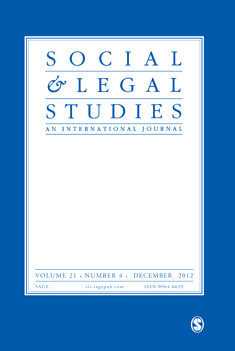
SOCIAL & LEGAL STUDIES
Bridging Law and Society for a Better TomorrowSOCIAL & LEGAL STUDIES, published by SAGE Publications Ltd, stands at the forefront of interdisciplinary research within the spheres of law, sociology, and political science. With an ISSN of 0964-6639 and an E-ISSN of 1461-7390, the journal has established a significant presence in academia since its inception in 1992. This esteemed journal, recognized as a Q1 publication in Law and holding Q2 status in both miscellaneous Social Sciences and Sociology & Political Science categories, garners attention from leading scholars and practitioners alike, evidenced by its impressive Scopus rankings, including a top 88th percentile in Law. Although it does not offer open access, researchers and students can rely on this journal for high-quality, peer-reviewed articles that synthesize theoretical and empirical insights, addressing contemporary legal and social issues. As it converges into 2024, SOCIAL & LEGAL STUDIES continues to be a vital platform for advancing discussions that shape the interplay between societal norms and legal frameworks.