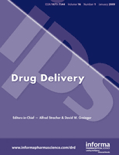
DRUG DELIVERY
Scope & Guideline
Advancing the Future of Pharmaceutical Innovation
Introduction
Aims and Scopes
- Nanoparticle-based Drug Delivery Systems:
This area emphasizes the development and characterization of nanoparticles, including liposomes, solid lipid nanoparticles, and nanocrystals, for the targeted delivery of therapeutic agents. - Transdermal and Topical Formulations:
Research on various techniques to enhance the transdermal delivery of drugs, including microneedles, gels, and emulsions, focusing on improving bioavailability and therapeutic efficacy. - Biopolymer and Natural Compound Delivery:
Utilization of biopolymers and natural compounds in drug delivery systems, highlighting their potential in improving drug solubility and stability. - Smart and Responsive Drug Delivery Systems:
Investigation into stimuli-responsive systems, such as pH-sensitive and thermosensitive formulations, aimed at achieving controlled and targeted drug release. - Nanomedicine in Cancer Treatment:
Exploration of nanomedicine approaches for cancer therapy, including the use of targeted delivery systems to enhance the efficacy and reduce side effects of chemotherapeutics. - Computational and AI-Assisted Drug Design:
Application of computational methods and artificial intelligence in drug delivery research to optimize formulations and predict pharmacokinetic properties.
Trending and Emerging
- Nanotechnology in Drug Delivery:
The application of nanotechnology continues to expand, with a growing focus on engineered nanoparticles and nanocarriers for improved drug delivery, particularly in oncology and chronic diseases. - Multi-Drug Delivery Systems:
There is an increasing trend towards the development of multi-drug delivery systems that allow for co-delivery of therapeutic agents, addressing issues such as drug resistance in cancer therapy. - Personalized Medicine Approaches:
Research is increasingly oriented towards personalized medicine strategies, where drug delivery systems are tailored to individual patient profiles, enhancing treatment efficacy and minimizing side effects. - AI and Machine Learning Applications:
Integration of artificial intelligence and machine learning in drug formulation and delivery systems is gaining traction, aimed at optimizing design and predicting drug behavior. - Sustainable and Green Drug Delivery Technologies:
Emerging interest in sustainable practices within drug delivery systems, including the use of biodegradable materials and eco-friendly manufacturing processes. - Regenerative Medicine and Advanced Therapies:
The application of drug delivery systems in regenerative medicine, including stem cell therapies and tissue engineering, is a rapidly developing area that is gaining attention.
Declining or Waning
- Conventional Drug Delivery Methods:
Traditional drug delivery methods, such as oral and intravenous routes without advanced formulations, are seeing a decrease in focus as newer, more innovative methods gain traction. - Herbal and Traditional Medicine Applications:
Although still relevant, the specific application of traditional herbal medicines in drug delivery has decreased, possibly due to a shift towards more clinically validated pharmaceutical approaches. - Single-Drug Delivery Systems:
Research that focuses solely on the delivery of single drugs without combination therapies or multifunctional systems appears to be declining, reflecting an evolving emphasis on combination therapies. - In Vivo Studies with Limited Scope:
Studies focusing exclusively on limited in vivo models without broader applicability or translational potential are becoming less common as the field moves towards more comprehensive, multi-faceted research. - Basic Formulation Research:
The emphasis on purely theoretical or basic formulation studies without practical application or translational research has diminished, as the journal increasingly favors studies with clear clinical implications.
Similar Journals
Future Journal of Pharmaceutical Sciences
Bridging Research and Practice in the Pharmaceutical RealmThe Future Journal of Pharmaceutical Sciences, published by Springer, stands as a vital resource in the realm of pharmaceutical research and innovation. Recognized for its open access initiative since 2015, this journal promotes extensive dissemination of cutting-edge discoveries, fostering collaboration among researchers, industry professionals, and students alike. With an ISSN of 2314-7245 and an E-ISSN of 2314-7253, it aims to bridge the gap between laboratory research and practical applications in the pharmaceutical sciences. Although specific metrics like HIndex and Scopus ranks are currently unavailable, the journal's commitment to high-quality, peer-reviewed content positions it as a promising platform for advancing pharmaceutical science. By engaging with this journal, contributors and readers can participate in the vibrant discourse shaping the future of drug development, therapeutic strategies, and healthcare solutions.
Advanced Pharmaceutical Bulletin
Advancing the Frontiers of Pharmaceutical ScienceAdvanced Pharmaceutical Bulletin, an esteemed journal published by Tabriz University of Medical Sciences & Health Services, serves as a pivotal platform for disseminating groundbreaking research in the field of pharmaceutical sciences. Since its inception in 2011, this open-access journal has dedicated itself to advancing knowledge in pharmacology, toxicology, and pharmaceutics, boasting an impressive Q1 ranking in miscellaneous categories and Q2 in pharmaceutical science as of 2023. The journal is noted for its rigorous peer-review process, ensuring that published work meets the highest standards of scientific inquiry. With notable rankings, including 7th out of 80 in general pharmacology and toxicology, it sits in the 91st percentile, highlighting its significance in the research community. Researchers and practitioners alike can access cutting-edge findings and innovative methodologies, promoting collaboration and knowledge within the scientific community. Based in Tabriz, Iran, the journal remains committed to fostering research excellence, making it an invaluable resource for scholars and professionals eager to contribute to the dynamic field of pharmaceuticals.

Journal of Reports in Pharmaceutical Sciences
Elevating Standards in Pharmaceutical Research and Education.Journal of Reports in Pharmaceutical Sciences is a pivotal publication in the realm of pharmaceutical research, disseminating innovative findings that cater to the evolving landscape of pharmacology, toxicology, and biomedical engineering. Published by Wolters Kluwer Medknow Publications, the journal serves as a bridge for scholars and practitioners aiming to enhance their understanding of drug development, therapeutic advances, and biopharmaceutical technologies. With an ISSN of 2322-1232 and E-ISSN 2322-5106, it has established its relevance from 2012 to 2022, occupying notable quartile rankings, including Q3 in Pharmacology, Toxicology, and Pharmaceutics. Despite being categorized in Q4 in some areas, the journal's commitment to quality research ensures it remains a respected platform for disseminating significant insights. Researchers, professionals, and students alike will find this journal an indispensable resource for staying updated on critical advancements in pharmaceutical sciences, making it a go-to source for impactful studies that shape industry practices and academic inquiries.

CRITICAL REVIEWS IN THERAPEUTIC DRUG CARRIER SYSTEMS
Empowering research in pharmaceutical advancements.CRITICAL REVIEWS IN THERAPEUTIC DRUG CARRIER SYSTEMS is an esteemed academic journal published by BEGELL HOUSE INC, focusing on the innovative field of drug delivery systems and therapeutic carriers. With an ISSN of 0743-4863 and E-ISSN 2162-660X, this journal serves as a pivotal resource for researchers, professionals, and students engaged in pharmaceutical sciences and pharmacology. Spanning from 1984 to 2024, it has sustained its relevance in an evolving landscape, holding a commendable Q2 ranking in both Medicine (miscellaneous) and Pharmaceutical Science, as well as a Q3 ranking in Pharmacology for 2023. The journal is well-regarded for its critical and comprehensive reviews that enhance understanding and drive advancements in therapeutic applications. Access options are variable, providing insights into contemporary practices and innovations that shape drug delivery strategies. With a strong emphasis on interdisciplinary approaches, CRITICAL REVIEWS IN THERAPEUTIC DRUG CARRIER SYSTEMS not only fosters scholarly dialogue but also propels forward the critical field of therapeutic delivery, making it a valuable asset for anyone looking to deepen their knowledge and influence within this dynamic area of study.
AAPS PHARMSCITECH
Exploring the Frontiers of Drug Discovery and TechnologyAAPS PHARMSCITECH is a prestigious peer-reviewed journal published by Springer, focusing on the dynamic field of pharmaceutical sciences and technology. With an ISSN of 1530-9932, it provides a vital platform for disseminating cutting-edge research that spans key areas including drug discovery, pharmacology, toxicology, and ecological impacts of pharmaceuticals. The journal is recognized for its rigorous scientific contributions, currently holding a commendable Q2 quartile ranking across several relevant categories, including Agronomy and Crop Science, Aquatic Science, and Medicine in 2023. Notably, it ranks 43rd out of 183 in the Scopus Pharmacology, Toxicology, and Pharmaceutics category, placing it in the 76th percentile of its field. Aiming to foster innovation and collaboration among researchers, professionals, and students, AAPS PHARMSCITECH is committed to advancing scientific knowledge and addressing contemporary challenges in pharmaceutical sciences. The journal offers various access options to ensure wide dissemination of research findings, making it an essential resource for those dedicated to enhancing public health through pharmaceutical advancements.
Journal of Pharmaceutical Investigation
Innovating solutions through rigorous peer-reviewed research.Journal of Pharmaceutical Investigation, published by SPRINGERNATURE, is a leading academic resource in the field of pharmaceutical sciences, offering critical insights and innovative research findings. With an impact factor that underscores its significance, this journal ranks in the Q1 category for both Pharmacology and Pharmaceutical Science as of 2023, showcasing its high-quality publications and rigorous peer-review processes. Operating from the Netherlands, the journal spans from 2012 to 2024, offering a rich archive of interdisciplinary research contributions that advance knowledge in pharmacology, toxicology, and pharmaceutics. It holds impressive Scopus rankings, placing it among the top-tier journals in its categories, which enhances its appeal to researchers, professionals, and students aiming to publish their work or stay up-to-date with the latest advancements in the pharmaceutical field. Engaging with the Journal of Pharmaceutical Investigation not only enriches your understanding but also connects you with a community dedicated to advancing healthcare and therapeutic innovations.
Cancer Nanotechnology
Fostering Collaboration for Innovative Cancer SolutionsCancer Nanotechnology is a cutting-edge peer-reviewed journal dedicated to advancing the field of cancer research through innovative nanotechnology applications. Published by SPRINGER WIEN, this open-access journal, established in 2010, provides a vital platform for the dissemination of high-quality research with a focus on the intersection of nanotechnology, oncology, and biomedical engineering. With a commitment to promoting accessibility and fostering collaboration, Cancer Nanotechnology has gained impressive rankings within specialized categories, including Q2 in Biomedical Engineering and Pharmaceutical Science. The journal's rigorous selection process ensures that only the most impactful studies reach its audience, making it a must-read for researchers, professionals, and students eager to explore the latest advancements and methodologies in cancer treatment. With its scope encompassing critical topics that bridge multiple disciplines—including physical chemistry and toxicology—Cancer Nanotechnology positions itself as an influential resource for shaping the future of cancer therapies.

ADVANCED DRUG DELIVERY REVIEWS
Advancing Knowledge in Drug Delivery Systems.ADVANCED DRUG DELIVERY REVIEWS, published by ELSEVIER, is a leading journal in the field of pharmaceutical sciences, particularly acclaimed for its contributions to the disciplines of pharmacology, toxicology, and pharmaceutics. With an impressive 2023 Scopus rank of #1 out of 183 in its category, this journal is situated in the Q1 quartile, reflecting its high impact and the relevance of its published research. Since its inception in 1987, it has continually focused on the latest advancements in drug delivery systems, making it an indispensable resource for researchers, professionals, and students interested in the innovative developments that shape the pharmaceutical landscape. The journal aims to publish comprehensive and authoritative reviews that foster a deeper understanding of drug delivery mechanisms, technologies, and their clinical applications. Although it operates under a subscription model, the value it provides through rigorous peer-reviewed content ensures it remains an essential tool for anyone seeking to enhance their knowledge in this rapidly evolving field.
PHARMACEUTICAL DEVELOPMENT AND TECHNOLOGY
Advancing Pharmaceutical Innovations for a Healthier Tomorrow.PHARMACEUTICAL DEVELOPMENT AND TECHNOLOGY is a premier journal published by Taylor & Francis Ltd that focuses on the latest advancements and innovations in the field of pharmaceutical science. Established in 1996, this journal has evolved to encompass a wide array of interdisciplinary studies relevant to drug development, formulation technology, and delivery systems, serving as a platform for researchers and professionals to share groundbreaking findings. With an impressive impact factor and ranked in both Q2 in Pharmaceutical Science and Q3 in Medicine (miscellaneous), it positions itself among the top-tier journals in pharmacology and toxicology. The journal's insights are critical for scholars and practitioners aiming to enhance therapeutic efficacy and safety. Access options for the content remain traditional, thus supporting a comprehensive approach to scientific literature. Throughout its converged years up to 2024, PHARMACEUTICAL DEVELOPMENT AND TECHNOLOGY continues to play a vital role in shaping pharmaceutical education and practice.

Pharmaceuticals
Elevating Health Outcomes Through Cutting-Edge DiscoveriesPh pharmaceuticals is a leading peer-reviewed journal published by MDPI, focused on the dynamic fields of pharmaceutical science, drug discovery, and molecular medicine. Since its inception, the journal has established itself as a vital resource for researchers and practitioners, boasting an impressive impact factor reflected in its Q1 and Q2 quartile rankings across multiple categories, including Pharmaceutical Science and Drug Discovery. As an open access journal since 2009, Pharmaceuticals promotes the dissemination of cutting-edge research and innovative findings globally, facilitating collaboration and knowledge sharing among scientists. With a robust ranking in Scopus, specifically at Rank #56 in Pharmaceutical Science and Rank #65 in Drug Discovery, the journal serves as a critical platform for advancing the field and supporting future developments in therapeutics and pharmaceuticals. Based in Switzerland, Pharmaceuticals continues to inspire a diverse readership of scholars and healthcare professionals who are dedicated to improving health outcomes through innovative research.