Egyptian Journal of Critical Care Medicine
Scope & Guideline
Leading the Charge in Critical Care Medicine Research
Introduction
Aims and Scopes
- Critical Care Management:
The journal emphasizes studies that improve the management and outcomes of critically ill patients, addressing diverse conditions such as cardiac arrest, septic shock, and respiratory failure. - Innovative Diagnostic Techniques:
There is a consistent focus on exploring and validating novel diagnostic tools and imaging techniques, including ultrasound and biomarkers, that enhance clinical decision-making in critical care settings. - Therapeutic Interventions:
Research on therapeutic strategies, particularly pharmacological treatments and procedural interventions (e.g., tracheostomy techniques, mechanical ventilation strategies), is a core area, reflecting the journal's commitment to improving patient outcomes. - Outcome Prediction and Prognostic Indicators:
The journal features studies that identify prognostic markers and scoring systems to predict outcomes for critically ill patients, thereby aiding in risk stratification and management planning. - Public Health and Policy Perspectives:
Research that discusses the implications of public health policies and practices in critical care, particularly in the context of pandemics such as COVID-19, is also a significant focus.
Trending and Emerging
- Impact of COVID-19 on Critical Care:
Research related to the management of critically ill patients with COVID-19 has surged, emphasizing the need for tailored treatment protocols and understanding long-term effects. - Ultrasound in Critical Care:
An increasing number of studies focus on the use of ultrasound as a diagnostic tool in critical care settings, highlighting its utility in assessing conditions like pulmonary embolism and guiding procedural interventions. - Biomarkers for Prognosis and Diagnosis:
There is a growing interest in the identification and validation of biomarkers (e.g., C-reactive protein, pentraxin-3) that can aid in diagnosing and predicting outcomes in critically ill patients. - Fluid Management Strategies:
Research focusing on fluid responsiveness and management, particularly in septic shock and acute kidney injury, is emerging as a critical area of investigation, reflecting the complexity of fluid management in critical care. - Innovative Ventilation Techniques:
The exploration of advanced mechanical ventilation strategies, including non-invasive methods and tailored weaning protocols, is gaining traction, addressing the challenges in managing respiratory failure.
Declining or Waning
- Traditional Pharmacological Comparisons:
Studies comparing established medications (e.g., conventional antibiotic regimens) seem to be less frequent, possibly due to a shift towards personalized medicine and targeted therapies. - General Reviews of Critical Care:
The prevalence of broad review articles discussing critical care practices has decreased, indicating a trend toward more specialized and focused research articles that address specific clinical questions. - Non-Acute Care Issues:
Research on non-acute care topics, such as long-term outcomes of critical care patients or rehabilitation post-ICU, appears to be waning, suggesting a narrowing of focus towards acute management.
Similar Journals
Journal of Acute Disease
Transforming research into practice for acute diseases.Journal of Acute Disease is a leading peer-reviewed publication dedicated to the timely dissemination of research focused on acute medical conditions, enhancing our understanding and management of these vital health issues. Published by WOLTERS KLUWER MEDKNOW PUBLICATIONS, this Open Access journal has been committed to providing unrestricted access to high-quality research since its establishment in 2012, ensuring that professionals, researchers, and students can readily benefit from groundbreaking studies and innovative practices in the field. With a focus on enhancing clinical practice through rigorous research, the journal covers a wide range of topics including epidemiology, diagnostics, treatment protocols, and patient outcomes related to acute diseases. With its robust editorial team and a global readership, the Journal of Acute Disease serves as an essential platform for advancing knowledge and improving healthcare delivery worldwide.
ACTA CARDIOLOGICA
Elevating standards in cardiovascular health research.ACTA CARDIOLOGICA is a distinguished journal published by TAYLOR & FRANCIS LTD, focusing on the dynamic fields of Cardiology and Cardiovascular Medicine. Established in 1946, the journal has maintained a significant presence in the academic community, providing a platform for cutting-edge research and clinical studies that aim to address challenges in cardiovascular health. With its Q3 rating in both Cardiology and General Medicine categories, it showcases a robust compilation of articles that reflect the evolving landscape of cardiac care. Although ACTA CARDIOLOGICA is not an Open Access journal, it continues to serve a vital role for researchers, professionals, and students dedicated to advancing knowledge in cardiovascular health. This journal, with an ISSN of 0001-5385 and E-ISSN of 1784-973X, is a critical resource for those looking to stay updated on the latest developments and practices in the specialization, contributing significantly to the field until 2024 and beyond.
JOURNAL OF VETERINARY EMERGENCY AND CRITICAL CARE
Innovating critical care for our beloved animals.JOURNAL OF VETERINARY EMERGENCY AND CRITICAL CARE, published by WILEY, is a leading journal in the field of veterinary science, specifically focusing on emergency medicine and critical care for animals. With an impact factor that underscores its significance in the field, this journal serves as a crucial resource for veterinary professionals, researchers, and students dedicated to advancing the care of animals in critical conditions. Since its inception in 1991, the journal has continually contributed to the knowledge base and methodological advancements in veterinary emergency practices, consistently ranking in the Q1 category for veterinary sciences, as per the latest Scopus Ranks. Located in the United Kingdom, the journal is committed to disseminating high-quality, peer-reviewed research that addresses the challenges and innovations in veterinary critical care. With its goal to enhance clinical outcomes through evidence-based practices, the JOURNAL OF VETERINARY EMERGENCY AND CRITICAL CARE remains an essential platform for scholarly communication and collaboration in veterinary medicine.
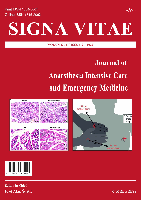
Signa Vitae
Transforming challenges into advancements in patient care.Signa Vitae is a distinguished academic journal published by MRE PRESS, focusing on critical care, intensive care medicine, and emergency medicine. Established in 2008 and running through 2024, this journal serves as an essential conduit for the dissemination of innovative research and clinical practices in these dynamic fields. Based in Croatia, Signa Vitae is indexed in Scopus, highlighting its importance within the scholarly community, boasting respectable quartiles with a Q3 ranking in both Critical Care and Intensive Care Medicine and Emergency Medicine as of 2023. Although it operates under a traditional access model, the journal aims to enhance knowledge sharing and interdisciplinary dialogue among researchers, healthcare professionals, and students globally, addressing the urgent challenges and advancements in patient care. By providing a platform for high-quality studies and reviews, Signa Vitae continues to advance the conversation and practice within critical and emergency medicine.
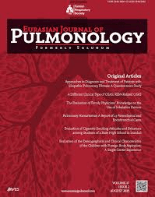
Eurasian Journal of Pulmonology
Fostering collaboration in the realm of thoracic medicine.The Eurasian Journal of Pulmonology is a premier open access journal dedicated to advancing the field of respiratory medicine and thoracic diseases. Published by KARE PUBL since 1999, the journal serves as an invaluable platform for researchers, clinicians, and students, facilitating the dissemination of innovative research findings and clinical practices. With an emphasis on high-quality and peer-reviewed articles, it aims to foster collaboration and knowledge sharing among professionals in the pulmonology community. Although the journal’s precise impact factor is currently not specified, its commitment to openness and accessibility ensures a broad reach and engagement with vital research, making it a critical resource for those in the academic and medical fields. The journal is based in Istanbul, Turkiye, further enriching its contributions to the Eurasian medical landscape and global health discourse.
HEART & LUNG
Elevating Standards in Cardiology and Pulmonary MedicineHEART & LUNG is a premier academic journal published by MOSBY-ELSEVIER, focusing on the critical intersections of cardiology, critical care, and respiratory medicine. Since its inception in 1973, the journal has established a significant reputation within the medical community, as evidenced by its impressive Q2 ranking in key categories such as Cardiology and Cardiovascular Medicine, Critical Care and Intensive Care Medicine, and Pulmonary and Respiratory Medicine for the year 2023. With a dedicated readership comprising researchers, healthcare professionals, and students, HEART & LUNG serves as a vital platform for disseminating cutting-edge research, clinical innovations, and comprehensive reviews that influence practice standards and enhance patient care. While it currently does not offer Open Access options, readers can access a wealth of information pivotal to the advancement of medical knowledge and practice through conventional subscription. Explore the latest findings and contribute to the ever-evolving landscape of cardiovascular and respiratory health through this esteemed journal.

Hepatic Medicine-Evidence and Research
Empowering Professionals with Cutting-edge Hepatic InsightsHepatic Medicine-Evidence and Research is a distinguished open-access journal published by DOVE MEDICAL PRESS LTD, dedicated to advancing knowledge in the field of hepatology. Since its inception in 2009, this journal has served as a critical platform for researchers, professionals, and students alike, facilitating the dissemination of high-quality, peer-reviewed articles that address the latest developments in hepatic medicine. With a commitment to accessibility, all articles are freely available to a global audience, thereby promoting collaboration and innovation in research. Although specific metrics such as H-index and Scopus ranks are currently undeclared, the journal is recognized for its contributions to clinical practice and ongoing research in liver health, making it an essential resource for those seeking to enhance their understanding of hepatic conditions and treatments. By prioritizing the latest evidence and research in this vital field, Hepatic Medicine-Evidence and Research continues to play a pivotal role in influencing clinical outcomes and shaping future studies.

Tuberkuloz ve Toraks-Tuberculosis and Thorax
Bridging research and practice in respiratory medicine.Tuberkuloz ve Toraks (Tuberculosis and Thorax) is a distinguished journal published by the TURKISH ASSOCIATION OF TUBERCULOSIS AND THORAX located in Turkey. Serving as a pivotal platform for researchers and practitioners in the fields of Critical Care, Intensive Care Medicine, and Pulmonary and Respiratory Medicine, this journal has been disseminating vital research since 2003 and is committed to advancing knowledge and clinical practices related to tuberculosis and thoracic diseases. Although currently not an Open Access publication, its relevance is underscored by its rankings within Scopus, including a Q3 category in Critical Care and Intensive Care Medicine and a Q4 in Pulmonary and Respiratory Medicine, reflecting its significant contributions to the academic community. With a mission to foster the exchange of innovative ideas and encourage rigorous scholarly discourse, Tuberkuloz ve Toraks plays an essential role in addressing pressing health challenges associated with respiratory ailments and remains an invaluable resource for researchers, health professionals, and students dedicated to improving outcomes in thoracic health.
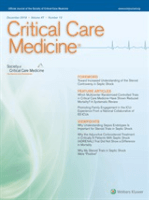
CRITICAL CARE MEDICINE
Elevating Standards in Intensive Care MedicineCRITICAL CARE MEDICINE is a premier journal dedicated to the advancement of knowledge and practice in the field of critical care and intensive care medicine. Published by Lippincott Williams & Wilkins, this distinguished journal has been at the forefront of medical research since its inception in 1973, and it continues to offer insights into the latest developments and innovations in critical care. With a remarkable ranking of #5 out of 110 in Scopus' Critical Care category and a 95th percentile rating, CRITICAL CARE MEDICINE is a leading source for high-impact research, reviews, and clinical studies. The journal is recognized as a Q1 publication, underscoring its authoritative presence within the academic community. Researchers and clinicians are encouraged to engage with cutting-edge findings that aim to improve patient care and outcomes. Although the journal is not open access, it remains an essential resource for professionals seeking to enhance their understanding and application of critical care practices.

Netherlands Journal of Critical Care
Innovating Intensive Medicine PracticesThe Netherlands Journal of Critical Care, an esteemed publication of the NETHERLANDS SOC INTENSIVE CARE, serves as a vital resource for those in the fields of critical care and intensive medicine. As a platform focused on disseminating high-quality research from 2008 to 2023, this journal provides critical insights and advancements pertinent to the rapidly evolving landscape of intensive care practices. Though categorized in the fourth quartile for Critical Care and Intensive Care Medicine in 2023, its commitment to enhancing patient outcomes remains unwavering. With an ISSN of 1569-3511, this journal invites submissions that push the boundaries of knowledge and offer innovative approaches to critical care challenges. Thus, it is an essential reference for researchers, healthcare professionals, and students eager to stay at the forefront of critical care developments in the Netherlands and beyond.